Enoclerus Interactive Key
Couplet-clicker: click a character state, jump to the next couplet. Covers all 110 species/subspecies currently placed in the key (Antlike Guild, Robust Guild, Small Patterned Cluster, Uniform Dark-Ground Vestitural-Dominant Cluster, and E. molybros). Use the tabs below to switch to the full running prose draft.
A Visual Key to the beetles belonging to the genus Enoclerus Gahan (Coleoptera: Cleridae: Clerinae) for the United States, Canada and Mexico
Jacques Rifkind
Research Associate, California State Collection of Arthropods
Sacramento, California USA
Email: clerid@aol.com
Enoclerus is a large genus of checkered beetles that attains its greatest diversity in the Neotropics. The present key treats 110 species and subspecies that occur within the geographical area that comprises the United States, Canada, and the whole of Mexico. Heretofore, only restricted regional keys to the genus have existed, and none for Mexico. The species that comprise the genus are extremely diverse in size, facies, coloration, elytral and pronotal patterning, setation, and integumental sculpturing. For the non-specialist seeking a name, this diversity has proven a barrier to identification. This key is designed to remedy this barrier to further understanding of the genus. Many species of Enoclerus are similar in pattern and coloration, and can only be differentiated by a combination of characteristics, rather than a single character. Others may be defined by a character that requires microscopic examination or dissection. Because of this, the dichotomous key included herein will often have a leg denoted "not as above" that directs the user to the next set of characters. Having a visual representation of all included species should make identification within these similar, potentially confusing, clusters of species relatively straightforward, despite the lack of a single differentiating character. In order to further facilitate identification, I also provide an interactive key, available as . Here beetles are clustered based on shared traits such as size, presence or absence of integumental color, etc., and the user can click between these clusters to find detailed defining characteristics of species, as well as photos.
In addition to the two key modes provided, each species has its own separate account, which includes more details of characteristics, photographs of color morphs and sometimes of living specimens. Furthermore, within these the user may find discussion of the taxonomic standing of some species and notes on possible difficulties in making positive determinations.
Because several other genera of Cleridae resemble Enoclerus in one or more ways, I provide a tab to a section that illustrates one to several species of each of the that occur within the region covered by the key. It is beyond the scope of the present project to define these other genera here. But I note that some of the species in these groups are nominally extremely similar to Enoclerus species and can only be separated based on subtle characters requiring close examination or dissection. Indeed, some members of these genera may eventually be moved to Enoclerus. Someone using the key who fails to make an identification for a specimen within Enoclerus, should proceed to the "other genera" section to search out a possible match.
Finally, the user will find an including references to Enoclerus original descriptions, faunistic studies and the few keys previously available.
Within Cleridae, the genus Enoclerus is distinguished by distinctly emarginate, finely granulate eyes, slender maxillary palpi, dilated, often securiform, labial palpi, a three-segmented antennal club which is rather abruptly enlarged, the pronotum with a shallow, transverse subapical groove lacking a median line joining it, tarsi that are apparently four-segmented, third and fourth segments of metatarsi dilated, and broadly dentate claws (after Leavengood 2008).
Some of the photographs used in the key were taken from fair use sites like bugguide.net and iNaturalist. I have tried to attach attribution where possible. If anyone finds one of their uncredited photos here, please email me and I will attach your info promptly. I appreciate the many naturalists who provide these often unique images.
Presented below is a continuous numbered dichotomous key covering all 110 species and subspecies of Enoclerus occurring in the USA, Canada and Mexico. (Many Mexican species also occur in northern Central America — Guatemala, El Salvador, Belize, Nicaragua, Honduras — but the key does not cover the entire fauna for that region.) Each species will eventually key at a terminal couplet. Where a group of 3 or more similar species shares a particular gestalt (overall impression conveyed by a combination of characteristics), the group's defining characters are given when it is first introduced, then split further down couplet by couplet to arrive at a designated species.
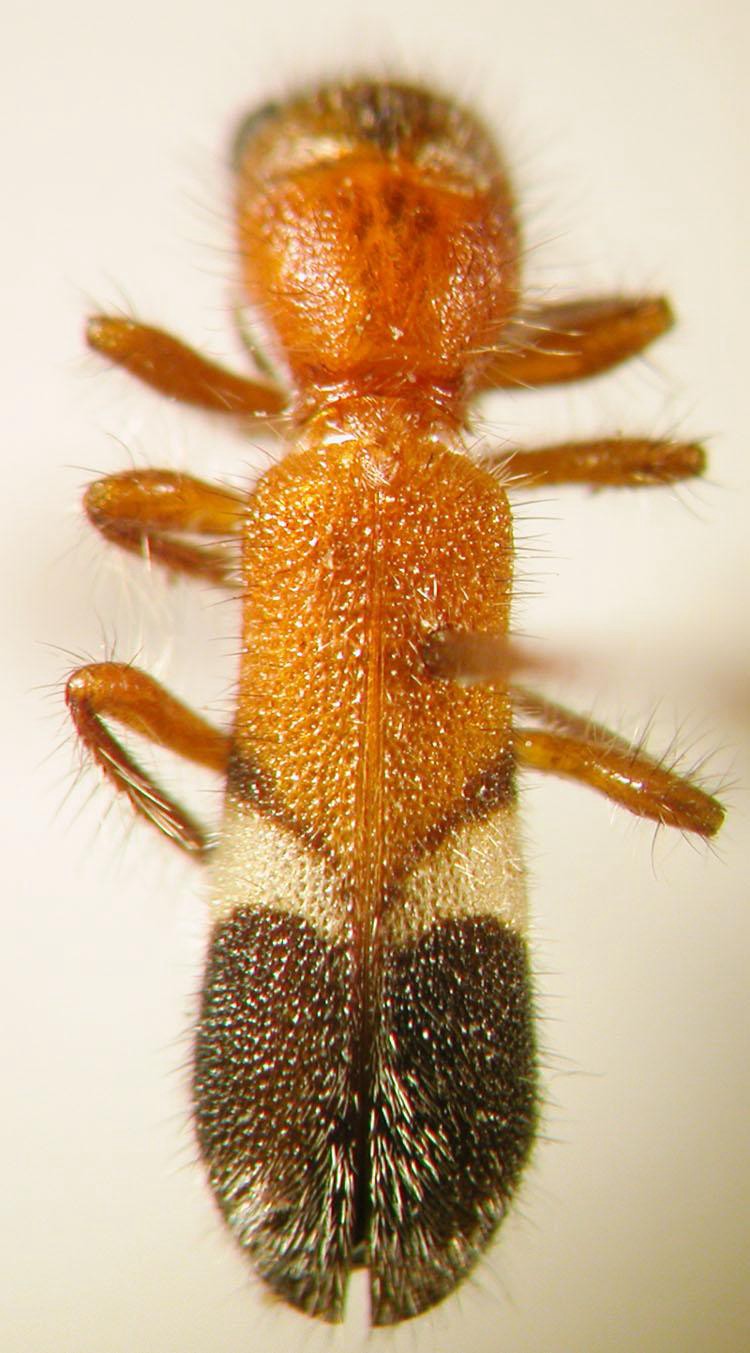
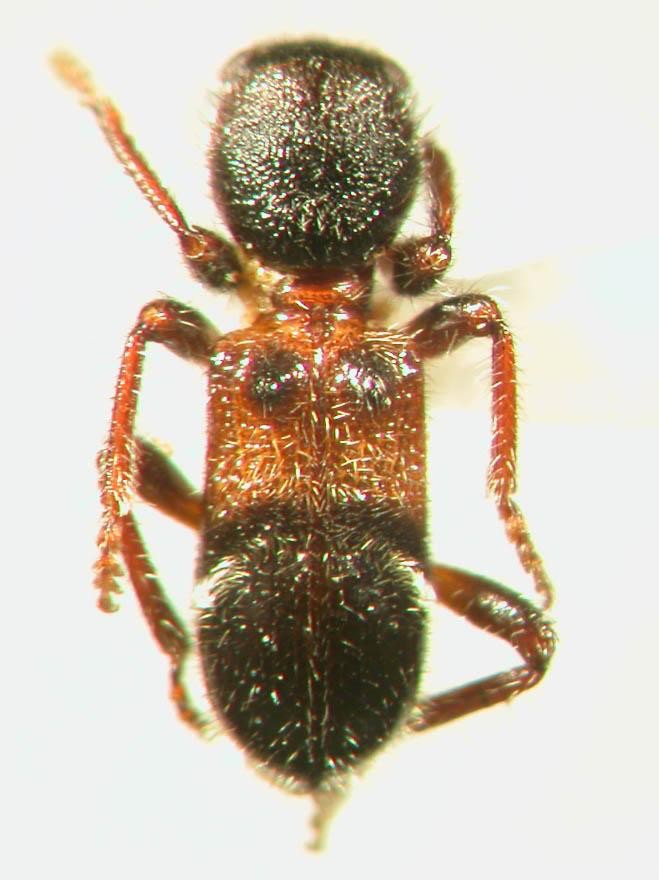
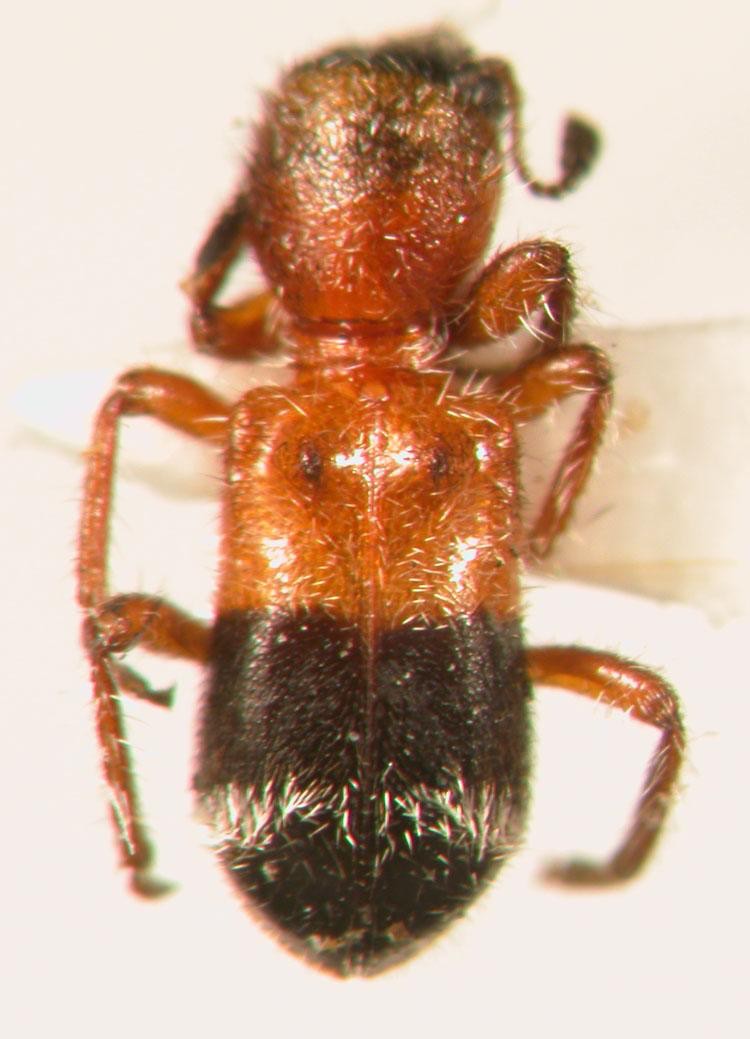
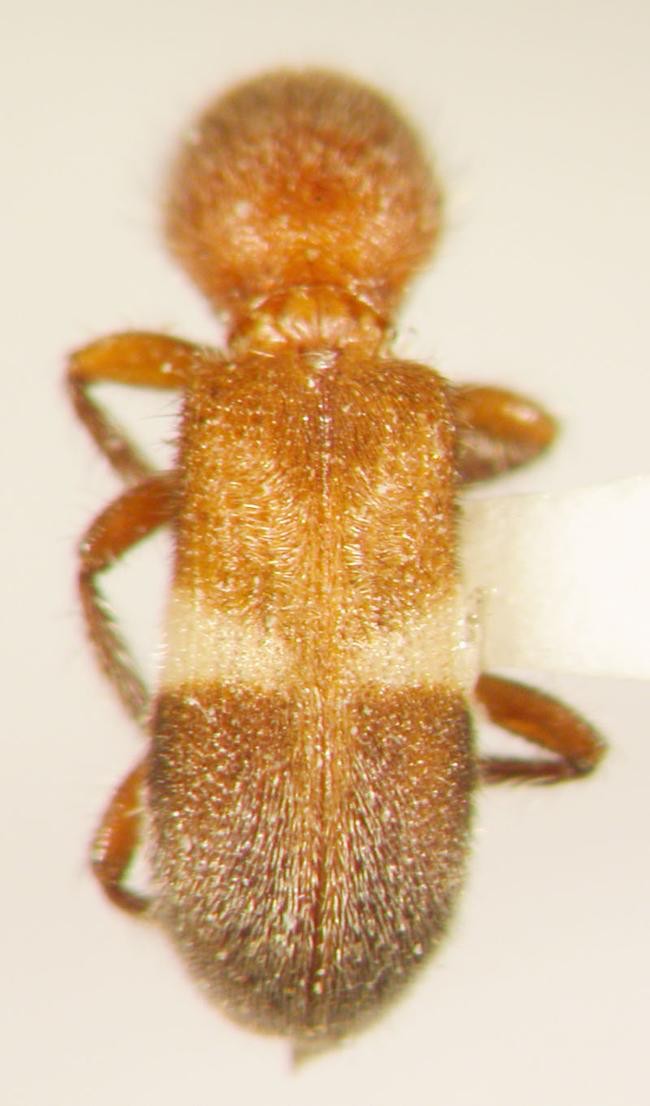
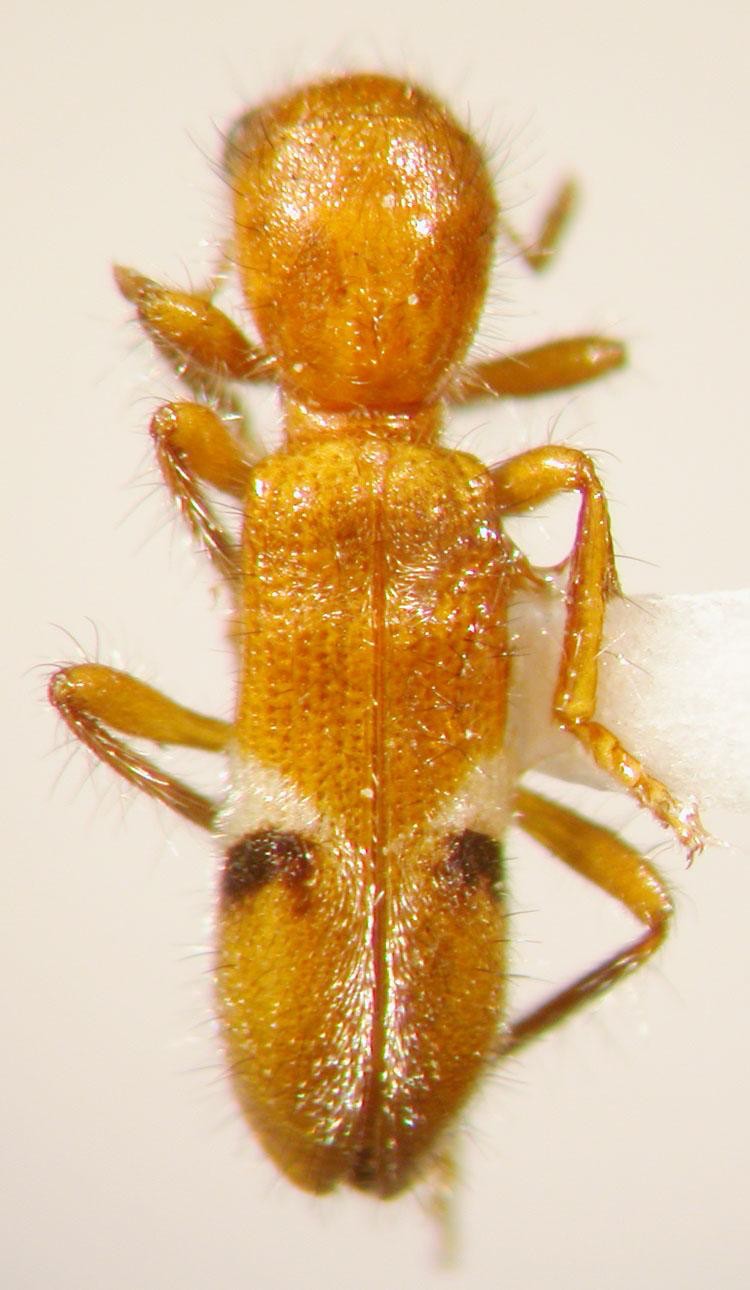
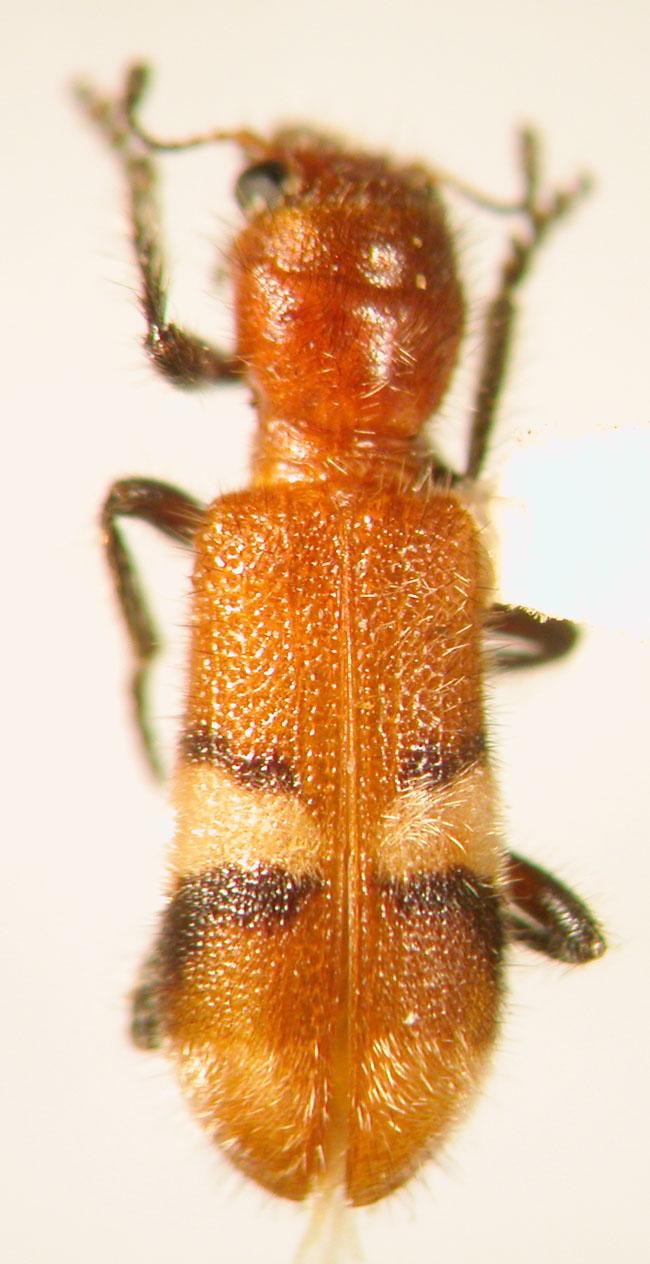
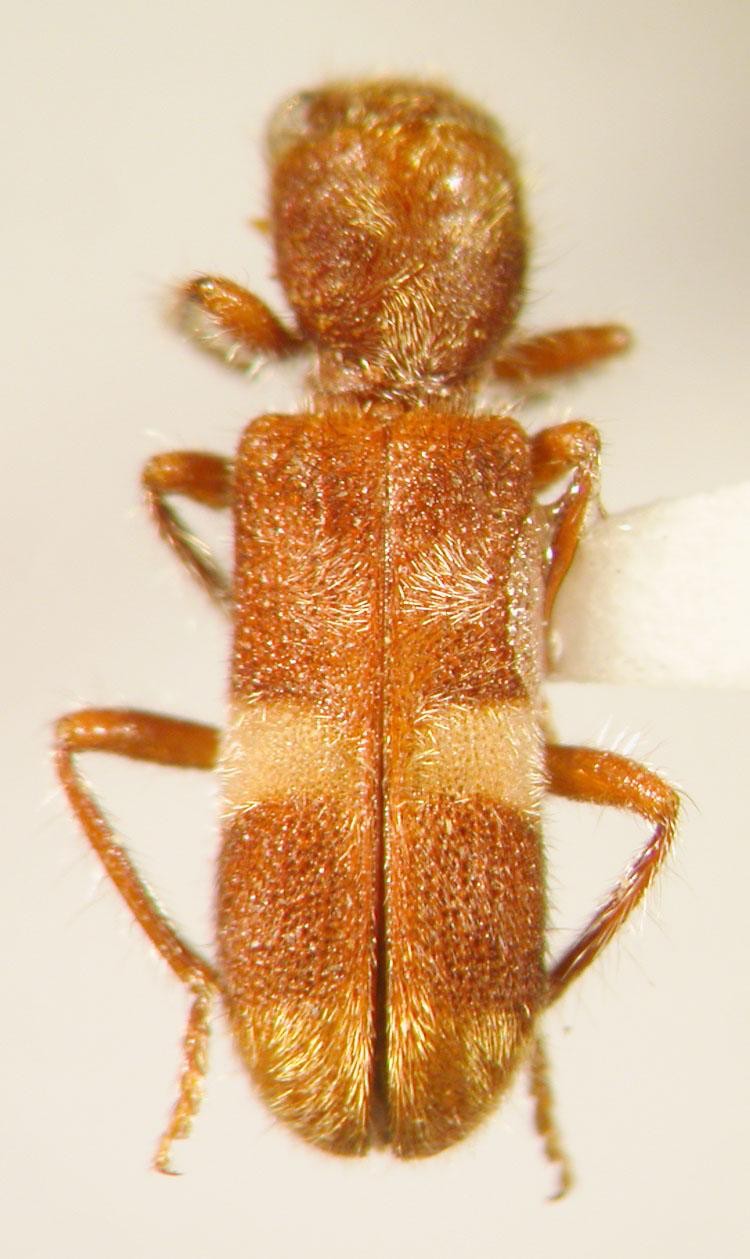
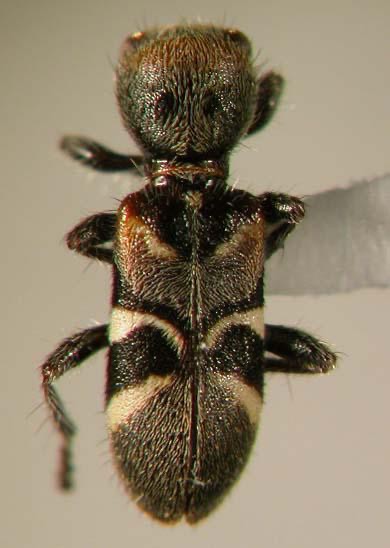
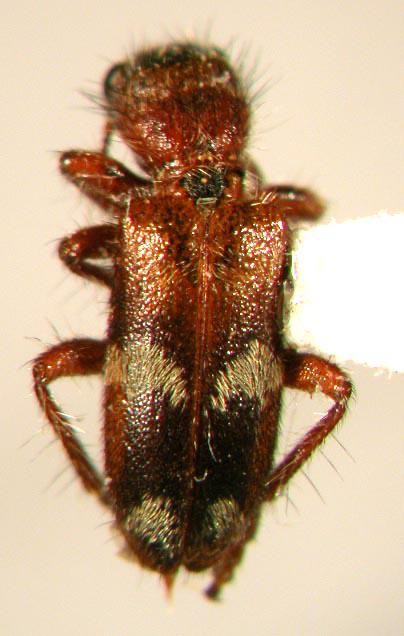
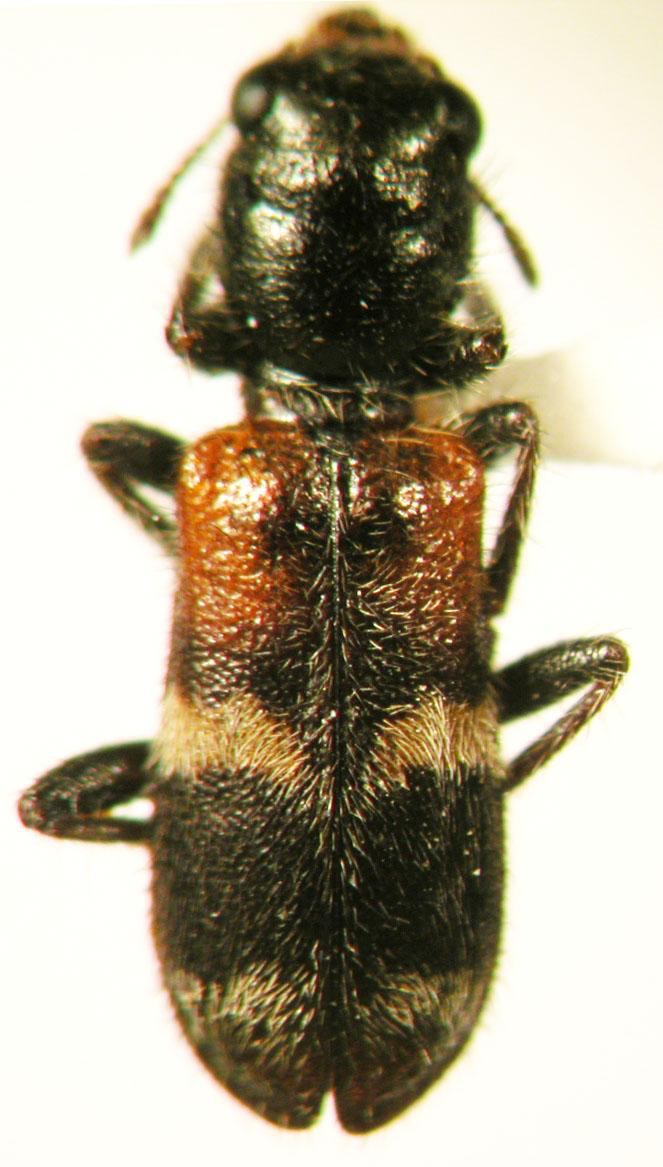
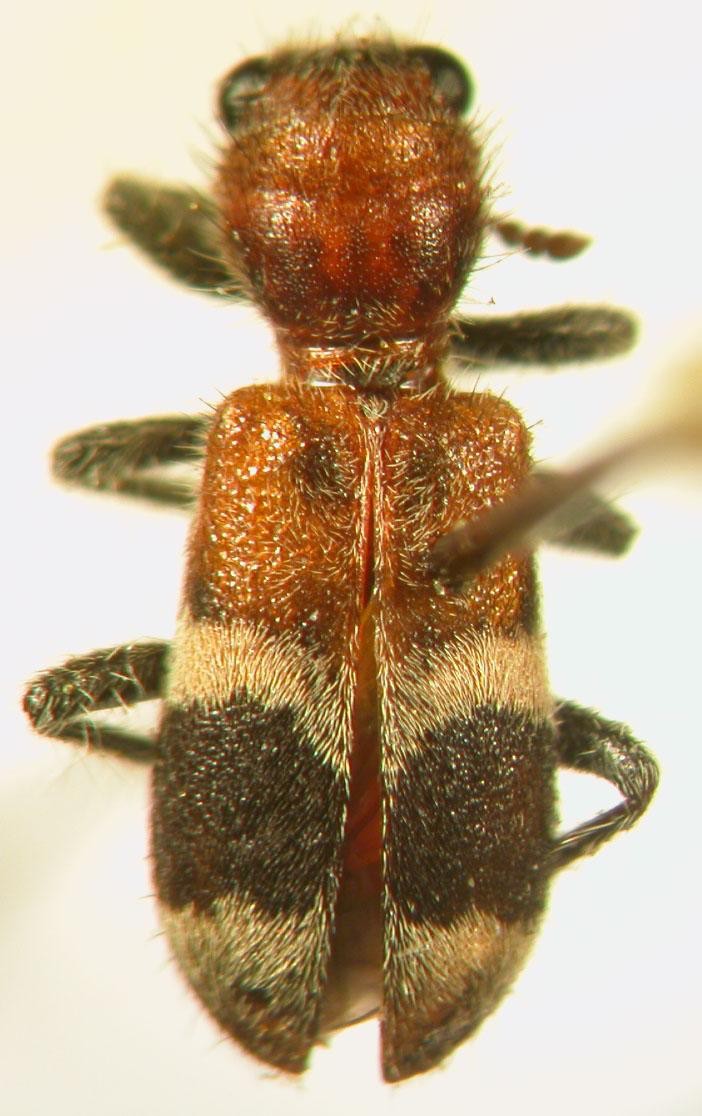
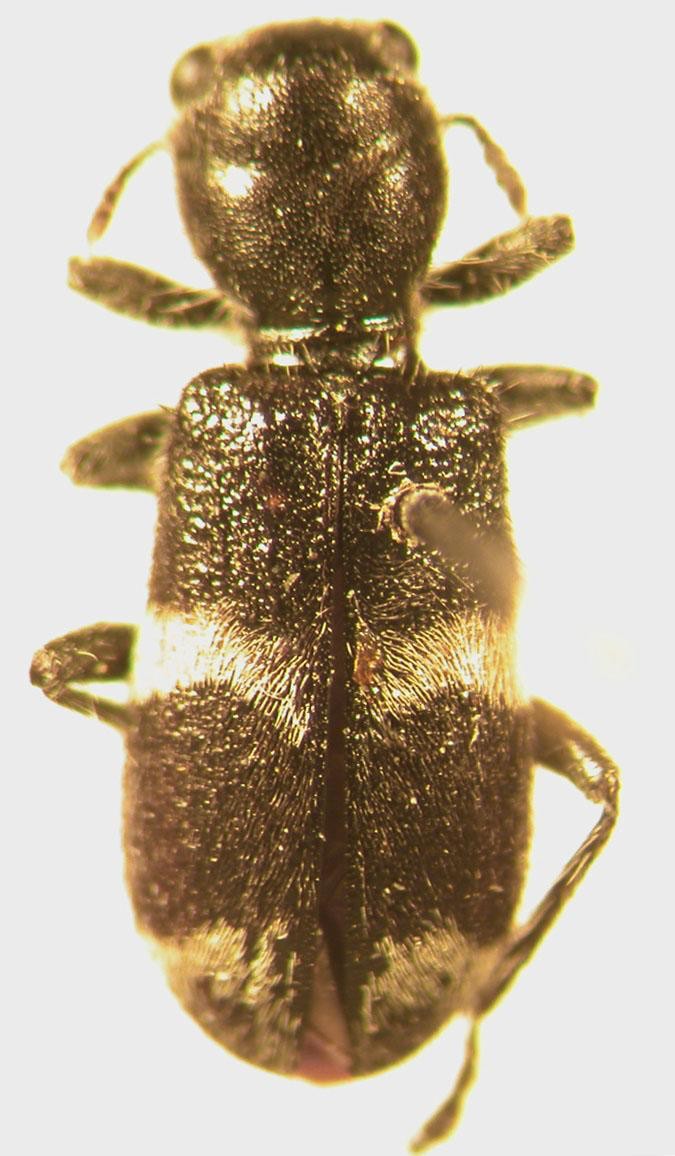
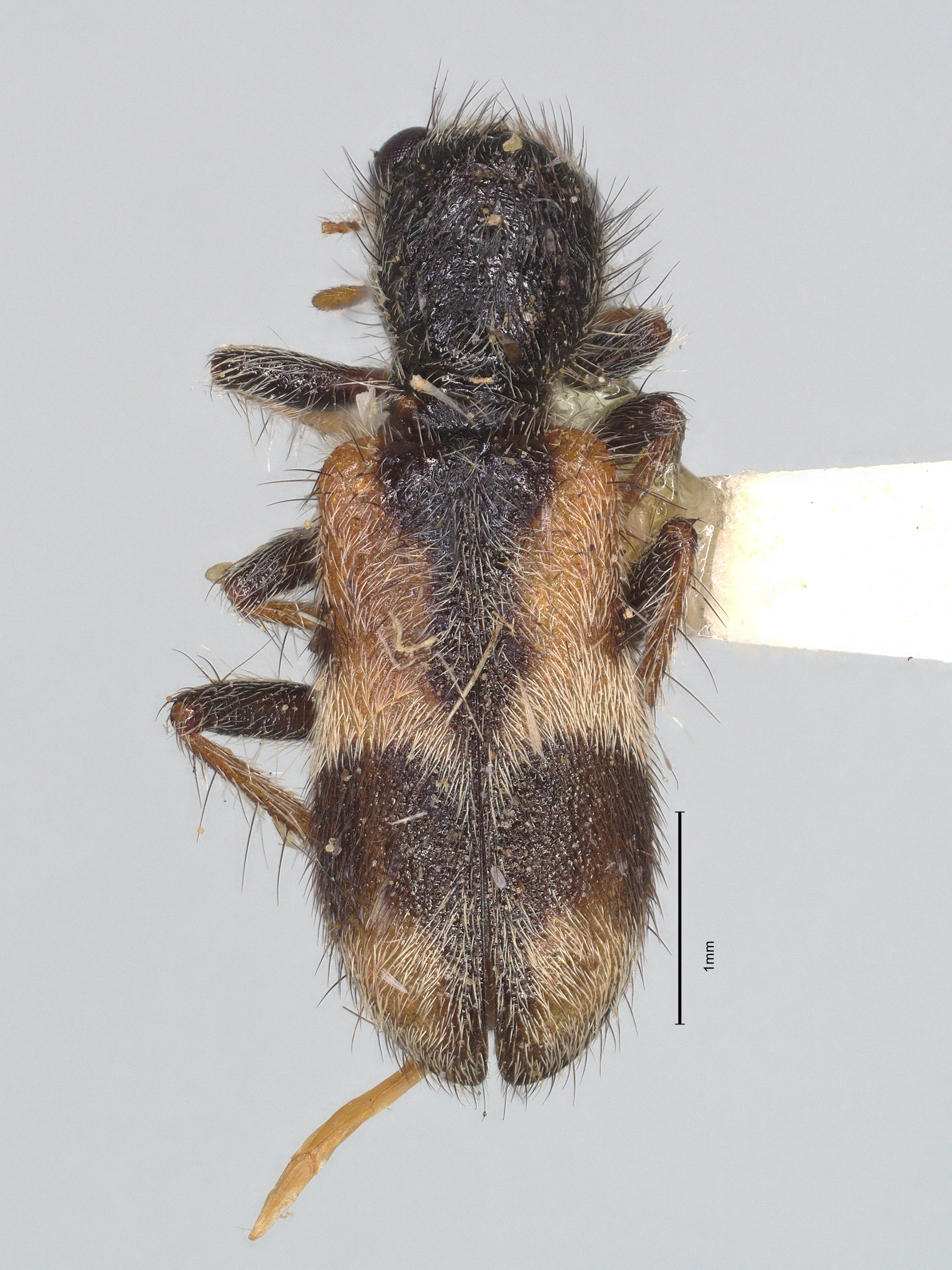
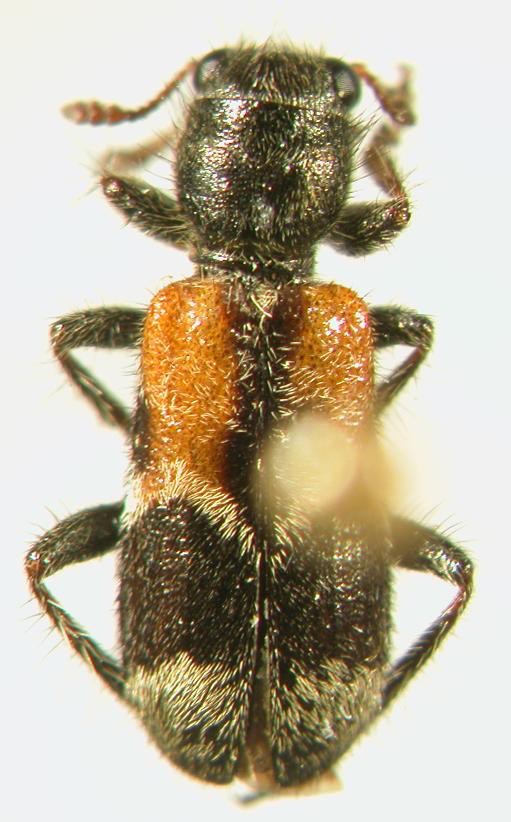
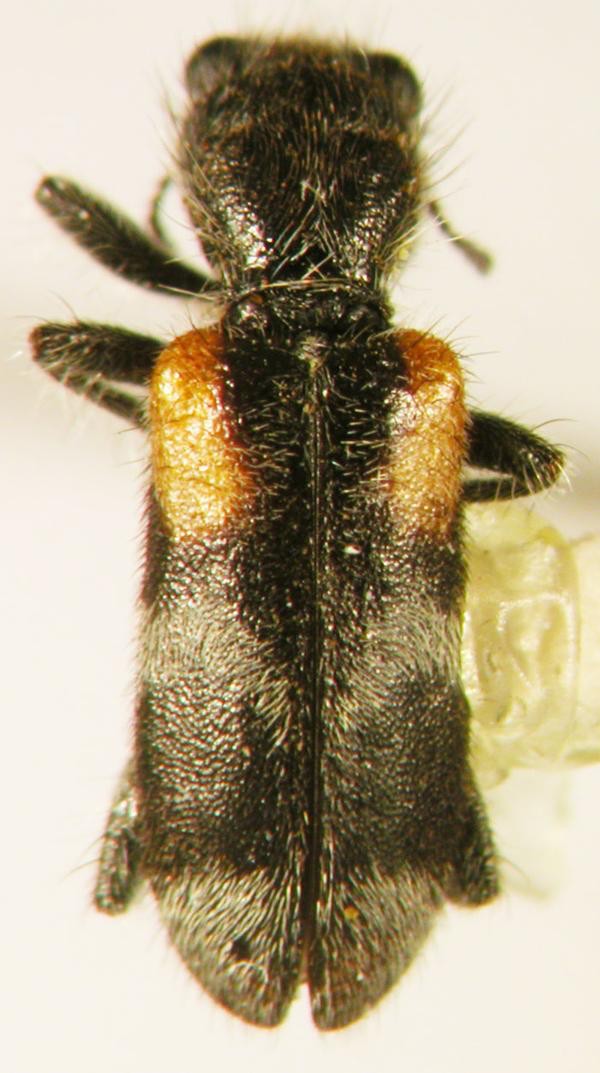
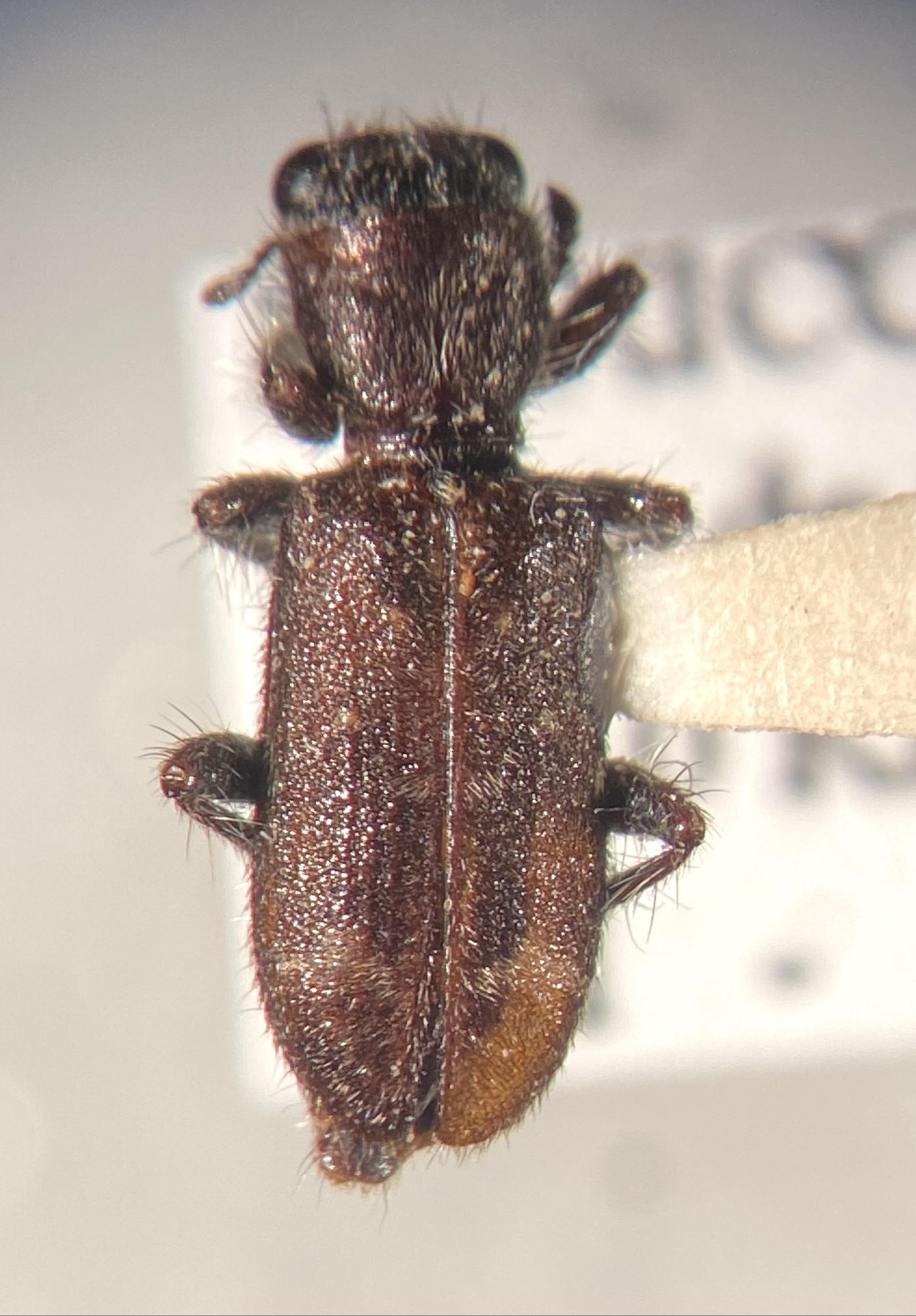
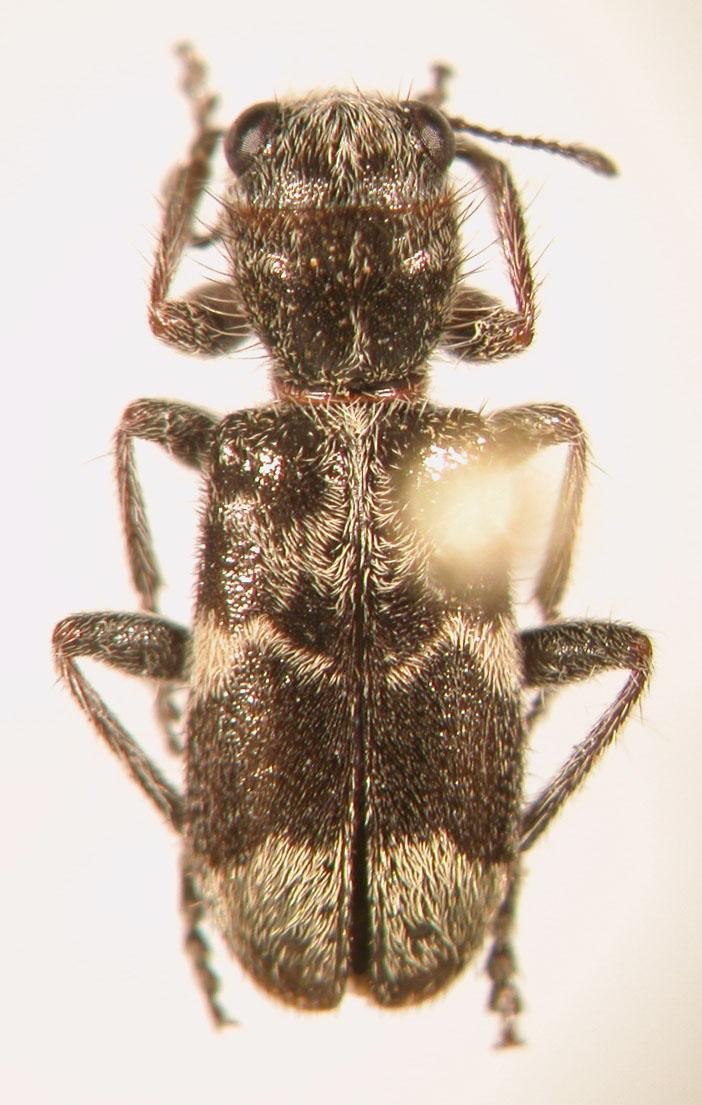
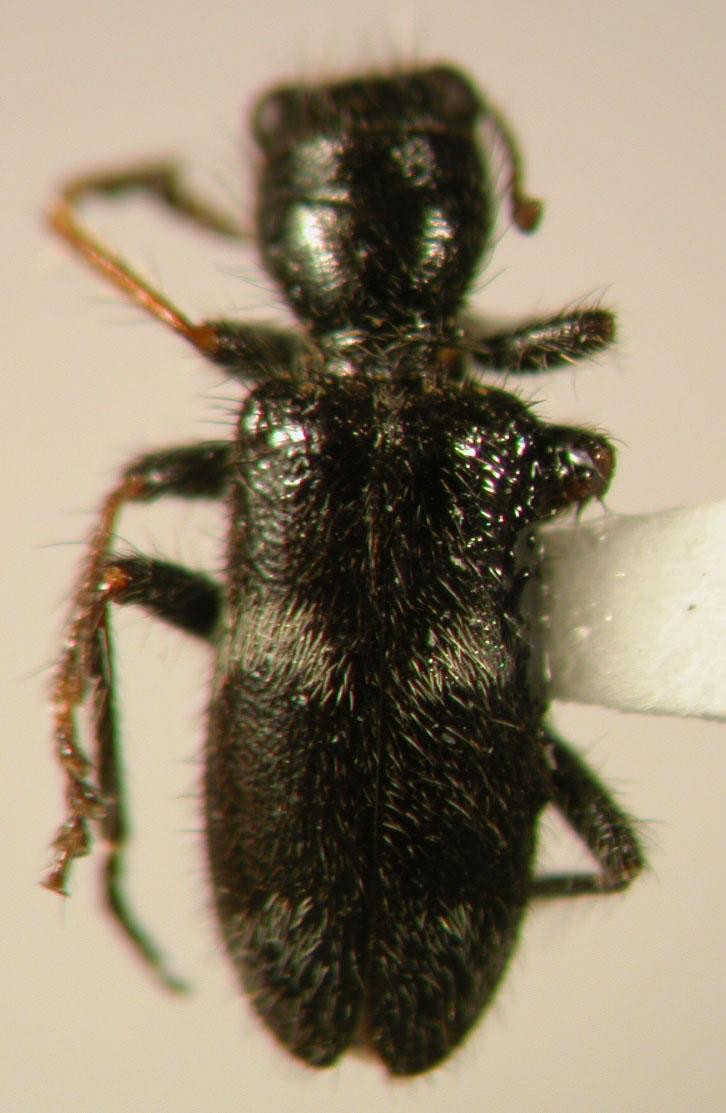
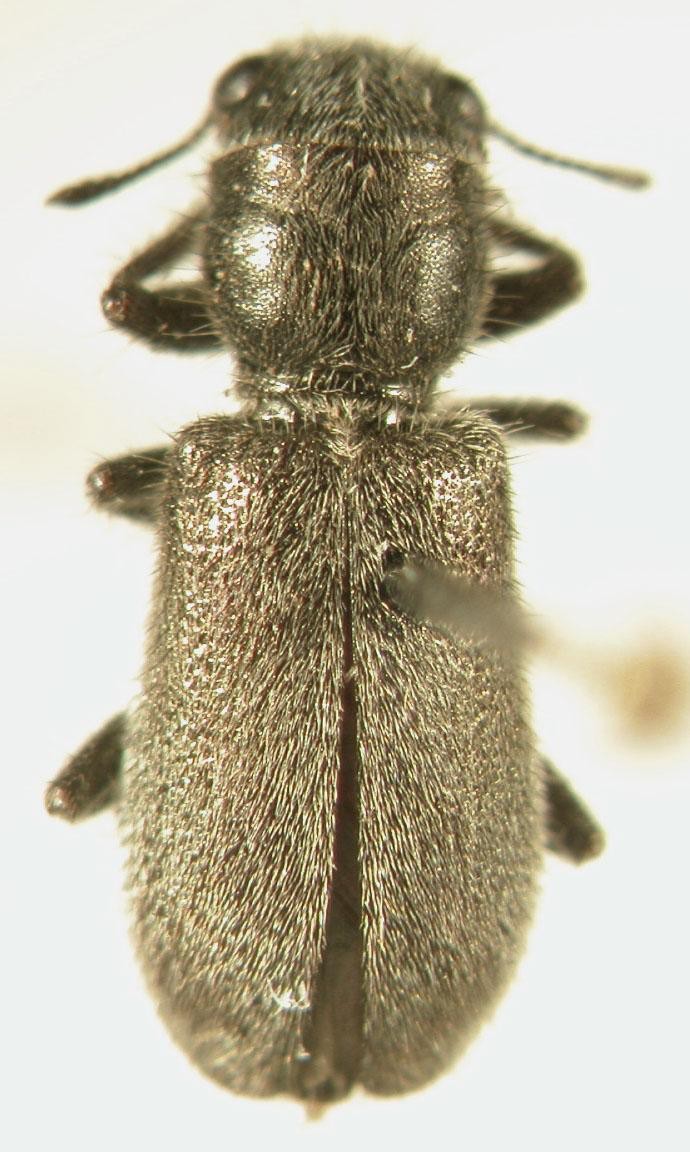
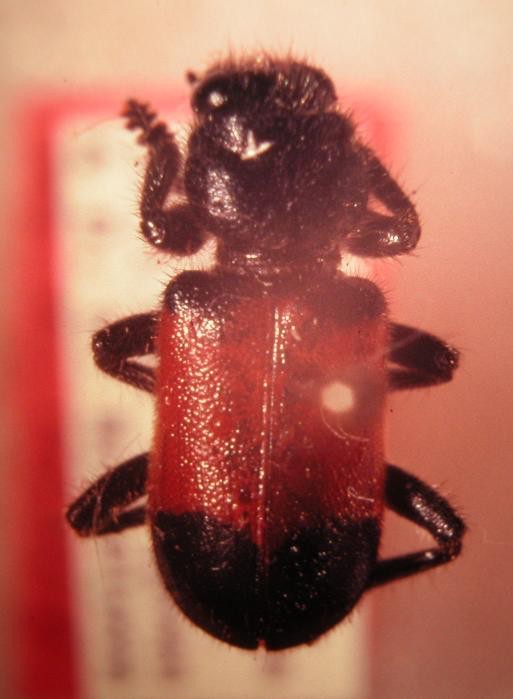
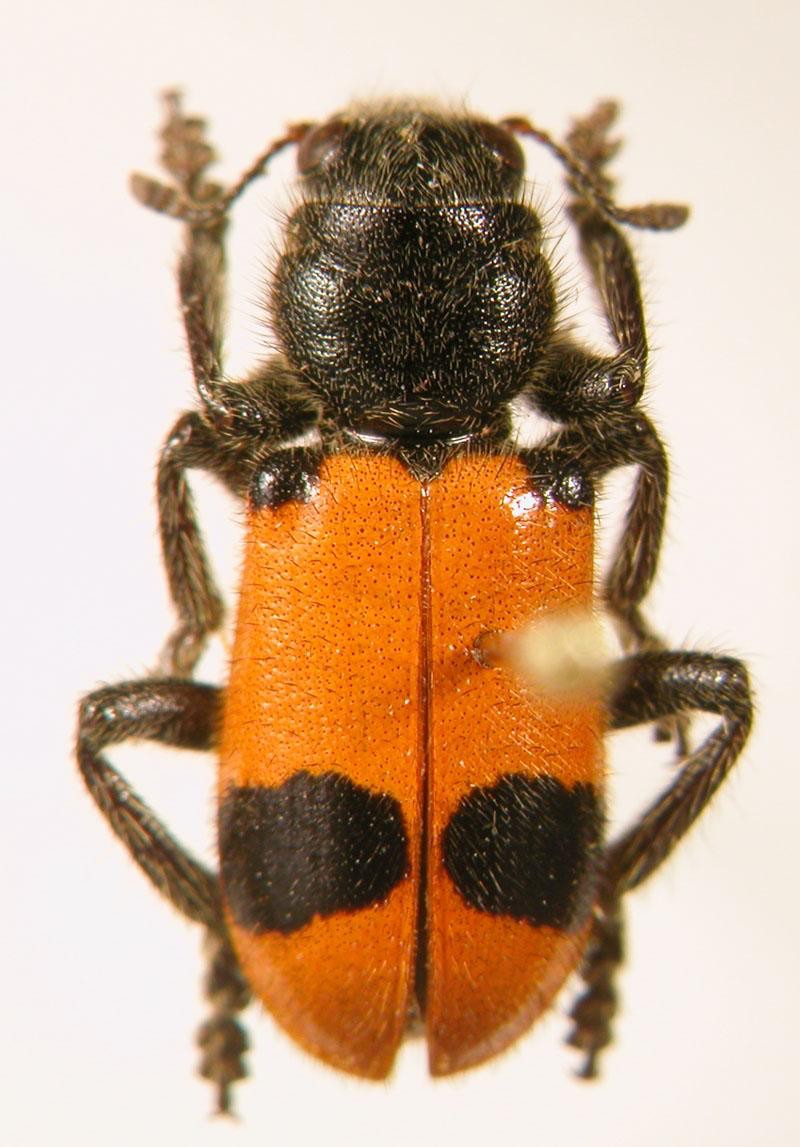
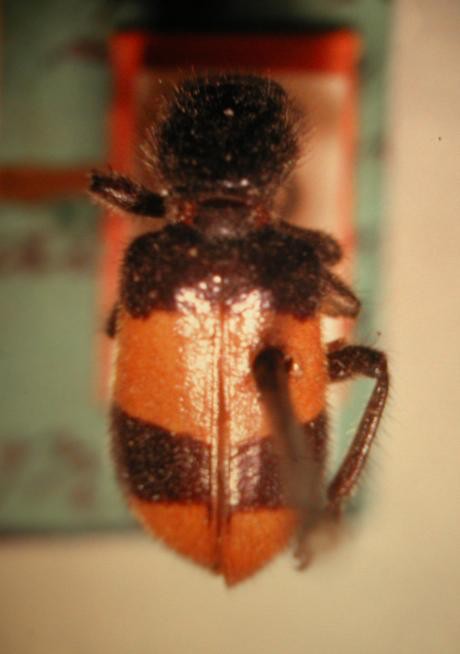
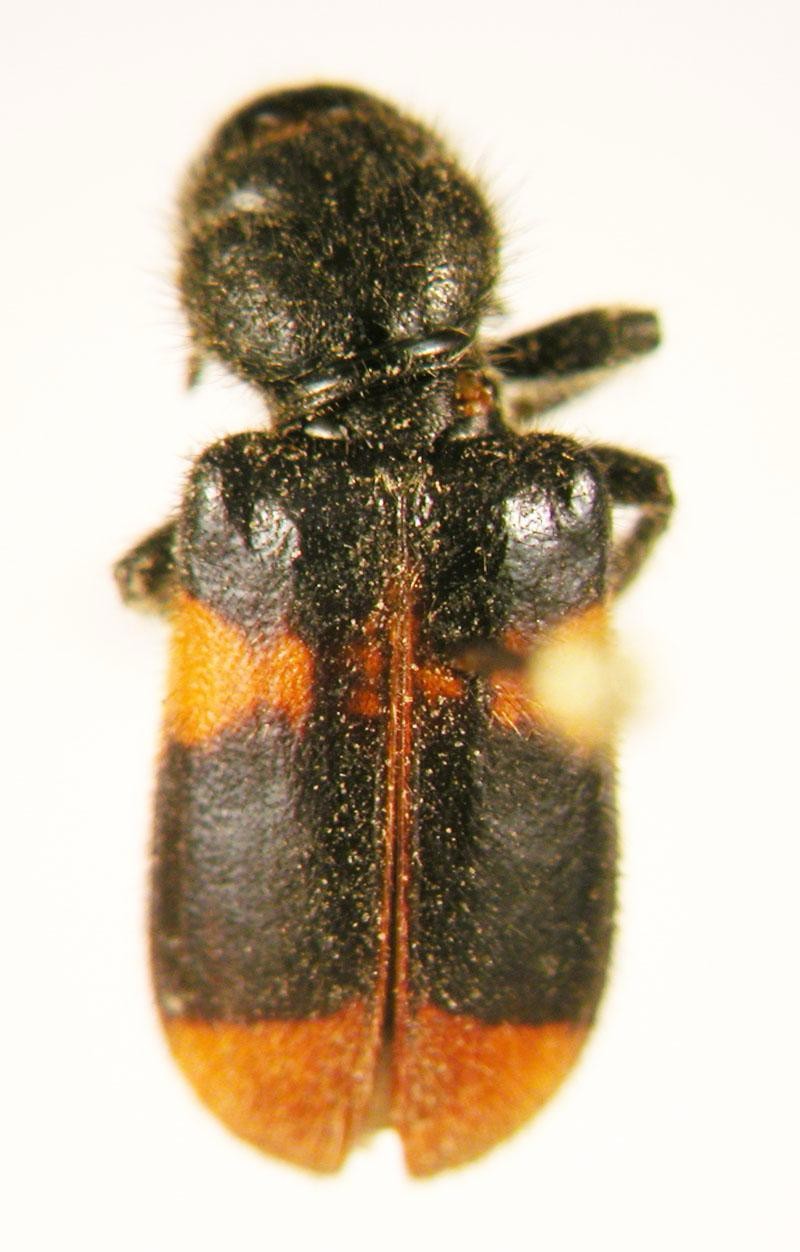
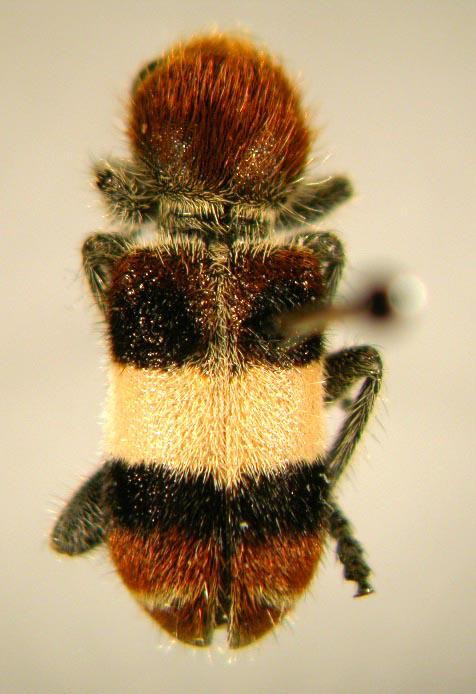
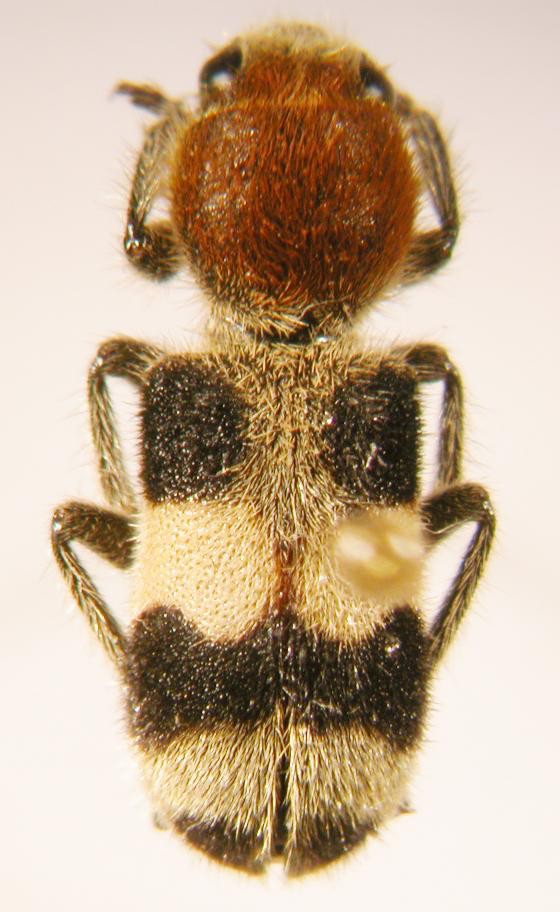
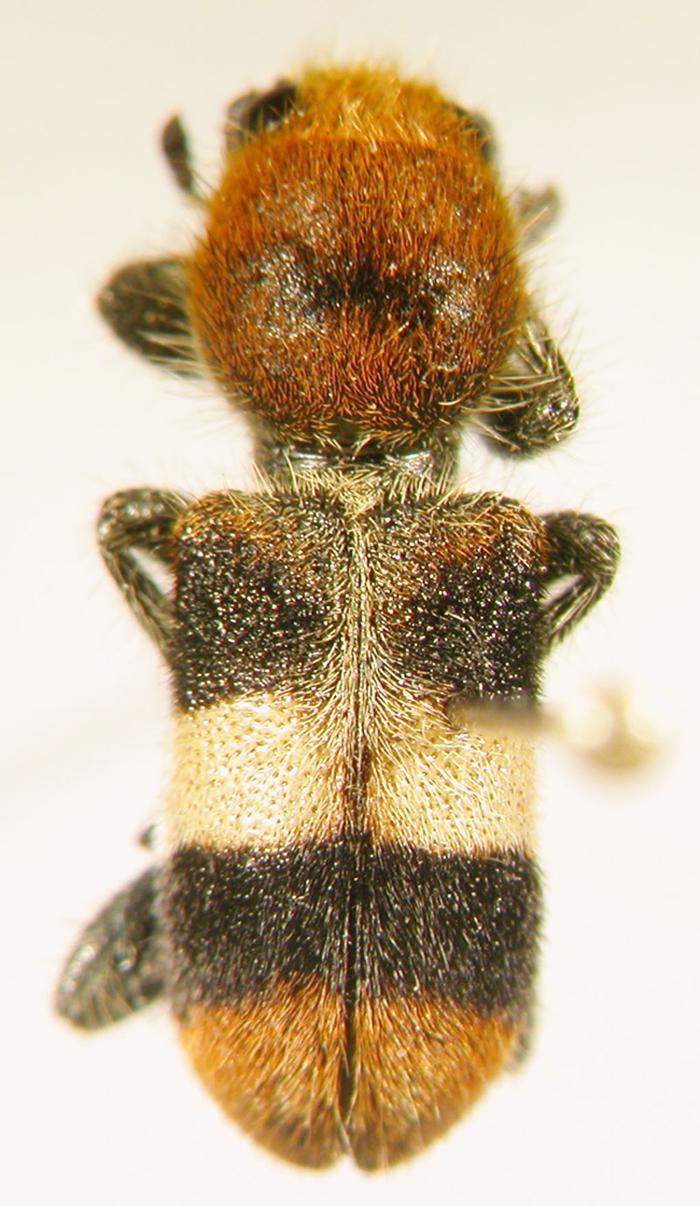
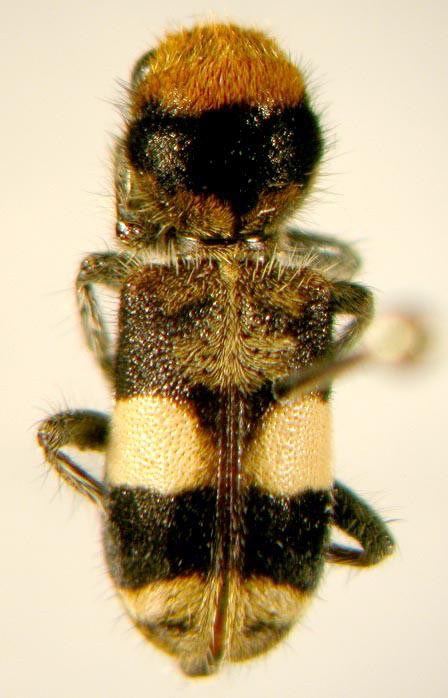
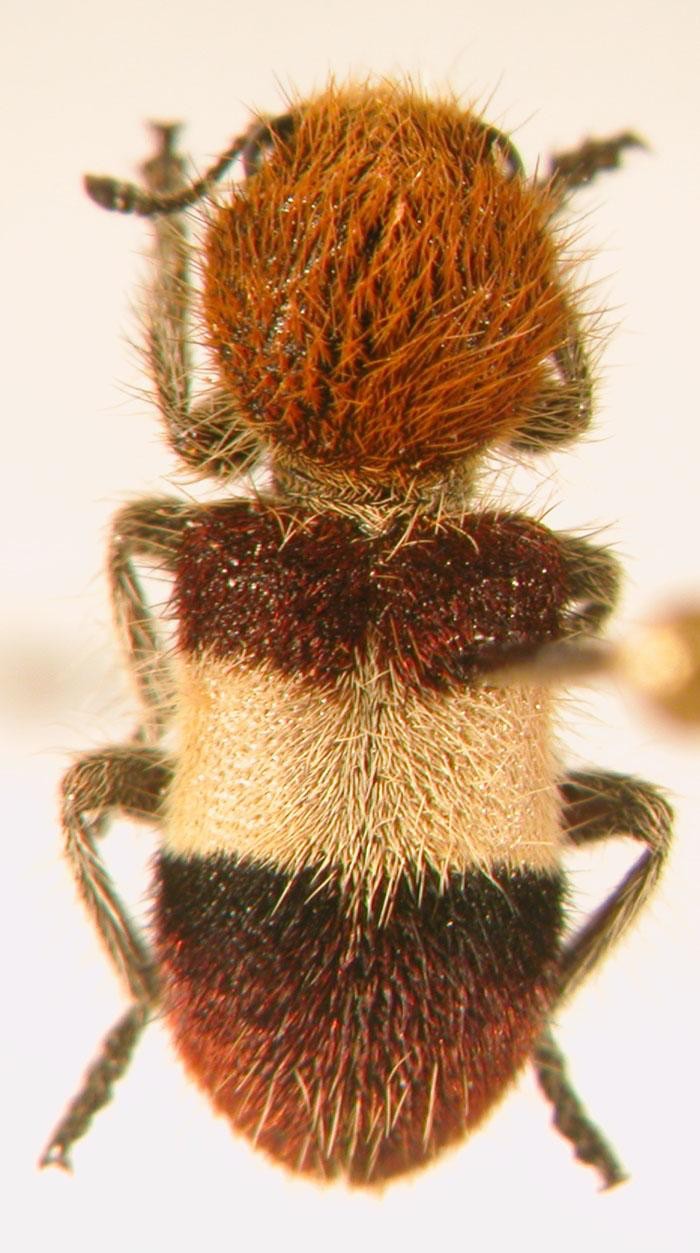
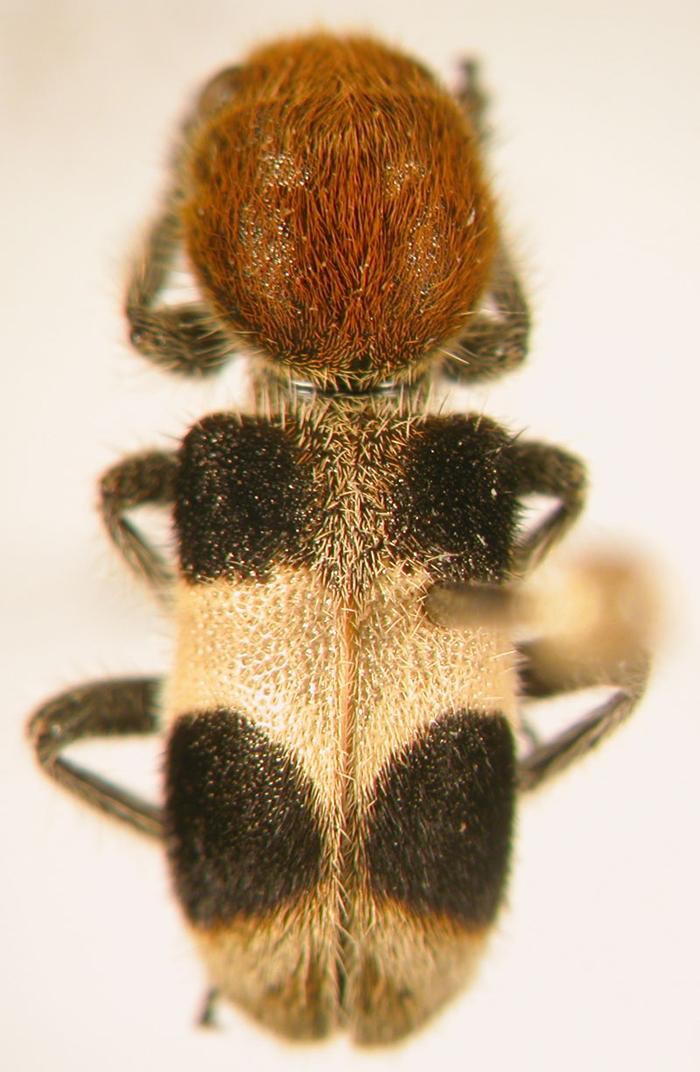
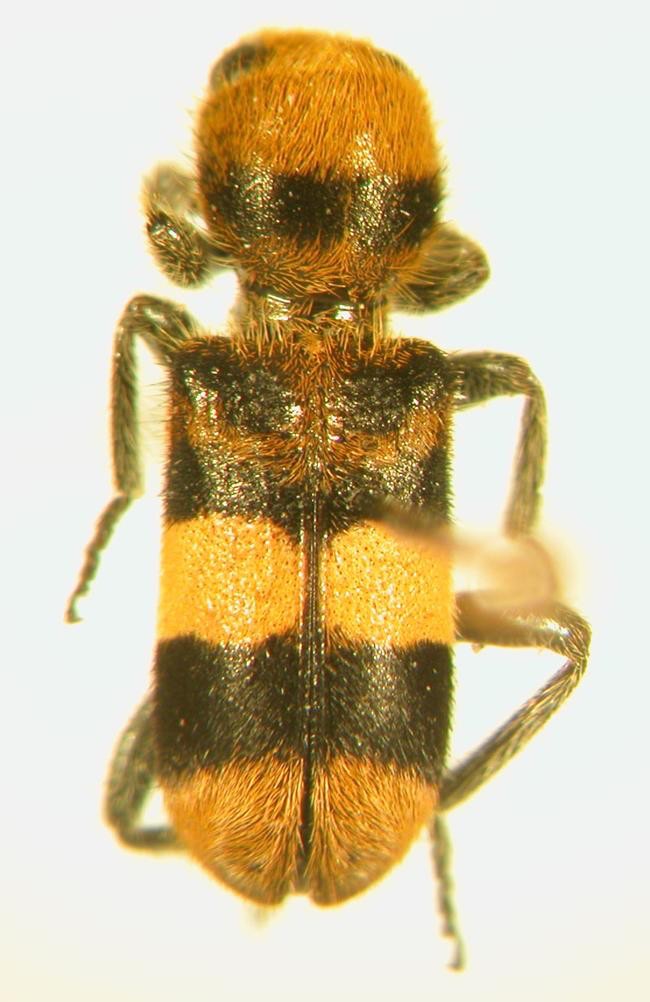
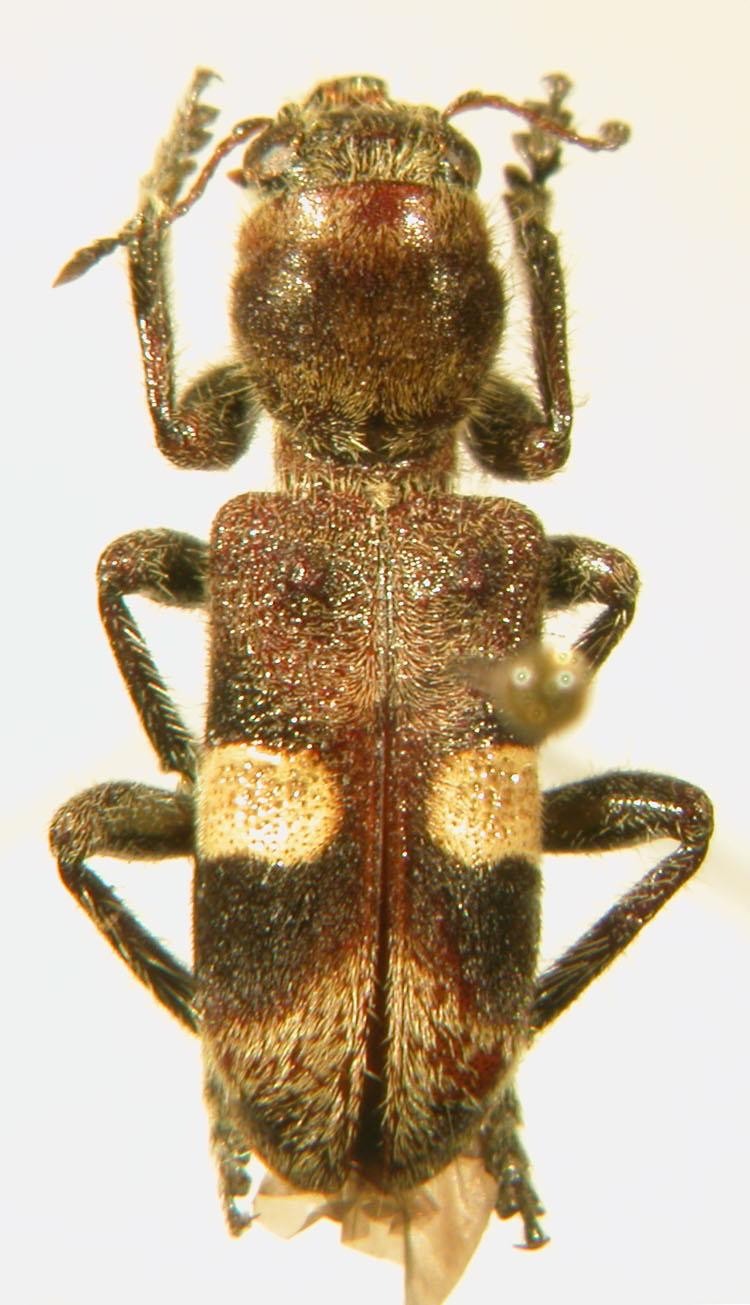
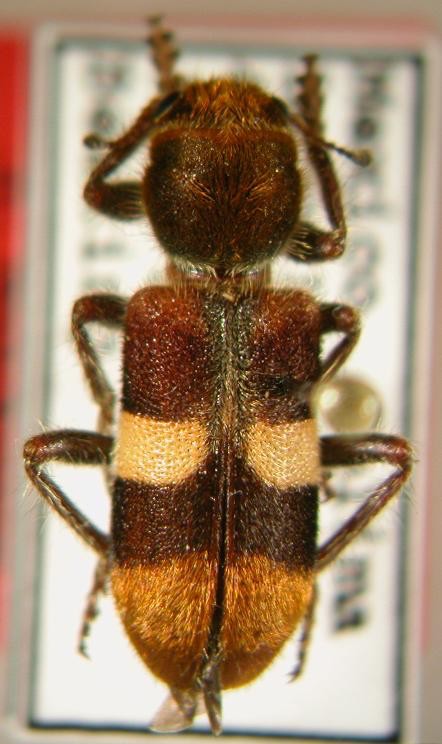
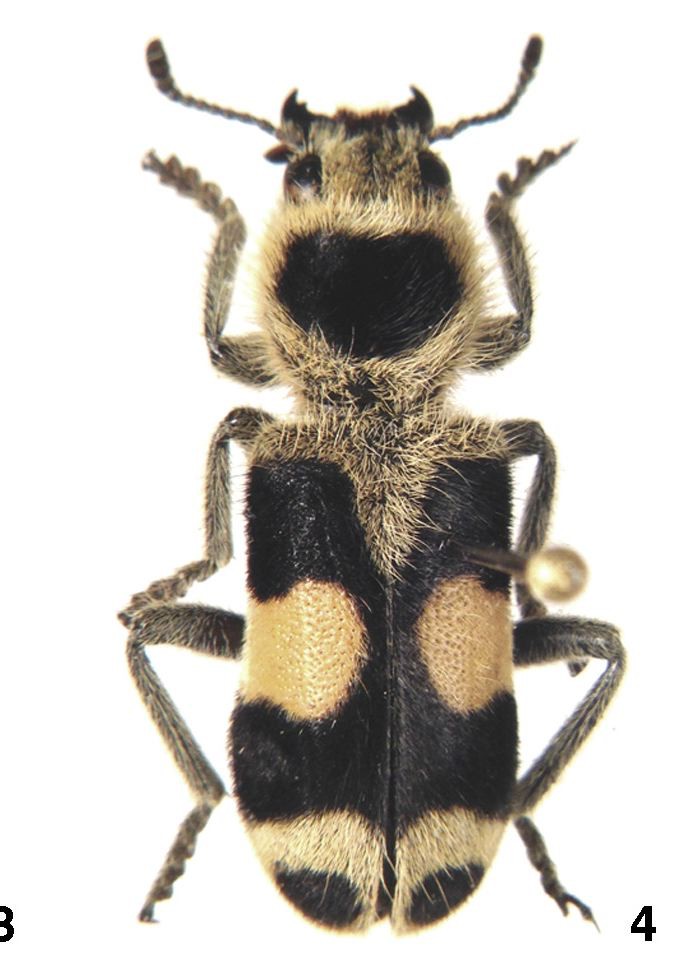
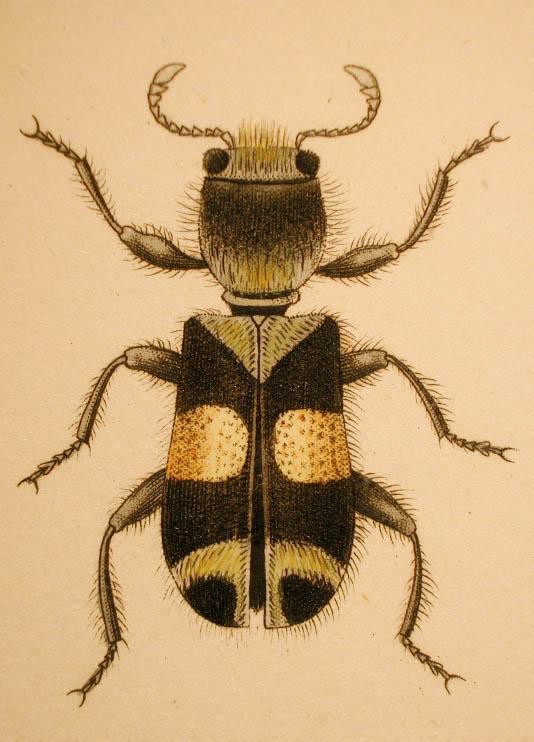
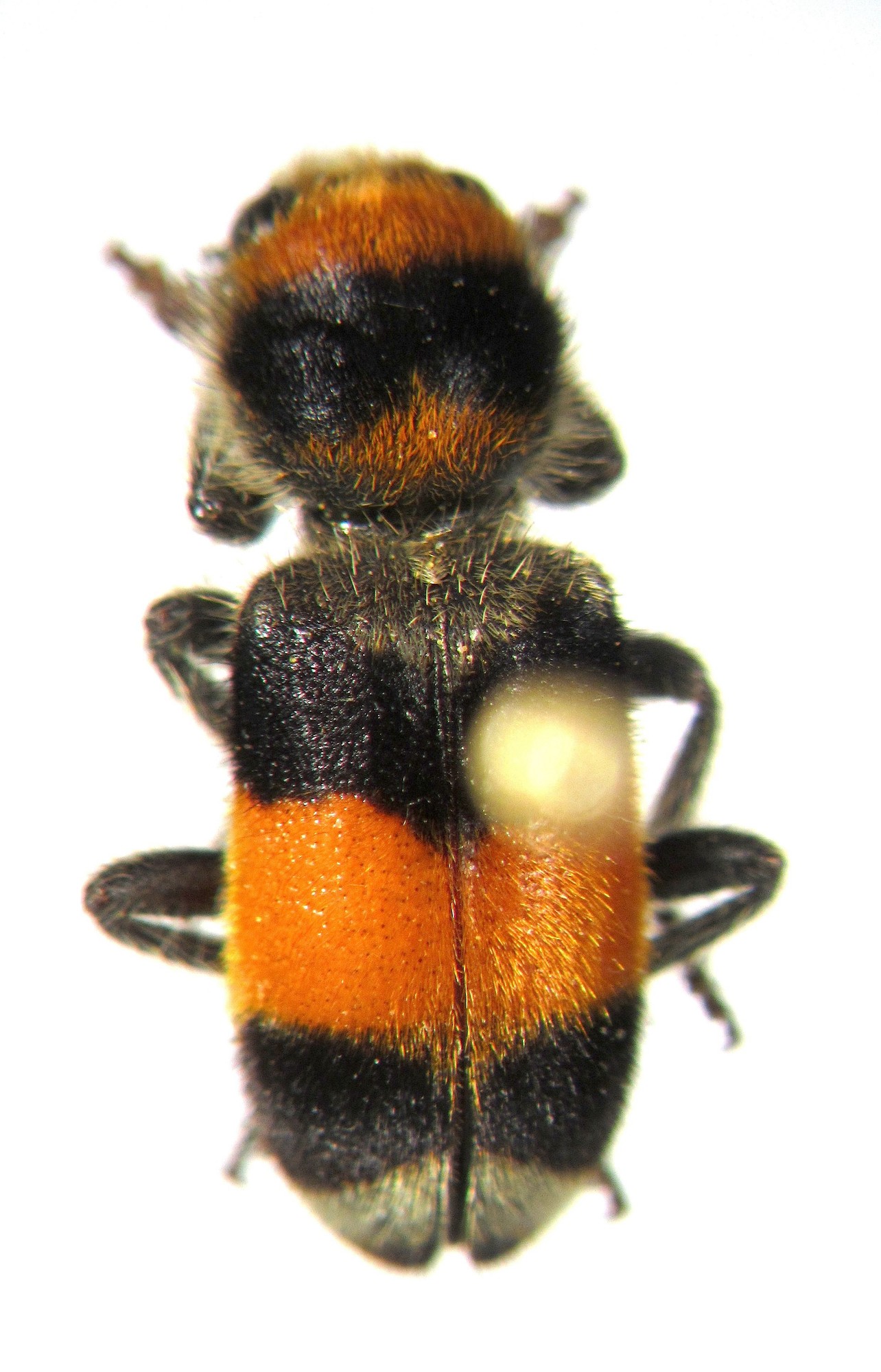
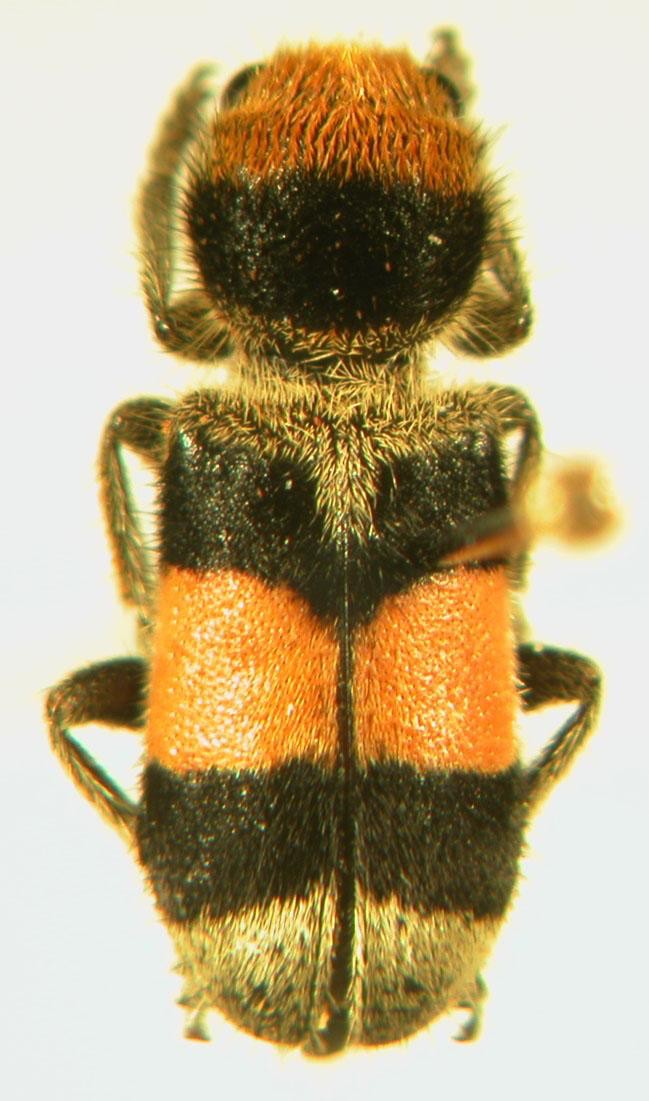
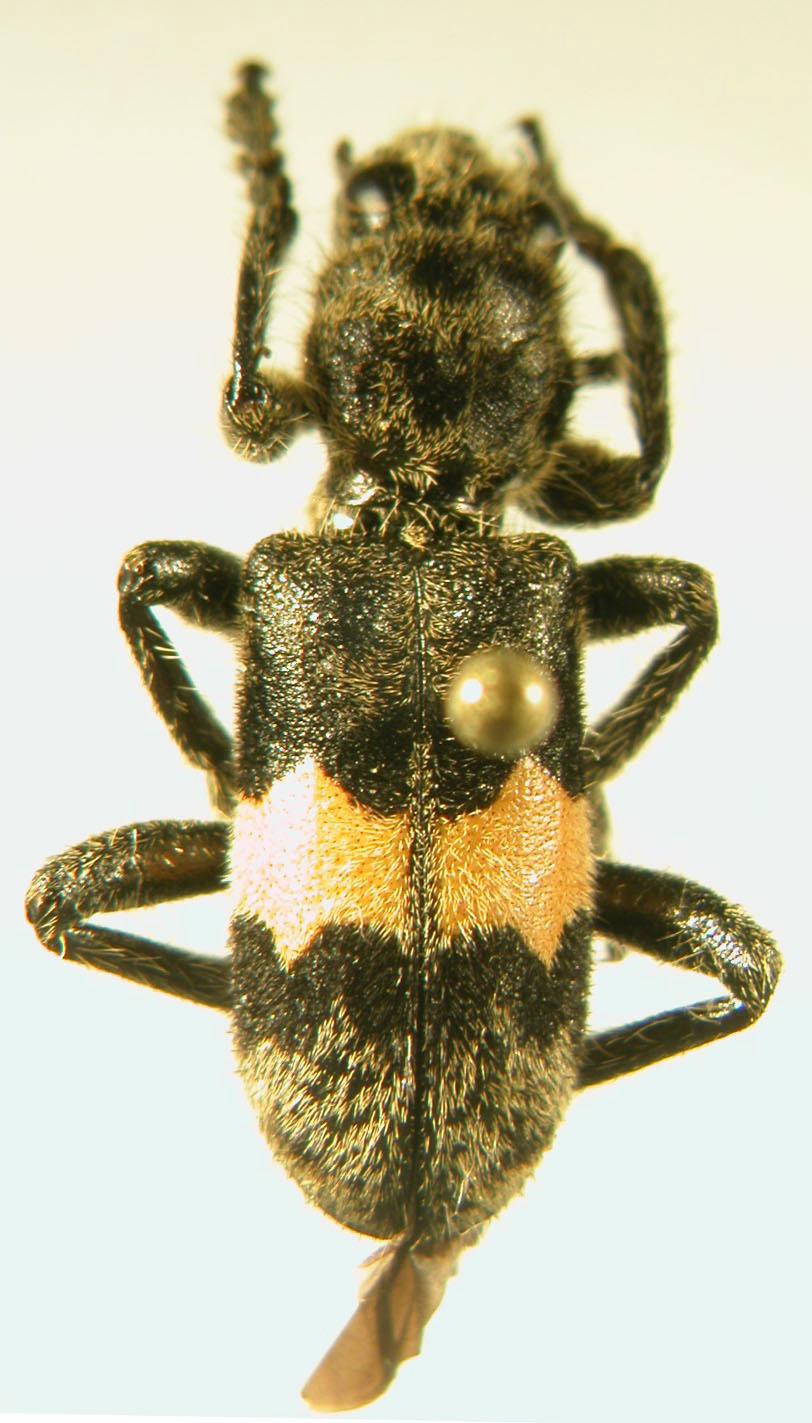
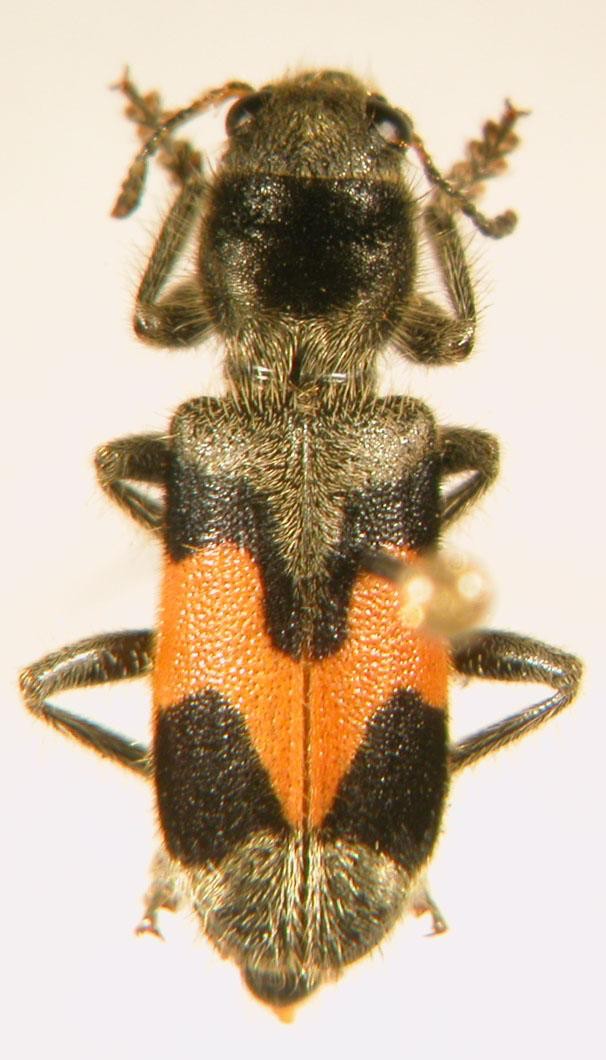
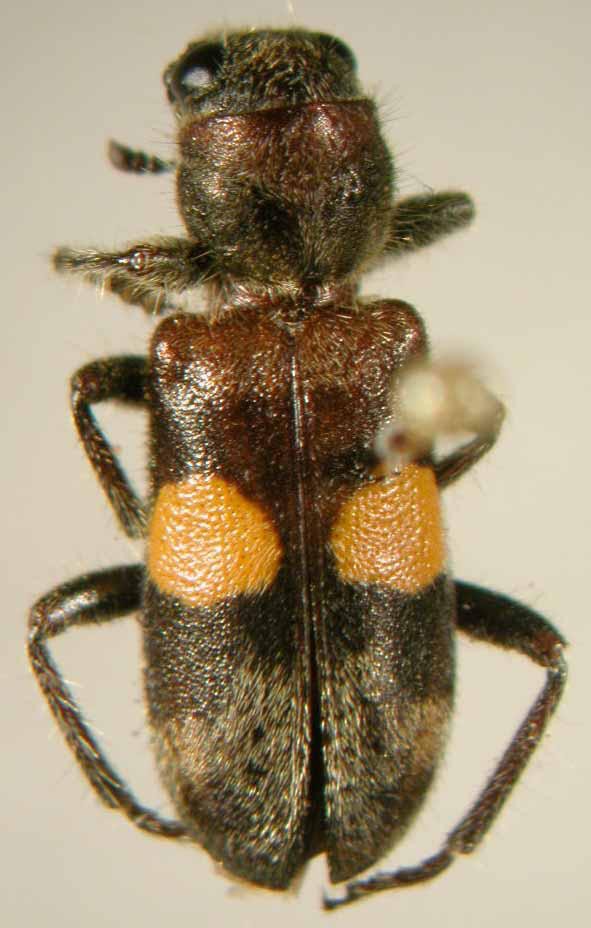
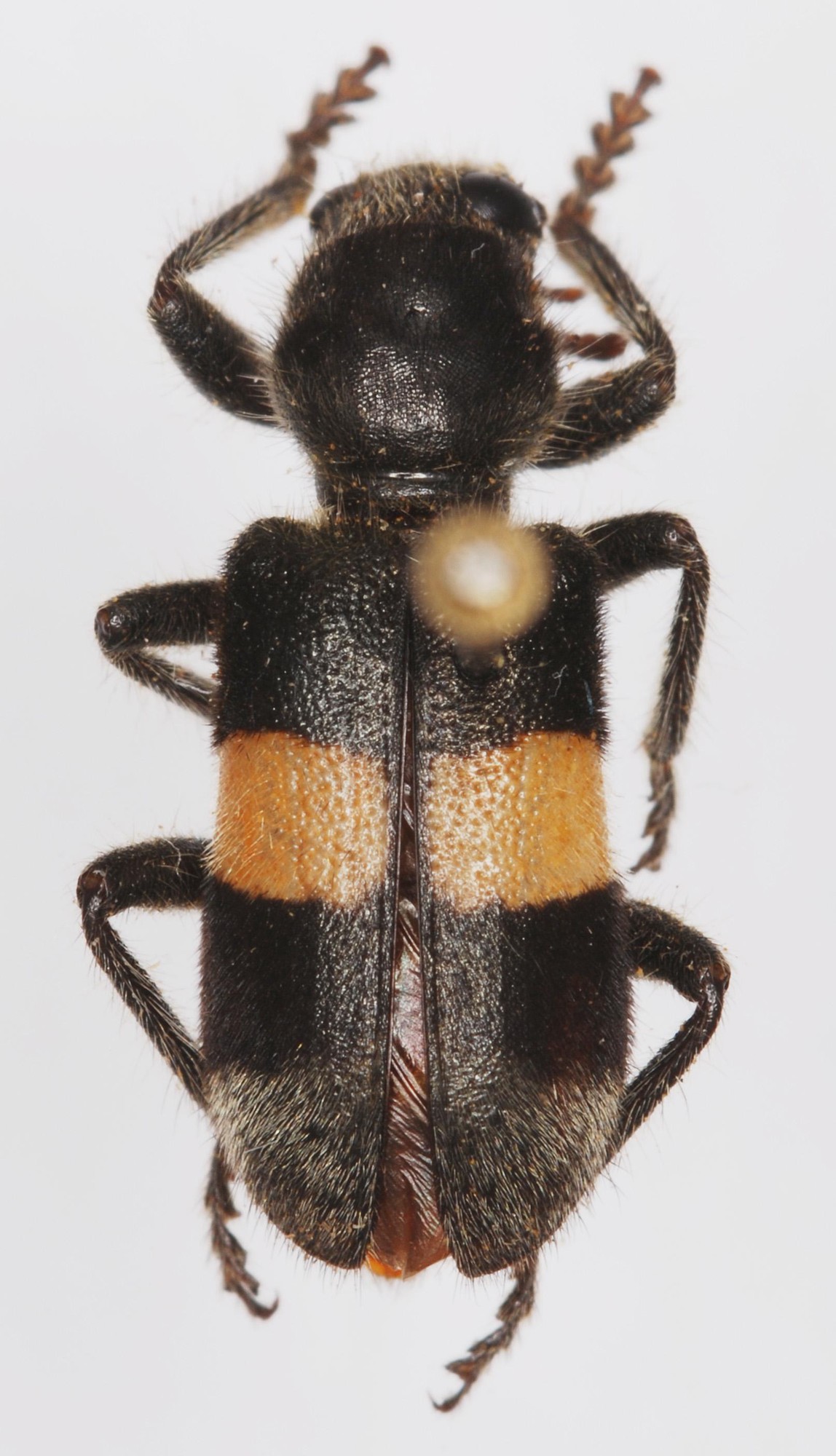
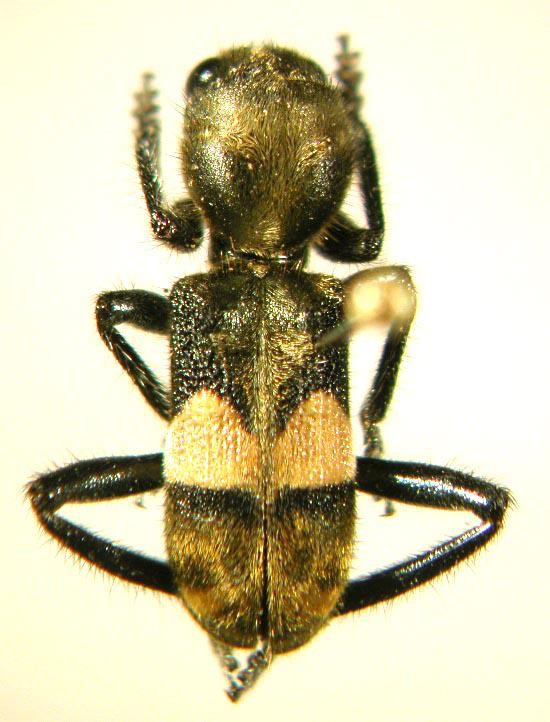
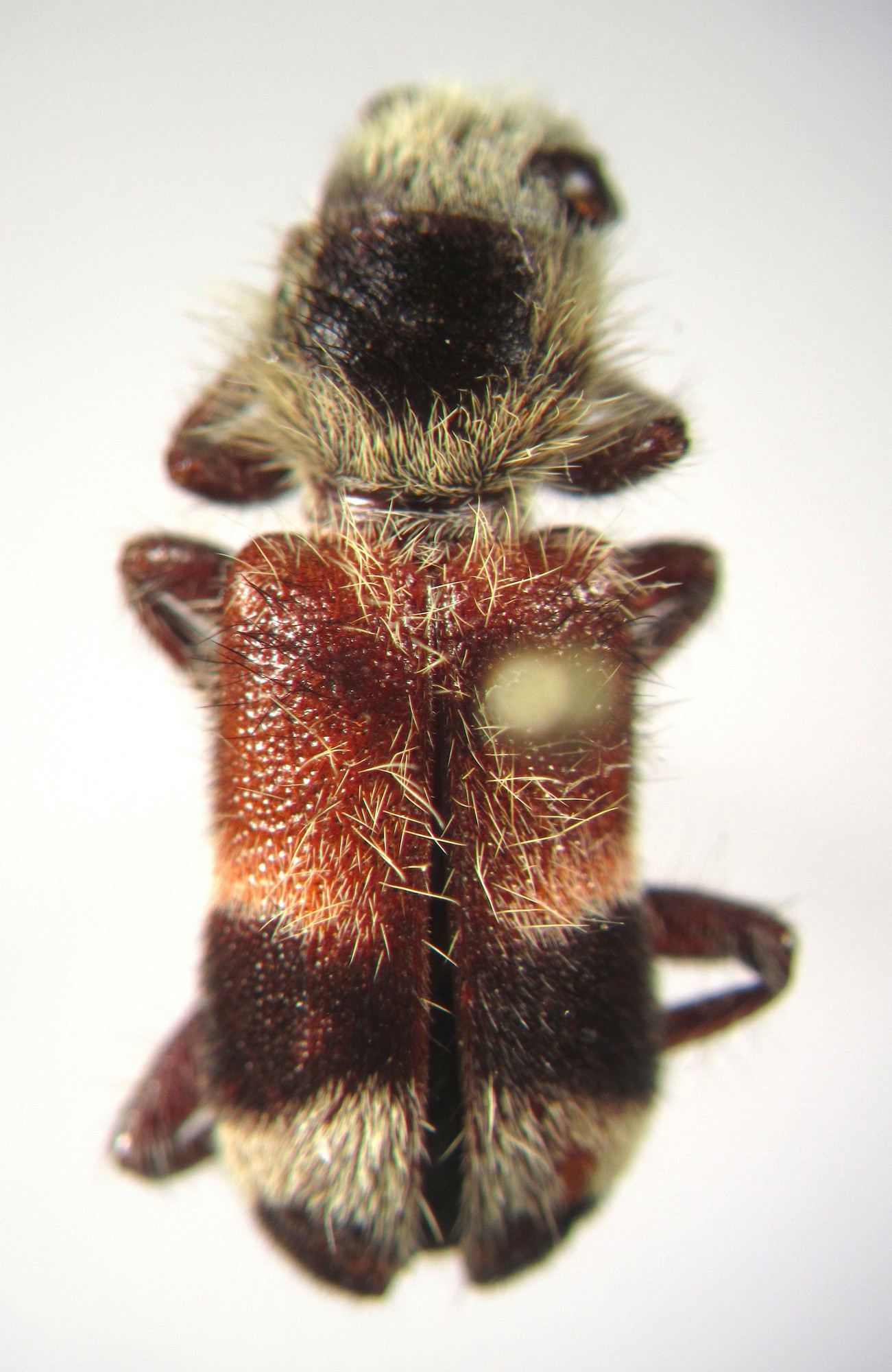
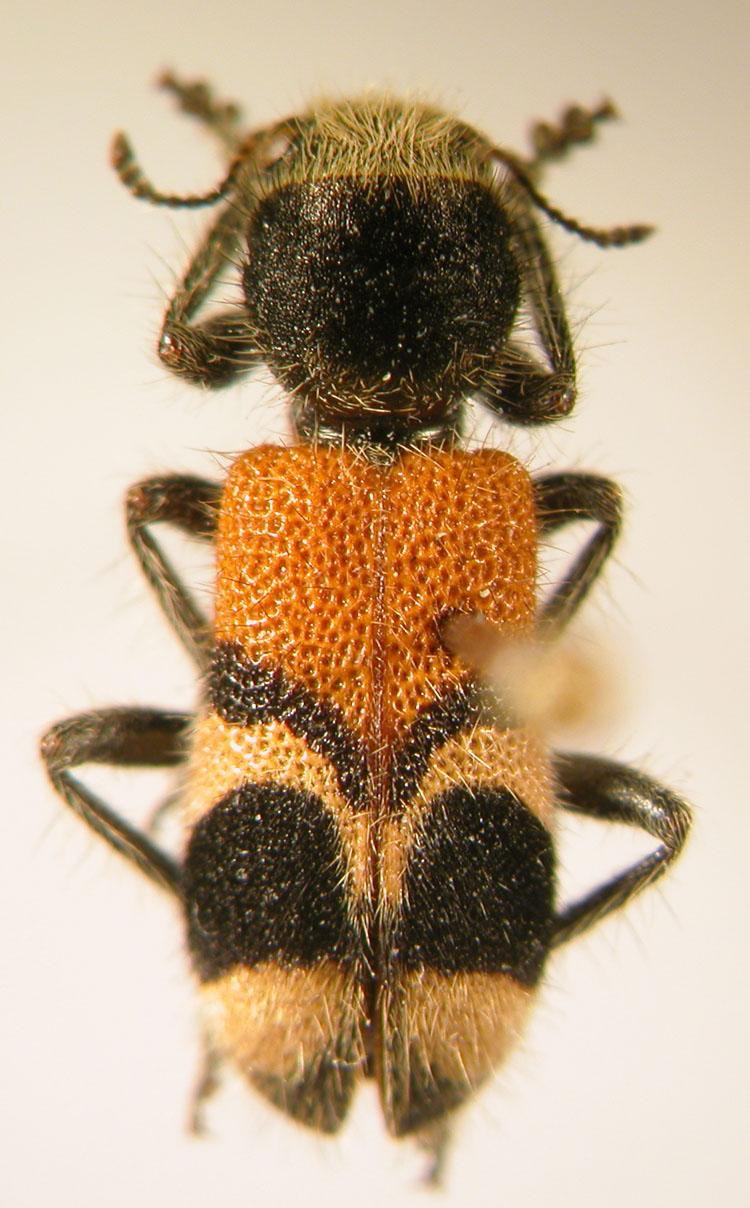
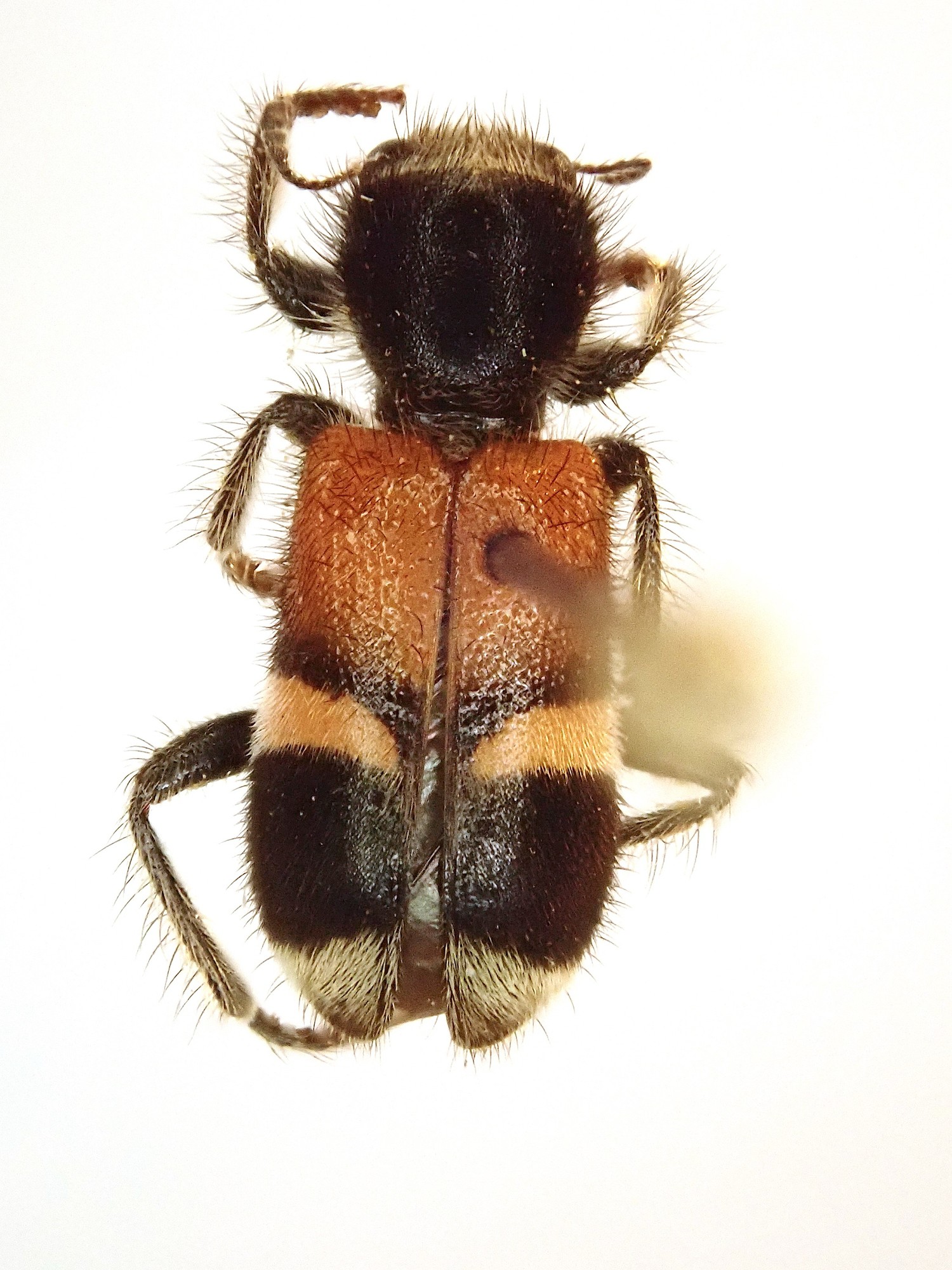
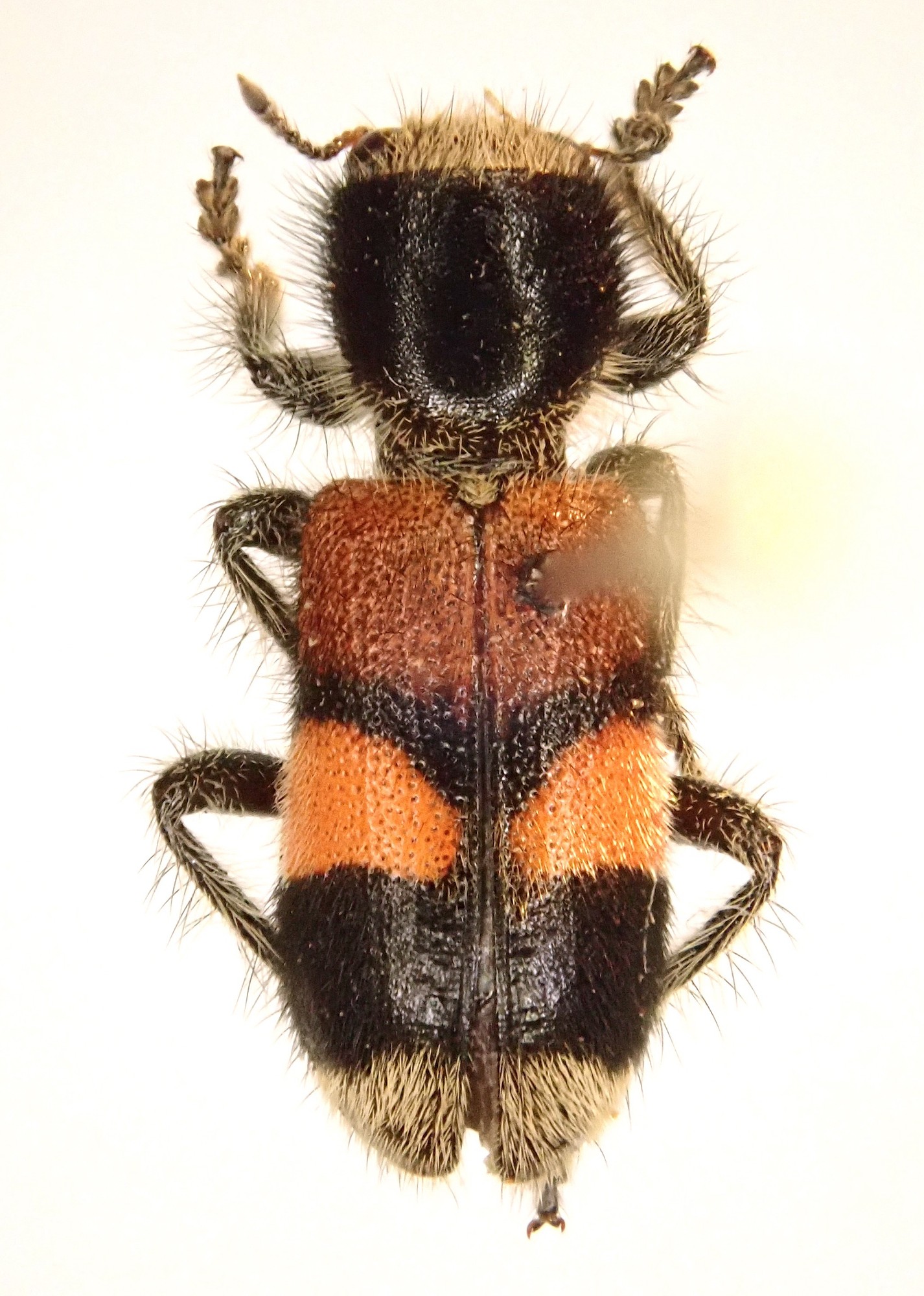
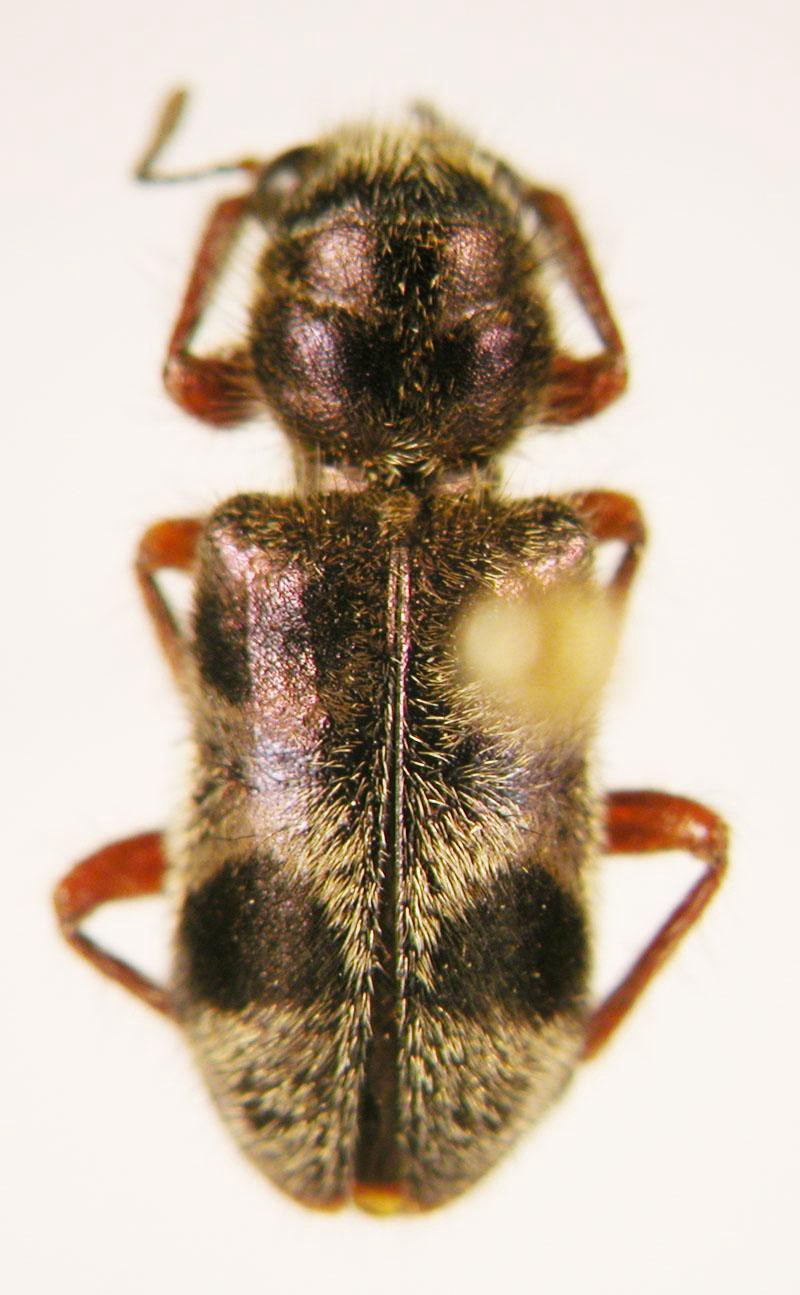
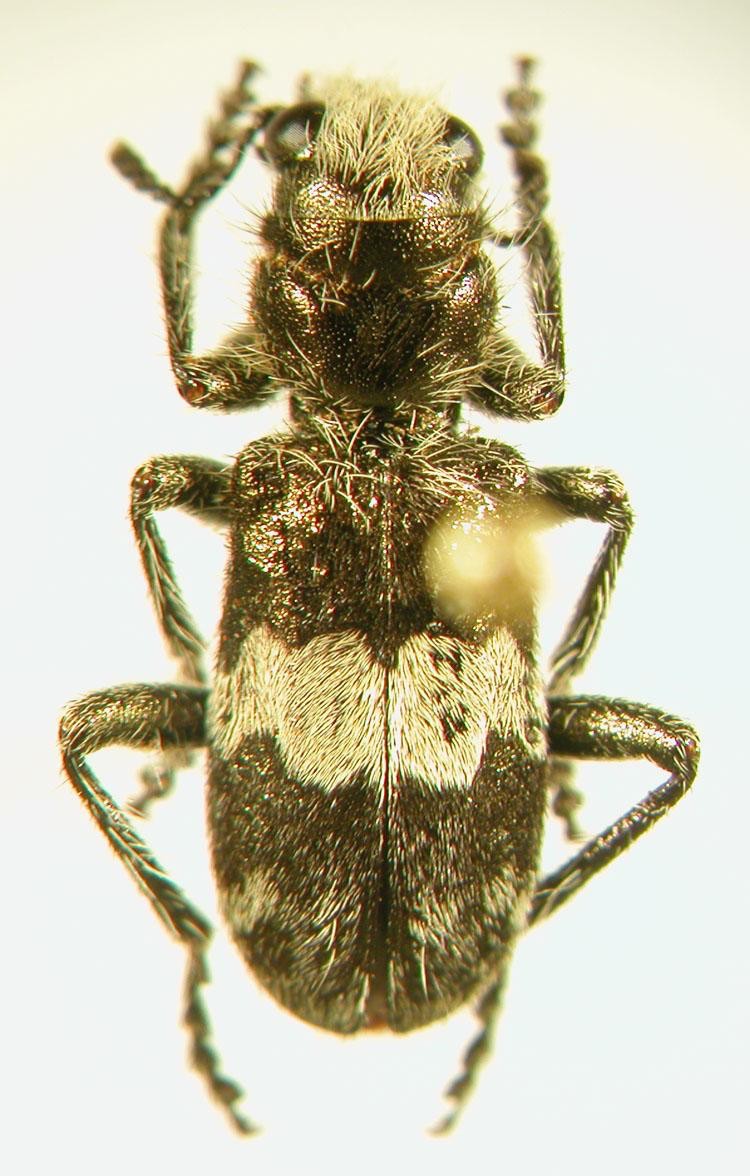
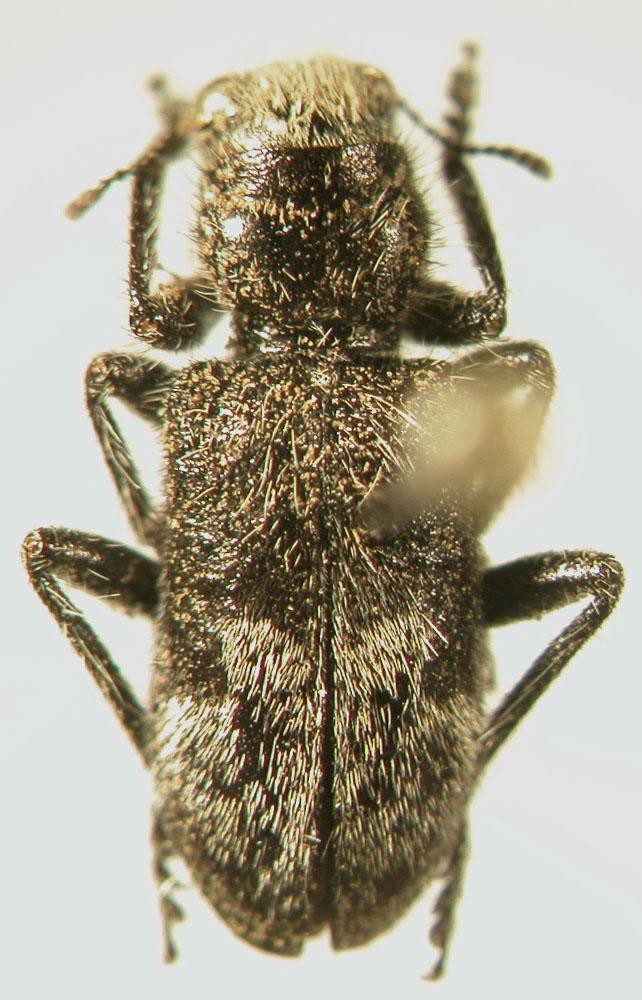
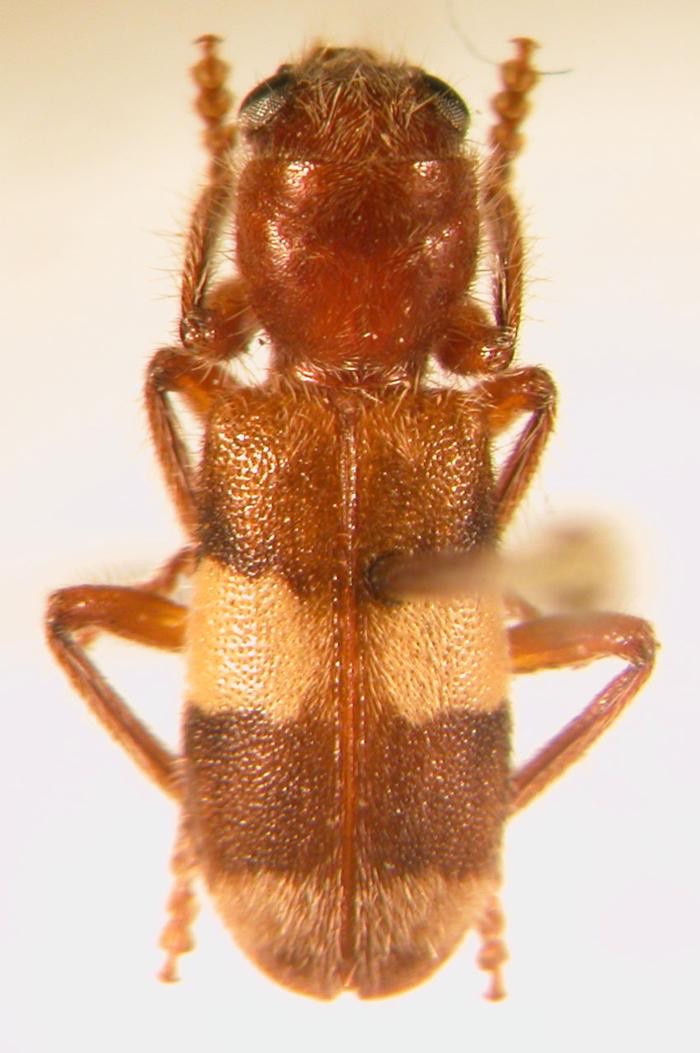
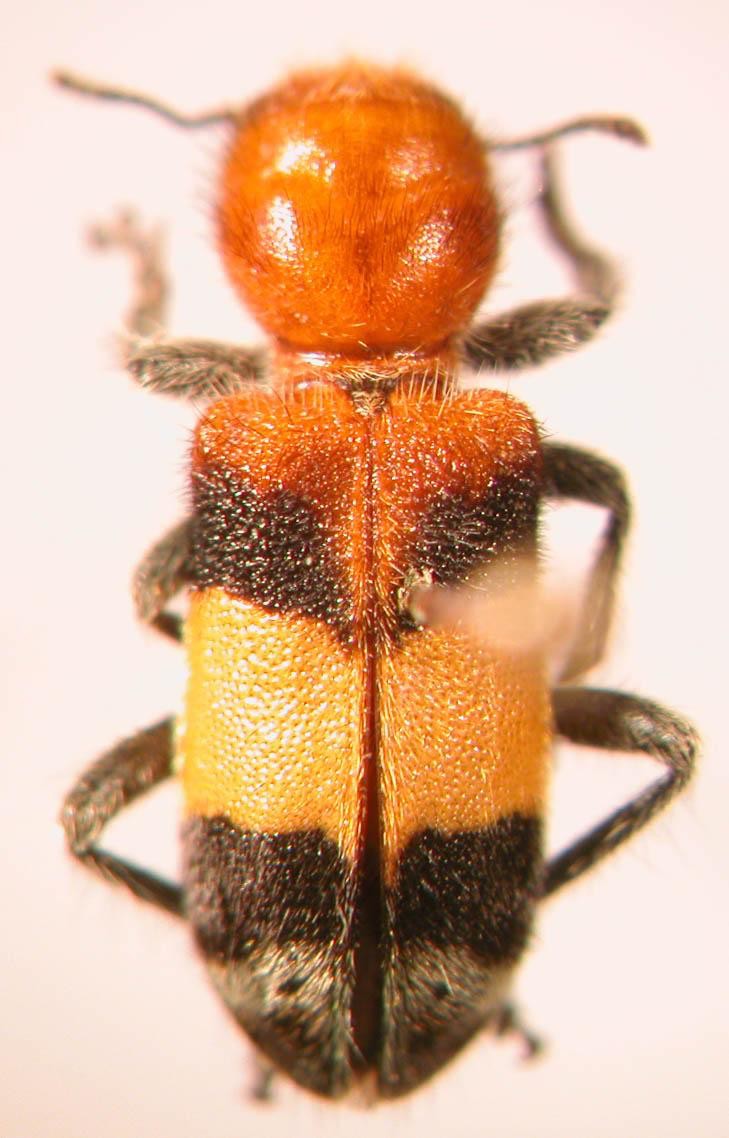
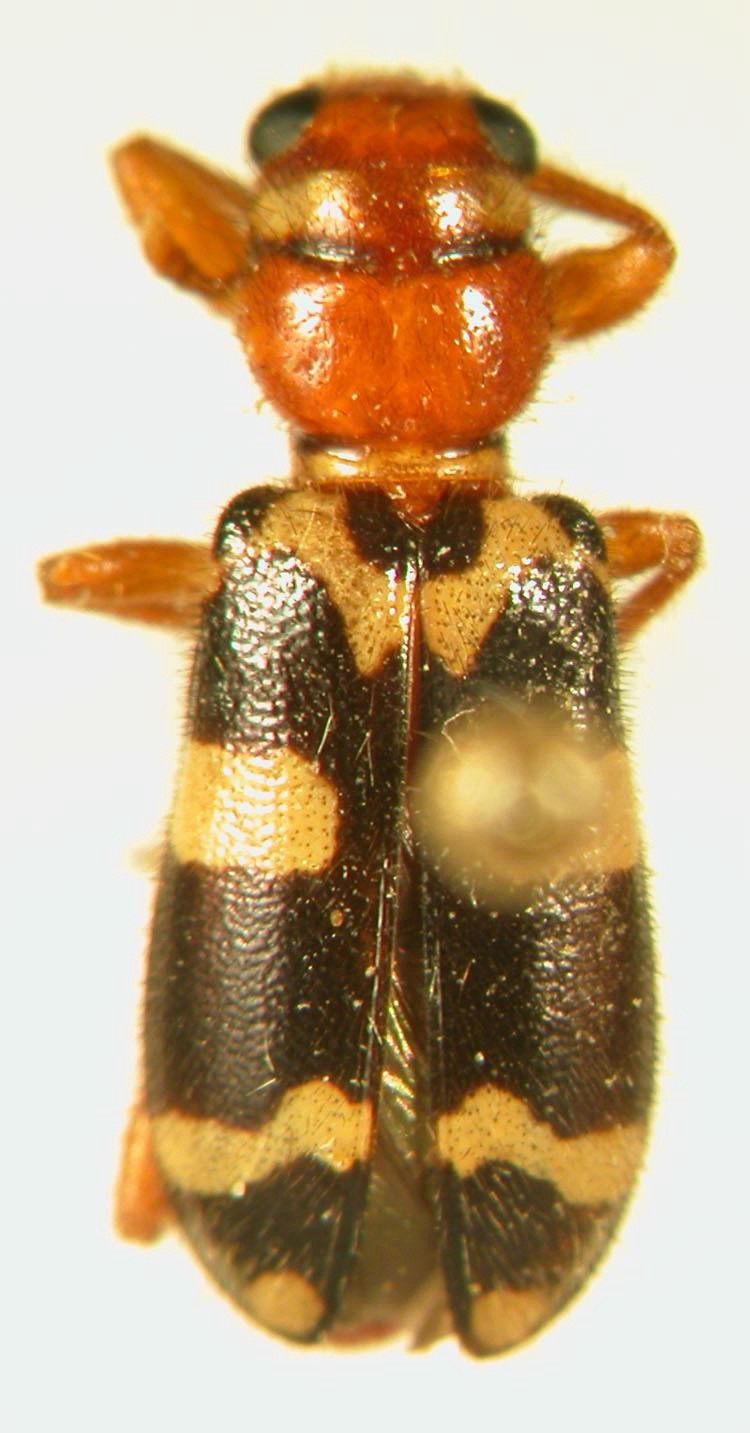
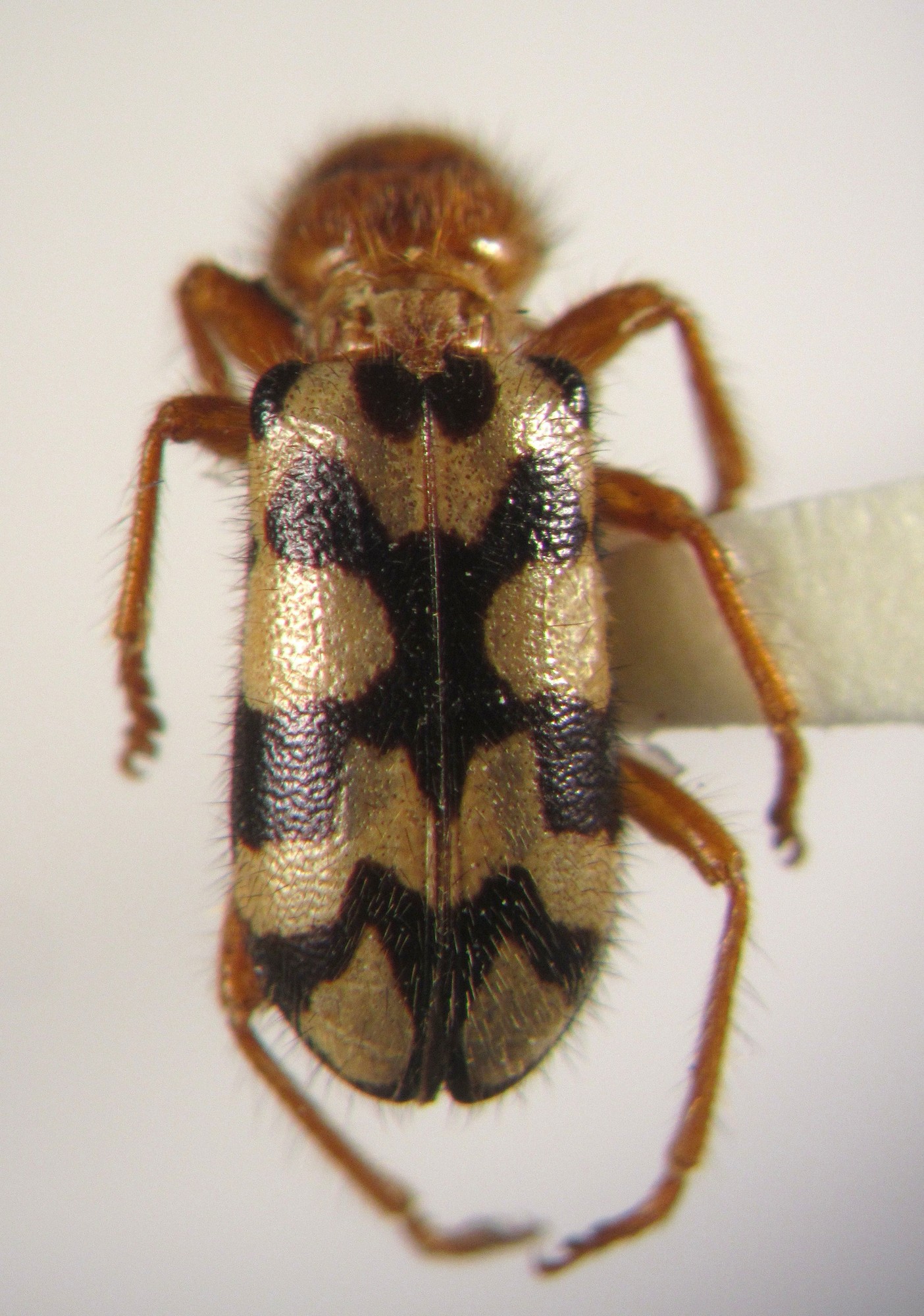
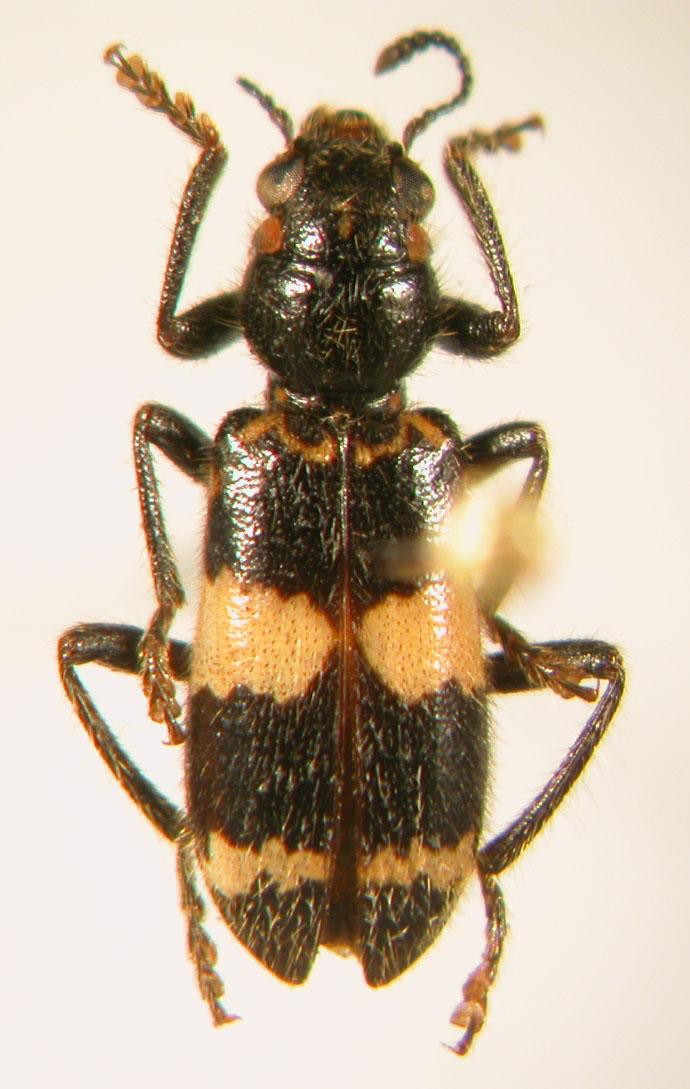
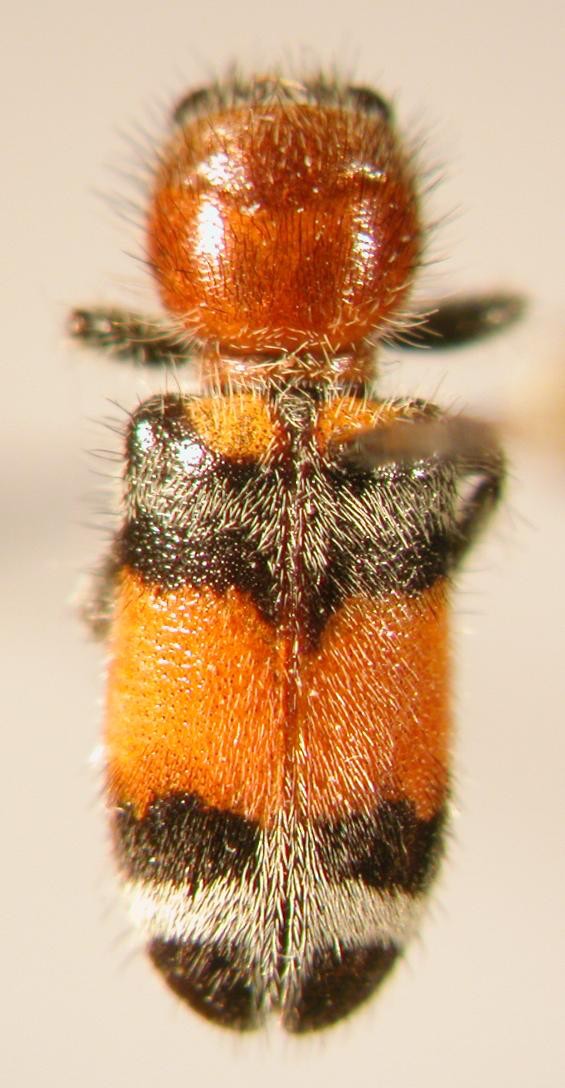
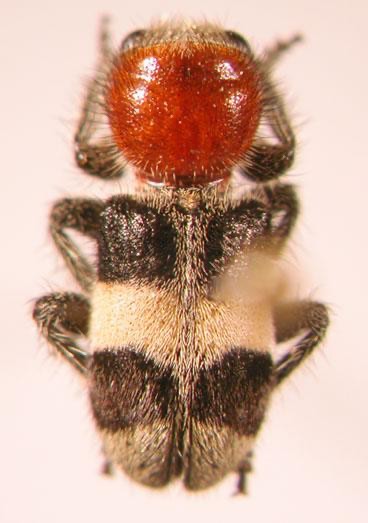
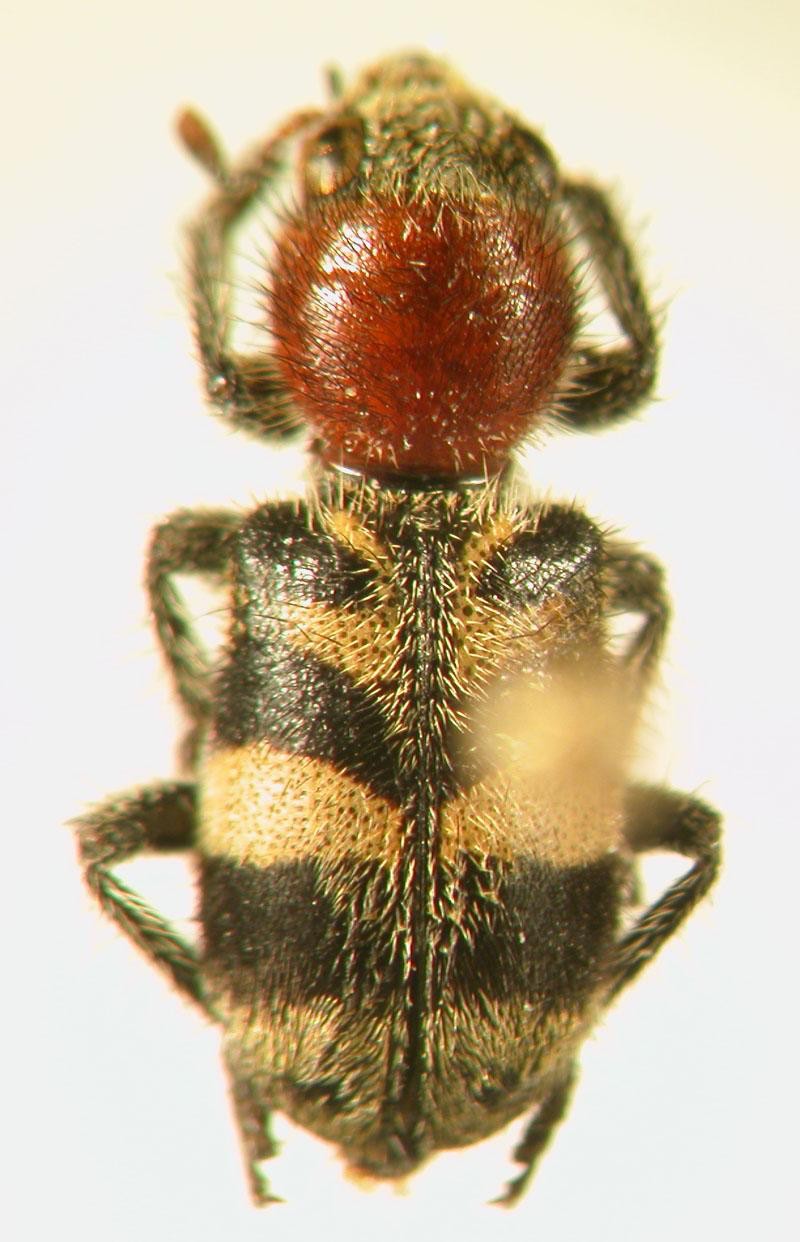
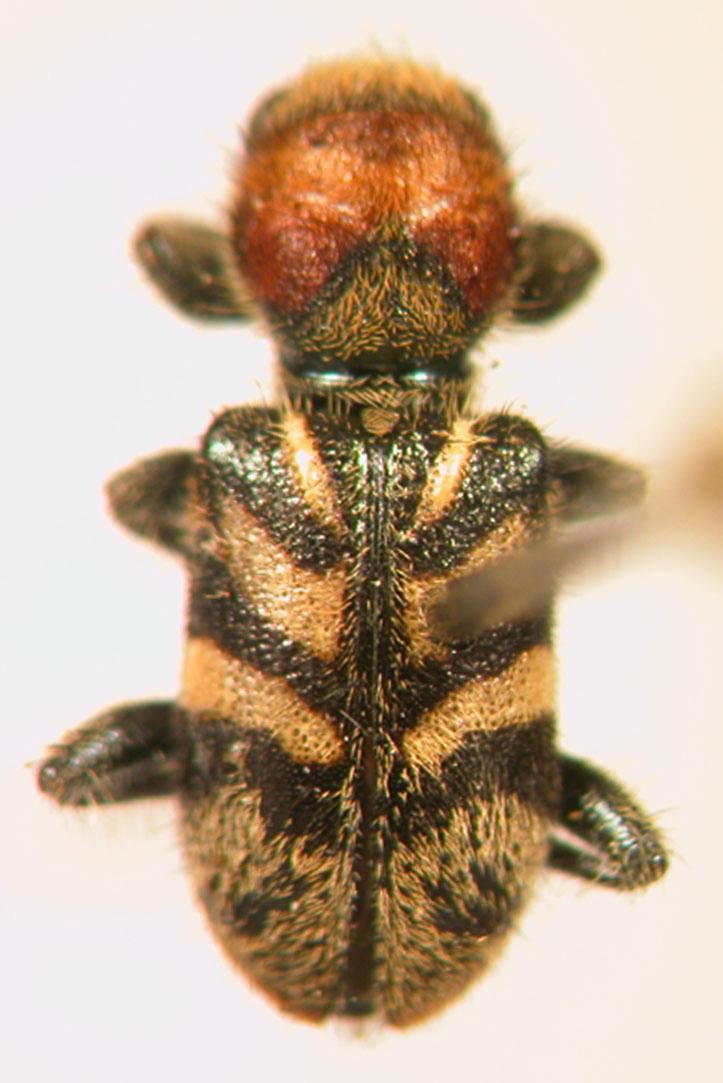
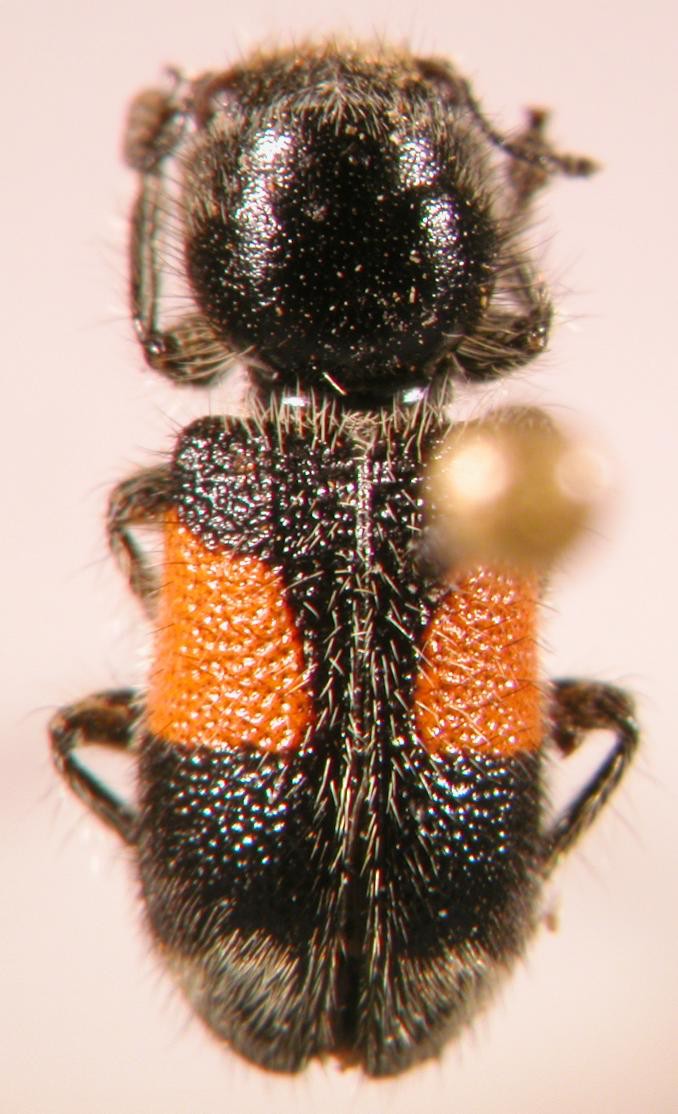
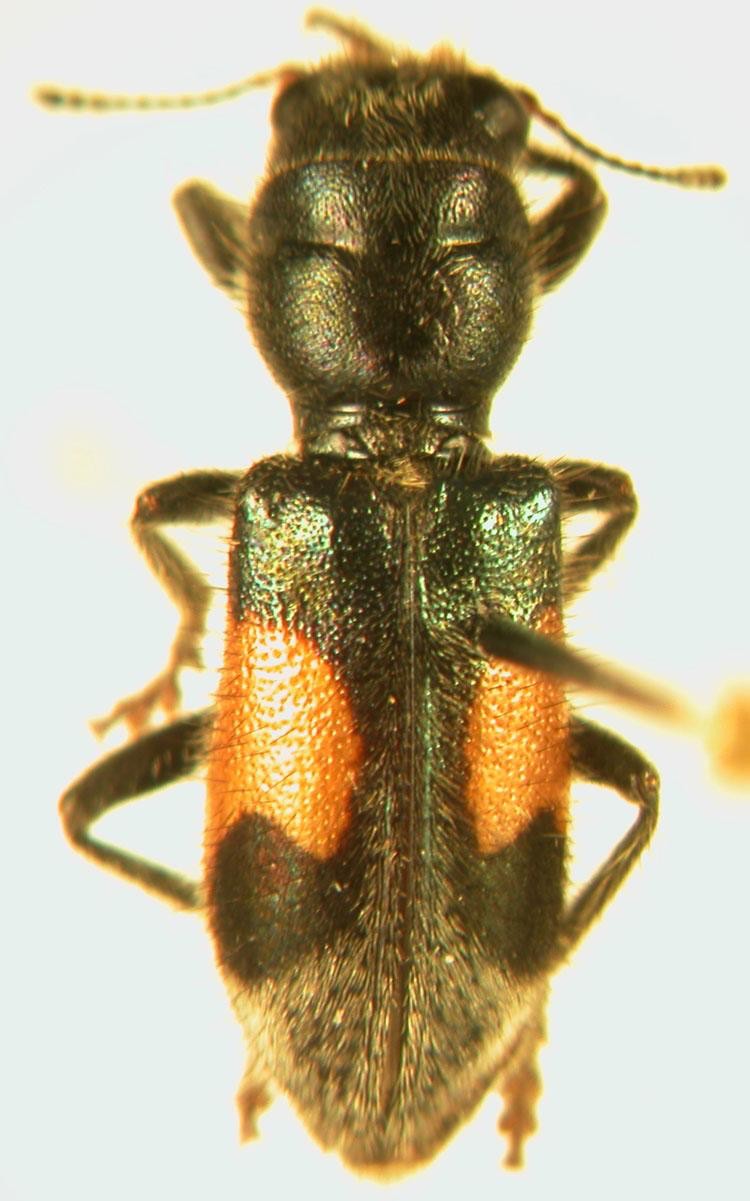
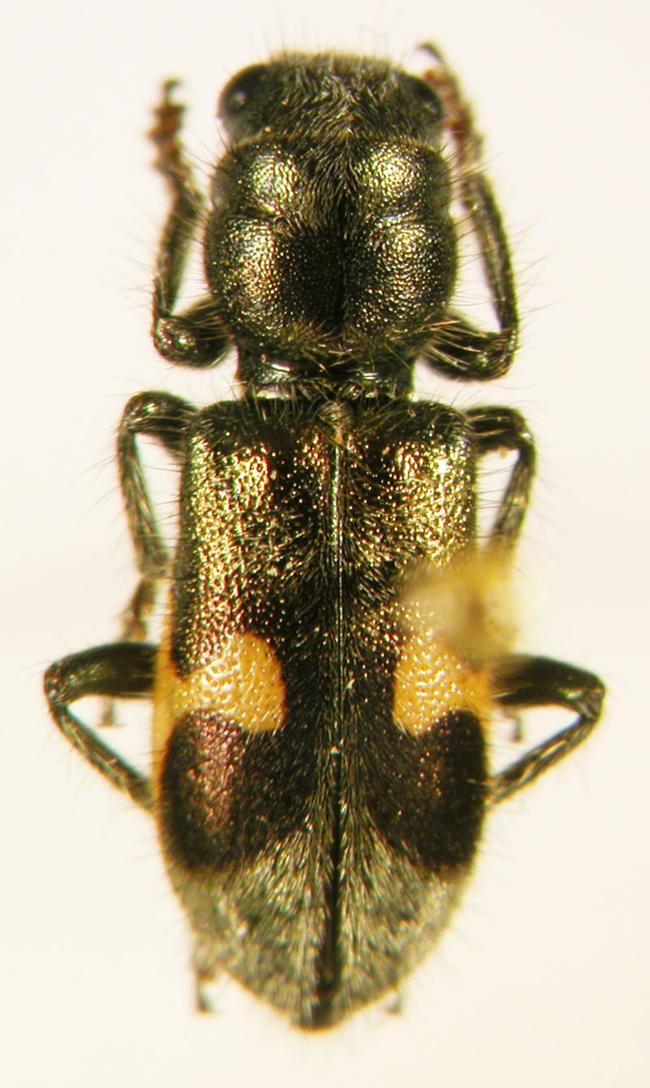
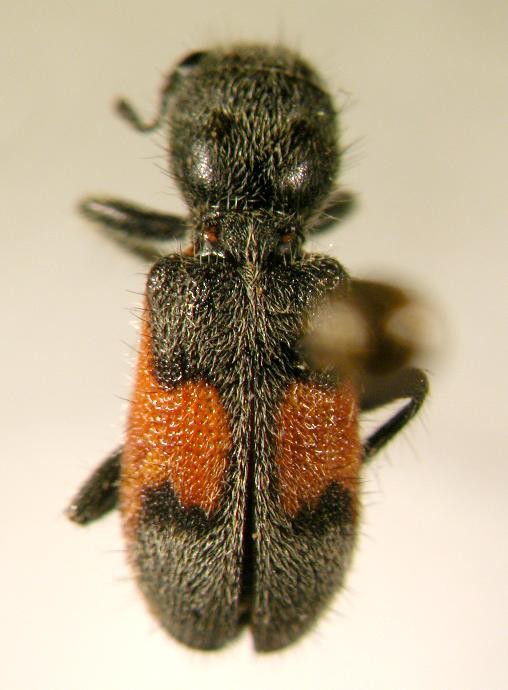
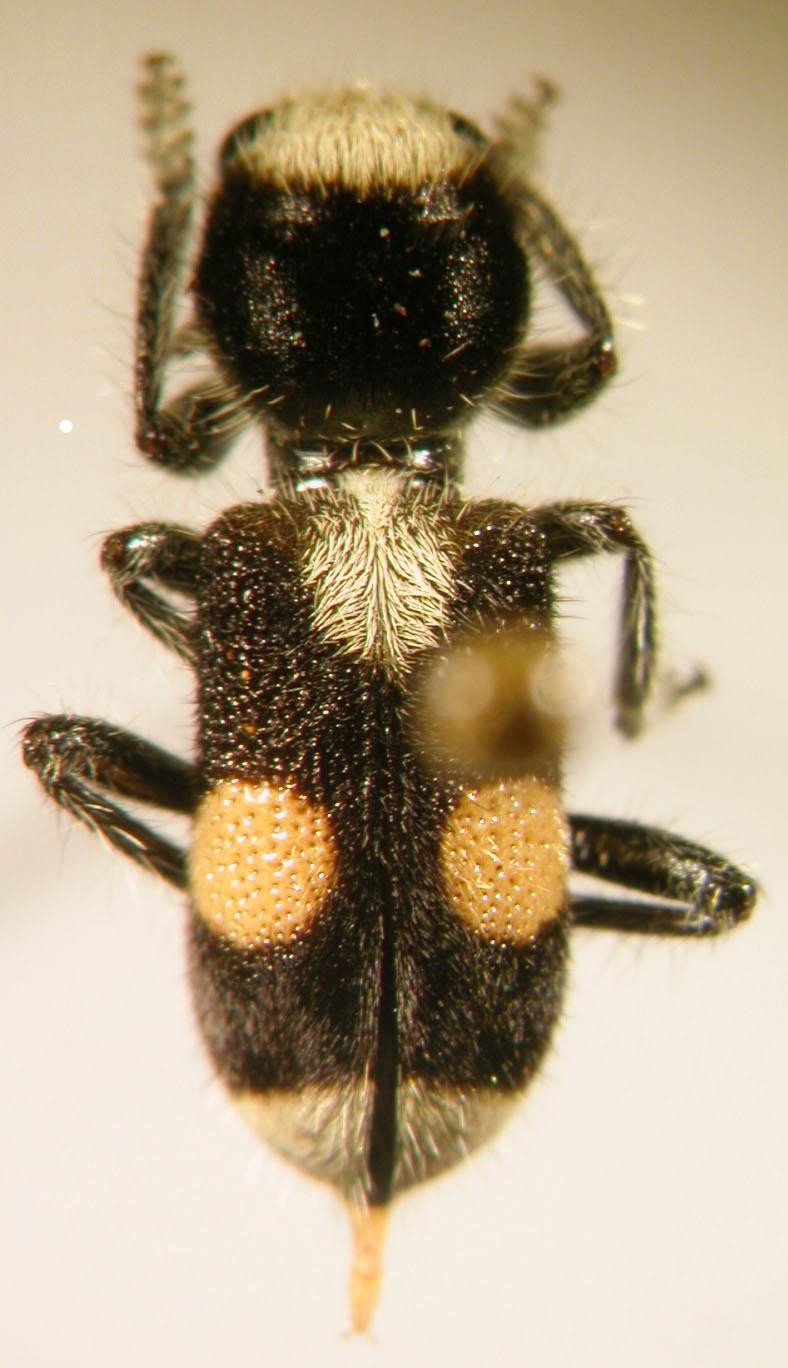
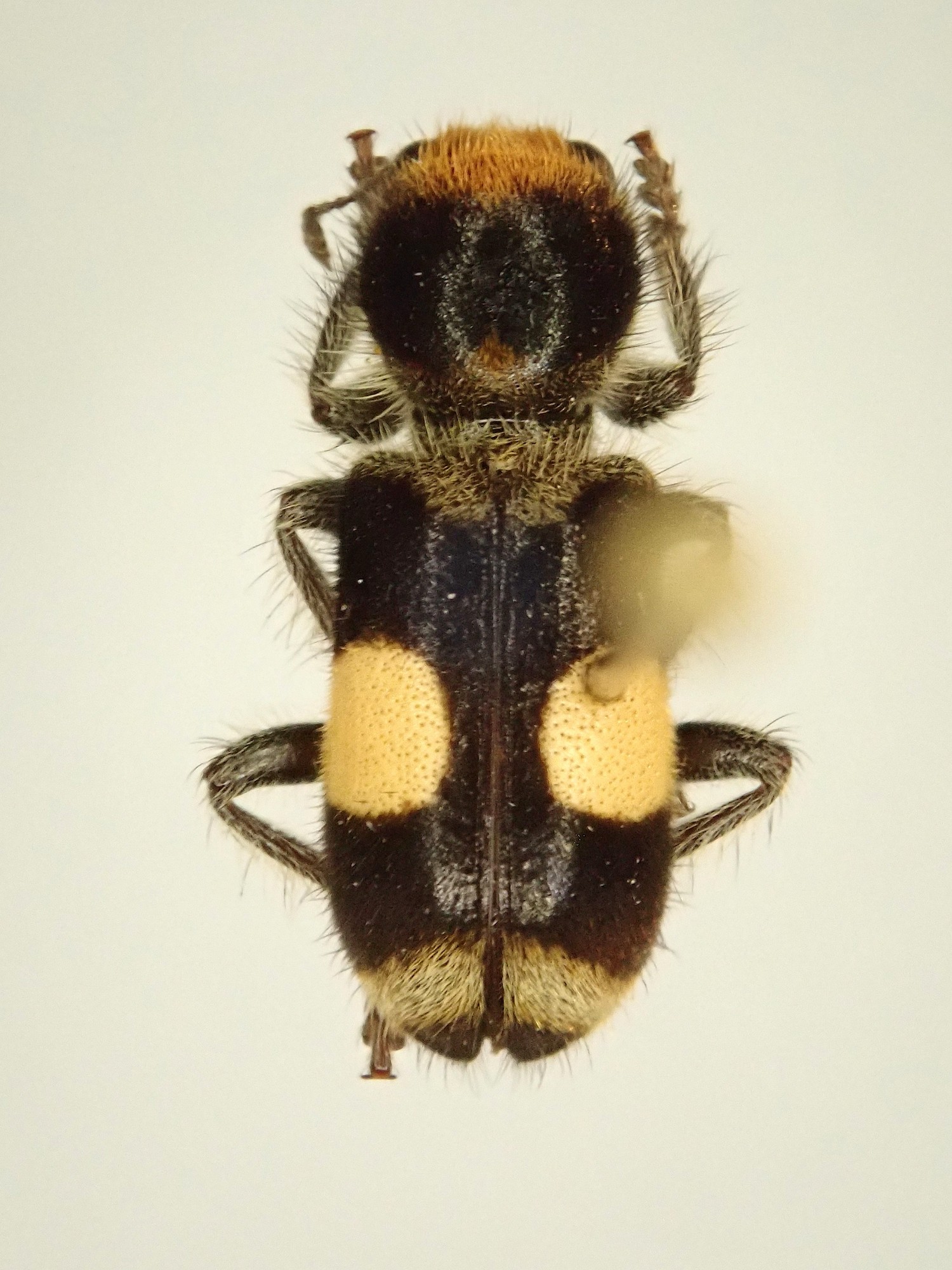
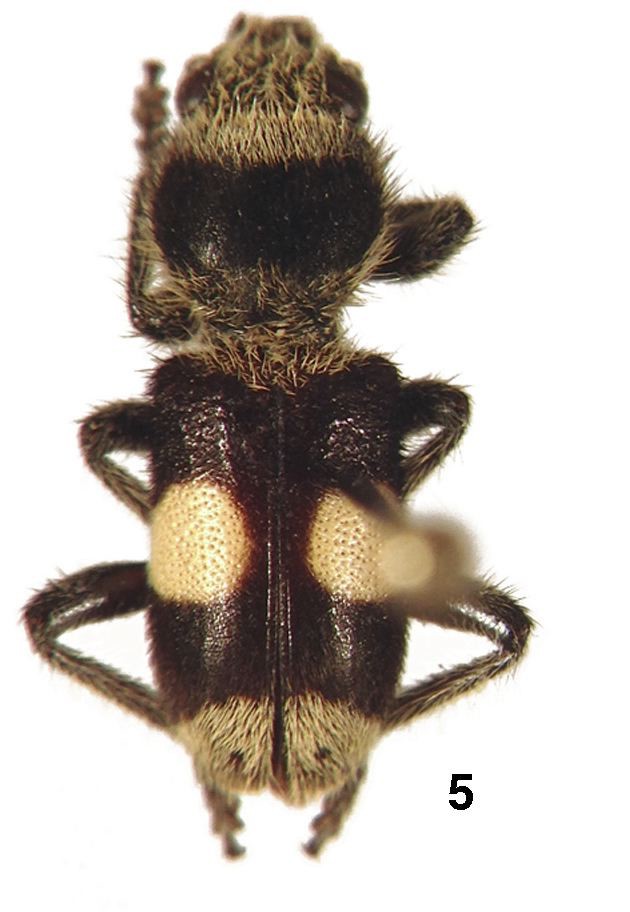
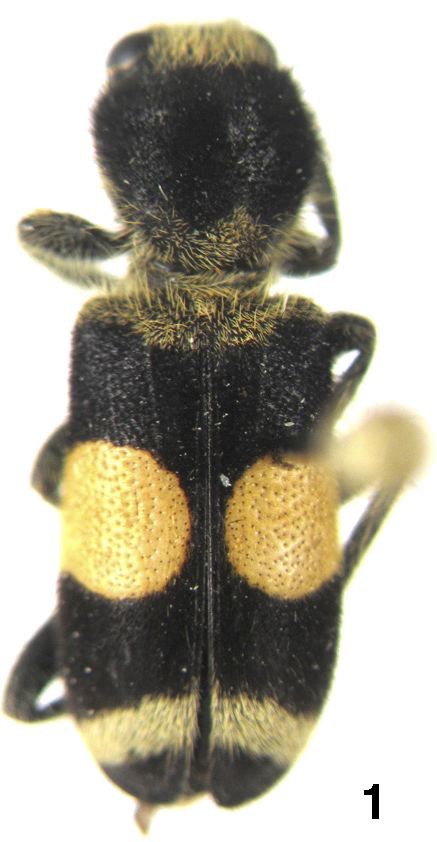
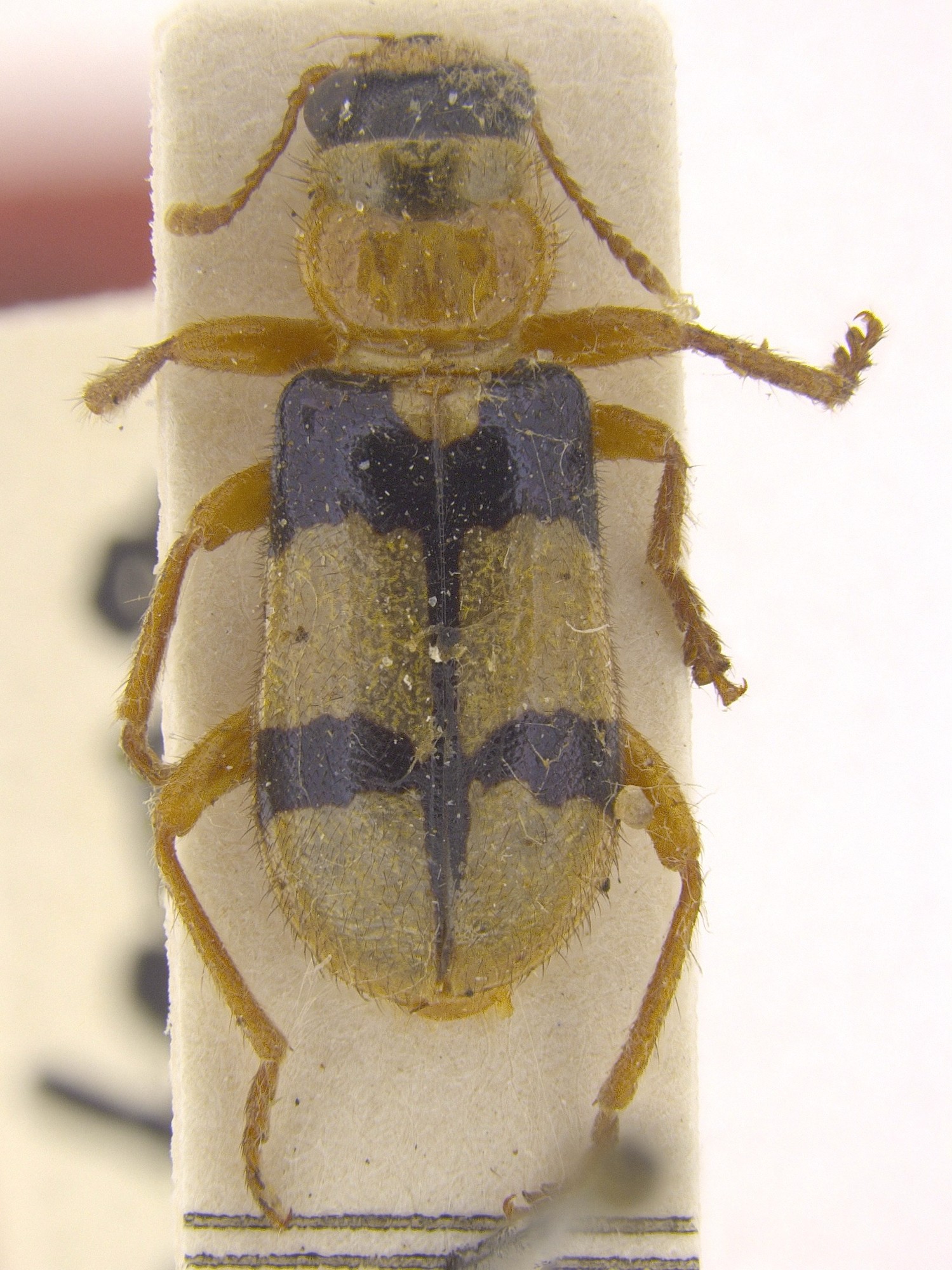
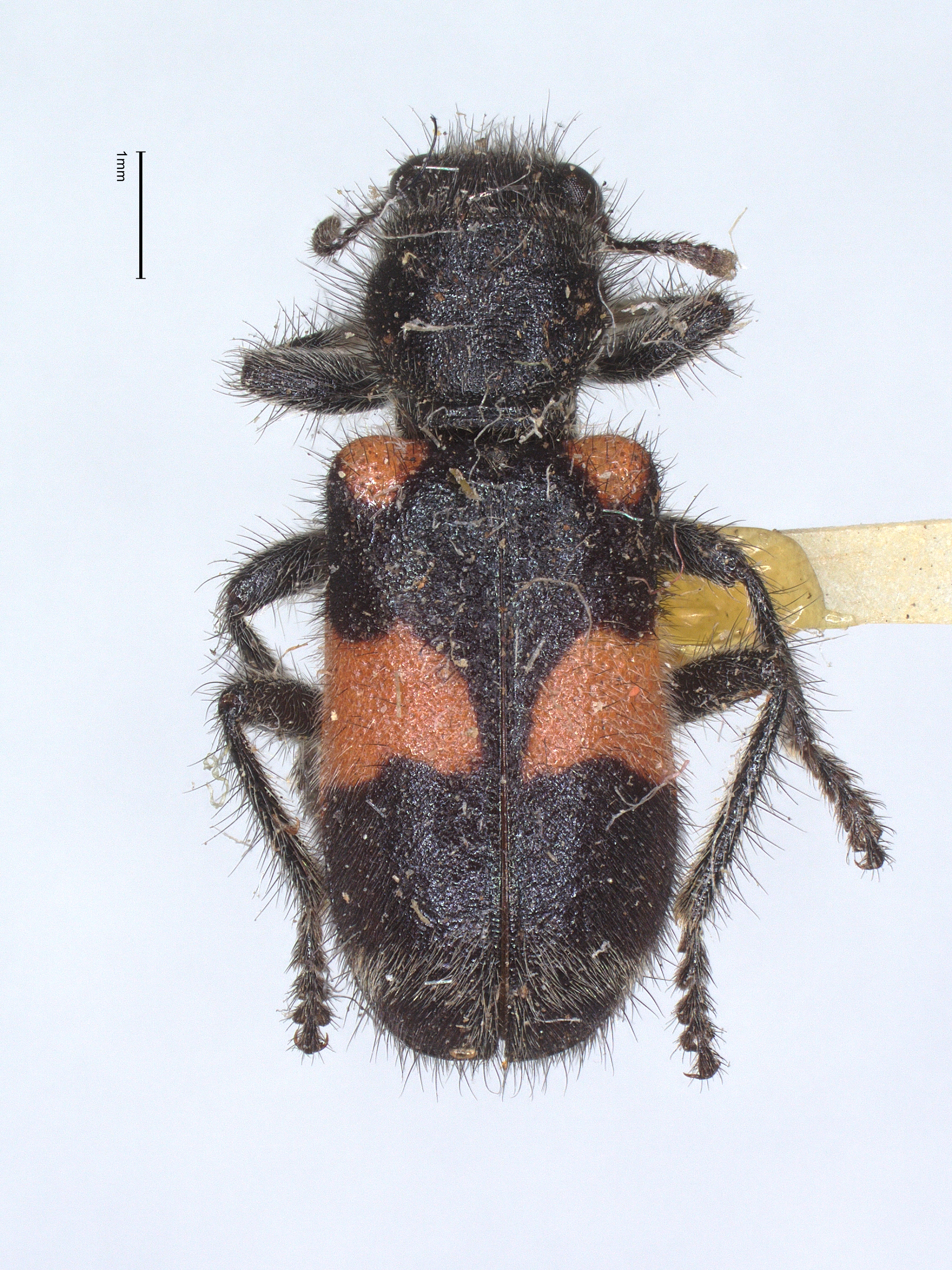
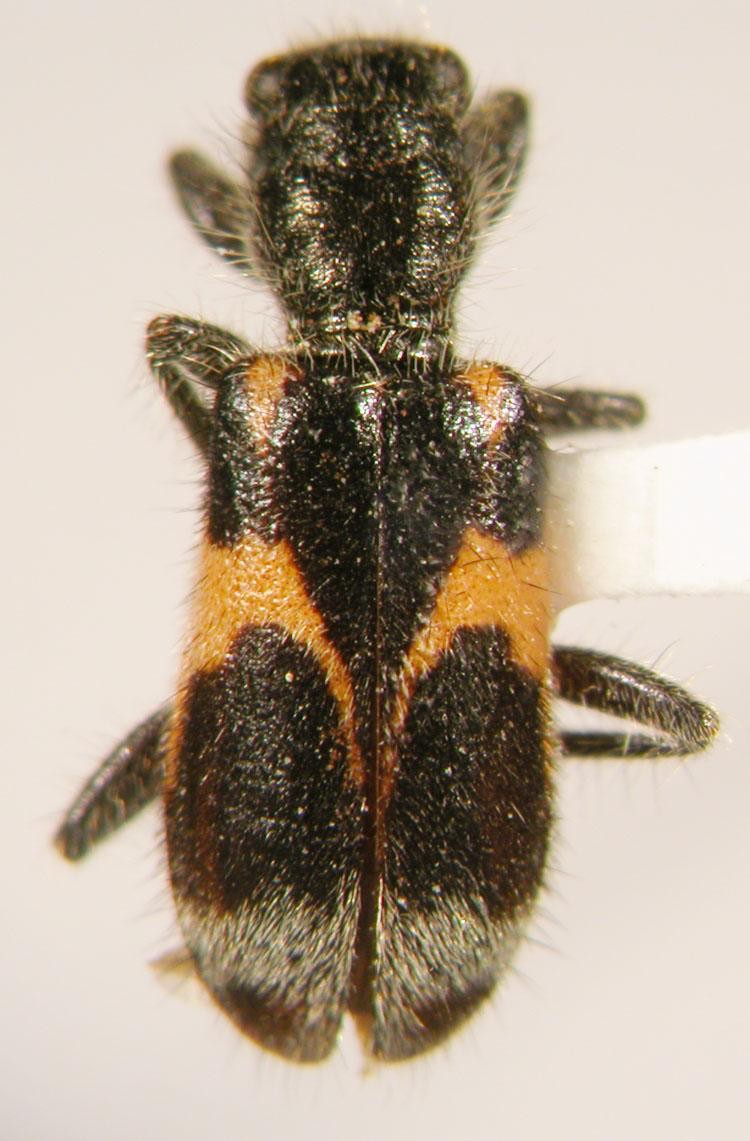
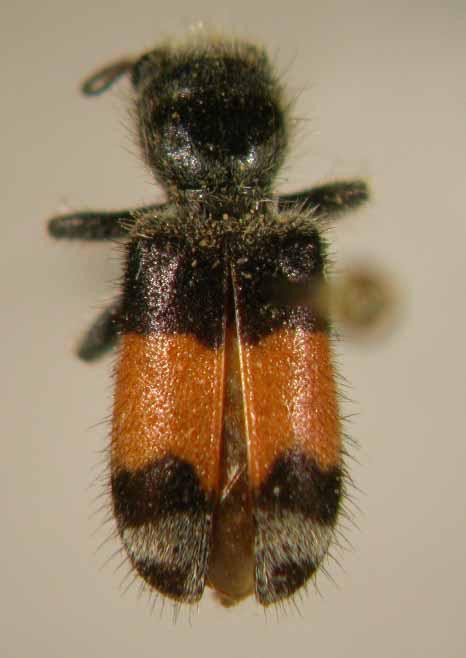
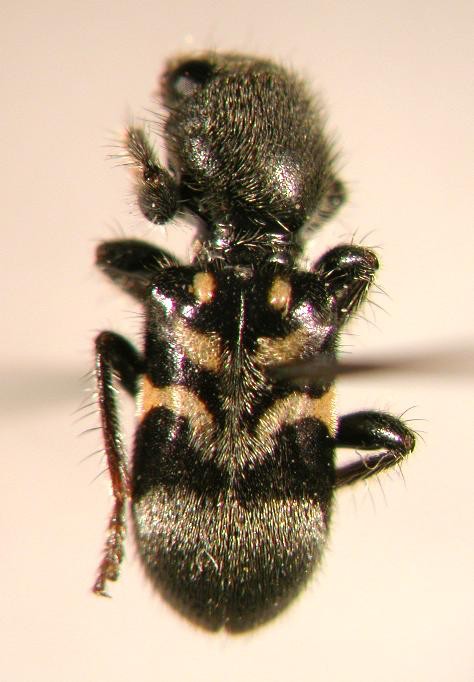
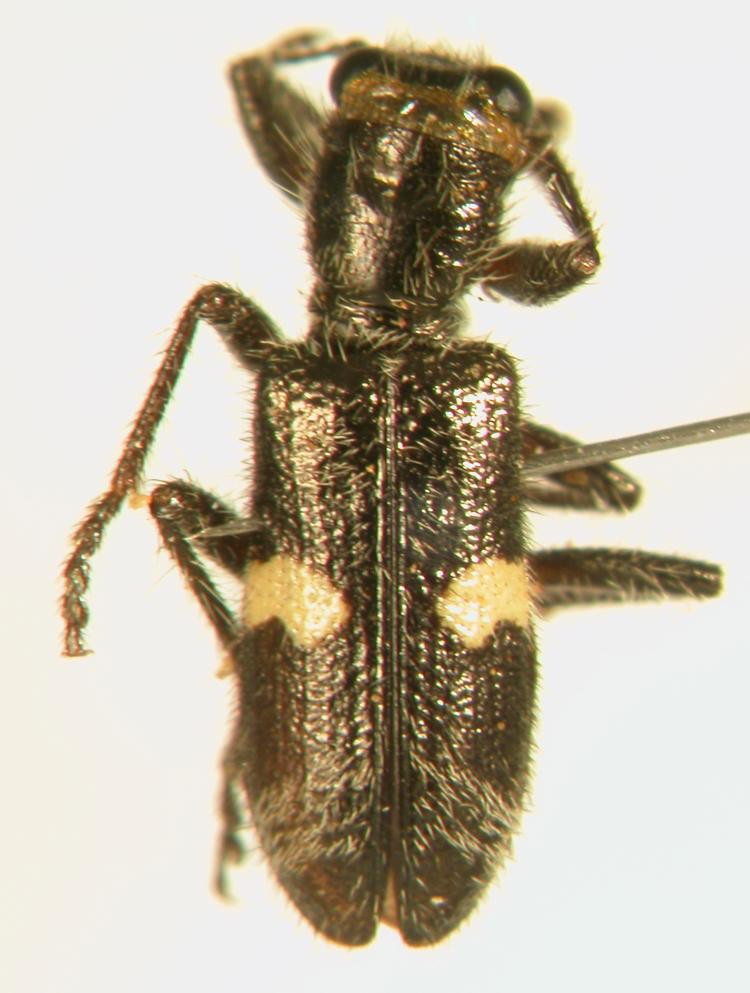
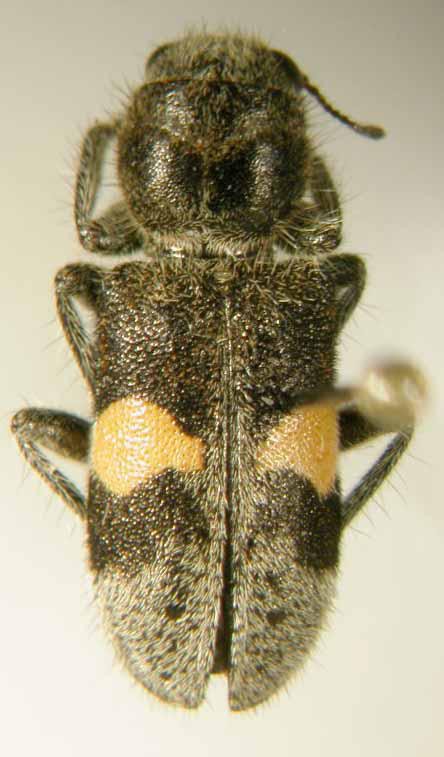
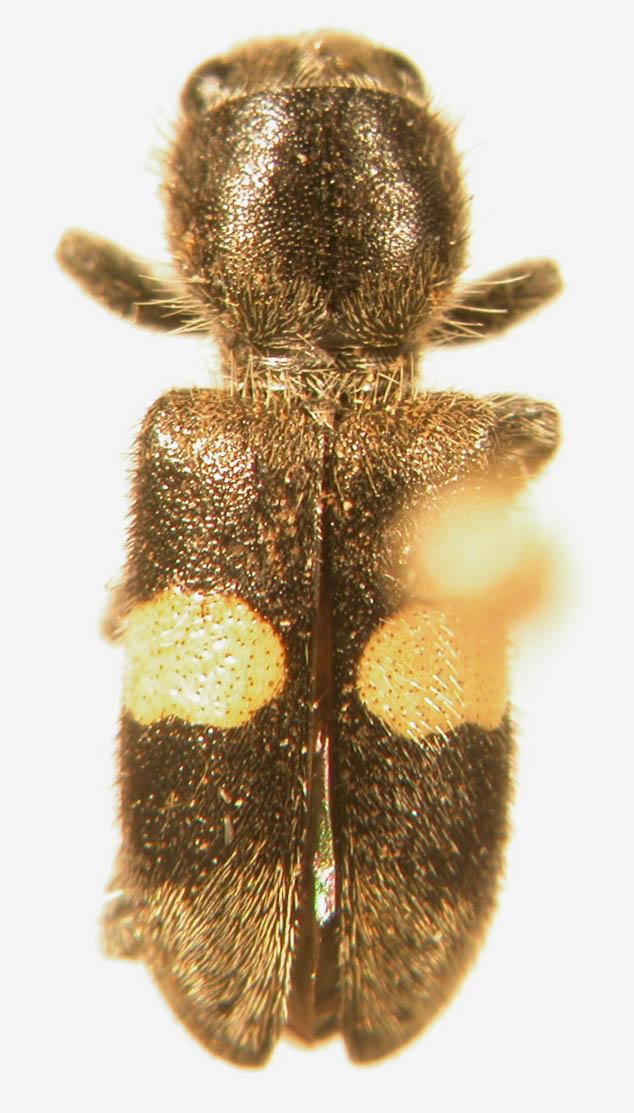
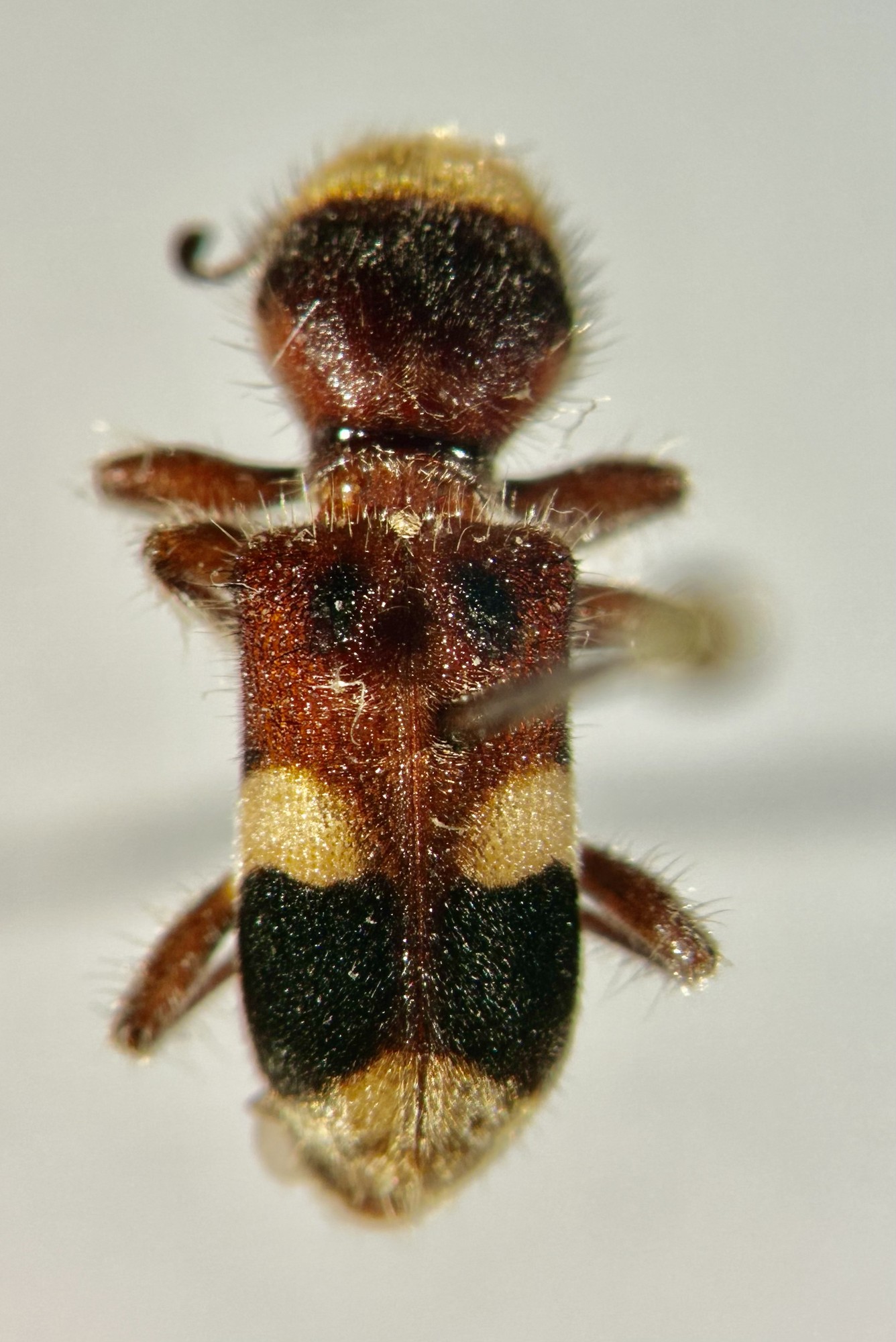
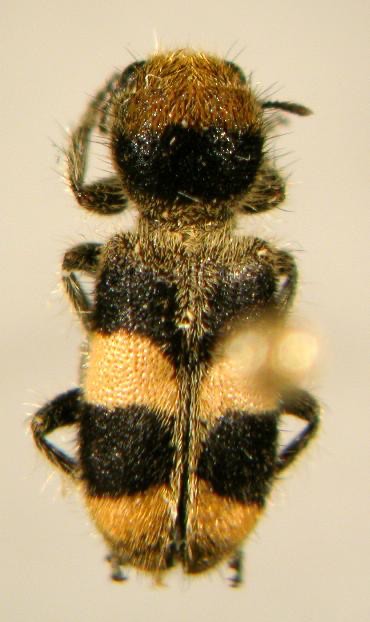
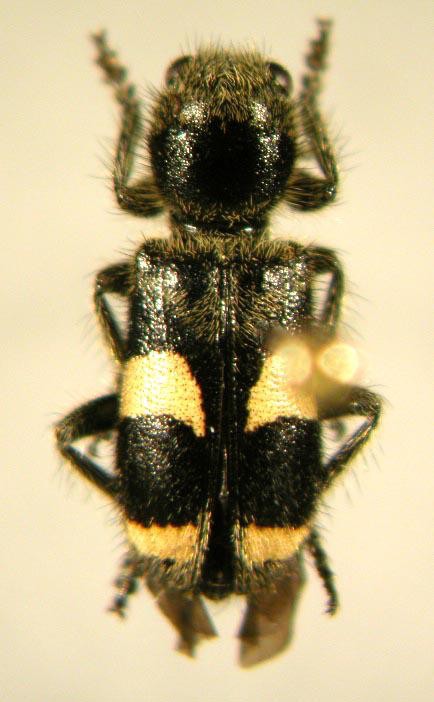
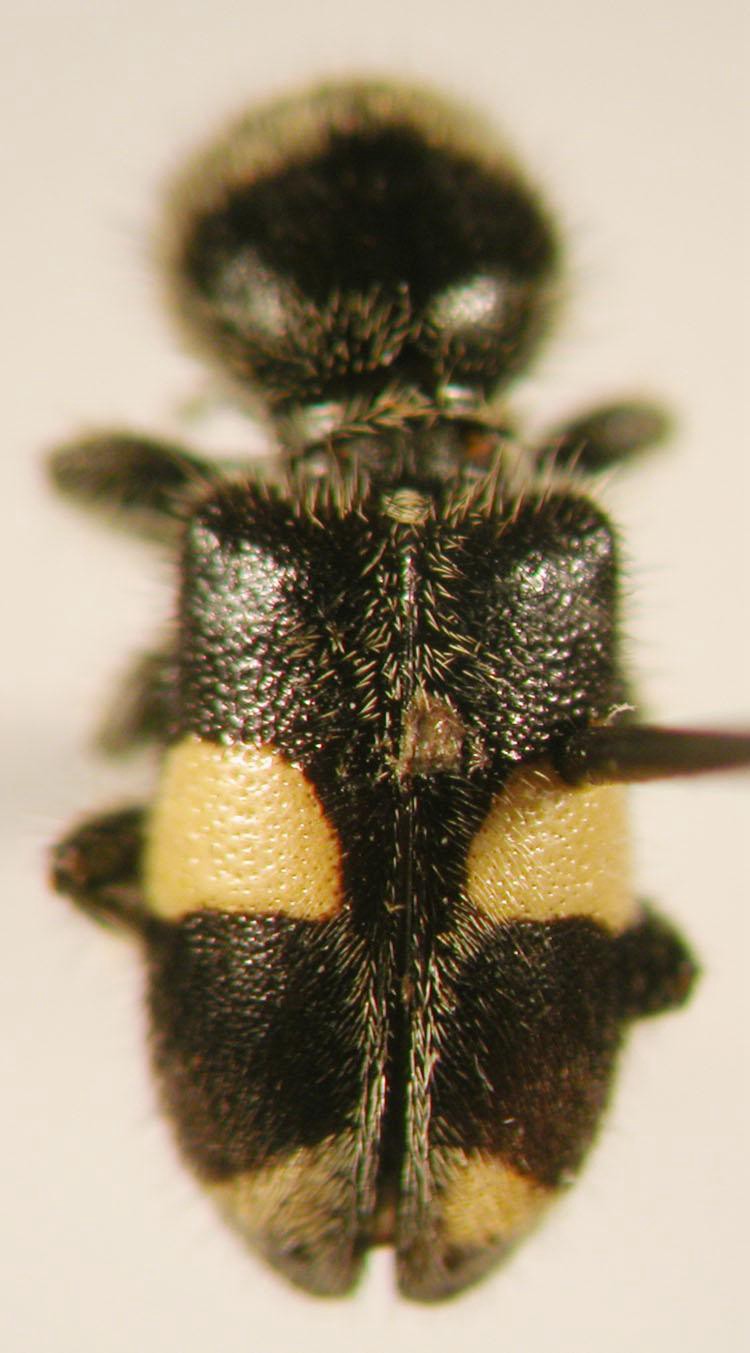
Enoclerus Key — Working Draft (branching structure)
Status: actively under construction, working outline form (not final couplet numbering/wording yet). This file tracks the branching decisions as we make them; couplets get formal numbering and polished wording once a full branch is worked out end-to-end. Cross-check against species_data.md for the full character data behind each call.
Glossary terms (for the eventual HTML key's plain-language tooltips)
Running list of jargon used in couplets that will need a non-specialist gloss, built up as terms come up: - sagittate — arrowhead-shaped (not just "arrow-shaped"; the point/barb shape of an arrowhead specifically)
Interactive-build design notes
Running list of UI/UX decisions confirmed during drafting, to carry into the eventual HTML key:
- "Similar species" popup: any two species with a cross-reference in species_data.md's "Similar species"
field get a popup/flyout link to each other in the final key, even when they aren't structurally
adjacent in the couplet tree (e.g. E. lecontei vs. E. nigricans — both black, vestitural-only pattern,
but resolved in different branches of the tree). Confirmed as a good pattern by the keys — worth
applying consistently everywhere a "Similar species"/"Cross-reference" note exists in species_data.md,
not just this one instance.
Similar genera (introductory section — genera difficult to separate from Enoclerus)
Skeleton below; distinguishing-character text to be added per genus. Cross-reference any Enoclerus species already flagged elsewhere in this file as resembling a given genus.
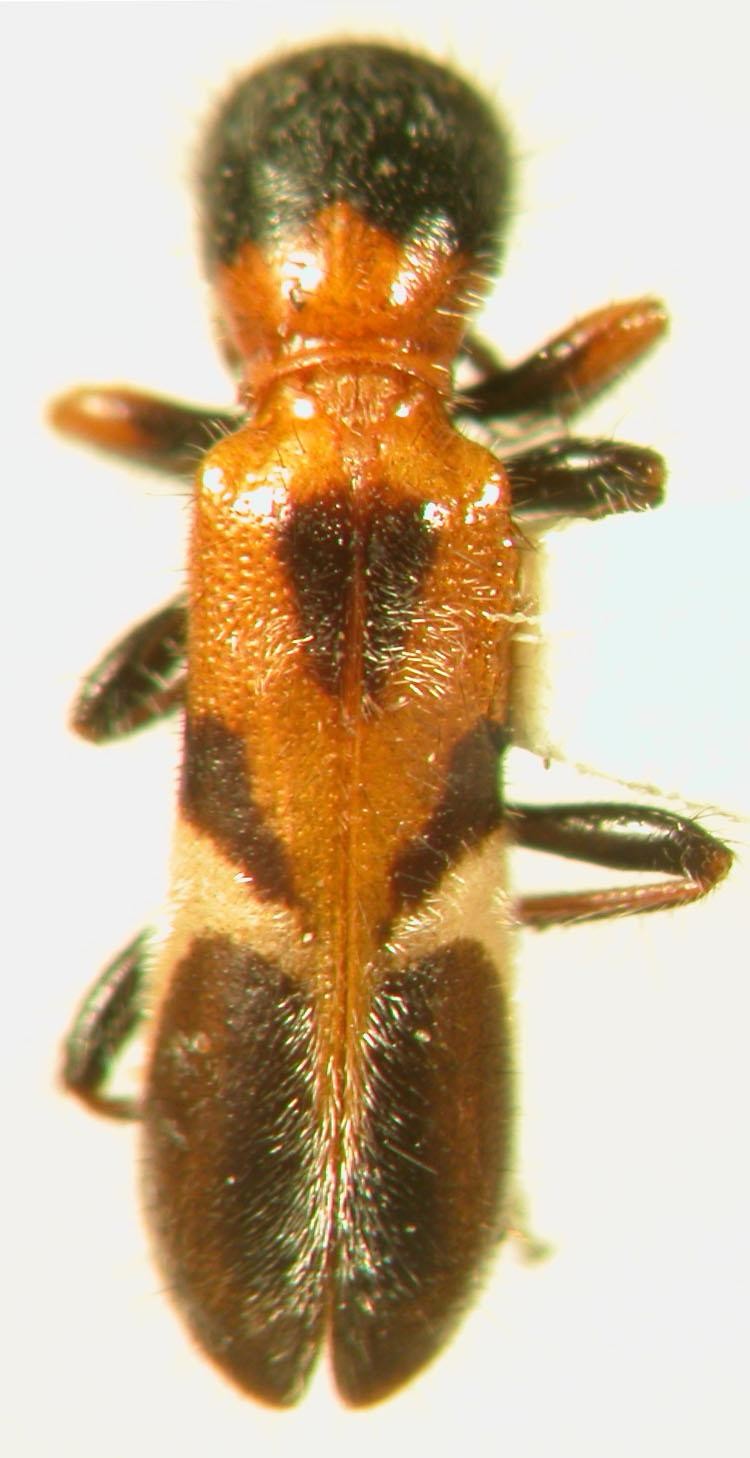
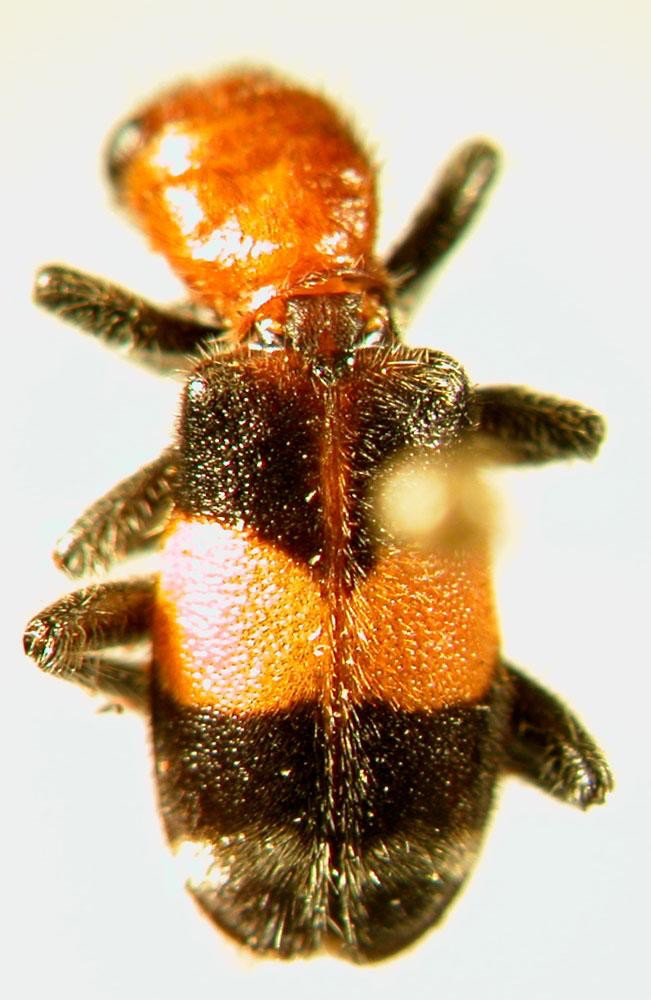
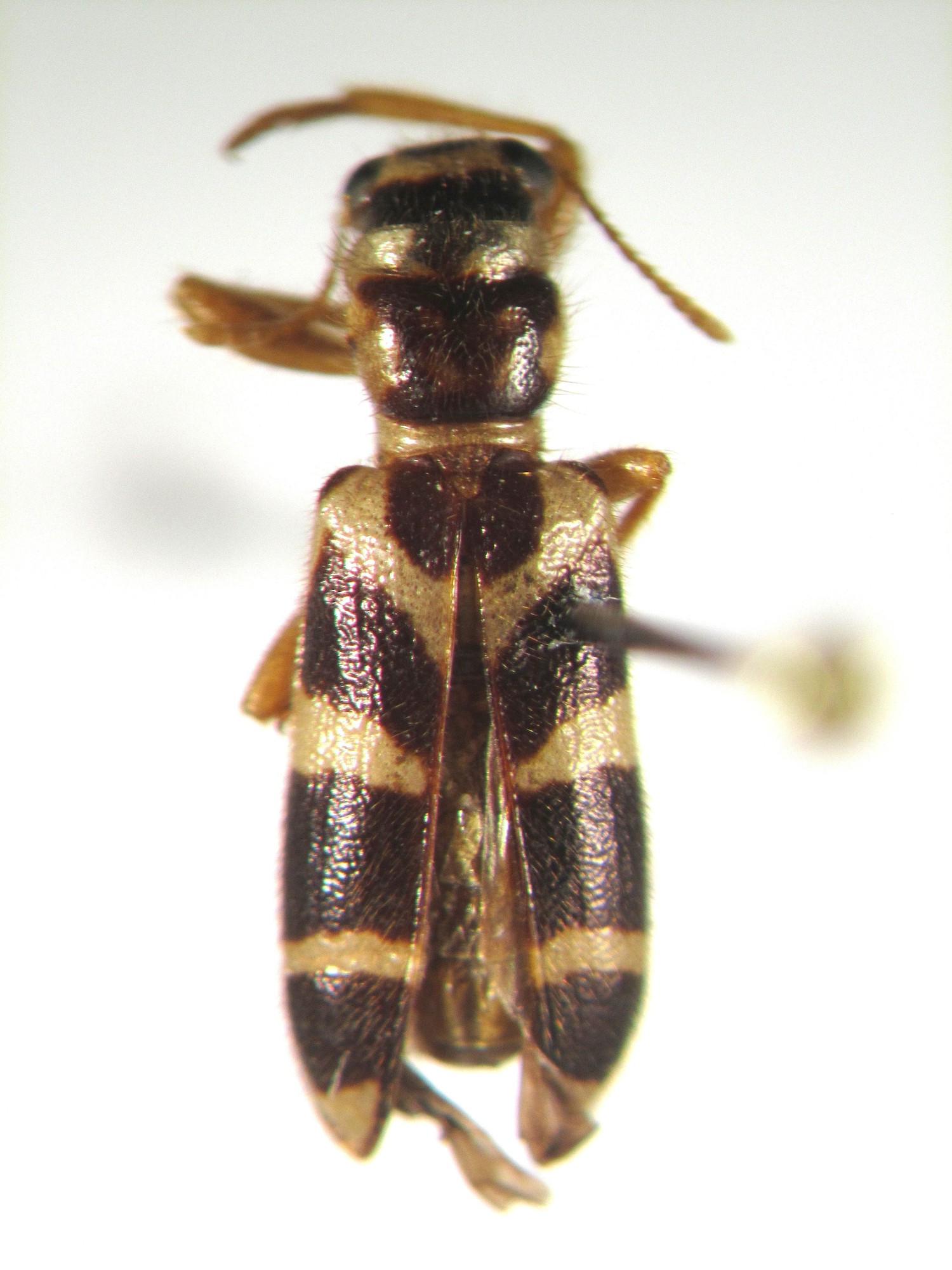
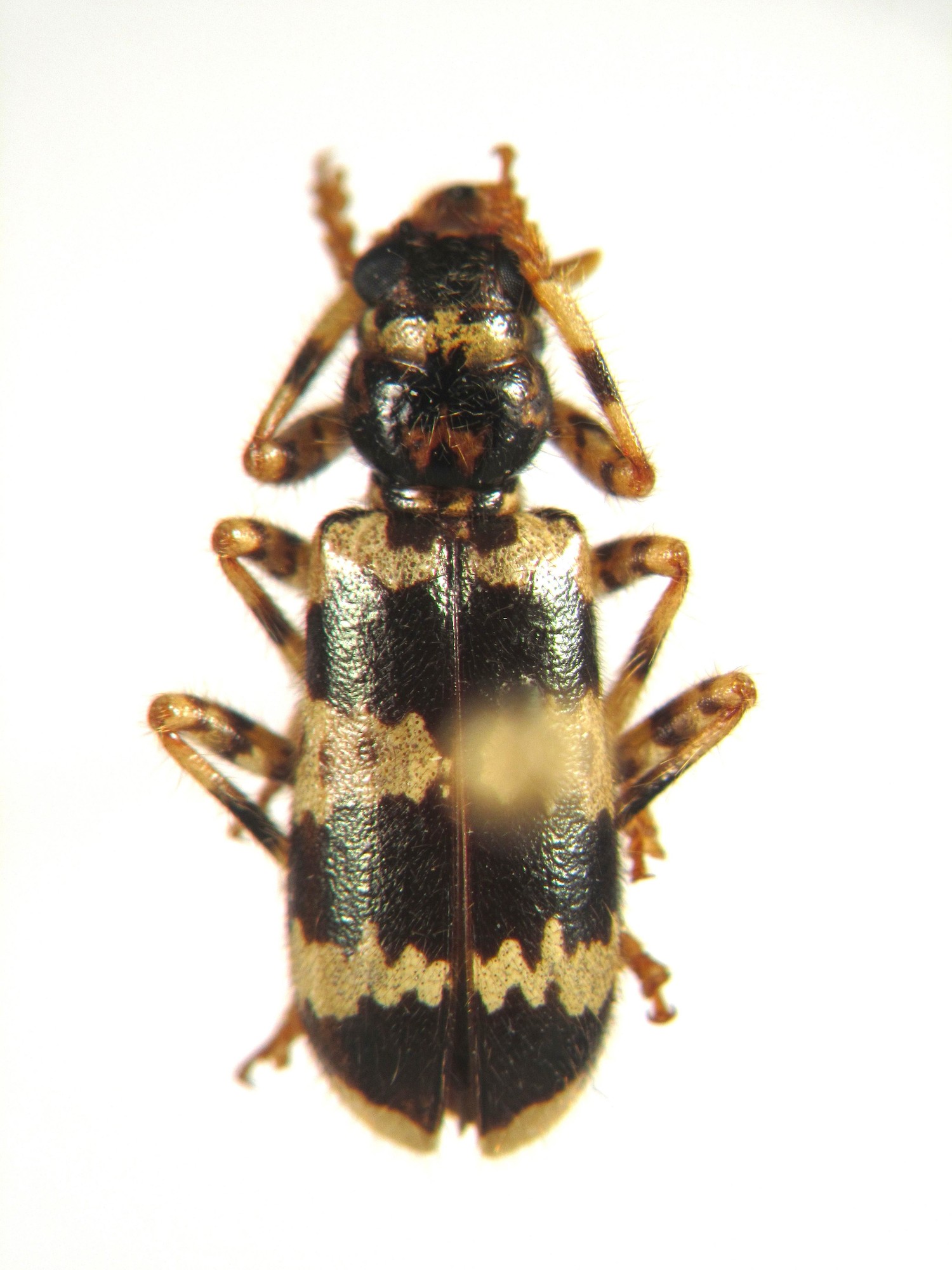
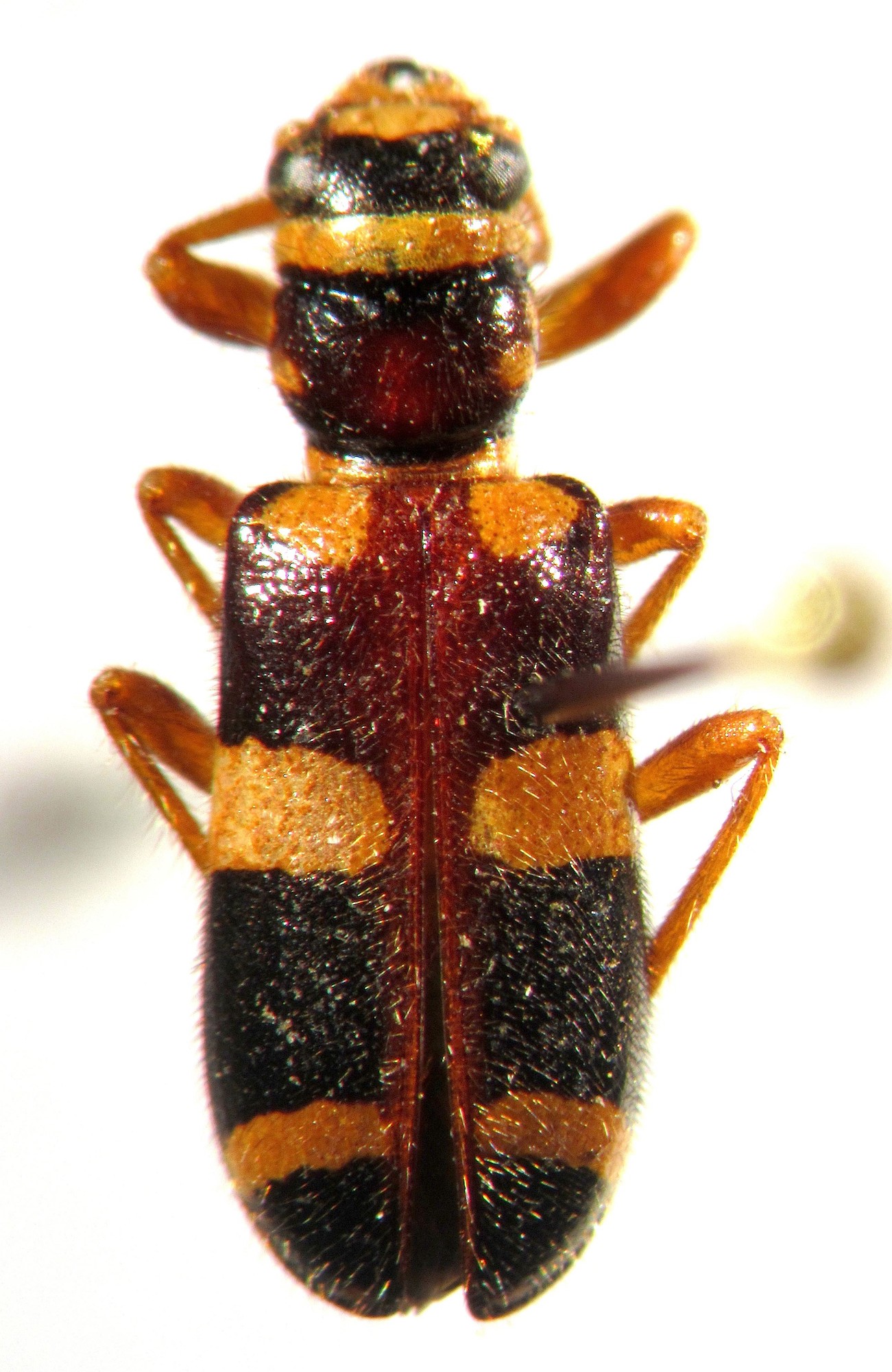
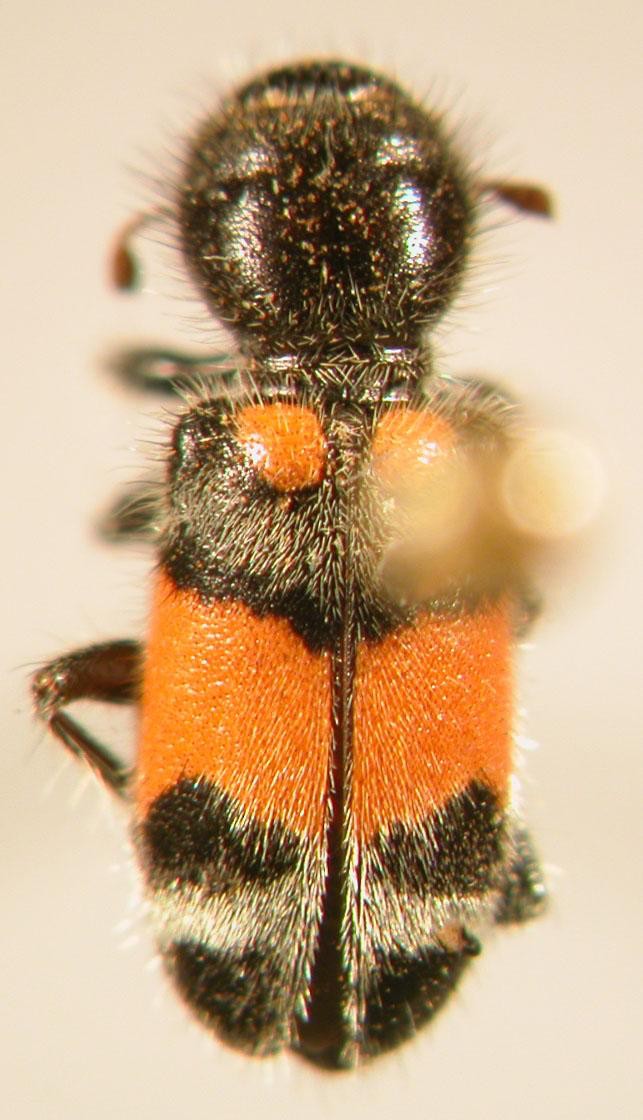
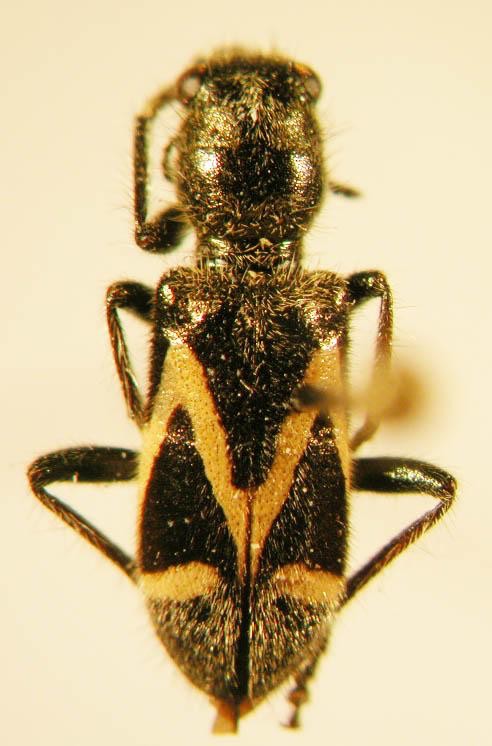
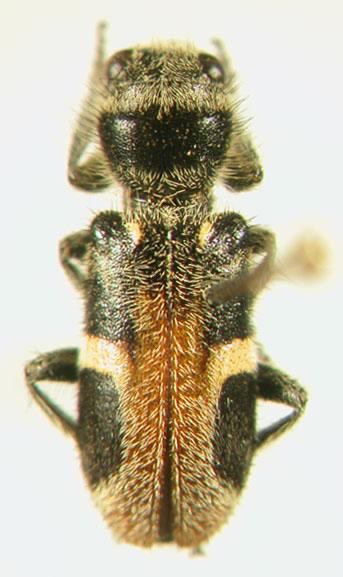
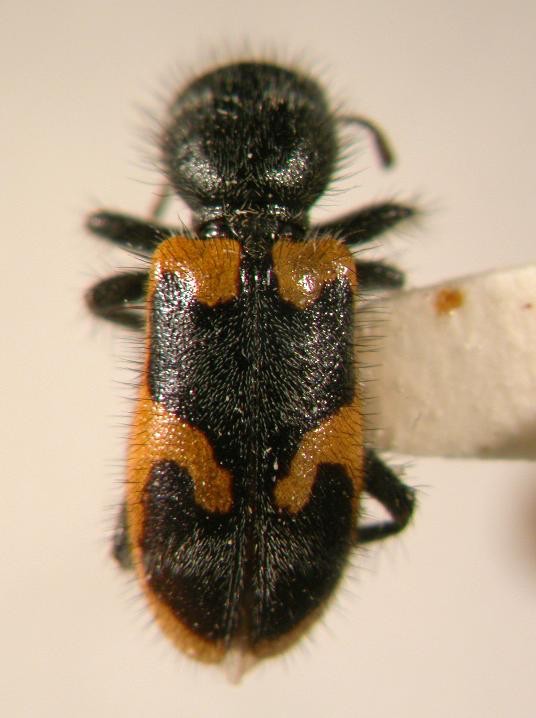
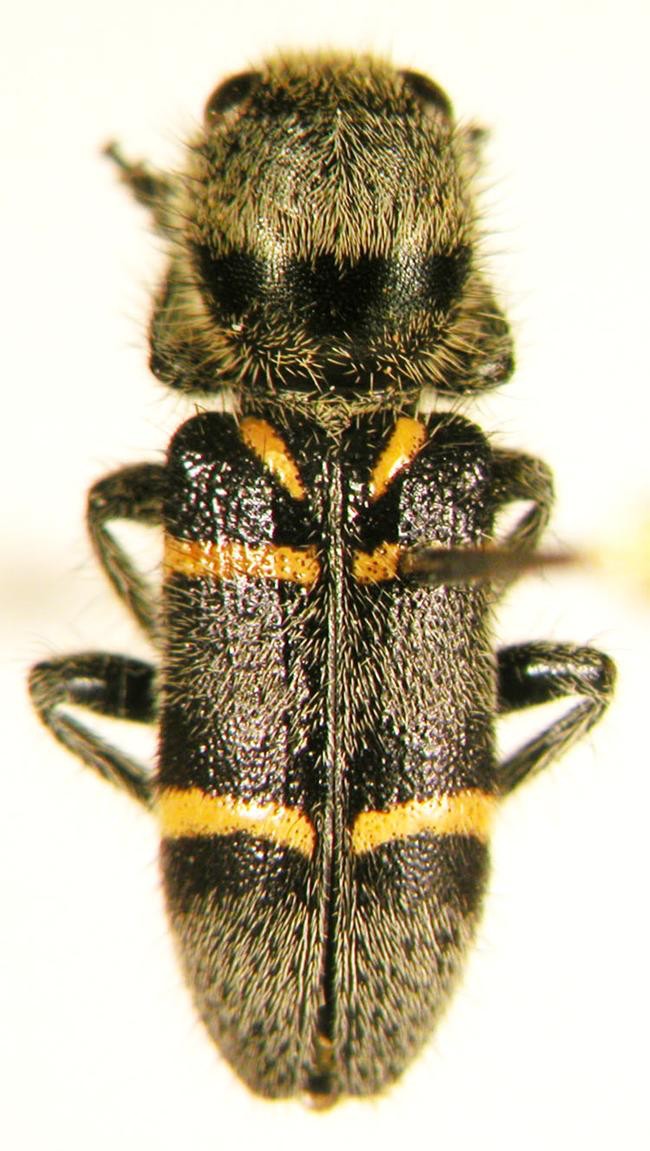
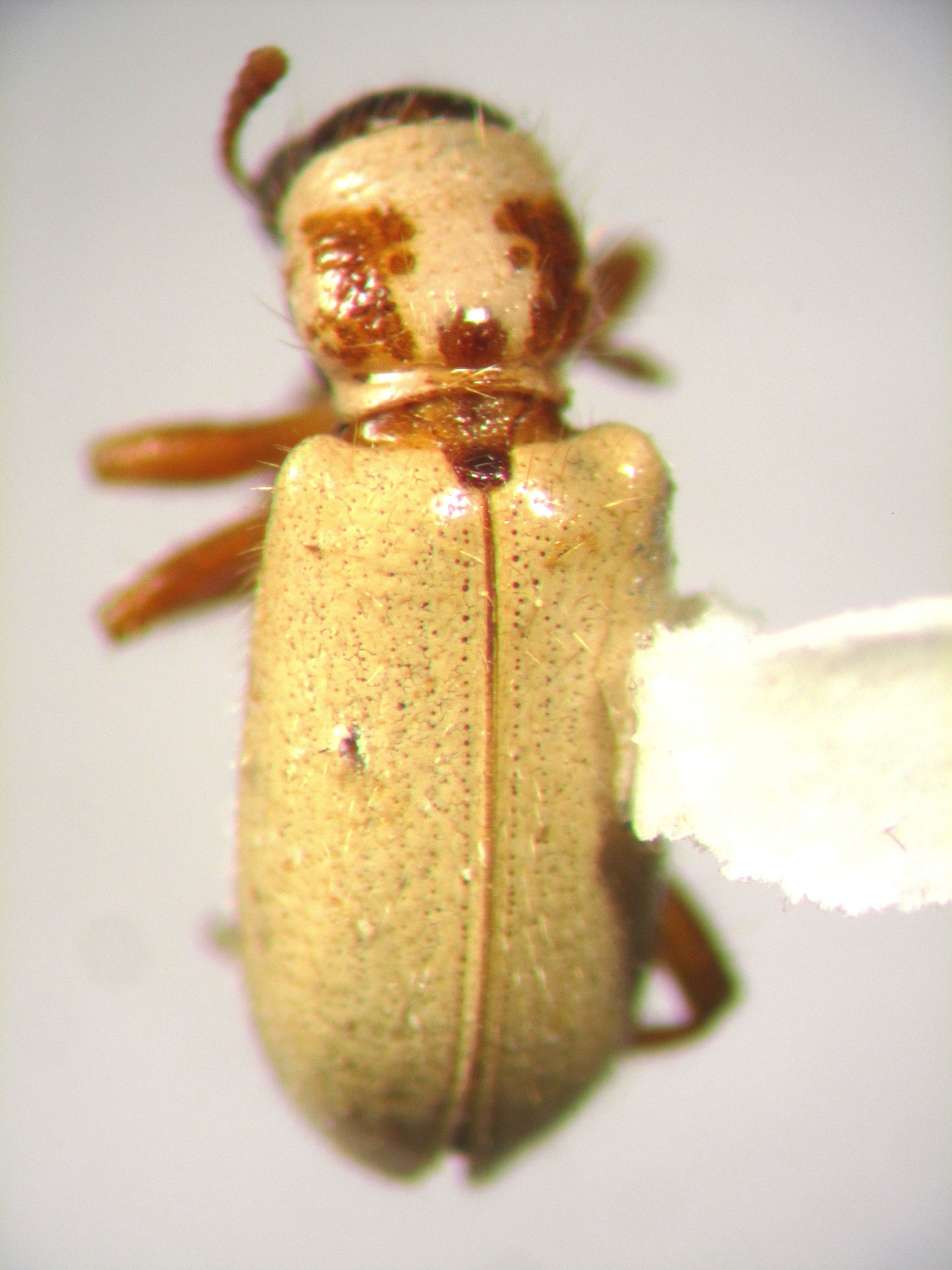
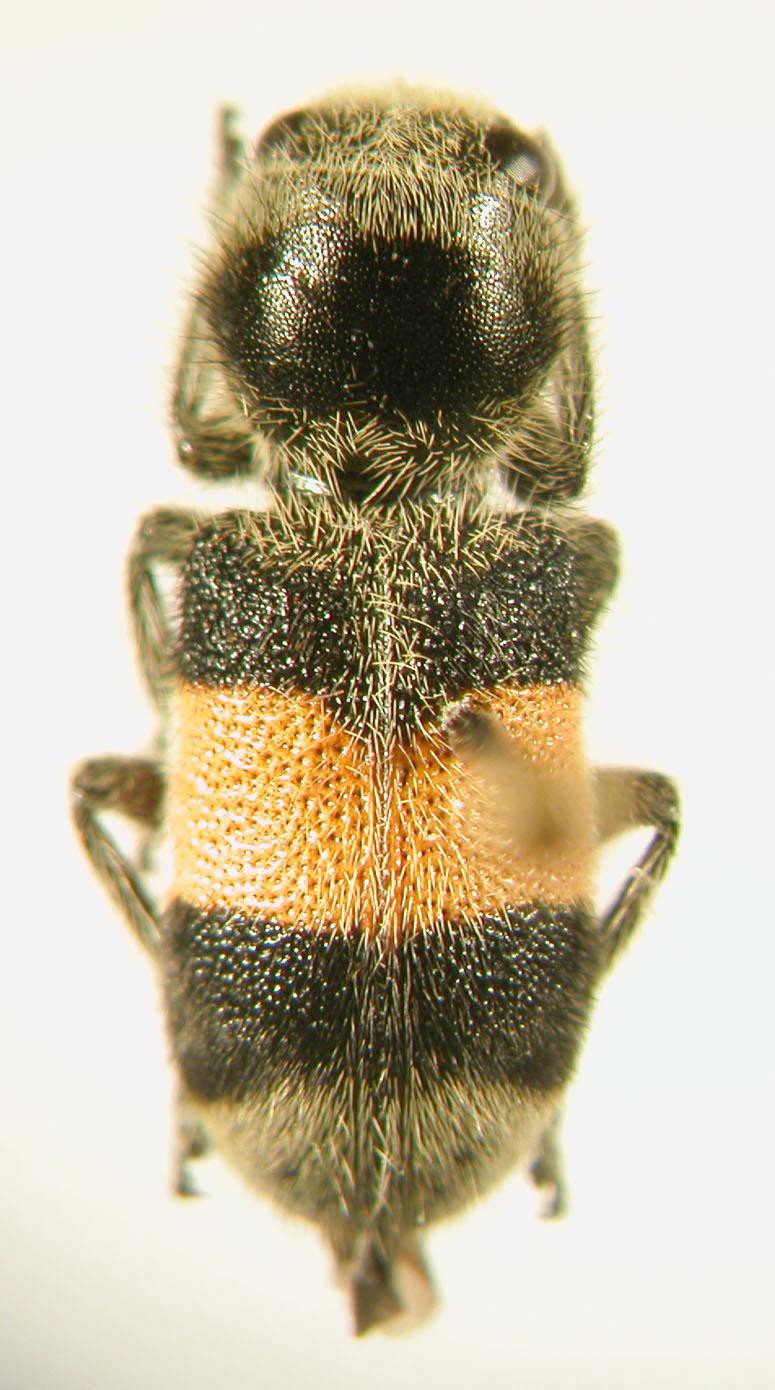
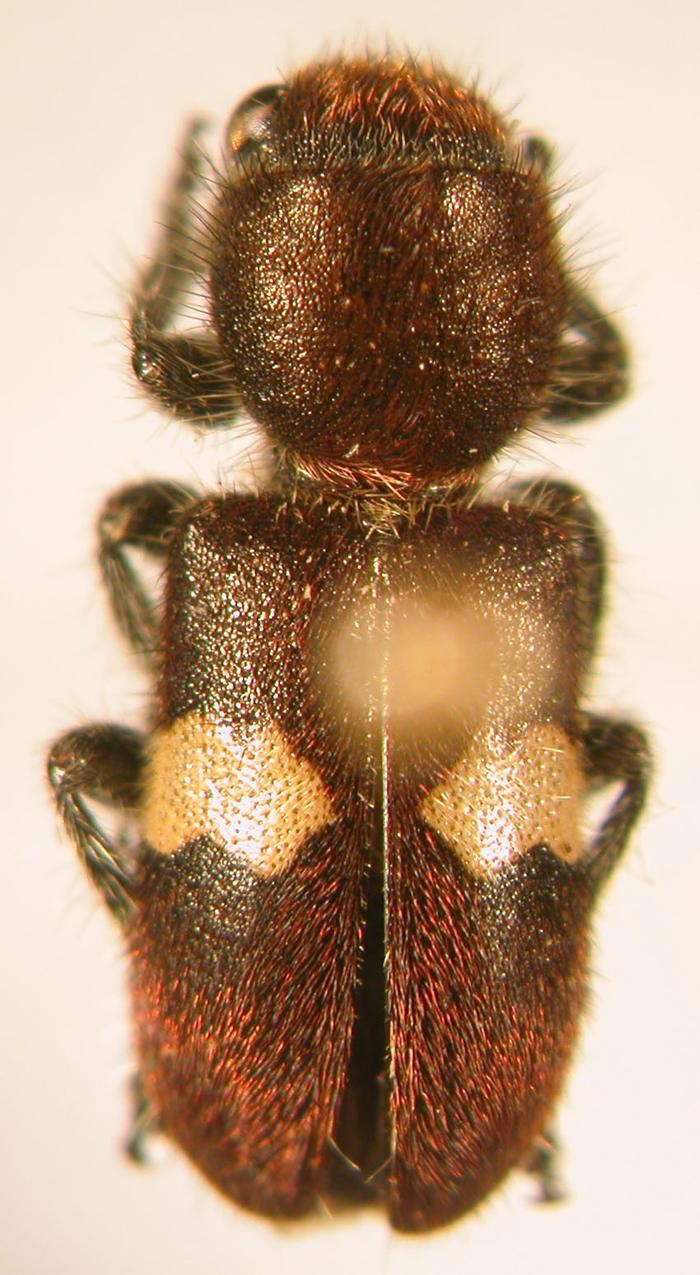
Caestron
Reference images:
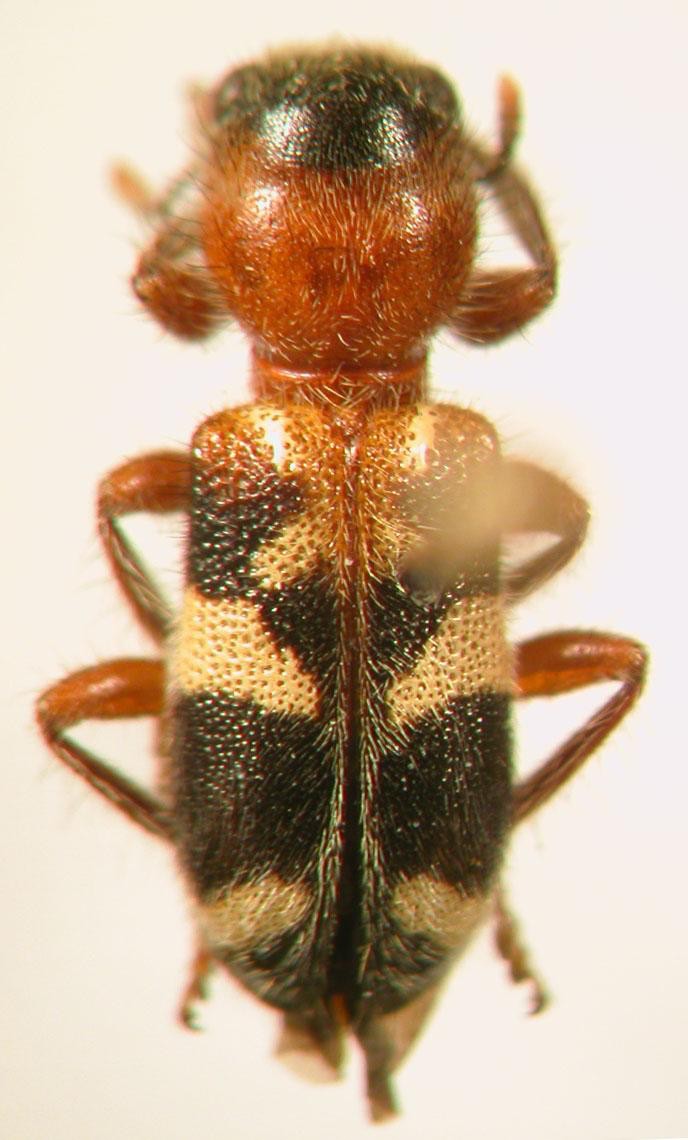
- species/Caestron_concinnus/habitus_dorsal.png (pinned specimen, Caestron concinnus [Gorham], dorsal —
head black with grayish pubescence; pronotum orange/reddish-brown; elytra with a black basal area, a
rust/orange-red median band, and a black posterior area; robust, densely setose, clerid-like habitus)
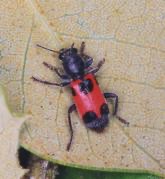
- species/Caestron_contractus/habitus_live.png (live specimen, C. contractus [Gorham], dorsal, on a leaf
— entirely black, densely punctate/granulate texture, strongly ant-mimic gestalt with a
narrowed/petiolate-looking waist and globose elytra resembling an ant's gaster; a couple of small
pale spots near the elytral base; antennae with pale basal segments)
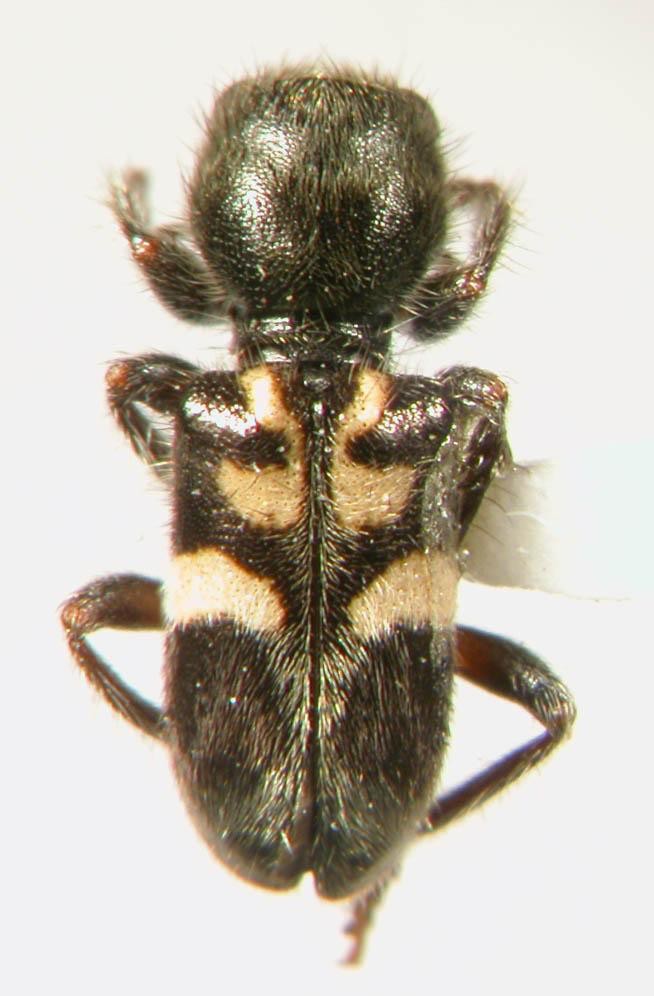
- species/Caestron_trogositoides/illustration_historical_plate.png (historical color plate — black head,
orange/red pronotum, black elytra with a yellow-green basal band, yellow legs and antennae)
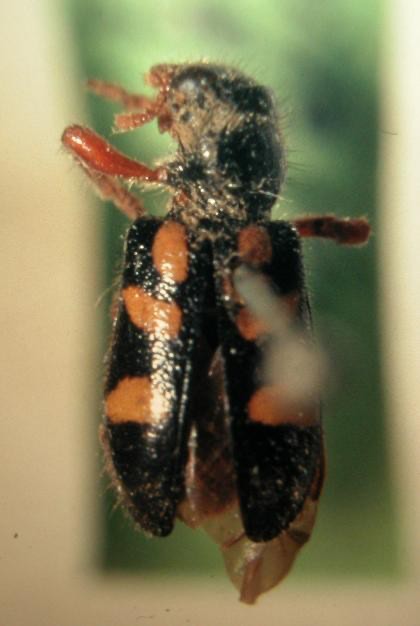
- species/Caestron_trogositoides/habitus_live.png (live specimen, dorsolateral, on lichen-covered bark —
black head, orange/red pronotum with dark spots and a pale transverse band, black elytra)
Confirmed: "Caestron trogositoides Spinola," used elsewhere in this file as the name of the E. nelsoni/
E. vulnus/unnamed-coastal-NW-México look-alike complex, is indeed this actual species — Caestron =
genus, trogositoides = species epithet, Spinola = author. C. trogositoides, as currently recognized,
appears to be a complex of species rather than a single one, and that complex may include some elongate,
antlike Enoclerus (E. nelsoni and E. vulnus among them). Distinguishing-character text (Enoclerus vs.
Caestron generally) still pending; C. concinnus's banded pattern and C. trogositoides's own pattern are
both broadly reminiscent of the nelsoni/vulnus complex's gestalt, while C. contractus shows the genus can
also converge on the antlike-guild mimicry style seen elsewhere in Enoclerus.
Sallea
Reference image: species/Sallea_necrobioides/habitus_live.png (live specimen, Sallea necrobioides Chevrolat, dorsolateral, on a leaf — head, pronotum, and elytra with a metallic blue-green/teal iridescent sheen overlaid with dense grayish setae; legs bright coral-red with dark tarsi; a reddish- orange patch at the elytral base near the humeri; antennae dark reddish-brown). Distinguishing-character text still pending.
Placopterus
Reference images: - species/Placopterus_rufipes/habitus_live.png (live specimen, Placopterus rufipes [Schenkling], dorsolateral, on bark — head and pronotum bright red/coral with two black transverse bands (one across the head/eyes, one across the pronotum); legs reddish-orange with dark tarsi; elytra metallic dark green/black with a golden-green iridescent sheen, densely setose, elongate) - species/Placopterus_thoracicus/habitus_live.png (live specimen, Placopterus thoracicus [Olivier] — dictated as "throacicus," standardized to thoracicus; source likely iNaturalist — dorsal, on dried plant/seed pods — head black with an orange/tan patch below the eyes; pronotum with an orange-tan collar/band; elytra entirely black, densely finely punctate, matte, elongate; legs black) - species/Placopterus_plumbeus/habitus_live.png (live specimen, Placopterus plumbeus [Gorham], dorsolateral, on a leaf — head, pronotum, and legs bright orange-red; elytra black with a metallic bluish-green iridescent sheen, densely short-setose, more compact/rounded (less elongate) than P. rufipes or P. thoracicus; antennae dark with a pale tip) Distinguishing-character text still pending.
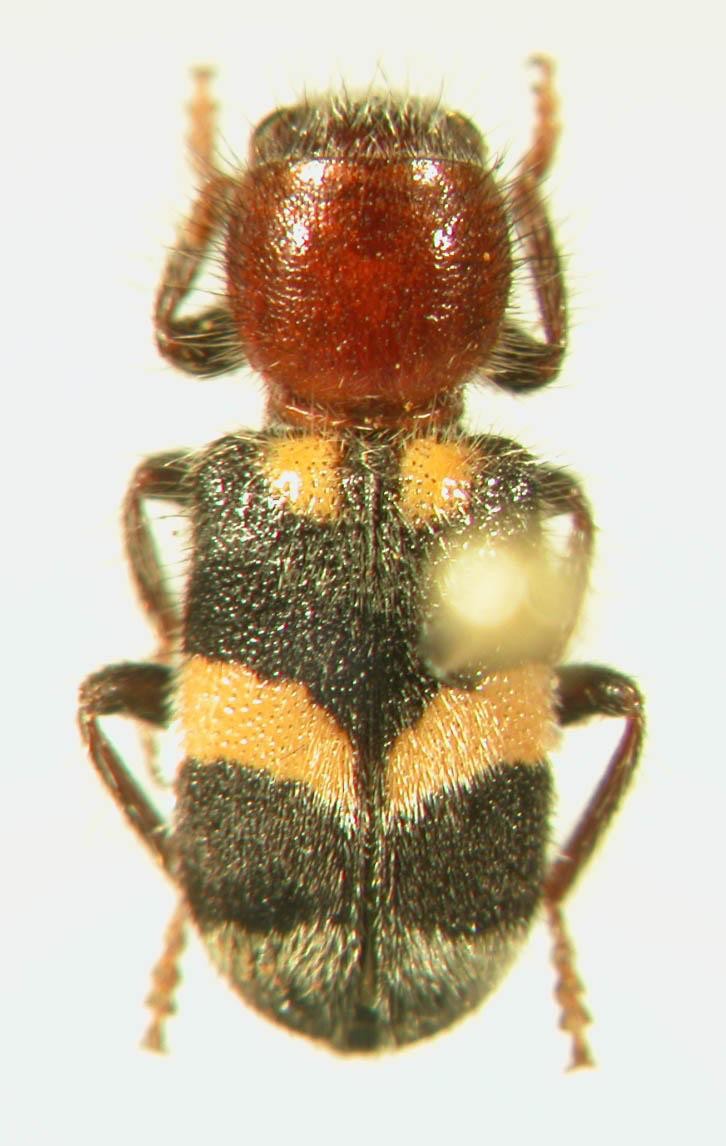
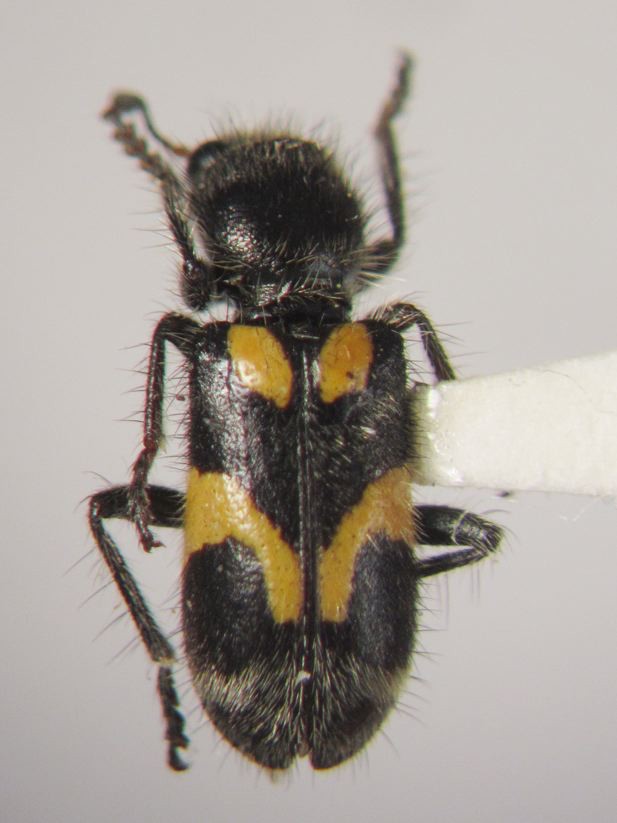
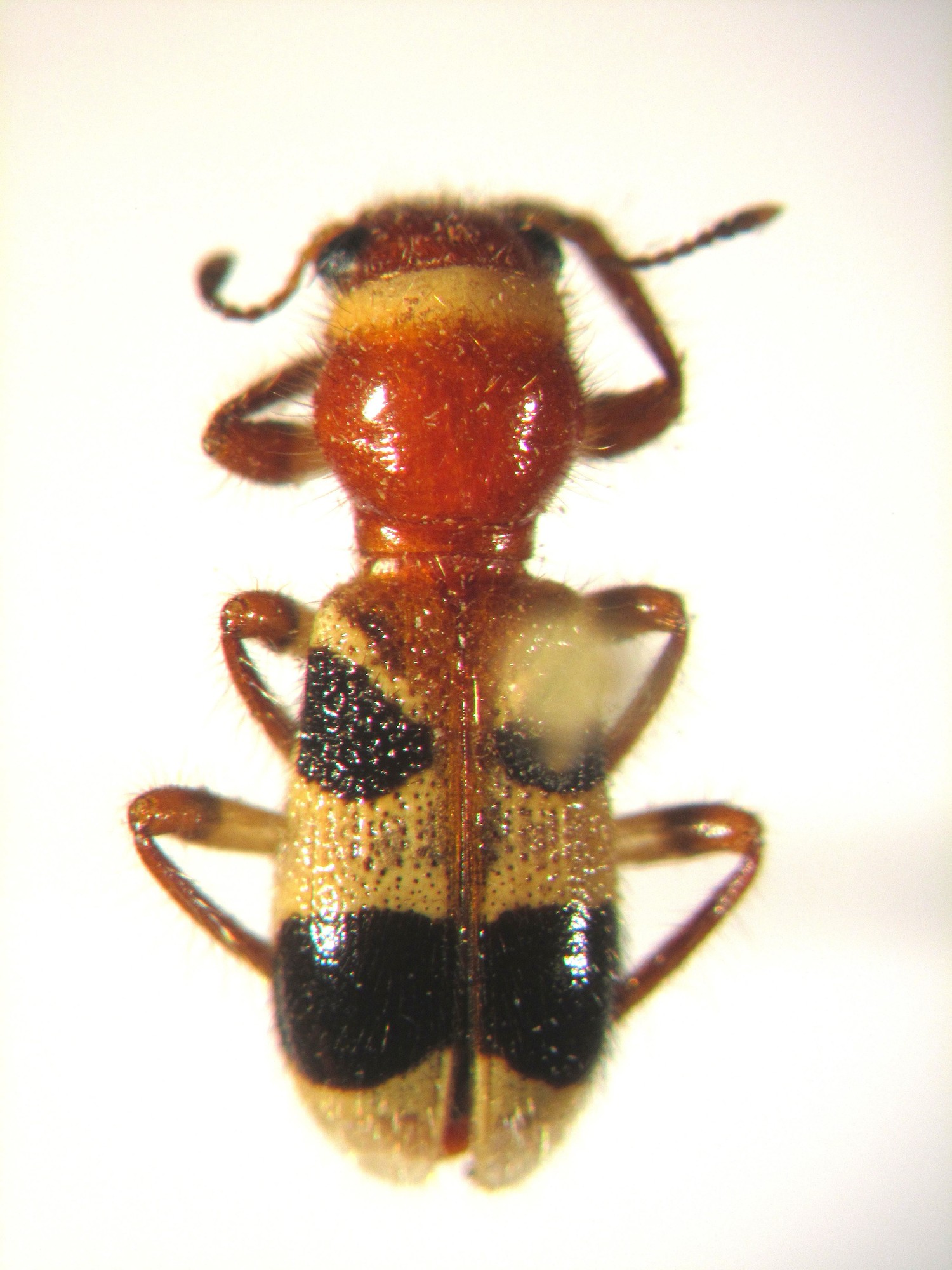
Colyphus
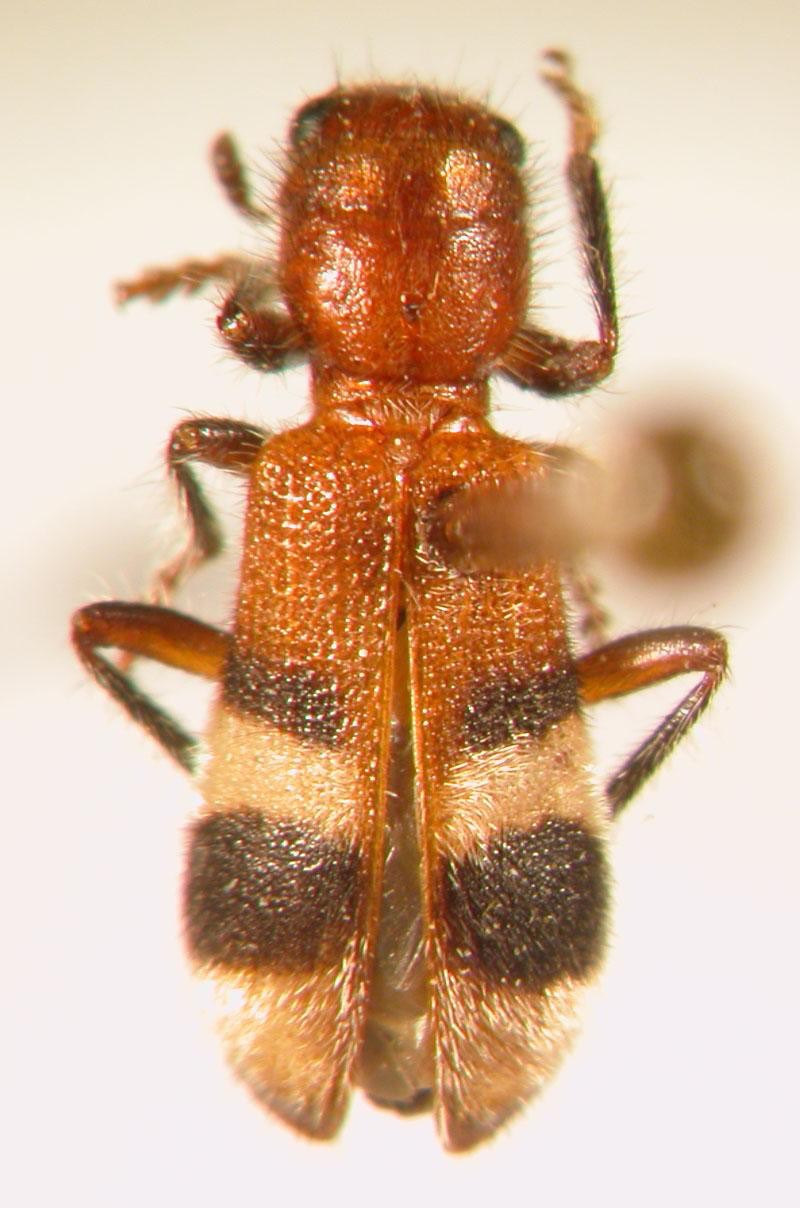
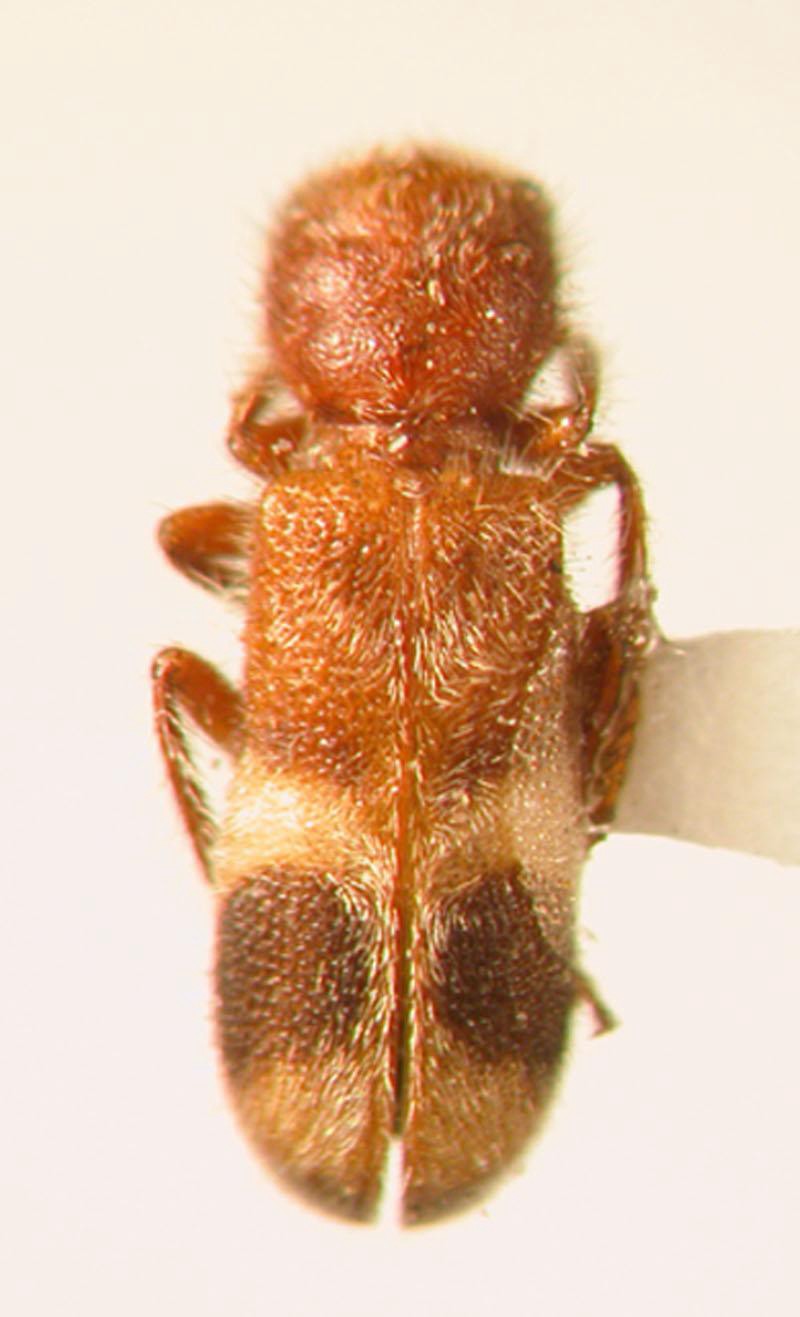
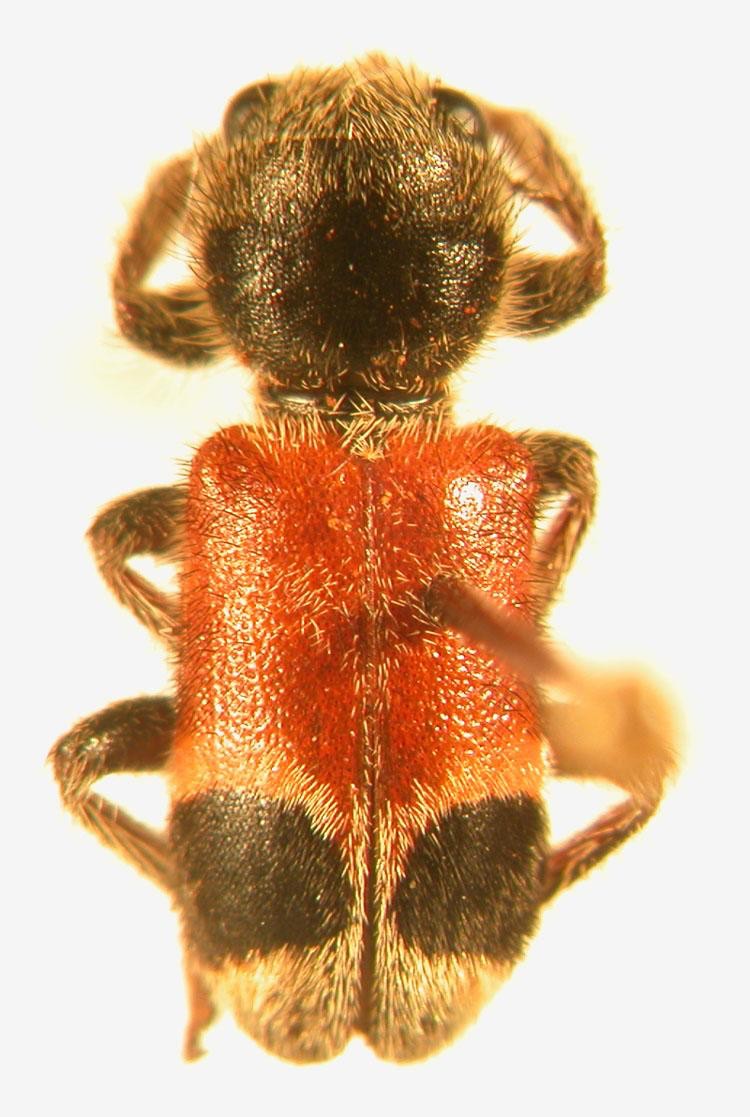
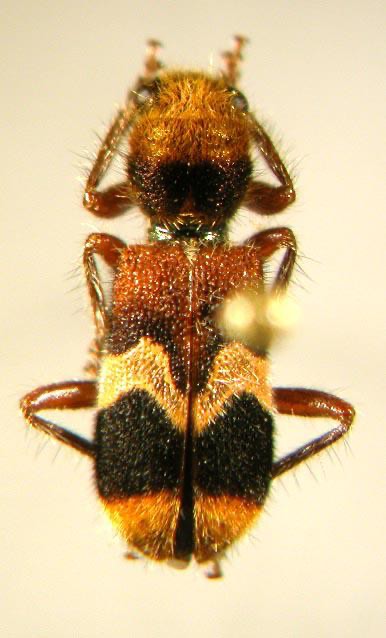
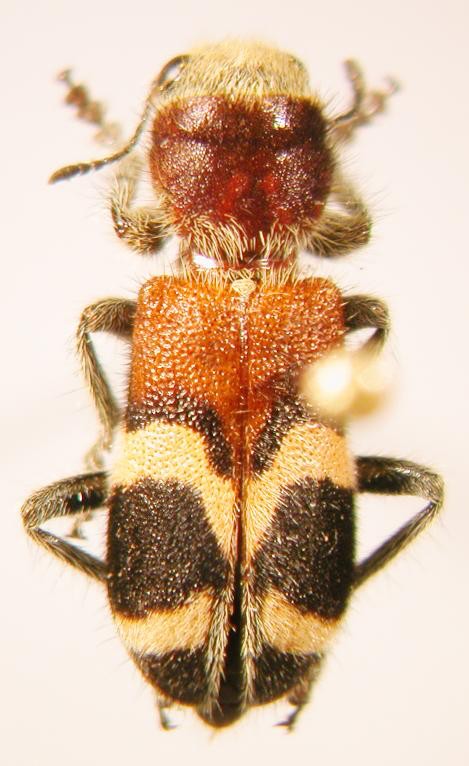
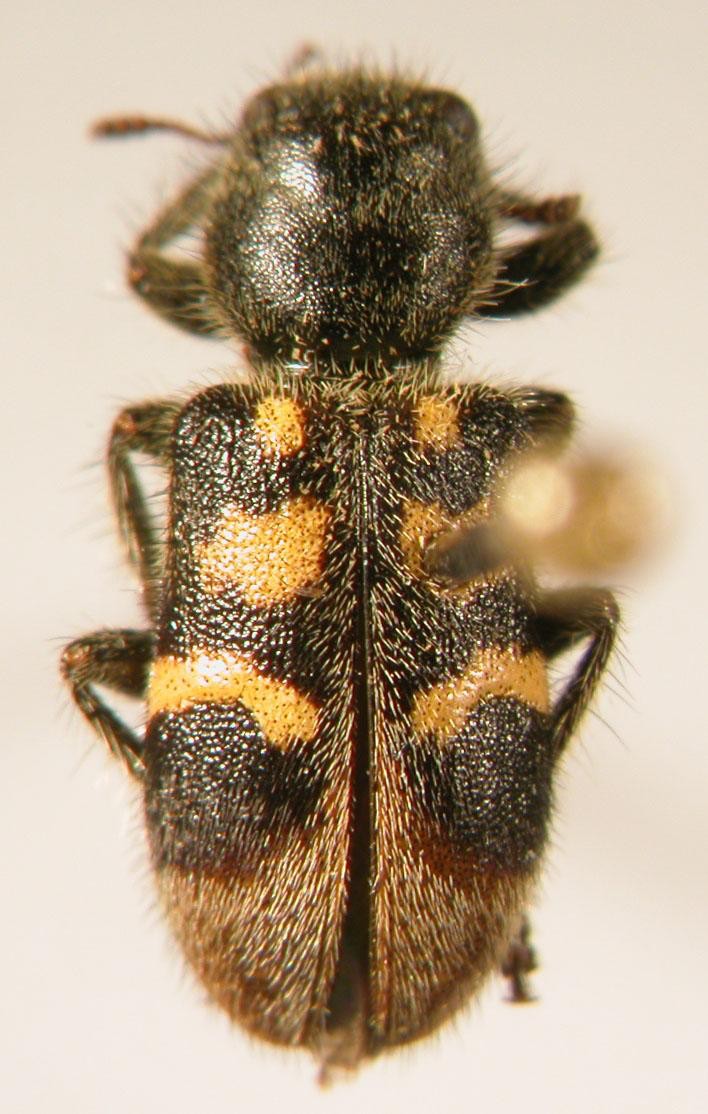
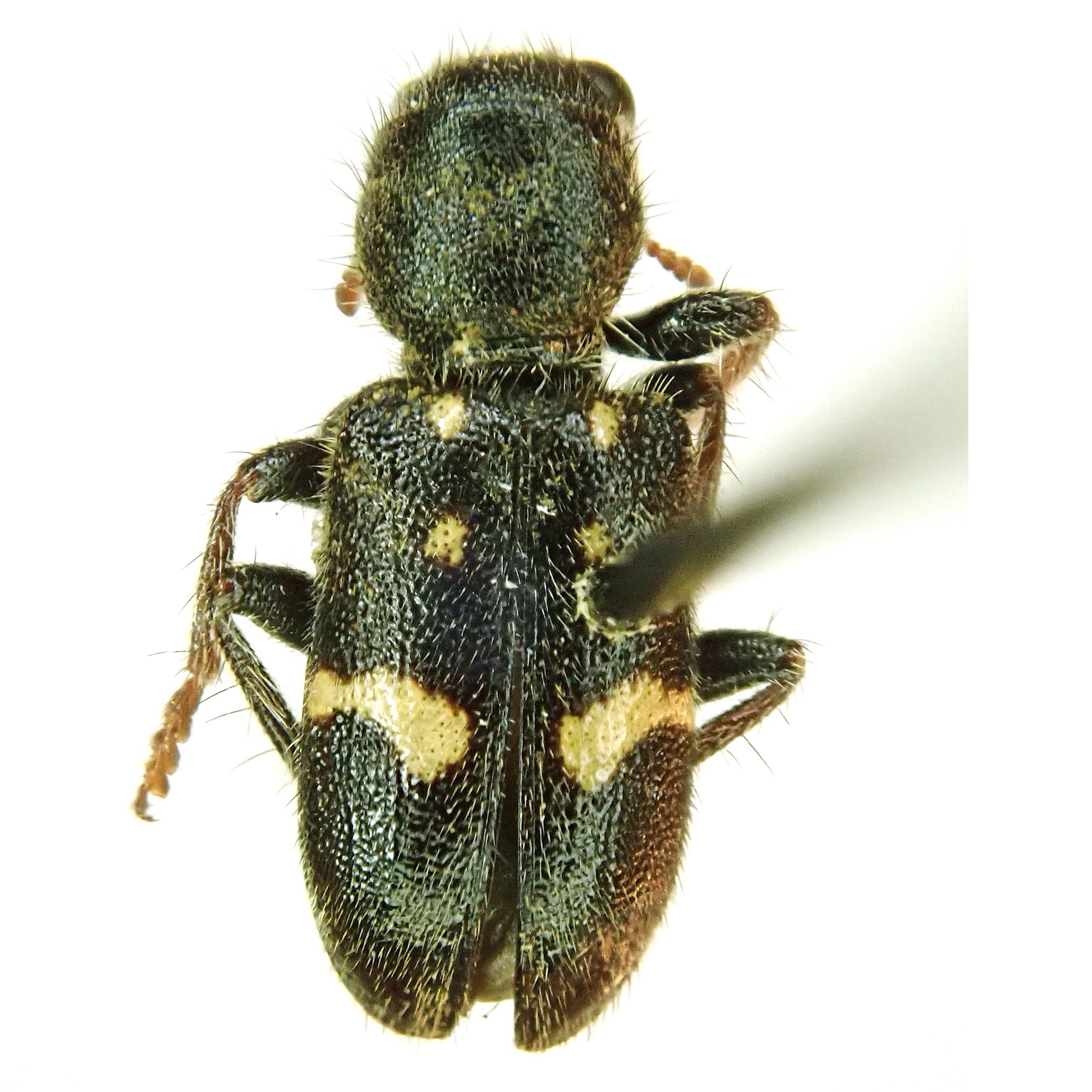
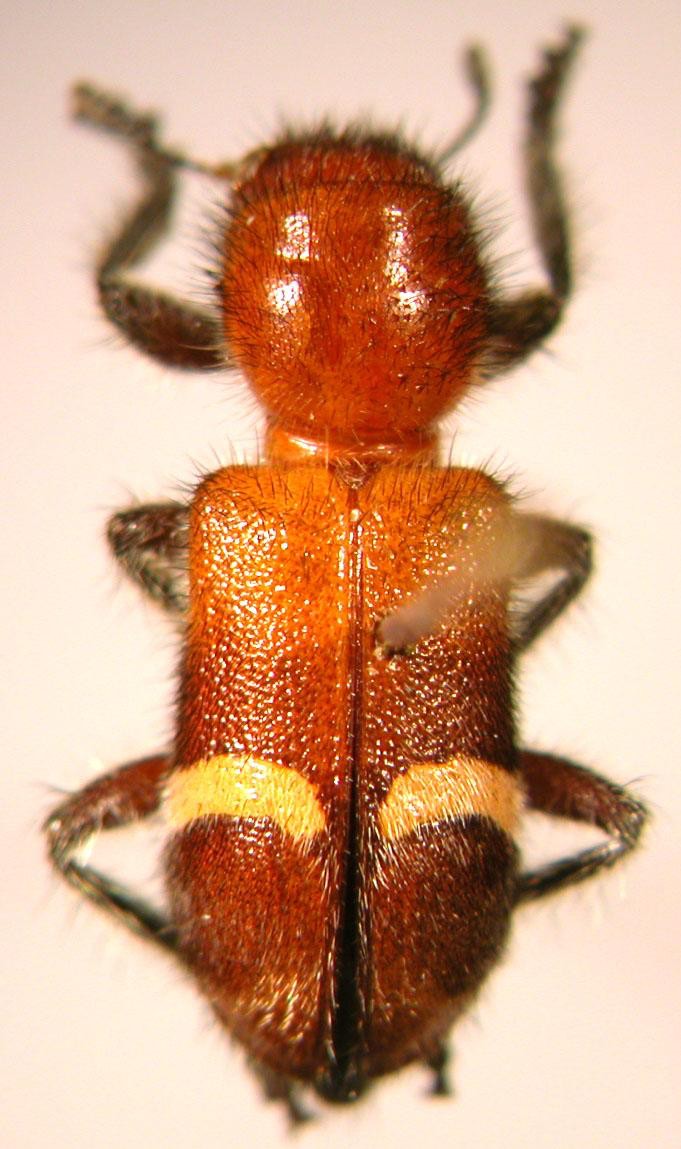
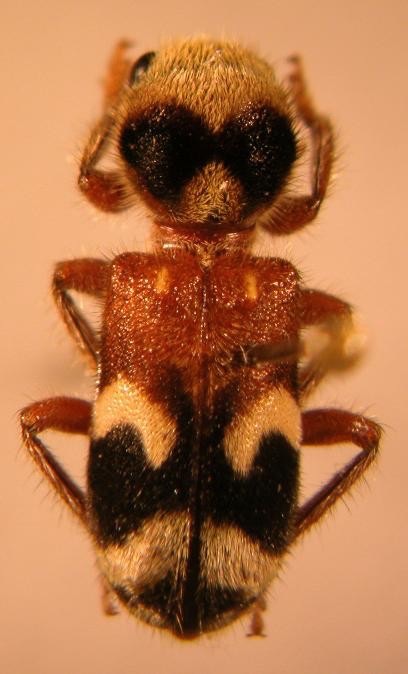
Reference images: - species/Colyphus_artus/habitus_dorsal.png (specimen, Colyphus artus Ekis, dorsal, on a leaf — head and pronotum dark brown/black, densely tan-setose; elytra black with three transverse rows of bright yellow/orange spots in a zigzag arrangement (subbasal, median, subapical pairs); legs and antennae dark) - species/Colyphus_cylindricus/habitus_dorsal.png (specimen, Colyphus cylindricus [Gorham] — confirmed spelling (dictated as "cynlindricus") — dorsal, on a leaf — head and pronotum tan/brown, densely setose; elytra elongate/cylindrical, mostly yellow with irregular dark brown/maroon mottled blotches, including a large dark patch near the base and a diagonal reddish-brown band; legs reddish-brown, densely setose) Distinguishing-character text still pending. Note: C. artus's clean multi-spot zigzag pattern is broadly reminiscent of the multi-marking-set Enoclerus species in the small/medium bulk (e.g. scitulus, sagittarius, gabriellae) — worth a callout in the intro text once written. C. cylindricus's more mottled/ blotchy pattern is less directly comparable to any specific Enoclerus but still worth noting as within the same general genus gestalt. - species/Colyphus_guptai/habitus_dorsal.png (pinned specimen, Colyphus guptai Ekis, dorsal, close-up — head and pronotum reddish-brown/maroon, densely setose; pronotum with a pair of pale cream/ivory basal spots on an otherwise reddish-orange ground; elytra with alternating bands — reddish-orange base, black band, pale cream band, black band, pale cream apex; legs reddish-orange)
Aulicus
Reference images:
- species/Aulicus_apachei/habitus_dorsal.png (pinned specimen, Aulicus apachei [Barr & Foster], dorsal,
close-up — head black, densely setose; pronotum black with a pair of round orange/tan subbasal spots;
elytra black with a metallic blue-black iridescent sheen and two pairs of round orange/tan spots (one
pair near the upper third, one pair near the lower third) — four spots total in two transverse rows;
legs and antennae dark)
- species/Aulicus_femoralis/habitus_dorsal.png (pinned specimen, Aulicus femoralis Schaeffer, dorsal,
close-up — head reddish-orange/rust with a black patch on the vertex, densely setose; pronotum
orange anteriorly, transitioning to black posteriorly; elytra metallic blue-black with the same
four-spot pattern as A. apachei (subbasal pair, median pair); legs reddish-orange with dark tarsi and
a dark band near the middle of the femora)
- species/Aulicus_monticola/illustration_historical_plate.png (historical color plate, fig. 18, Aulicus
monticola Gorham — head red/orange with a black band; pronotum red/orange with black borders; elytra
metallic blue/teal ground with irregular red/orange blotches (subbasal patch plus a mid-lateral
patch), a more irregular blotchy pattern than the clean round spots of A. apachei/A. femoralis; legs
and antennae black)
- species/Aulicus_thoracicus/habitus_dorsal.png (pinned specimen, Aulicus thoracicus Schenkling —
distinct from Placopterus thoracicus [Olivier] logged above, different genus, same epithet — dorsal,
close-up — head and pronotum black, densely setose; elytra with alternating full-width transverse
bands: metallic blue-teal at base, orange/tan, blue-teal again, orange/tan toward the apex — a clean
striped pattern rather than discrete spots or blotches; legs dark)
- species/Aulicus_linsleyi/habitus_dorsal.png (pinned specimen, Aulicus linsleyi Barr, dorsal, close-up
— head and pronotum entirely black, densely setose; elytra metallic blue-black throughout with just a
single small pair of orange/tan spots at the base — no other markings, the most reduced pattern of
the Aulicus species logged so far; legs and antennae dark)
Distinguishing-character text still pending. Cross-
reference: E. colligatus's entry already notes it "recalls some species of Aulicus" (superficial
resemblance only, not a taxonomic affinity) — colligatus's markings are contiguous along the sides
rather than four discrete round spots, so the two are visually distinguishable once compared directly;
pull the specific distinguishing characters from the keys into this section.
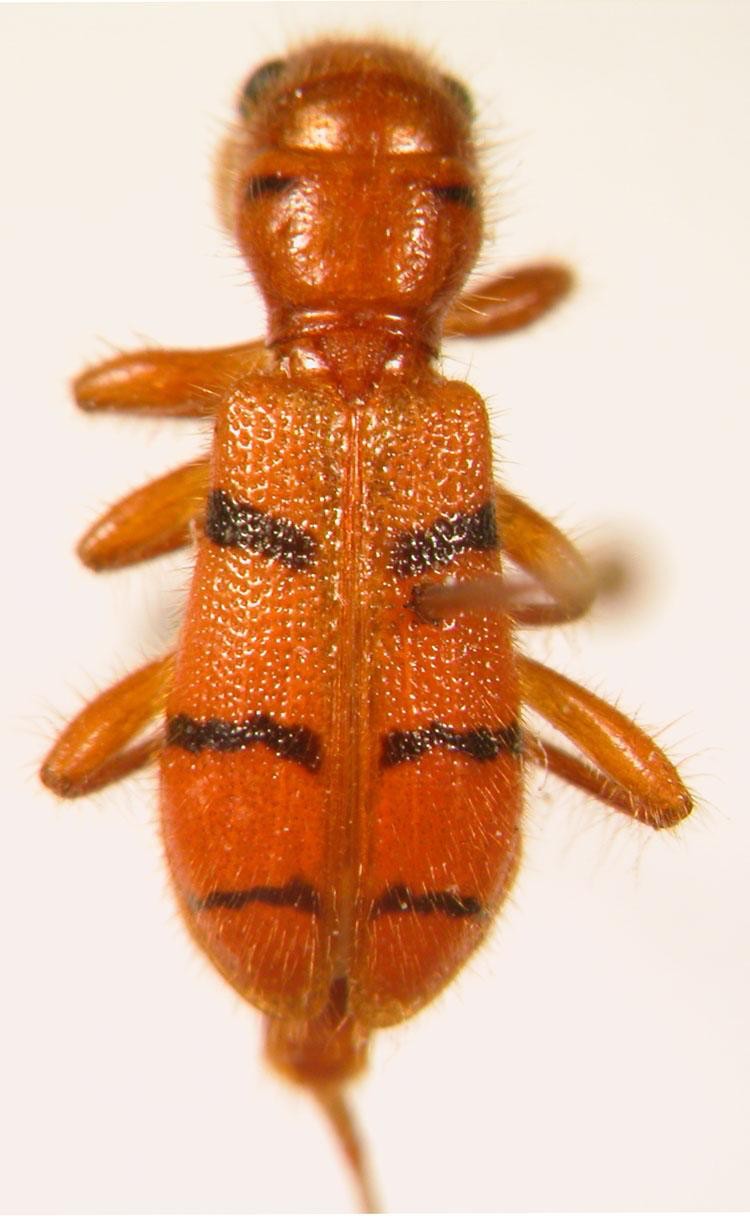
Perilypus
Reference images: - species/Perilypus_ornaticollis/habitus_dorsal.png (pinned specimen, Perilypus ornaticollis [LeConte], dorsal, close-up — head orange with a black spot at the base/vertex; pronotum orange with a black triangular macula at the base; elytra plain tan/brown, unmarked, elongate; legs and antennae dark) Also named by the keys as a genus example: Perilypus chaletoides Ekis — no image or description given yet. P. claudus and P. criocerides are not Mexican/USA/Canada fauna and are not included here. Distinguishing-character text still pending.
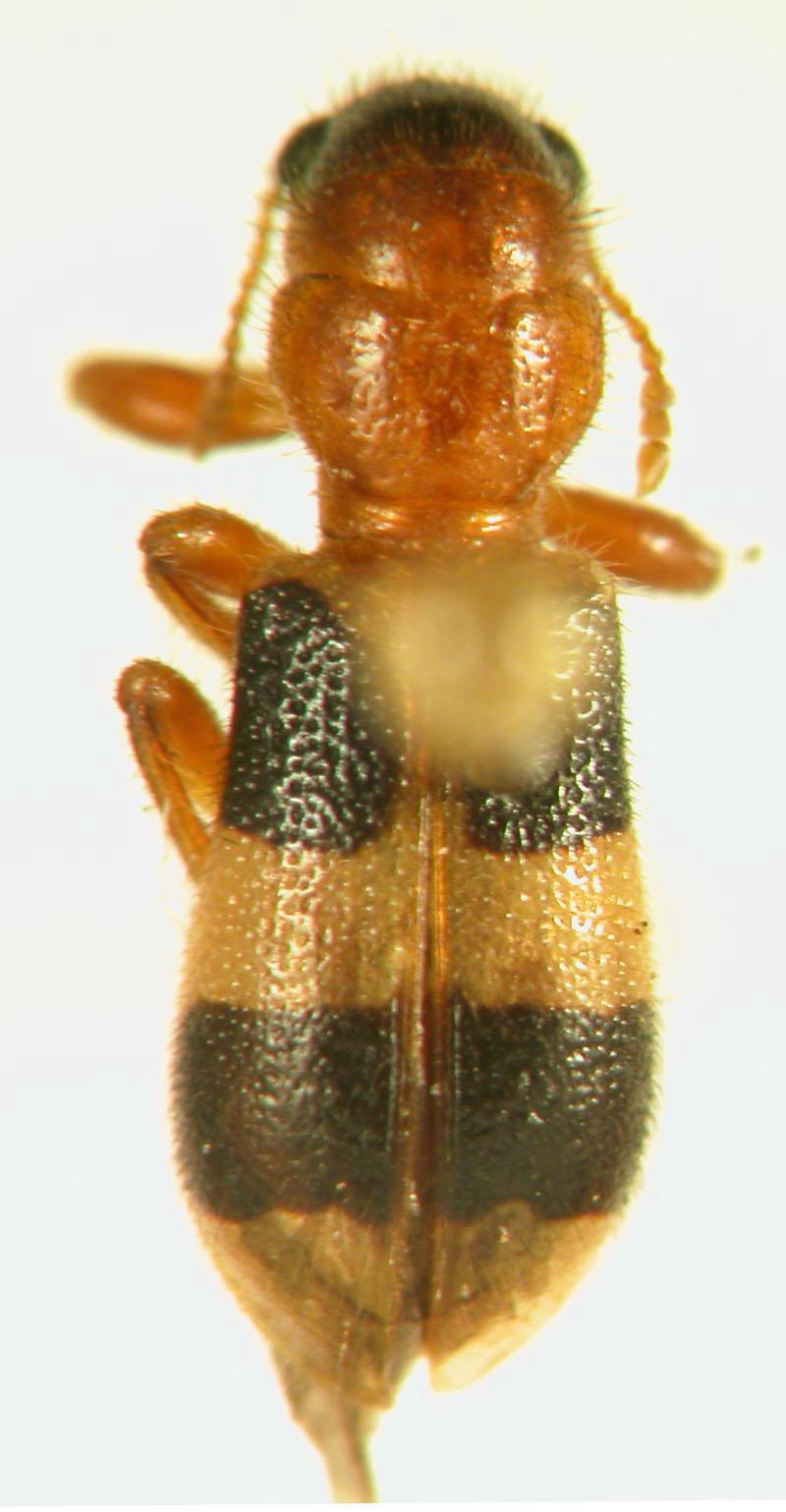
Dologenitus
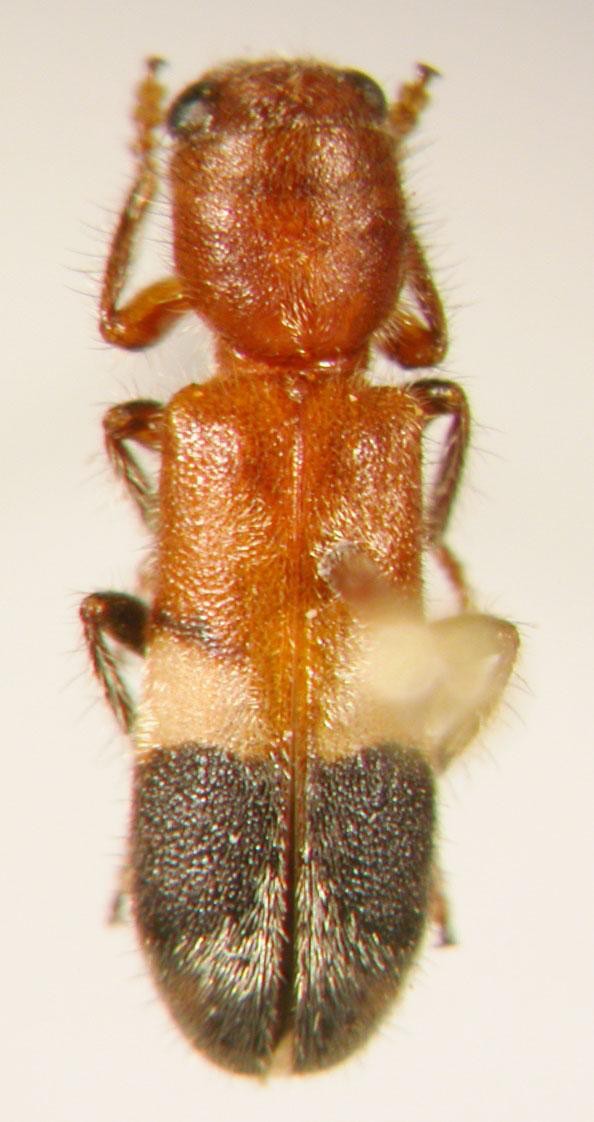
Spelling confirmed. Reference images: - species/Dologenitus_cyanipennis/habitus_live.png (live specimen, Dologenitus cyanipennis [Klug], dorsal, on a fuzzy white-pubescent plant — head black; pronotum bright coral-red/orange, densely setose; elytra metallic gold/bronze-green with a black sutural stripe, elongate) - species/Dologenitus_nigrocinctus/habitus_dorsal.png (pinned specimen, Dologenitus nigrocinctus [Klug], dorsal, close-up — head reddish-orange, densely setose; pronotum orange-red with a black transverse band near the base; elytra orange with two black transverse bands (one near the base, one near middle/posterior), apex orange) Distinguishing-character text still pending.
Quadrophenia
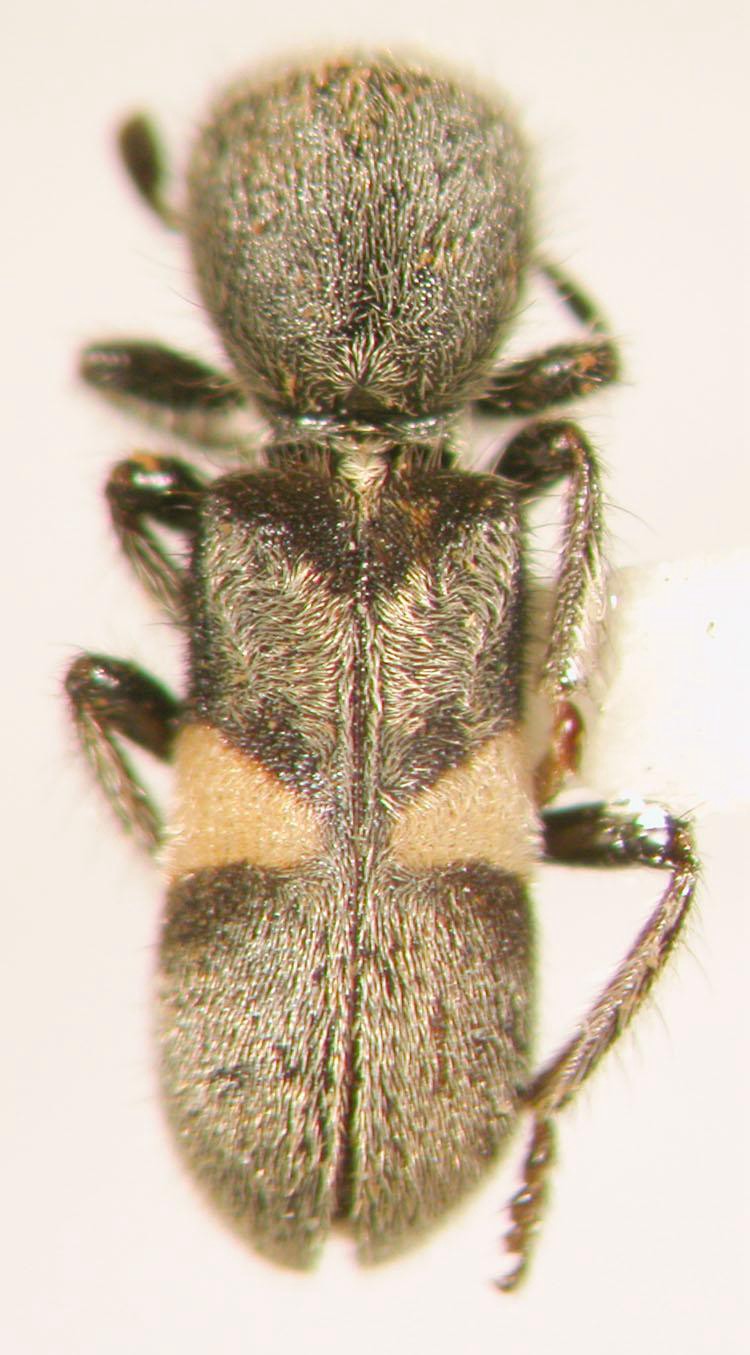
Rifkind, 2017 (new genus). Type species Q. townshendi; also includes Q. mooni, Q. entwistlei, Q. daltreyi, Q. sumidero, Q. curoei. Distinguishing-character text vs. Enoclerus/Systenoderes: unique combination of a broad, subflattened pronotal dorsum, relucent (shiny) pronotal and elytral integument, and the shape of antennomere 11. Overall gestalt reads as chrysomelid (leaf beetle) mimics rather than the antlike or ant-associated mimicry seen elsewhere in this key. Reference images: - species/Quadrophenia_townshendi/habitus_dorsal.png (pinned specimen, Q. townshendi, dorsal, fig. 5 — orange-red ground; pronotum with a pair of black basal maculae; elytra with a black patch behind the humeri and a second black pair before the apex; legs and antennae reddish-brown) - species/Quadrophenia_sumidero/habitus_dorsal.png (pinned specimen, Q. sumidero, dorsal, fig. 12 — black ground; broad tan/cream median band across both elytra; black basal and apical portions; head and pronotum black, densely setose) Q. daltreyi is Costa Rica fauna and is not included here. Distribution (genus-wide): México (Chiapas — Q. sumidero) through Nicaragua, Costa Rica, Panamá (Q. townshendi widespread across this range; Q. mooni and Q. daltreyi Costa Rica; Q. entwistlei Guatemala/Honduras).
COUPLET 1 — habitus
1a. Body ant-like in general facies — either distinctly elongate and narrow (habitus and proportions read as "ant" at a glance, with elytral fasciae and setation patterning creating the illusion of a constricted "wasp waist"), or small and more robust but still antlike, with raised post-basal elytral tubercles → ANTLIKE GUILD (below) 1b. Body more robust, not particularly ant-like in general form → ROBUST GUILD (below)
ANTLIKE GUILD (11 species confirmed)
E. angustus, E. auripilus, E. bellamyi, E. gibbus, E. nelsoni, E. rosmarus, E. sericeus, E. topes, E. tubercularis, E. vulnus, E. zacryptoceroides
(+ E. angustus, E. bellamyi confirmed in by author explicitly)
Split A — size (bellamyi peels off first)
- 6–8 mm (larger) → E. bellamyi (also distinguished by color from zacryptoceroides — see below)
- ≤ ~5–7 mm (rest) → continue to Split B
Split B — subbasal tumescence/tubercle prominence
- Prominent/produced tumescence or tubercle → E. gibbus, E. tubercularis, E. sericeus, E. topes (4 spp — see Split C)
- Not prominent (shallow, obsolete, or non-diagnostic) → E. auripilus, E. angustus, E. nelsoni, E. rosmarus, E. zacryptoceroides (5 spp — see Split D) (E. bellamyi already removed via Split A)
Split C — within the tuberculate four
Diagnostic character, confirmed by the keys: tubercle shape. E. gibbus and E. tubercularis have a really distinct, sharply produced tubercle, vs. a smoother, rounder tumescence in E. sericeus and E. topes — this lines up with the wording already used consistently in each species' own description ("tubercle" for the first pair, "tumescence" for the second) and cleanly separates the two natural pairs below: - E. gibbus vs. E. tubercularis (produced tubercle pair) — split on elytral sculpturing: oblique median elytral carinae and sulcus (grooves) present (→ E. gibbus) vs. absent (→ E. tubercularis). Both also have 2 color morphs each (see full entries). - E. sericeus vs. E. topes (smoother tumescence pair) — split on elytral surface: shining, finely punctate, NON-rugose (→ E. topes) vs. arenose/rugulose, punctate (→ E. sericeus). Secondary/ confirming character: size, ~6–8mm (sericeus) vs. ≤5mm (topes). E. topes has two color phena (reddish/black-marked, and pale); sericeus is not known to vary this way.
Split D — within the non-tuberculate five, by abdomen color
- Pale/testaceous abdomen → E. auripilus, E. angustus (2 spp — already cross-diagnosed as look-alikes: see Split E)
- Solid black abdomen → E. rosmarus, E. zacryptoceroides (2 spp — see Split F) [bellamyi removed via Split A already]
- Bicolored: black anteriorly, red posteriorly, OR sexually-dimorphic dark/reddish sternites → E. nelsoni / E. vulnus pair (both part of the "Caestron trogositoides" complex — see below; this complex is taxonomically messy overall, but in practice E. nelsoni and E. vulnus separate easily on distribution alone, with color as a confirming secondary character)
Sub-cluster resolved — E. vulnus (Caestron trogositoides complex; closest affinities with
E. sericeus and E. auripilus) Ca. 6mm, elongate/antlike but relatively stocky for the complex — comparable in build to E. sericeus, with which it's sympatric (both Sinaloa; E. auripilus also Sinaloa). Elytral ground reddish-testaceous (corrected from the OD's "castaneous"); paired dark posterior maculae; scutellum rounded, somewhat raised. Sexually dimorphic: male abdominal sternites darkened (vs. reddish in female); male terminal antennomere narrowed/acute apically (vs. blunted in female). México (Sinaloa). - vs. E. sericeus: transverse pronotal depression present in E. vulnus, absent in E. sericeus. - vs. E. auripilus: E. auripilus has two discrete pale setal patches (post-humeral oblique + apical) on a pale orange-testaceous ground (vs. E. vulnus's paired dark posterior maculae on reddish- testaceous ground); E. auripilus also has an entirely pale testaceous venter, vs. E. vulnus's sexually dimorphic abdominal sternite color. - vs. E. nelsoni (diagnostic character: distribution — cleanly allopatric, easiest and most reliable separator): E. nelsoni is México (Oaxaca, Isthmus of Tehuantepec) only, vs. E. vulnus, México (Sinaloa) only. Confirming secondary character, color: E. nelsoni has the elytral posterior 1/3 black, vs. E. vulnus, which is more reddish-brown overall (no black posterior field) — corrected from an earlier draft that overstated this as a sharp pale-fascia-on-black-ground vs. dark-maculae-on-pale-ground contrast; the real picture is messier (the whole "Caestron trogositoides" complex is taxonomically messy), so distribution is the character to lead with here, not color.
Cross-reference — E. beatus (antlike gestalt, atypical build)
Not part of this guild's terminal count and not moved — already resolved in the Small, Patterned Cluster (couplet 13) — but flagged here because its overall gestalt reads as antlike despite an atypical build: elytra subflattened above, without post-basal tubercles typical of most Antlike Guild members (e.g. E. nelsoni, E. vulnus). It has been observed running on wood and may be a mimic of cephalotine ants, which would strengthen the case for an antlike placement. Elytral pattern too variable to key on; identification relies on distribution plus photo comparison.
Split E — E. auripilus vs. E. angustus
Both pale-abdomened. Already cross-diagnosed: - E. angustus: elongate, elytra narrow; white median fascia narrowly margined in black; abdomen pale reddish; Eastern USA (Florida, South Carolina, Virginia) only - E. auripilus: antlike; pale orange-testaceous overall with a pale transverse elytral fascia; two patches of pale setae (post-humeral oblique + posterior 1/6 covering apices); Sinaloa, México (TDF) → separates cleanly on distribution alone: Eastern USA (E. angustus) vs. México (E. auripilus) — confirmed by author
Split F — E. rosmarus vs. E. zacryptoceroides
Both black-abdomened. - E. rosmarus: USA-wide distribution (New York south to Florida/Texas, west to Kansas/Nebraska/North Dakota/South Dakota/Wisconsin) — the only USA-only species left at this branch tip - E. zacryptoceroides: México only (Jalisco, Colima, Guerrero, Oaxaca); black but densely covered in silvery/ashy setae giving a gray cast; elytra with a pair of wedge-shaped eburneous maculae at middle → separates cleanly on distribution (USA vs. México) and color/vestiture (reddish-brown integument, sparse vestiture vs. black integument obscured by dense gray setae)
Antlike guild: fully resolved to 11 terminal species, plus 1 cross-reference to an already-placed species (E. beatus). ✓ (angustus, auripilus, bellamyi, gibbus, nelsoni, rosmarus, sericeus, topes, tubercularis, vulnus, zacryptoceroides)
SMALL, PATTERNED CLUSTER (8 species — pulled aside from antlike guild, not itself ant-mimic gestalt)
E. nigrifrons, E. nigripes nigripes, E. nigripes rufiventris, E. beatus, E. aethiops, E. lautus, E. schaefferi, E. inyoensis
(9 taxa counting the two nigripes subspecies separately; 8 species). E. lecontei and
E. ocreatus were formerly placed here but are now grouped with E. nigricans and
E. ablusus instead, in the Uniform Dark-Ground, Vestitural-Dominant Cluster below — see that
section for the reasoning.
Fully broken down into sub-couplets below (stale "pending" note removed). Known internal cross-diagnoses
already in species_data.md to build from:
- E. nigrifrons vs. E. n. nigripes: sympatric pair, separated by elytral punctation (coarse/dense in nigripes vs. shining/finer in nigrifrons) and body form (narrow/elongate nigrifrons vs. more robust nigripes)
- E. n. nigripes vs. E. n. rufiventris: subspecies pair, pronotum and elytral base black in rufiventris vs. reddish brown in nigripes
- E. lautus / E. schaefferi / E. inyoensis: explicitly flagged as a trio difficult to separate, needing careful comparison
- E. inyoensis OD gives explicit 3-way diagnosis vs. E. lecontei and E. schaefferi (cited in the OD under
its now-preoccupied original name, E. humeralis Schaeffer — E. schaefferi Barr is the replacement
name) on humeral patch extent, median gray bar shape, black bar definition, tibia color
Split (top of cluster) — distribution
- E. beatus / E. aethiops peel off first as a pair: México/Central America only, no USA records
- E. nigrifrons / E. n. nigripes / E. n. rufiventris peel off next as a trio: USA Midwest-to-East + adjacent Canada, no México records
- Residual trio (E. lautus, E. schaefferi, E. inyoensis): western USA and/or México — resolved below
Split — E. beatus vs. E. aethiops (México/Central America only)
Diagnostic character: elytral form. - E. beatus: elytra subflattened above, without post-basal tubercles found in most Antlike Guild members (e.g. E. nelsoni, E. vulnus) — an overall antlike gestalt despite atypical build; elytral pattern too variable to key on, identification relies on distribution plus photo comparison; México/Central America (Sinaloa through Chiapas/Yucatán/Quintana Roo, México; Guatemala; Costa Rica; Honduras) — no USA records - E. aethiops: elytra not particularly flattened above; reddish-brown ground, vertex and scutellum contrastingly black; fascia distinctly transverse-angulate PLUS a separate apical setal patch, both sharply contrasted against the infuscate posterior half; pine-associated; narrower range (Edo. de México, Tlaxcala, Oaxaca, Chiapas, México; Huehuetenango, Guatemala) → elytral flattening (present in beatus, absent in aethiops) is the fastest, most reliable split.
Split — within the nigrifrons/nigripes/rufiventris trio
- E. nigrifrons vs. E. n. nigripes (sympatric pair): elytral punctation — coarse, dense (→ E. n. nigripes) vs. shining, finer (→ E. nigrifrons); body form — narrow/elongate (nigrifrons) vs. more robust (nigripes)
- E. n. nigripes vs. E. n. rufiventris (subspecies pair): reddish brown pronotum and elytral base (→ E. n. nigripes) vs. pronotum and elytral base black (→ E. n. rufiventris)
Split (within trio) — E. inyoensis splits off first
Three independent lines of evidence converge: 1. Extent of red/orange: covers the ENTIRE anterior half of the elytra (vs. a discrete elongate block [lautus] or a smaller "blocky" humeral patch [schaefferi]) 2. Posterior pattern: light-colored background densely clothed in gray pile, bisected by a sharply defined black transverse bar (vs. black integument with a white setal patch/fascia laid over it, in both lautus and schaefferi) 3. Distribution: restricted to the Panamint Mts., Inyo Co., California only (per OD type series) — vs. lautus (Arizona + Sonora/Durango/Sinaloa, México) and schaefferi (much broader: California, Arizona, Idaho, Washington, Oregon, Nevada, British Columbia, possibly Chihuahua) → E. inyoensis
Split (within trio) — E. lautus vs. E. schaefferi
Ranges overlap in Arizona, so lead with color extent rather than distribution: - Elongate reddish block running from the elytral base to the middle → E. lautus - More localized, "blocky" red macula confined to the humeral area only → E. schaefferi
Small, patterned cluster: fully resolved to 9 terminal taxa (counting both E. nigripes ssp. separately; 8 species) — geographic splits for beatus/aethiops and the nigrifrons/nigripes/rufiventris trio are given above. ✓
UNIFORM DARK-GROUND, VESTITURAL-DOMINANT CLUSTER (4 species, small-bodied — pulled from robust guild; cross-references E. viduus, E. sphegeus, E. moestus)
E. lecontei, E. ocreatus, E. nigricans, E. ablusus.
No reason to complicate the key by splitting these four into separate categories: all four share the same
basic visual gestalt — a small, essentially unicolorous (black or brown) integument with the pattern
produced mainly or entirely by pale setae, rather than a true bi/tricolor integumental marking.
E. lecontei, E. ocreatus, and E. nigricans are purely vestitural over immaculate black integument;
E. ablusus has a brown ground (the posterior half sometimes darker, but not a true bicolor pattern), so
it reads the same way to the eye and is grouped here on that basis rather than kept separate.
E. aethiops, formerly grouped with E. ablusus here, has been moved to the Small, Patterned Cluster
instead — its ground color contrast (reddish-brown vs. contrastingly black vertex/scutellum) and
well-defined two-part fascia read as a genuine bi/tricolor pattern, unlike E. ablusus's vaguer, more
uniform-looking marking.
Split — integument color
- Black integument (3: lecontei, ocreatus, nigricans) — continue splitting below
- Brown integument, posterior 1/2 sometimes darker but not truly bicolored → E. ablusus: fascia indistinct, interrupted, angular (vague/broken pattern); no separate apical setal patch; dorsum rugulose; wide range NW México through Belize/Honduras/Nicaragua/Guatemala
Split (within black trio) — E. nigricans vs. E. lecontei/E. ocreatus
Diagnostic character: distribution plus setal-pattern shape. E. nigricans is a distribution outlier for this trio (disjunct in Puebla/Hidalgo, México, vs. the largely USA-centered lecontei/ocreatus) and has a distinctively complex single setal path rather than a clean three-part or simple curvate pattern. - E. nigricans: restricted to Puebla/Hidalgo, México (disjunct); slender form; elytral surface finely, densely roughened, nearly scabrous; the pale setal patch is a distinctive elongate, narrow shape — from the disk near middle, posteriorly to the suture, then along the suture to the apical 1/4, where it angles obliquely to the sides (a more complex path than a simple transverse fascia); pine/oak forest - E. lecontei / E. ocreatus: USA-centered (reaching just into northern México); setal pattern either three separate markings or a single simple curvate fascia — see next split
Split (within pair) — E. lecontei vs. E. ocreatus
Both purely vestitural, immaculate black integument, small-bodied. Diagnostic character: setal-marking count/gestalt. - E. lecontei: defined by the COMBINATION of THREE setal markings together — a swirled basal patch (scutellum to basal 1/4, expanding irregularly laterally), a separate narrow angulate median fascia, and a densely white-vested apical patch. 5–7mm. USA (Wisconsin, Michigan, Arizona, California, Washington, Oregon, Idaho, South Dakota, Colorado, Wyoming, New Mexico, Texas); Canada (British Columbia); México (Sonora, Durango). Variable ("erro" phenon has red pronotal margins; Napa Valley population shows integumental pale color under the fascia — the one population where this cluster's "no integumental color" rule doesn't strictly hold); on dead pine. - E. ocreatus: a single curvate median fascia, apices also white-setose, but no separate basal patch. <5mm, narrow. USA (Arizona, New Mexico, Colorado, Kansas, Utah, Nevada); México (Nuevo León). → the three-part vs. single-marking-plus-apices gestalt is the fastest, most reliable split; body size (lecontei 5–7mm vs. ocreatus <5mm) is a confirming secondary character.
Cross-reference — E. viduus, E. sphegeus, E. moestus (also purely vestitural)
Not part of this cluster and not moved — these three are resolved within the Robust Guild (couplets 53–55) on size/gestalt grounds — but they share this cluster's defining trait (pattern produced entirely by vestiture, no true integumental marking): E. viduus (blue-black, 4 vestitural maculae), and E. sphegeus/E. moestus (broad pale transverse vestitural fascia at middle, both large-bodied). Flagged here so the "vestitural-dominant" condition at this couplet isn't misread as exclusive to this 4-species cluster.
Uniform dark-ground, vestitural-dominant cluster: fully resolved to 4 terminal species, plus 1 cross-reference note covering 3 already-placed species (E. viduus/E. sphegeus/E. moestus). ✓
E. MOLYBROS (1 species — stands alone)
Keys out directly on: "elytra concolorous, lacking integumental pattern; densely setose, producing a uniformly gray appearance."
ROBUST GUILD (88 species — fully resolved below)
Everything not already placed above. Working split: size, using 10 mm as the dividing line (this is the exact phrase used throughout dictation for dozens of species — "Length: < 10 mm" — so it's the keys' own de facto working boundary, not an arbitrary cutoff).
Sub-cluster within Large — Agave/Yucca-associated red-on-black-elytra group (4 species)
E. agave, E. spinolae, E. zonatus, E. vernalis — already substantially cross-diagnosed against each
other in species_data.md (spinolae/zonatus/vernalis trio), now joined by E. agave. All four are
associated with Agave/Yucca (predaceous, as in the genus generally — larvae/adults feeding on
beetle and moth larvae found in the plant, not on the plant itself); separate almost entirely on
distribution (essentially allopatric) plus extent/shape of the red-on-black elytral pattern:
- E. agave: fascia extremely broad, occupying roughly the basal 2/3 of the elytra (black only at the extreme base, and the apical third); Chiapas, México + Zacapa, Guatemala — geographically isolated from the other three (southernmost, no range overlap)
- E. spinolae: inverse ground color — elytra red with black maculae (humeral + postmedian/anteapical), not a fascia on a black ground; SW USA (Arizona, New Mexico, Texas, Colorado, Utah, Nebraska) + N México (Chihuahua, Durango, Sonora, Guerrero); flies during the Arizona "monsoon" season (June–Aug)
- E. zonatus: broad transverse red fascia at middle (fire-engine red in life) + red apical 1/5, black elsewhere; NE México (Tamaulipas, Hidalgo, Michoacán)
- E. vernalis: reduced/narrower orange band at basal third + orange apex (least extensive red of the four); elytral integument usually less lustrous than in related E. spinolae; restricted to the Mojave Desert, California, associated specifically with Joshua Tree (Yucca brevifolia); flies in spring (Apr–Jun), phenologically isolated from E. spinolae even where ranges might otherwise approach
Large cluster overall — bookkeeping tally only, not a couplet (≥10–11mm, or explicitly labeled
"large" even when the low end dips under 10; E. semiochraceus is a size EXCEPTION, pulled in here purely
on Rusty-Vestiture-group gestalt at 4–8mm — by far the smallest member of this cluster) — 24 species total,
already fully accounted for by the two breakdowns below:
- 4 species — E. agave, E. spinolae, E. zonatus, E. vernalis — already resolved above, in the
Agave/Yucca sub-cluster. NOT re-processed here or below; listed only for the total count.
- 1 species — E. quadrisignatus — already resolved elsewhere, in the ichneumoneus trio (see the
small/medium bulk section). NOT re-processed here or below.
- 19 species — the rest, resolved just below as "the hairy bears."
"Hairy bears" — remaining Large-cluster breakdown (19 species: bimaculatus, boucardi, chamelae,
crabronarius, incanus, insidiosus, latesellatus, crinitus, leehermani, lobatus, magnus, mexicanus, pacificus, quadrinotatus, regius, semiochraceus, s. silbermannii, spectori, valens — quadrisignatus already resolved above in the ichneumoneus trio)
Rusty Vestiture group (7 species): E. boucardi, E. lobatus, E. s. silbermannii, E. mexicanus, E. regius,
E. quadrinotatus, E. semiochraceus
Gestalt: separable by robust body type, shape of fascia, and by the extent, placement and color of the cranial, pronotal
and elytral vestiture. Most species in the group have male setal daggers — curvate structures projecting
past the pygidia, composed of tightly ranged elongate setae. Integumental ground color is generally
black, although E. mexicanus occurs in both black and reddish-brown integumental forms. Six of the
seven have setal daggers on the male pygidium (boucardi, lobatus, s. silbermannii, quadrinotatus,
semiochraceus, and mexicanus, though reduced in the last); E. regius is the sole exception, lacking them
entirely, but is confirmed by the keys to belong here on setation and coloration grounds, closely
resembling E. boucardi. Daggers are a nice confirming character if a male is in hand, but not used as the
lead couplet text since it requires dissection/close inspection — the visible fascia-shape + vestiture
gestalt carries the split instead.
- E. boucardi: fascia complete internally and laterally (not interrupted), with anterior and
posterior margins more evenly transverse than in E. s. silbermannii; pronotum entirely rust-vested,
lacking the black transverse macula present in E. s. silbermannii; subbasal tumescences
prominent/elevated, covered with elongate black setae; mesosternal posterior median process produced
well beyond the mesocoxae; setal daggers present (male). México (Guerrero, Michoacán, Jalisco, Puebla,
Oaxaca, Chiapas, Morelos); Guatemala. To 13mm.
- E. lobatus: fascia lobate internally and deeply emarginate posteriorly (distinctive scalloped shape,
unlike boucardi's simple complete band); entire pronotum densely covered with reddish setae (not just
anterior); setal daggers present (male). México (Chiapas, Oaxaca). 10–14mm.
- E. s. silbermannii: fascia narrowly interrupted at the suture (not complete), with anterior and
posterior margins less evenly transverse than in E. boucardi; pronotum with a
transverse black macula at middle lacking reddish setae, amid the otherwise rusty pubescence (absent
in E. boucardi); elytral apex black integumentally, covered with a band of thick rusty setae bearing a
subapical ivory-colored setal spot on each elytron; setal daggers present (male). México
(Chiapas only); Guatemala. To 11mm — a much narrower range than E. boucardi's.
- E. mexicanus: pronotum broadly black across the middle (a transverse band bisecting the rusty
pubescence — not a discrete macula as in E. s. silbermannii); subbasal tumescences distinctly
tuberculate (vs. not tuberculate in the other members of this group); elytra with a distinct post-basal
shield-shaped patch of pale pubescence, paired median cream markings usually not reaching the suture;
apices ashy-pubescent (vs. E. s. silbermannii's dense rusty apical vestiture); setal daggers present but
reduced. Variable — can run primarily black or primarily reddish; the diagnostic pronotal band and other
characters hold regardless of body color. The reddish-brown ground color is otherwise atypical for this
group (vs. black/piceous in the other six), but overall gestalt places it here rather than with the
spectori/pacificus pair (see below), which it also superficially resembles. Primarily Atlantic versant;
México (Tamaulipas, Veracruz, San Luis Potosí, Chiapas, Yucatán Peninsula; Nuevo León?); Honduras. To 12mm.
- E. regius: closely resembles E. boucardi. Diagnostic split: facies more robust, elytra less elongate in
E. regius than in E. boucardi. Additional characters: subbasal tumescences shallow, not elevated/prominent in
E. regius (vs. elevated/prominent in E. boucardi); vestiture texture — E. regius bears notably long,
erect setae on head/pronotum (ferruginous) and elytral base (coppery red, commixed with longer erect
black setae), vs. E. boucardi's shorter, non-erect rust-colored covering; setal daggers ABSENT in male
(vs. present, though reduced in E. mexicanus, in all six other members of this group, including semiochraceus). México (Guerrero, Oaxaca, Jalisco, Morelos).
7.8–8.75mm — smaller than boucardi (to 13mm), lobatus (10–14mm), and s. silbermannii (to 11mm).
Note: E. boucardi and E. regius are difficult to separate with confidence unless a specimen can be
examined in hand — elytral proportion and tumescence elevation are subtle and best confirmed alongside
vestiture texture and (in males) the setal-dagger character.
- E. quadrinotatus: readily distinguished from the other four by its elytral pattern — a broad yellowish
fascia attaining the suture PLUS a separate large black macula on each elytron posterior to the fascia
(a fascia-plus-spot pattern, not a single uninterrupted band as in boucardi/lobatus/s. silbermannii/
regius); two color phena — a reddish phenon (pronotum, elytral base, venter except abdomen reddish)
and a black phenon (pronotum, entire venter including abdomen, elytral base black; known from Guerrero)
— a parallel case to the black/reddish variation also seen in E. mexicanus, elsewhere in this same group,
though not a shared diagnostic; pronotum densely reddish/coppery-setose in
both phena; setal daggers present (male). México (Sinaloa, Jalisco, Nayarit, Colima, Guerrero, Oaxaca).
To 12mm.
- E. semiochraceus: DIAGNOSTIC character — sagittate (arrowhead-shaped) patch of rust-colored
pubescence at the elytral base, the single most reliable diagnostic mark for this species within the group.
Confirming/secondary characters: distinguished from boucardi/s. silbermannii by lacking prominent
subbasal elevations; midelytral fascia with anterior margin slightly constricted before the suture and
posterior margin similar but also shallowly emarginate at the middle of the elytron (vs. both margins
transverse in boucardi); pronotal vestiture variable — uniformly
rust-colored, or rust-colored with a narrow transverse black setal patch anterior to the basal
constriction; rusty vestiture on head and both anterior and posterior of pronotum, and thickly covering
the elytral apices; midelytral fascia densely setose with short, fine, yellow-orange setae (vs. more
sparsely vested, mixed-length whitish setae, in boucardi/silbermannii). Setal daggers present
in males. México (Puebla, Veracruz); Guatemala (Baja Verapaz). 4–8mm — smallest in this
group by a wide margin.
Large, elongate, bimaculate-elytra group (2 species): E. spectori, E. pacificus
Gestalt: large, elongate-bodied species with somewhat reduced transverse pale median elytral maculae,
interrupted at the suture, and brown-to-castaneous integumental ground color. Both spectori and pacificus
also share the rusty vestiture gestalt of the Rusty Vestiture group above,
but separate out from it on proportionally more elongate elytra (E. mexicanus, formerly grouped here with
this pair, is now placed in the Rusty Vestiture group above on overall gestalt, despite its reddish-brown
rather than black ground — see that group's mexicanus account for the full split rationale). Vestiture
and fascia detail separate pacificus from spectori.
- E. spectori: elytra most elongate of the pair (≈2× as long as wide); elytral maculae broad,
arcuate bands, complete to the lateral margins, attenuated before the suture and rounded internally;
cranial and pronotal vestiture PALE (not orange/rust) and FINE (not coarse) — vs. E. pacificus, which
has orange/rust, coarser vestiture; subbasal tumescences each produced into an obtuse,
backward-projecting spine (unique in this pair). Costa Rica, Panamá, México (Veracruz). To 11.5mm.
- E. pacificus: elytra elongate, though less pronounced than E. spectori; shape of the elytral
fascia complete to the lateral margins and only narrowly interrupted at the suture (vs. spectori's,
which are broad, arcuate, attenuated before the suture and rounded internally); pronotum ENTIRELY
vested with rust-colored setation; apical 1/3 distinctly ferruginous — a third color zone not present
in spectori. Pacific versant México (Sinaloa to Oaxaca). To 15.5mm (largest of the two).
Velvety-macula-ringed-in-white pair (2 species): E. crabronarius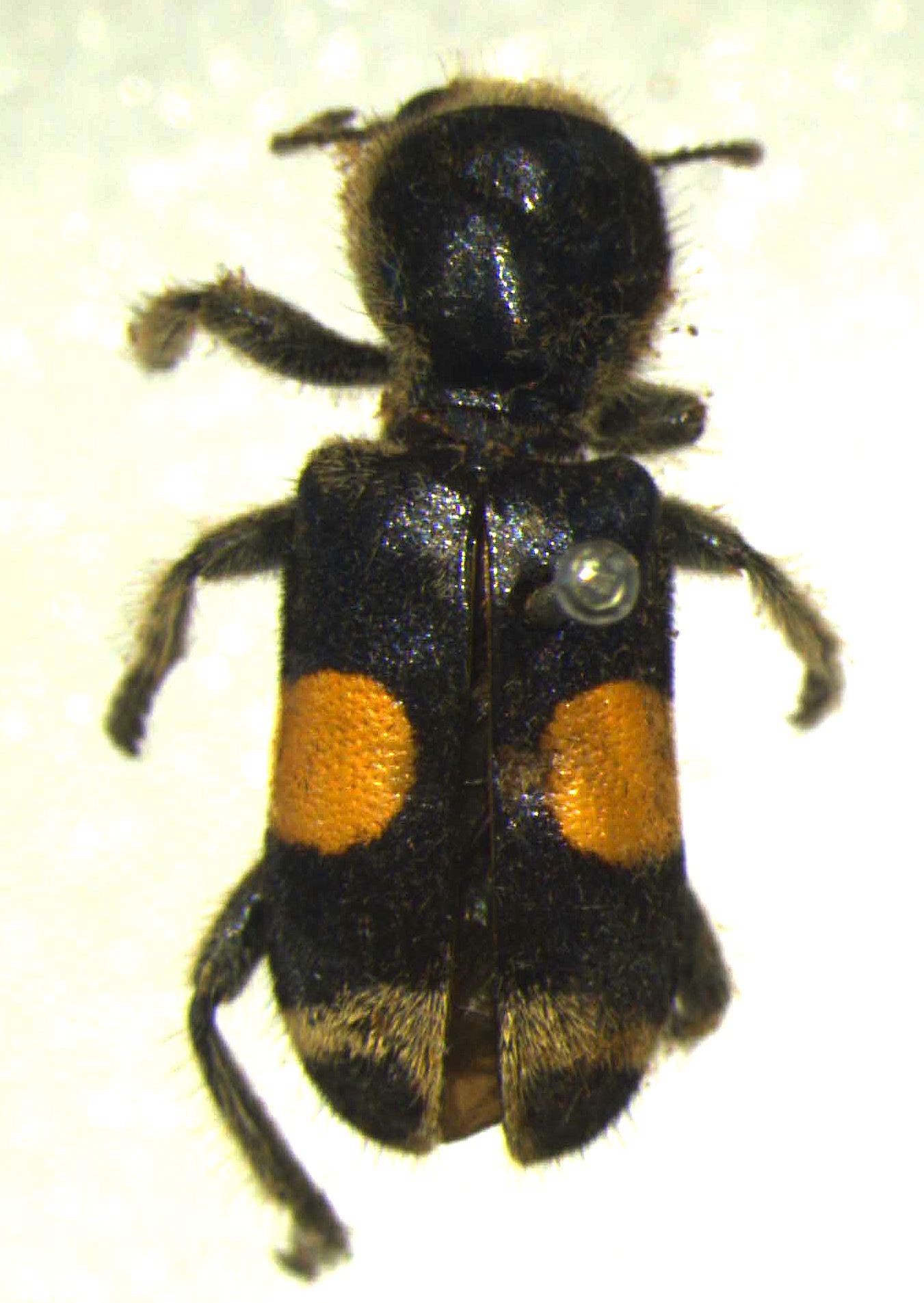 , E. incanus
Already cross-referenced to each other in species_data.md — both have a black velvety macula near the
elytral apex, entirely encircled by a ring of white setae, a condition shared by very few (if any other)
large Mexican/Central American Enoclerus in the region covered here — a genuine apples-to-apples shared
trait (crabronarius: subapical, one per elytron; incanus: see below, same ringed-macula gestalt but
larger/more diffuse). Once grouped on that basis, the pronotal setal pattern resolves the two cleanly —
and is diagnostic for E. incanus alone, so let it define that species first:
- E. incanus: each elytron's pale apical band eclipsed at middle by a large black macula, giving the
same ringed-apical-black-spot effect shared with crabronarius (see above); pronotal disk additionally
bears a large black scutiform macula completely ringed by a continuous band of very long pale setae —
a true ring surrounding the black center, not matched by any other large Enoclerus in the region and
diagnostic on its own. Much larger, >13mm (holotype 16.5mm) — the largest species in this whole
sub-cluster; elytra with a large pale fascia, broadest medially, constricted toward the lateral margins
(though remaining complete to the margin). Oaxaca (Isthmus of Tehuantepec) only.
- E. crabronarius: each elytron with a ringed apical black spot — a black velvety macula
subapically, entirely circumscribed by a ring of white setae (the shared trait with incanus, above);
lacks a pronotal ring — anterior AND posterior pronotal margins covered in white setae, disk between
them black (separate bands, not a continuous ring); a pair of large round/oval orange spots at
basal-middle, black band, then a black macula near the apex entirely encircled by white setae;
vestiture black and white/silvery ONLY — no trace of orange or
tawny setae anywhere on cranium, pronotum, or elytra. 10.5–13mm. México (Chiapas) to Honduras to Costa Rica
(Guanacaste).
Already resolved — E. chamelae / E. leehermani (2 species)
Gestalt: black integument, pronotum with rusty vestiture, elytra with a broad reddish fascia complete
across the middle. A very similar but geographically separated Mexican pair, separated on three
characters. Distribution is the easiest way to separate: the species are allopatric. Elytral apex
vestiture is the diagnostic morphological character (the most usable of the three for a key); the
pronotal-band and antennomeres characters are subtler and better used as confirming secondary checks:
- Distribution: E. chamelae is only known from the vicinity of Chamela, Jalisco, on México's west
coast, vs. E. leehermani in Chiapas/Oaxaca, plus Honduras and Guatemala.
- Elytral apex: in E. leehermani the elytral apices are thinly covered with ashy pubescence vs
E. chamelae where the apices appear black (black integument set with black setae) — diagnostic character.
- Confirming character 1 — posterior pronotal vestiture band: rusty in color and produced triangularly
anteriorly in E. chamelae vs. usually white and transverse in E. leehermani.
- Confirming character 2 — antennomeres 9–10 setation: inconspicuously pale-setose in E. chamelae vs.
robustly white-setose in E. leehermani.
E. magnus vs. E. latesellatus
Both black-ground with a single broad transverse median fascia spanning the full elytral width; ranges
overlap too much (Sinaloa/Jalisco/Nayarit shared) to separate geographically. Primary split is fascia
shape + color (quite different between the two, and easy to see at a glance); abdomen color is a good
confirming secondary character.
- E. magnus: fascia yellowish, jagged/scalloped in outline (per OD figure); abdomen entirely red; up to
15mm (largest of the pair). México (Durango, Sinaloa, Colima, Jalisco, Nayarit; possibly Oaxaca).
- E. latesellatus: fascia salmon pink, angular (not scalloped) in outline, complete to the lateral
margins; abdomen black except ventrites reddish only along the posterior margins/at middle (not
entirely red); to 13mm. México (Sinaloa, Nayarit, Jalisco, Chihuahua, Sonora).
E. bimaculatus vs. E. valens (2 species)
Superficially similar species; separable by integumental color and shape/color of elytral maculae. Both black-ground, large (to 14mm), single-marking elytral pattern, probably not sympatric in Arizona.
- E. bimaculatus: elytral marking is a SINGLE large oval/transverse macula per elytron, not a fascia
spanning the full elytral width; post-basal (subbasal) swellings obsolete (vs. shallow but
present in valens); venter orange-testaceous; pronotum (posterior portion) and elytral base
castaneous (reddish-brown) — good confirming character, absent in valens. USA (Arizona, New Mexico);
México (Sonora) — Sonora-borderland range only, does not extend south of Sonora (an earlier note
suggesting a possible extension into southern México was a mistranscription and has been removed).
- E. valens: elytral marking is a broad transverse median fascia narrowly interrupted before the
suture (spans almost the full width, unlike bimaculatus's isolated macula); elytral humeri very
pronounced; subbasal tumescences shallow but present (vs. obsolete in bimaculatus); pronotum and
elytral base black throughout (no castaneous coloring, unlike bimaculatus); abdomen reddish.
Apparently restricted to central Arizona.
- Also distinguished from E. insidiosus (below): E. bimaculatus lacks the bronzy setation and
rugulose elytral sculpturing that characterize E. insidiosus.
E. insidiosus (standalone terminal)
- E. insidiosus: metallic bronze/greenish sheen on head and pronotum (unique in this cluster); patches
of golden/bronze setae; prominent post-basal (subbasal) tubercles; coarsely rugose-punctate elytral
sculpturing on the anterior 1/2; third leg pair (tibia) conspicuously flattened and elongate (unique
structural character); presumed mimic of the ant Camponotus sericeiventris.
7.5–10.5mm (smallest in this cluster, which is why it dips under the 10mm line). Costa Rica, Panamá,
México (Chiapas, Veracruz).
- E. crinitus: long, conspicuous erect setae on both pronotum and elytra (NOTE: this character is
shared with E. regius, in the Rusty Vestiture group above — long setae alone won't separate the two).
The reliable split from the whole Rusty Vestiture group (boucardi/lobatus/silbermannii/
regius/quadrinotatus) is ground color plus fascia pattern: E. crinitus has a cinnamon/reddish-brown
integument on elytra throughout (not black), and a pair of separate narrow, faintly-indicated
post-median oblique fasciae (not the single broad band, lobate band, interrupted band, or
fascia-plus-macula patterns seen in that group). 11.25mm. México (Puebla) only.
"Hairy bears" sub-cluster: fully resolved. ✓ (E. quadrisignatus already resolved above in the ichneumoneus trio; E. quadrinotatus placed in the Rusty Vestiture group above; E. valens paired with E. bimaculatus above.)
Sub-cluster resolved — E. opifex / E. bombycinus / E. decussatus / E. salvini / E. analis / E. primulus / E. sepultura (7 species, black base color, mutillid-mimic gestalt)
A visual-gestalt cluster: all seven read as black-ground mutillid mimics at a glance, though the mimicry is built differently in each — vestiture alone in E. bombycinus; a mix of integumental color and vestiture in the other six. Grouped here on that shared gestalt rather than strict phylogenetic logic — ordered easiest, most visible character first:
Step 1 — E. opifex: unique in the group for its two large black anteapical maculae, bordered anteriorly by a curvate yellow fascia overlaid with white setae and posteriorly by a narrow angular yellow fascia, plus a more robust facies than the rest of the cluster and the greatest extent of elytral red (anterior 2/3). Not as above → continue to Step 2.
Step 2 — vestiture pattern: orange setae throughout on pronotum, elytral base, AND apices (unique combination in this group) → E. bombycinus. Not as above → continue to Step 3.
Step 3 — count the pale elytral markings: TWO (E. decussatus: arcuate fascia PLUS a post-basal white scutiform setal patch; E. salvini: arcuate median fascia PLUS a distinct separate posterior fascia; E. analis: a single arcuate fascia, sometimes extended along the suture to a second, anteapical fascia) → continue to Step 4. ONE only (E. primulus/E. sepultura) → continue to Step 5.
Step 4 — E. analis vs. E. decussatus/E. salvini: E. analis is the only one of the three with primarily USA distribution (vs. decussatus's México + Arizona borderland and salvini's México/Central America range) and is generally smaller. Not as above (decussatus/salvini) → sculpturing (finely, smoothly rugulose/punctate in E. decussatus vs. coarsely, deeply cribrate/reticulate in E. salvini) and distribution (E. decussatus central/northern México + Arizona vs. E. salvini southern México/Central America — essentially non-overlapping); NOT reliably on pronotum color, since E. decussatus's black morph also has an entirely black pronotum, colliding with E. salvini's.
Step 5 — E. primulus vs. E. sepultura (both shining/smoother-surfaced, unlike E. salvini): narrow, reddish-yellow fascia → E. primulus. Broader, bright salmon pink fascia → E. sepultura. Near-cryptic pair; author notes the fascia difference is consistent enough across specimens to treat as separate species rather than population variation.
- E. opifex: red with black pronotum; anterior 2/3 of elytra red; two large black anteapical maculae bordered anteriorly by a curvate yellow integumental fascia overlaid with white setae, posteriorly by a narrow angular yellow fascia; apices covered with ashy vestiture; shining, rather finely punctate elytral surface; more robust facies than the rest of this cluster. USA (Texas, New Mexico); México (Sonora, Sinaloa, Nayarit, Jalisco, Michoacán, Guerrero, Puebla, Veracruz, Chiapas, Tamaulipas, Morelos); Guatemala; Nicaragua; Honduras; Costa Rica. - E. bombycinus: to 10mm; base color black (head, pronotum, venter), with orange-testaceous setae/markings giving an overall mutillid-mimic effect; abdomen reddish; subbasal tumescences obsolete, no tubercles. México (Jalisco, Michoacán, México, Guerrero, Sinaloa, Colima, Guanajuato, Puebla, Oaxaca, Chiapas, Chihuahua, Distrito Federal, Durango, Morelos, Zacatecas, Hidalgo). Biology: very widespread and common species in a variety of habitats, including suburban parkland. - E. decussatus: to 11mm; two color morphs — red morph: pronotum/elytral base reddish but posterior black; black morph: entirely black ground; large white scutiform setal patch post-basally, arcuate fascia (in red form narrowly outlined in black anteriorly), sometimes reduced to unconnected spots in either form; subbasal tumescences shallow. México (Chihuahua, Nayarit, Michoacán, México, Morelos, Guerrero, Puebla, Veracruz); USA (Arizona — Sycamore Cyn., Santa Cruz Co.). - E. salvini: entirely black pronotum; two separate pale posterior bands (arcuate median fascia attaining the suture PLUS a distinct separate posterior transverse/oblique fascia); rough cribrate/reticulate elytral sculpturing. Widest range of the trio — México (Chiapas), Guatemala, Honduras, Nicaragua, Costa Rica; to 10mm. - E. analis: black; head, pronotum, and at most basal 1/5 of elytra reddish; arcuate yellowish median fascia (placed centrally, not white-vested), may or may not extend along the suture to an anteapical fascia; apices black (bare); generally smaller than decussatus/salvini; the only member of this trio with primarily USA distribution. USA (Arizona, Colorado, Illinois, Kansas, Nevada, New Mexico, New York, Ohio, Rhode Island, Texas, Utah); México (Chihuahua, Durango). - E. primulus: entirely black pronotum; one pale yellowish, elytral band only — anterior 1/2 of elytra reddish, posterior 1/2 interrupted anteriorly by a narrow, arcuate, reddish-yellow fascia; shining, smoother integument vs. E. salvini. Central Depression of Chiapas, México + Bosque El Imposible, El Salvador; more xeric habitat; 8.0mm. - E. sepultura: entirely black pronotum; one pale reddish, elytral band only — broader, bright salmon pink fascia (vs. E. primulus's narrower, reddish-yellow fascia); shining, smoother integument vs. E. salvini. Chiapas only, Sierra Madre de Chiapas — possibly allopatric from E. primulus; 7.5mm.Mutillid-mimic cluster: fully resolved. ✓ (7 species)
Resolved standalone — E. viduus
Keys out directly on color plus lack of integumental pattern: blue-black, sometimes with purple reflections; legs and abdomen red; elytra with four large dark maculae, but these are formed entirely by areas where whitish pubescence is ABSENT (vestitural gap, not true integumental color) — no integumental pattern at all. Medium to large, to 10mm. USA (Texas, North Carolina, Georgia, Virginia); México (Sinaloa, Jalisco, Nayarit, Oaxaca, Morelos, Hidalgo, Querétaro). Thorn forest/TDF in México, often on Acacia.
Sub-cluster resolved — E. sphegeus / E. moestus (vestitural-only fascia, large/robust) — 2 species
Both already flagged in the Key-writing conventions section of species_data.md as having a purely vestitural (setal) elytral fascia with NO integumental color change beneath — integument is uniformly dark underneath in both. This pulls E. sphegeus out of the boundary zone and resolves E. moestus (previously in the "no length recorded" list) by character. Both share a reddish abdomen (not itself diagnostic between the two, since it's shared — the split is on setal marking shape/position, below). - E. sphegeus: 9–13mm; black, sometimes with cupreous reflections, abdomen red; broad pale (whitish-ashy) transverse vestitural fascia at middle; Western North America to southern México, and Honduras; pines - E. moestus: to 9mm; abdomen reddish; USA (California, Arizona, Nevada, New Mexico, Colorado, South Dakota, Wyoming, Nebraska); México (Sonora, Chihuahua, Chiapas); pine forest; some populations have the setal block denuded laterally/subapically (the "barri" variety of Knull, treated as a phenon here, not a species) - Split: shape/position of the vestitural marking — broad transverse fascia AT THE MIDDLE (→ E. sphegeus) vs. a posteriorly-positioned setal "block", not a median transverse band (→ E. moestus)
Sphegeus/moestus pair: fully resolved. ✓
Sub-cluster resolved — E. ichneumoneus / E. muttkowskii / E. quadrisignatus (3 species)
All three share a reddish-orange-to-piceous ground color with a broad pale/orange elytral fascia — easily confused at a glance. Splits: - E. quadrisignatus peels off first: ground color variable (castaneous to light brown in western US/México/Central America, or bicolor reddish-brown anterior/dark brown posterior in eastern US) — never true orange; median fascia distinctly narrower than in the other two, PLUS a second, separate, narrower anteapical pale fascia (a two-band pattern, not a single broad band) - E. ichneumoneus vs. E. muttkowskii (both overall reddish-orange, with a broad median/submedian band wider than in quadrisignatus): - Key character: anteapical/subapical white setal fascia — diffuse, NOT forming a distinct narrow line, in E. ichneumoneus; sharply defined, forming a distinct narrow line, in E. muttkowskii - (Considered and rejected: median marking shape — rounded maculae touching at the suture in muttkowskii vs. continuous fascia in ichneumoneus — appears inconsistent per Knull's figures, not used as a key character) - E. ichneumoneus: scutellum elongate (diagnostic per Downie & Arnett 1996); USA/Canada only — broader range reaching further south/west (Florida, Texas, Arkansas, Kansas, in addition to the eastern seaboard states, plus Ontario) - E. muttkowskii: USA (Connecticut, Maine, Massachusetts, Michigan, Minnesota, New Hampshire, New Jersey, New York, Ohio, Pennsylvania, Tennessee, Vermont, Virginia, West Virginia, Wisconsin); Canada (New Brunswick, Ontario, Quebec) — core range a narrower northern band, with a disjunct extension south along the Appalachians into Virginia, West Virginia, and Tennessee - Note: both are strictly USA/Canada in range, which helps rule out the superficially similar reddish-orange/broad-fascia gestalt of the Mexican E. chamelae/E. leehermani pair (Chiapas/ Oaxaca), should the two groups ever seem to converge on a specimen.
Formerly "no length recorded" — now resolved (author supplied sizes/placement, 2026-08-09)
- E. juquilensis: small, to 5mm → joins the small/medium bulk below
- E. cupressi: small, to 6mm → joins the small/medium bulk below
- E. pelonioides: medium, but keys out on its own distinctive character combo regardless of size — elytra expanded posteriorly, integument shining/non-rugose, unique pattern (already noted as "apparently a chrysomelid mimic, rare, known from perhaps the type only" in species_data.md) — treat as a standalone terminal, no further splitting needed
- E. sanguinipes: small, unique pattern → standalone terminal, no further splitting needed
- E. s. silbermannii: large, to 11mm → moves into the Large cluster above (see updated 22-species list), groups with E. mexicanus, E. lobatus, etc. (consistent with its existing setal-dagger cross-references to E. hoegei/E. boucardi/E. lobatus/E. quadrinotatus/E. vetus already logged in species_data.md)
(E. moestus resolved above, paired with E. sphegeus — to 9mm, abdomen reddish)
Sub-cluster identified — the "E. varius group" (6 species): E. varius, E. bobloydi, E. maculicollis,
E. toledoi, E. fibrillatus, E. mcnallyi
Members are medium sized, generally robust, pronota with strong anterior constriction, elytra
subflattened above, shining and shallowly sculptured, with fasciate or tesselate patterns.
Natural group, straddling the 10mm line (varius 9mm, bobloydi ~8mm, toledoi to 7.2mm,
maculicollis ~10mm, fibrillatus exactly 10mm, mcnallyi 8.0mm); most are cloudforest/high-elevation
inhabitants (confirmed for toledoi and fibrillatus; maculicollis is pine/pine-oak-juniper; mcnallyi's
type locality is 9000 ft in Guerrero — so "most" not "all"); northeastern/central México highlands
distribution overall (Nuevo León, Hidalgo, Veracruz, Durango, Coahuila, Querétaro, Tamaulipas, Jalisco,
Guerrero). All of these species are associated with humid montane forests, and some or all may be
associated with relictual cloud forest habitat in their ranges. Elytral surface is shallowly transversely rugulose in all six members, uniform across the
group and not diagnostic within it (E. maculicollis and E. fibrillatus were briefly and incorrectly set
apart as "smoother"; corrected). E. mcnallyi's surface confirmed as the same: shallowly rugulose/
punctate with scattered small, well-defined punctures in addition — basically the same as the rest of
the group. This group is now fully resolved — each of the six keys out cleanly:
- E. toledoi: uniquely has an elongate, comma-shaped marking on each side of the pronotum — no other
member of the group has this. Otherwise: color brown, head stramineous except a dark half-moon macula;
elytra finely, deeply punctulate, distinctly transversely rugose throughout. México (Hidalgo). To
7.2mm.
- E. fibrillatus: uniquely has annulated (banded) legs — no other member of the group has this (also
distinguishes it from the similar Central American E. whiteheadi, which has concolorous legs). Piceous,
variegated; three pairs of transverse pale testaceous fasciae (irregular/subsinuate subbasally, broader
laterally just anterior to middle, narrower at posterior 3/8); elytral apices narrowly pale. Pronotum
and elytra share a uniformly dark (piceous to black) base color. Known only
from the type locality, México (Jalisco, Reserva de la Biosfera Sierra de Manantlán). Cloud forest.
10mm.
- E. mcnallyi: closest to E. varius, but readily separated — lacks the comma-shaped
pronotal marking (rules out confusion with toledoi too); elytral markings more regular than the rest of
the group (rules out bobloydi's tessellated pattern); vs. E. varius specifically: subbasal markings
MACULAR (discrete spots, not a fascia) vs. varius's fascia-based subbasal markings; posterior elytral
fascia TRANSVERSE (not sinuate as in varius); no anteapical pale spot (vs. a pair of small testaceous
maculae at the apices in varius); vertex, occiput, and pronotal posterior darkened (not
noted in varius); pronotum proportionally narrower across the disk than in varius. Piceous with
yellow-ochre pronotal/elytral markings; subbasal tumescences feebly elevated; surface shallowly
rugulose/punctate. High elevation (9000 ft type locality). México (Guerrero) only.
- E. varius: venter entirely red (unique in the group); four sets of yellowish elytral markings,
posterior fascia sinuate, plus a pair of small testaceous maculae at the apices; black with red head,
legs, pronotum; subbasal tumescences shallow. México (Nuevo León). 9mm.
- E. bobloydi: venter entirely pale testaceous (unique in the group); unique tessellated elytral
pattern (paired basal spots, a broad median black band, a paired subapical/apical pattern) — irregular,
cf. mcnallyi's more regular markings; without basal tumescences. México (Querétaro, Tamaulipas). ~8mm.
- E. maculicollis: abdomen reddish (distinct from varius's fully red venter and bobloydi's pale
testaceous venter); three elytral fasciae (distinct pattern from both); pronotum with a reddish
testaceous macula anteriorly on each side plus a third testaceous marking at the anterior margin
middle; legs solid black, without annulations (vs. annulated in fibrillatus). México (Hidalgo,
Veracruz, Durango, Coahuila). ~10mm.
Diagnostic characters, in order of reliability: (1) comma-shaped pronotal marking → toledoi; (2) annulated legs → fibrillatus; (3) venter/abdomen color (red / pale testaceous / reddish) plus elytral pattern (four markings / tessellated / three fasciae) → varius / bobloydi / maculicollis respectively.
Small/medium bulk (~53 species — fully resolved below) — top-level split: number of elytral marking-sets
Chosen approach: an easy-to-see, non-specialist-friendly gestalt count — single median fascia / two-band patterns / three-band patterns / immaculate or vestitural-only — used as the organizing split for this whole bulk. Worked through natural sub-clusters within it one at a time, same pattern as the robust guild above.
Sub-cluster resolved — E. coccineus coccineus / E. c. desertus (subspecies pair, "rounded basal
maculae + median fascia" gestalt — shares this gestalt with E. laetus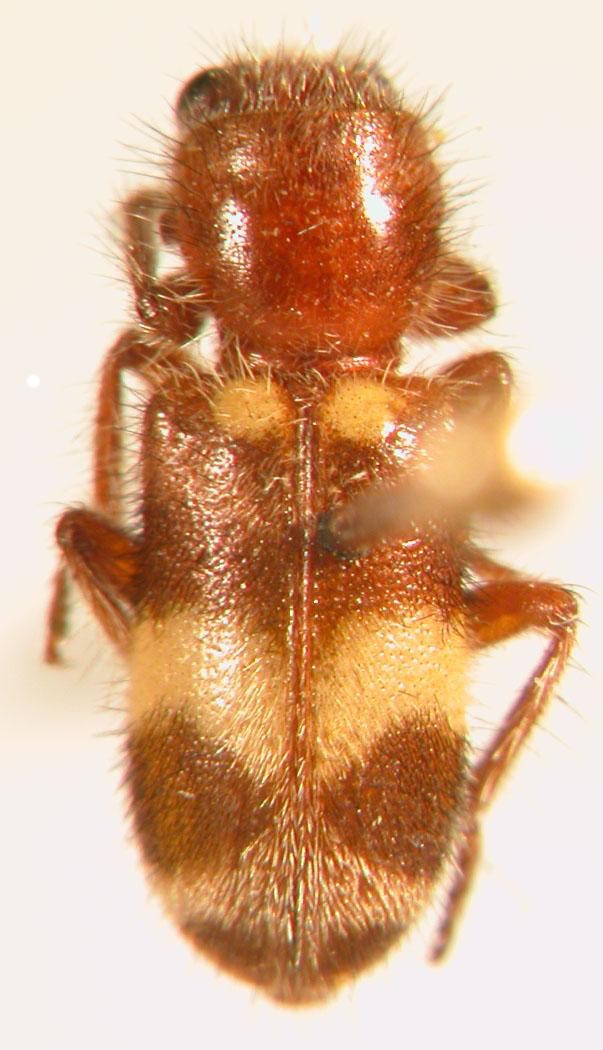 and E. recurvatus specifically in
the trio immediately below; E. cuneatus, the third member of that trio, lacks basal maculae entirely and
keys out on a different combination. Reviewed and confirmed the two clusters are already positioned
adjacently with full cross-references in place, so no further regrouping needed)
Broadly overlapping/non-geographically-separating range (per author, tentatively) — Opitz synonymized
desertus under the nominate, but the keys disagree and treat it as a valid subspecies. Diagnostic
character is pronotum color; basal ground color is a confirming secondary character. Fascia shape and
color are the SAME in both subspecies (broad, subsinuate/angulate margins, reddish) — not diagnostic
(earlier notes suggesting a fascia-shape difference were incorrect; corrected):
- E. c. coccineus (nominate): pronotum reddish-orange (primary diagnostic character); head also reddish-orange;
with a pair of round, consistently red basal maculae; fascia broad,
transverse, subsinuate. USA (Arizona, New Mexico, Oklahoma, Texas, Colorado, Nebraska, South Dakota,
Kansas, Utah, Wyoming, and tentatively California, Nevada, Oregon, British Columbia); "Mexico" per
Barr, unverified. To 7mm.
- E. c. desertus: pronotum black (primary diagnostic character); head also black; elytra same as nominate. Arizona only.
- Cross-cluster note: E. coccineus (both subspecies) is also separable from E. laetus (below), which
shares the same round-basal-maculae + median-fascia gestalt — E. coccineus's fascia is usually complete
internally across the suture, vs. E. laetus's fascia, usually narrowly interrupted at the suture.
Coccineus coccineus/desertus pair: fully resolved. ✓
Sub-cluster resolved — E. laetus / E. recurvatus / E. cuneatus (median-fascia trio)
Same size and shape, similar markings — genuinely difficult to separate. Lead with basal maculae presence/absence, which isolates E. cuneatus immediately (it alone lacks them); the remaining two then split on fascia shape: - E. cuneatus: uniformly black; fascia acutely angular, yellow, elongate posteriorly (sharp, hook-like, running back along the suture); NO basal maculae — only two elytral markings total (the acutely-angled, posteriorly-produced anterior marking, plus a separate transverse anteapical marking). Integument shining; punctures moderate basally, very fine posteriorly; basal tumescences shallow, somewhat elongate. Keys out cleanly on this combination — no close look-alike once separated from the trio. México (Edo. de México, Oaxaca). ~9mm. - E. laetus (basal maculae present): fascia transverse or angulate (not sharply hooked), usually narrowly interrupted at the suture; highly variable — at least 4 color morphs recorded, but a pair of medium-sized subbasal maculae (yellow or red, variable), a chevron-shaped band of whitish setae at the anterior 1/3, and a transverse anteapical band of pale setae produced along the midline are shared across all morphs; small to medium, ca. 8mm max. Commonly found late summer and fall on flowering yellow composites. USA — Arizona, New Mexico, Texas, Kansas; México — Nuevo León, Coahuila, Chihuahua, Querétaro. - E. recurvatus (basal maculae present — a pair of large subbasal yellowish maculae): fascia acutely angled internally AND elongate posteriorly (sharp, hook-like, running back along the suture, as in cuneatus); narrow transverse band of silvery setae anteapically, not covering the apices; taken at Ptelea trifoliata flowers in Puebla. México — Guerrero, Puebla, Oaxaca. - Cross-cluster note: E. laetus is also separable from E. coccineus (both subspecies, above), which shares the round-basal-maculae + median-fascia gestalt — E. laetus's fascia is usually narrowly interrupted at the suture, vs. E. coccineus's fascia, usually complete internally across the suture.
Laetus/recurvatus/cuneatus trio: fully resolved. ✓
Resolved standalone — E. dimidiatus
Keys out directly on its unique elytral pattern — an outlier, pattern-wise, with no close look-alike: the only small-to-medium, rather robust, black Enoclerus with a blocky reddish-brown (cupreous) marking running down the elytral middle and expanding toward the apices (a pair of small elongate eburneous basal maculae, and a pair of slightly arcuate yellowish median fasciae, broadly interrupted internally before the suture by the cupreous block; block begins anterior to middle, continues posteriorly to about apical 1/5, where it expands laterally to cover the apex). Shining integument, finely/densely granulate-punctate. Confirming secondary character: restricted to southern México (Guerrero, Puebla, Oaxaca, Chiapas) and Guatemala. 6–10mm.
Resolved standalone — E. colligatus
Unique color pattern in the fauna, no close Enoclerus look-alike — recalls some species of Aulicus (a different clerid genus; superficial resemblance only). Black with distinct reddish markings contiguous along the sides; venter black; elytra shining, finely granulate-punctate, without subbasal tumescences, black areas conspicuously set with short, adpressed silver setae. ~6mm. México (Durango, Jalisco, Guanajuato).
Resolved standalone — E. scitulus
Distinctive blue-black (not plain black) integument combined with a unique three-set bright yellow marking pattern — a pair of subbasal angulate elongate maculae (carinate), a pair of transverse narrow fasciae at basal 1/4, and a pair of narrow transverse postmedian fasciae incomplete internally. Surface rugulose-punctate, black areas ashy-reclinate-setose. A Morelos population has the yellow markings obsolete, appearing nearly concolorous blue-black (flag for key wording). No close look-alike in the fauna. ~7mm. México (Morelos, Oaxaca, Chiapas).
Resolved standalone — E. albidulus
The only primarily testaceous (straw/pale) colored Enoclerus in the fauna — unique on color alone. Combined with very small size (<4mm) and a shining integument, no close look-alike, no further splitting needed. Robust form; vertex black; elytra with or without a faint triangulate dark macula on each side. México (Puebla, Oaxaca, Chiapas).
Resolved standalone — E. madrensis (madrensis / turnbowi)
Keys out directly on its unique three-marking elytral pattern (paired basal maculae, median band, and
apical color zone) — no close look-alike among other Mexican congeners. The two subspecies separate
from each other on elytral posterior color (yellowish-orange in nominate madrensis vs. black in
turnbowi) and size (turnbowi smaller). Nominate: Sierra Madre Occidental, México (Sinaloa). Turnbowi:
Sierra Sur, México (Guerrero, Michoacán).
Sub-cluster resolved — E. lunatus / E. ichneumoneus pair
Both reddish-orange ground color, similar gestalt — split cleanly on elytral marking shape: - E. lunatus: discrete lunula (crescent-shaped marking) on each elytron. ~7mm. USA (New York, Maryland, New Jersey, Ohio, Pennsylvania, Mississippi, Florida, South Carolina, Virginia, Georgia, North Carolina, Alabama, Texas, Missouri, Kansas). - E. ichneumoneus: broad, continuous transverse fascia across the middle (not a discrete lunula). 8–11mm. USA (District of Columbia, Illinois, Indiana, Maryland, Pennsylvania, Wisconsin, New York, Ohio, South Carolina, Arkansas, Florida, Georgia, Virginia, Kansas, Iowa, Kentucky, Texas); Canada (Ontario). (Also cf. E. muttkowskii and E. quadrisignatus — see E. ichneumoneus's own entry/cross-references.)
Resolved standalone — E. gavagai
Keys out directly on color and pattern alone: brownish-red elytra (posterior 1/2 piceous) with three marking-sets — a pair of small rectangulate subbasal eburneous carinae, a pair of strongly curvate eburneous median fasciae attaining but not traversing the epipleural fold and broadly separated from the suture, and a pair of obscure, narrow, oblique reddish subapical fasciae. No other Mexican congener shares this combination — no close look-alike, no further splitting needed. Rare. ~10mm. México (Jalisco, Guerrero, Colima).
Sub-cluster resolved — E. sagittarius / E. zebra / E. gabriellae trio
Gestalt: medium-to-large, robust, pronotum reddish in whole or part, broad pale median elytral fascia/marking-set, ashy-white pubescence on the apices. Naive-user ordering — lead with size, then pronotum color: 1. Size: E. gabriellae notably larger (to 10mm) than E. sagittarius (~7mm) or E. zebra (~6–7mm). 2. Pronotum: concolorous red in E. sagittarius and E. gabriellae vs. bicolorous red-and-black in E. zebra (anterior 1/2 reddish, rest black). E. sagittarius and E. zebra share an identical 2-marking-set pattern and separate cleanly from each other on pronotum color alone. 3. Elytral markings: E. gabriellae has a single broad, nearly complete median fascia (one marking-set, flagged as an exception to the marking-set framework otherwise used across this bulk); E. sagittarius has 2 marking-sets (sagittate subbasal mark, narrowed median fasciae); E. zebra likewise has 2 marking-sets — a sagittate subbasal mark plus a pair of oblique/curvate median maculae, incomplete internally. Both E. sagittarius and E. zebra are proposed mimics of sarcophagid flies (per Hespenheide). México (widespread, Sinaloa/Jalisco/Morelos/Puebla/Guerrero/Michoacán/Colima for sagittarius; México (Tamaulipas, Chiapas, Quintana Roo), plus El Salvador/Belize/Guatemala/Honduras/Nicaragua/Costa Rica for zebra; Oaxaca/Chiapas for gabriellae).
Sub-cluster resolved — E. hoegei / E. vulneratus / E. signatus / E. vetus (macular-shape & setal-dagger look-alikes)
Gestalt: E. vulneratus and E. signatus both superficially recall E. hoegei on macular shape/coloration
(reddish-orange elytral maculae on a dark ground), but split cleanly on build and setation. E. vetus is a
further look-alike of E. hoegei specifically — both fellow members of the Rusty Vestiture group, similar
enough in size/gestalt (medium, ~6–8mm, black with a single pale-reddish transverse median fascia) to
warrant a direct couplet within the same cluster rather than standing apart:
- E. vulneratus: pronotum more elongate; elytra more elongate; setation ashy (not silvery); elytral
sculpturing finer than hoegei's. Blue-black integument with aeneous/blue reflections. México (Guerrero,
Puebla, Morelos, Distrito Federal, Estado de México, Michoacán, Oaxaca, Jalisco).
- E. signatus: pronotum more elongate; elytra more elongate; setation ashy (not silvery) — same split
as vulneratus vs. hoegei; maculae small, constricted laterally. Black with bronzy dorsal reflections,
venter blue-black. Bill Barr considered
E. vulneratus a synonym of E. signatus; both kept separate here pending further study (coloration and
marking-shape differences noted between them). México (Guerrero, Estado de México, Morelos).
- E. hoegei vs. E. vetus (both: pronotum less elongate; elytra more robust/less elongate; setation
silvery/shiny, part of the Rusty Vestiture group — this is what separates the pair from vulneratus/signatus
above; the two then split from each other on color plus elytral sculpturing):
- E. hoegei: elytra shining, finely punctate; fascia typically bright red, shape variable — often
broadly separated before the suture (also narrowly separated or complete). México (Oaxaca, Chiapas,
Sinaloa, Veracruz, Puebla, Querétaro, Hidalgo, Zacatecas, Jalisco); Honduras (?); El Salvador; USA
(Arizona); Guatemala.
- E. vetus: elytra dull, densely and deeply punctate (not finely as in hoegei); fascia pale
pink/reddish, complete across the suture (not broadly separated as often seen in hoegei). USA
(Texas); México (San Luis Potosí, Tamaulipas, Nuevo León, Jalisco?).
Cross-reference: E. cordifer can also be placed near this group but keys out easily on its prominent
ashy vestiture (covering head/pronotum/elytra, giving the whole dorsum a gray cast — denser/more
extensive than the ashy setation in E. vulneratus/E. signatus) and its black-outlined salmon pink
elytral maculae (pale setae absent right at the macular edges, making them appear rimmed in black) — a
distinctive combination not seen in the rest of this group. USA (Arizona, New Mexico, Texas, Colorado,
Montana, South Dakota, Kansas, Nebraska); not recorded from México but probably occurs in northern
Sonora. ~9mm.
Sub-cluster resolved — E. necator / E. zip / E. deletus trio ("twin-spotted mutillid mimic" group)
Gestalt: black ground with a pair of large pale (yellow-orange in life) submedian elytral maculae plus a silvery/white anteapical setal band. Naive-user ordering — lead with cranial vestiture color (fastest single split), then anterior pronotal patch presence/color, with build and apical-band extent as confirming characters: 1. Cranial (vertex/occiput) vestiture: ORANGE → E. necator; WHITE (or at most slightly yellowed) → continue to split 2 (E. zip / E. deletus) 2. Anterior pronotal margin: setal patch PRESENT, white → E. zip; setal patch ABSENT, margin clothed instead with concolorous black setae → E. deletus - E. necator: elytra more elongate than E. zip's; anterior pronotal patch of orange setae; posterior pronotal setal patch at least partially orange (vs. all white in the other two); anteapical elytral fascia sometimes orange-bordered, NOT reaching the apices (vs. reaching them in E. zip). 8.0–9.75mm. México (Chiapas); Guatemala (Zacapa). - E. zip: distinctly robust elytra (vs. more elongate in E. necator); posterior pronotal setal patch all white; anteapical elytral fascia purely silver/white, reaching the apices — the cleanest confirming check against E. necator once the pronotal-patch split has been made. ~6mm. Yucatán Peninsula, México (Quintana Roo, Yucatán); also Oaxaca, Veracruz, Chiapas, Tabasco, México; El Salvador. - E. deletus: apical elytral silvery-setaceous fascia a narrow oblique band, interrupted posteriorly before the apex (not encircling a macula) — a distinct fascia shape from both necator and zip; posterior pronotal setal patch all white; no admixture of orange/tawny vestiture anywhere (the cleanest "white-only" member of the trio). México (Veracruz, Chiapas); Costa Rica (Cartago); probably more broadly distributed through Middle America. Trio fully resolved. ✓
Sub-cluster resolved — E. longipes vs. E. necator / E. zip / E. deletus
A further, more distant comparison point against the "twin-spotted mutillid mimic" trio (immediately above) — E. longipes separated by: tuberculate subbasal elytral tumescence (vs. shallow/obsolete in the trio), coarser punctation, and (most diagnostic) a leaf-shaped subbasal white vestitural patch behind the scutellum, not seen in the trio. Restricted to the Yucatán Peninsula (vs. the trio's Chiapas/Guatemala range) — good confirming secondary/geographic character. ✓
Resolved standalone — E. reburrus
Very densely clothed with reddish-coppery setae over the whole dorsum — a distinctive, immediate single-character split from every other black-ground, single-fascia species in this part of the key. Elytra with a pair of large, irregularly margined, transverse maculae at middle; surface finely, densely punctate; basal margin clothed with long white setae; subbasal tumescences shallow. No further splitting needed. 6–8.3mm. México (Durango, Sinaloa, Hidalgo, Tamaulipas, Chiapas, Guerrero, Oaxaca); Guatemala.
Resolved standalone — E. tigris
Fluorescent orange-pink ground color (unique in the fauna) combined with three narrow black elytral fasciae — color and pattern alone place this species with no close look-alike. No further splitting needed. 7–8.5mm. México (Estado de México, Morelos, Guerrero, Puebla).
Resolved standalone — E. pelonioides
Elytra smooth, with a distinct pattern, expanded posteriorly. Apparently a chrysomelid mimic; rare species, known from perhaps the type only. Similar in facies to species of the genus Quadrophenia, but E. pelonioides has a more typical Enoclerus-type antennomere 11. No further splitting needed. México (Jalapa, Veracruz Estado).
Sub-cluster resolved — E. atriceps / E. juquilensis (2 species, "three-set tricolor" pattern)
Nearly identical elytral pattern (three sets of yellowish markings: basal narrow/oblique, median broad/transverse, apical). Diagnostic character: distribution (allopatric, no range overlap). Confirming: femora pattern. - E. atriceps: Guatemala, El Salvador (Guatemalan-centered); not yet recorded from México but may occur near the Guatemalan border. Femora reddish throughout (vs. tricolorous in juquilensis). Venter pale orange; head black, sometimes reddish; pronotum concolorous reddish, or with anterior margin black. To 10mm. - E. juquilensis: México (Oaxaca: Sierra Sur) only. Femora tricolorous — broadly white basally, with a narrow infuscate annulus at distal half (profemur) or distal third (meso-/metafemora), remainder reddish (vs. uniformly reddish in atriceps). Head reddish; pronotum reddish with anterior margin broadly white (vs. atriceps's black-or-absent anterior margin marking); elytral base narrowly reddish (not noted in atriceps). Small, to 5mm.
Atriceps/juquilensis pair: fully resolved. ✓
Sub-cluster resolved — E. cupressi / E. cowani / E. acerbus / E. eximius (4 species, western USA/
Pacific black-ground salmon-or-orange-marked group; cupressi's own OD already compares it to eximius) All four: abdomen red, similar size (7–8mm), overlapping California-centered western USA/Canada range. Three of the four (cupressi, cowani, acerbus) share a black ground with reddish/orange/salmon markings, splitting from each other on marking shape/breadth plus sculpturing; E. eximius is unique in the group — the reverse figure/ground relationship — and is treated last: - E. cupressi: markings orange-red on a bluish-black ground: a triangular macula at the humeri, plus a broad transverse bar at middle, usually NOT complete to the suture. Body proportionately broader and stouter than eximius, elytral sides more parallel, surface generally rougher. USA (California — central to northern coastal California). Larvae/adults associated with cypress (Cupressus). - E. cowani: markings reddish on a black ground, but shaped differently from cupressi — a pair of small, slightly LONGITUDINAL maculae at the base (not a triangular humeral spot), and a pair of ARCUATE fasciae at middle, complete to the lateral margins (a curved band, not a straight bar, and not usually incomplete at the suture as in cupressi). Elytral surface superficially rugulose, without distinct punctures (smoother than both eximius and cupressi); apical 1/5 with a band of silvery setae widest at the suture. USA (California, Oregon, Washington) — broader range than cupressi. ~7mm. - E. acerbus: markings form a single BROAD salmon-colored median fascia (not two separate maculae/ bars like cupressi or cowani) — anterior margin sinuate, posterior margin slightly produced along the suture; apices covered with silvery setae, but the setal patch is not complete to the apices (shares this with E. eximius, whose apical white setal patch likewise stops short of the very tip). Broadest reddish marking of the three black-ground species here — could superficially suggest E. ichneumoneus on fascia breadth alone, but the two key out easily apart (E. ichneumoneus is eastern USA, unrelated gestalt/range). USA (California, Oregon, Nevada, Utah, Washington, Wyoming). <10mm. Biology: Great Basin, on Atriplex nuttallii, Artemisia spinescens; ex Chrysothamnus viscidiflorus in California (Mono Co.), pupal chamber of Crossidius hirtipes rhodopus; reported (Linsley & Chemsak) to feed on C. hirtipes ssp. in Idaho. - E. eximius: reverse pattern, unique in the group — elytra anterior 4/5 salmon PINK is the ground color, with black maculae as the markings (a small spot each side not attaining the lateral margins; a large round/heart-shaped spot at middle, often narrowly touching the black scutellum). Apical 1/5 covered with whitish setae, except for a black anteapical spot on either side (corrected — the black marking sits within the white apical setal patch, not as a separate posterior macula). Elytral surface shining, densely punctate, superficially roughened. USA/Canada — California, British Columbia, Idaho, Oregon, Utah, Washington, Wyoming. To 8mm.
Cupressi/cowani/acerbus/eximius group: fully resolved. ✓
Sub-cluster resolved — E. sanguinipes / E. pilatei / E. cinereus / E. nigromaculatus (4 species, color and marking arrangement)
Small to medium species with 2–3 eburneous or reddish elytral markings. Diagnostic split: E. nigromaculatus is the only one of the four with the entire pronotum, as well as the elytral base, reddish. E. sanguinipes is easily separated from E. cinereus and E. pilatei based on the arrangement and shape of the elytral markings. E. cinereus and E. pilatei are separated by the extent of pronotal and apical elytral ashy pubescence. - E. nigromaculatus: entire pronotum, as well as the elytral base, reddish — unique in this group of four (the other three have a black pronotum, with at most the posterior margin reddish in pilatei); 3–4 pairs of yellowish/eburneous markings, variable (x-album form has a cross-shaped anterior marking); elytral surface smooth-and-shining to densely punctate/roughened depending on population. Apparent mimic of cephalotine ants. México (Chiapas, Yucatán, Quintana Roo); Guatemala; Nicaragua; Belize; Costa Rica; Honduras; Panamá. - E. sanguinipes: basal elytral markings macular, not forming an arrow/sagittate shape (vs. cinereus/pilatei); black, with three sets of yellowish or orange markings; legs reddish. Reported from México with no further locality; known from Panamá (Panamá); Costa Rica (Guanacaste); Nicaragua. - E. pilatei: pronotal and apical elytral ashy pubescence less extensive than E. cinereus — pronotum less conspicuously setose, apical elytral setal patch confined to about the apical 1/6; black, posterior of pronotum sometimes reddish; median yellow fascia incomplete internally; basal carinae may or may not connect into wedge-shaped yellow maculae — 2 marking-sets. Note: robust Yucatán Peninsula specimens likely represent an undescribed species, kept separate from typical material. Taxonomic note: E. quadrinodosus (Chevrolat) — Chiapas, Guatemala, Panamá, Costa Rica, Nicaragua — is very similar and may prove to be a junior synonym of this species; distinguished, if valid, by its primarily reddish (vs. mostly black) integument. Not treated as a separate key entry here, as confirmed specimens are not known from México. México (Quintana Roo, Yucatán, Veracruz, Tabasco, Chiapas); Guatemala (Izabal); Nicaragua; Honduras; Belize (Cayo, Orange Walk). - E. cinereus: pronotal and apical elytral ashy pubescence more extensive than E. pilatei — pronotum more conspicuously setose, apical elytral setal patch extends beyond the apical 1/6; 3 marking-sets — basal carinae/sagittate patch, a median arcuate fascia, and a posterior setal patch. Separated from E. pilatei by extent of pronotal and apical elytral ashy pubescence — apical elytral whitish setal patch more extensive (not just apical 1/6) and pronotum more conspicuously setose than in E. pilatei specimens. México (Chiapas); Guatemala; Costa Rica; Panamá; Ecuador.
Residual cluster — no single unifying character (6 species)
The remaining six species — E. pinus, E. luscus, E. palmii, E. bipilosus, E. fugitivus, and E. venator — share no single character that unites them as a natural group. Each is technically diagnosable by a unique combination of size, color, marking, and setation, but this cannot be reduced to a clean visual key for non-specialists. They are presented here in two loose trios for convenience; confirm identification against the photos, descriptions, and distributions in each species profile.
E. luscus / E. palmii / E. pinus (black ground, single pale fascia/pair of angular maculae, medium-small)
Naive-user ordering — lead with build, then fascia shape/color, then abdomen color: 1. Build: E. pinus is narrow and elongate (6–7mm) vs. the more robust E. luscus (to 10mm) and E. palmii (~7mm). 2. Elytral fascia: E. pinus has a narrow, curvate, eburneous (ivory-white) fascia not attaining the suture; E. luscus has a broader, angular/zigzag, orange-yellow marking; E. palmii has a broader yellow fascia, complete to the sides but broadly interrupted before the suture. Apical setae whitish in E. pinus vs. ashy in both E. luscus and E. palmii (good confirming character). 3. Abdomen color (separates luscus from palmii specifically): red in E. luscus vs. black in E. palmii (and in E. pinus). - E. pinus: newly added to the master species list (was previously missing entirely). USA (Arizona — central and southern part of the state) only; legs black. - E. luscus: USA (Arizona — Cochise Co., Huachuca Mtns; Nevada); México (Sonora; San Luis Potosí?, unconfirmed). Enoclerus quercus Schaeffer is likely a synonym of this species. - E. palmii: USA (Arizona — Cochise Co., Greenlee Co.; New Mexico, Utah, California); México (unsubstantiated). Cross-reference: E. signatus (placed above with E. hoegei/E. vulneratus) could also be considered near this trio on general gestalt, but separates out on being less robust, more elongate-elytra'd, plus its pattern of apical vestiture and elytral maculae constricted toward the sides. Cross-reference: E. reburrus (resolved standalone, above) could also be linked here on general habitus and macula shape, but splits off immediately on its densely reddish-coppery-setose dorsum, vs. ashy/whitish setae restricted mainly to the apices in this trio.
E. bipilosus / E. fugitivus / E. venator (highly variable, two-band, reddish/black-morph trio)
Note: this trio is organized for identification convenience, same as every couplet in this key — no claim about phylogenetic relationship is implied. Bipilosus and fugitivus are probably not close relatives, just convergent on a similar variable two-morph appearance; venator is smaller and joins mainly on general gestalt. - E. bipilosus: elytra with subbasal tumescences indistinct; two sets of yellow/orange markings, which may or may not be contiguous via a midline projection, mid-fascia sometimes broad/transverse, sometimes narrower/arcuate; one morph with orange pubescence on head/anterior pronotum/elytral apices, some specimens lack orange vestiture entirely; some populations lack dense vestiture above (dorsal surface more sparsely setose); venter black. 7–11mm (corrected from an earlier 6–10mm estimate). México (Sinaloa, Jalisco, Colima, Nayarit, Michoacán, Guerrero, Morelos) — Pacific-slope/ west-central México. - E. fugitivus: subbasal tubercles prominent, with a dense covering of erect black setae (contrast with bipilosus's shallow subbasal tumescences). Reddish morph: head/pronotum/basal elytral 1/2 reddish, pronotum infuscate at middle behind the transverse impression, posterior 1/2 with a broad black band. Black morph: entirely lacking reddish dorsal integument. Both morphs share: pronotum anterior margin broadly pale with fine pale setae; each elytron with a pale oblique/transverse fascia, broadly interrupted at middle; apical 1/6 pale, densely setose; elytral anterior 1/2 densely, coarsely cribrate/punctate; meso-/metafemora pale at base; abdomen bicolored, first visible ventrites pale, remainder dark. To 10mm in México (larger in Costa Rica). México (Quintana Roo, Chiapas, Hidalgo, Veracruz); Guatemala; Belize; Honduras; Costa Rica; Panamá; Nicaragua — essentially non-overlapping with bipilosus's Pacific-slope range. - E. venator: broad median transverse yellow macula on each side, rather broadly interrupted internally before the suture; a small oblique yellowish fascia may or may not be present anteapically, when present mostly obscured by the apical covering of ashy pubescence. Pronotum ashy-clothed on the anterior half; elytra with a sagittate patch of fine white setae postbasally. Abdomen black. Smallish, ca. 6mm max. At least one, and possibly several, similar species occur in Central America (including Guatemala) with an added pair of basal pale maculae — more taxonomic work needed here. Southern México.
Residual cluster: fully resolved. ✓
All 110 species/subspecies, alphabetical, one card each — photo(s) at left, full character summary at right. Same data as the species pages in the Interactive Key tab, laid out for browsing/comparison.
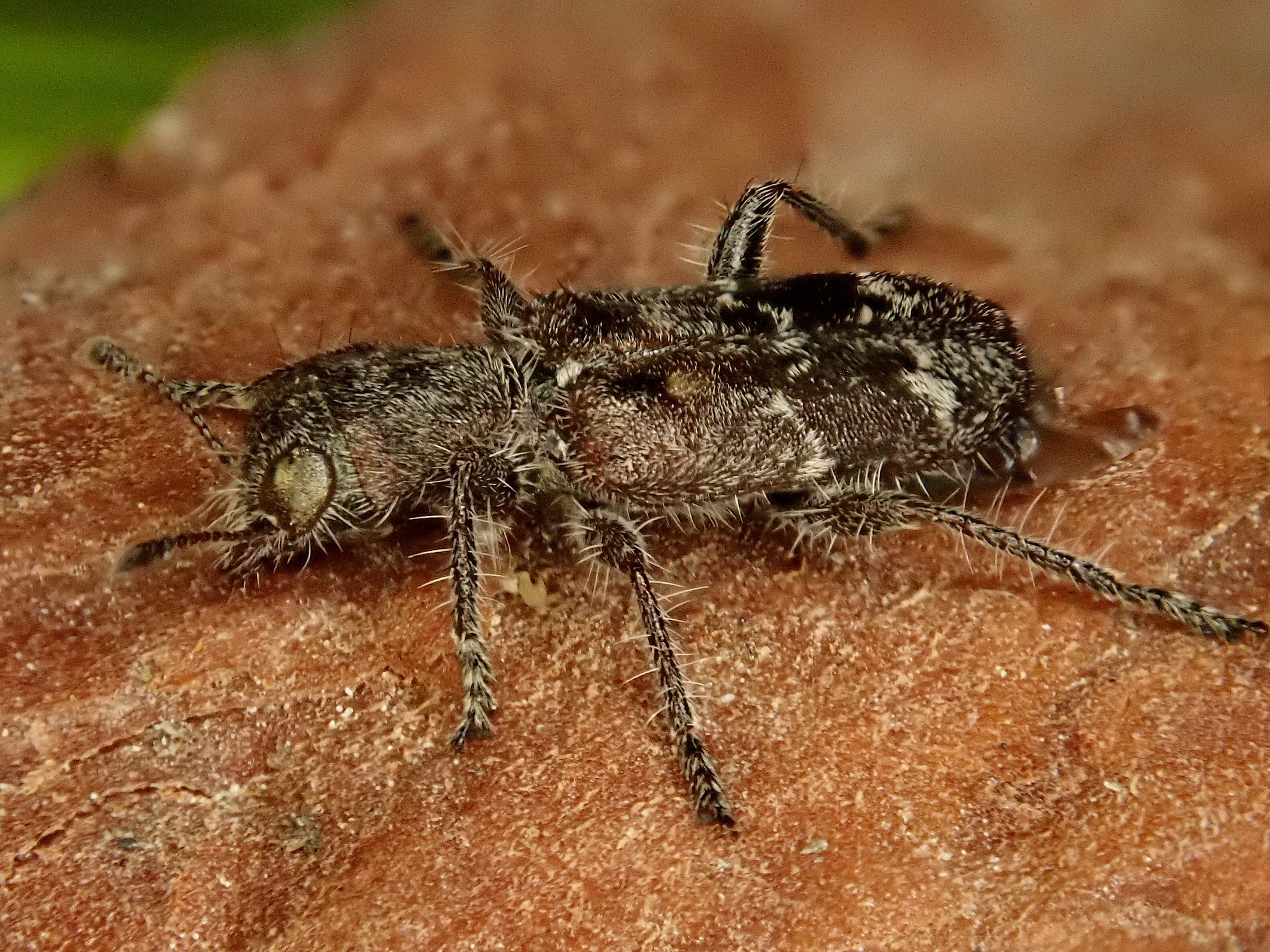
Enoclerus ablusus
- Elytra
- Fascia indistinct, interrupted, angular (vague/broken pattern); no separate apical setal patch
- Color
- Brown; posterior 1/2 sometimes darker
- Surface
- Dorsum rugulose
- Distribution
- Wide range, NW México through Belize/Honduras/Nicaragua/Guatemala
Enoclerus acerbus
- Elytra
- Markings form a single BROAD salmon-colored median fascia (not two separate maculae/bars like cupressi or cowani); anterior margin sinuate, posterior margin slightly produced along the suture
- Elytra (apex)
- Covered with silvery setae, but the setal patch is not complete to the apices (shares this with E. eximius)
- Length
- <10mm
- Distribution
- USA (California, Oregon, Nevada, Utah, Washington, Wyoming)
- Biology
- Great Basin, on Atriplex nuttallii, Artemisia spinescens; ex Chrysothamnus viscidiflorus in California (Mono Co.), pupal chamber of Crossidius hirtipes rhodopus; reported (Linsley & Chemsak) to feed on C. hirtipes ssp. in Idaho
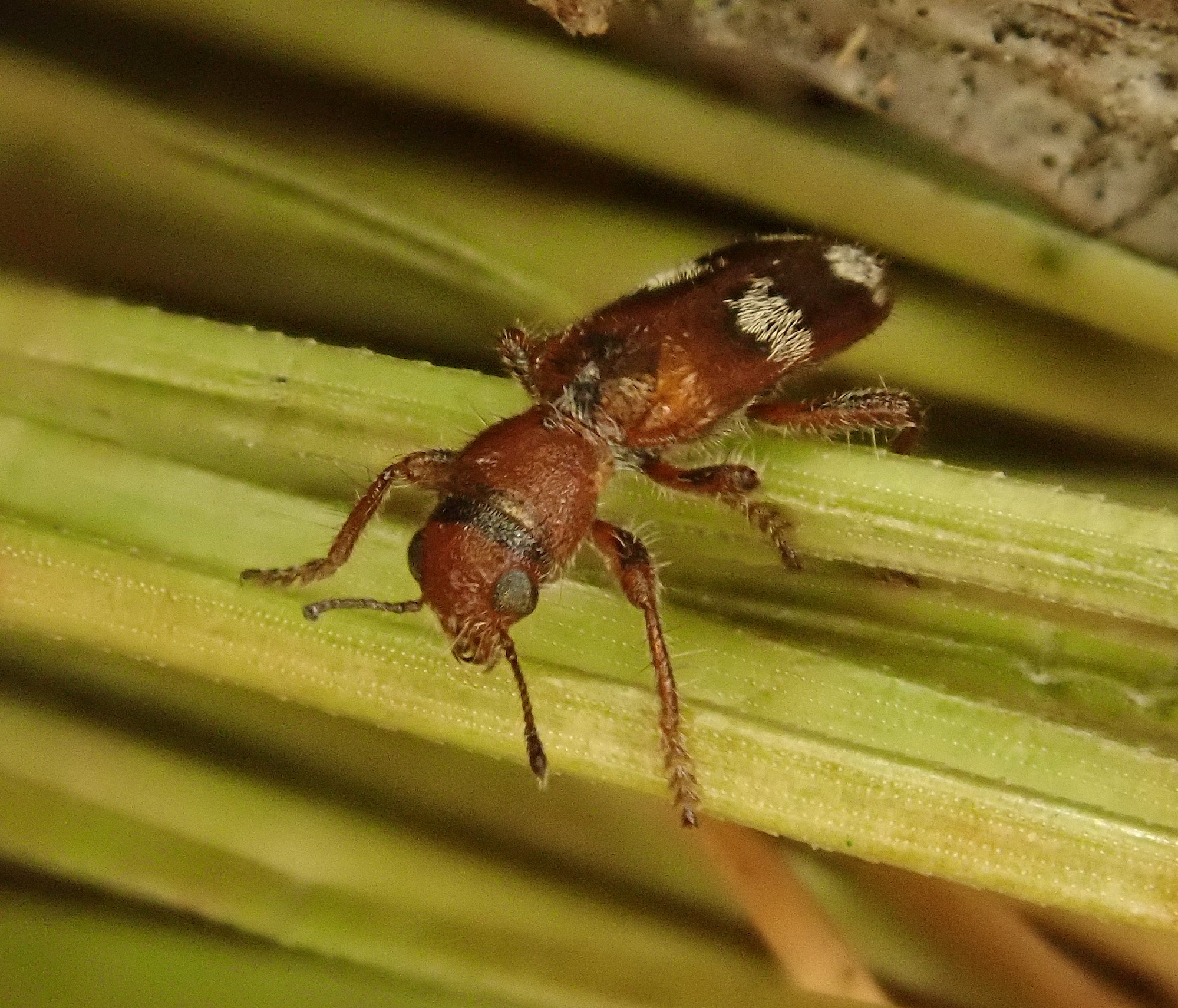
Enoclerus aethiops
- Elytra
- Fascia distinctly transverse and angulate, PLUS a separate, similarly-composed apical setal patch, both contrasted against the dark posterior field; scutellum black
- Color
- Reddish-brown integument, posterior half of elytra infuscate (darkened), darkest under the pale setal patches
- Head
- Vertex contrastingly black
- Distribution
- Narrower range (Edo. de México, Tlaxcala, Oaxaca, Chiapas, México; Huehuetenango, Guatemala)
- Biology
- Pine associated
Enoclerus agave
- Elytra
- Fascia extremely broad, occupying roughly the basal 2/3 of the elytra; black only at the extreme base, and the apical third
- Biology
- Associated with Agave/Yucca (predaceous — larvae/adults feed on beetle and moth larvae found in the plant, not on the plant itself)
- Distribution
- Chiapas, México + Zacapa, Guatemala — geographically isolated from the other three (southernmost, no range overlap)
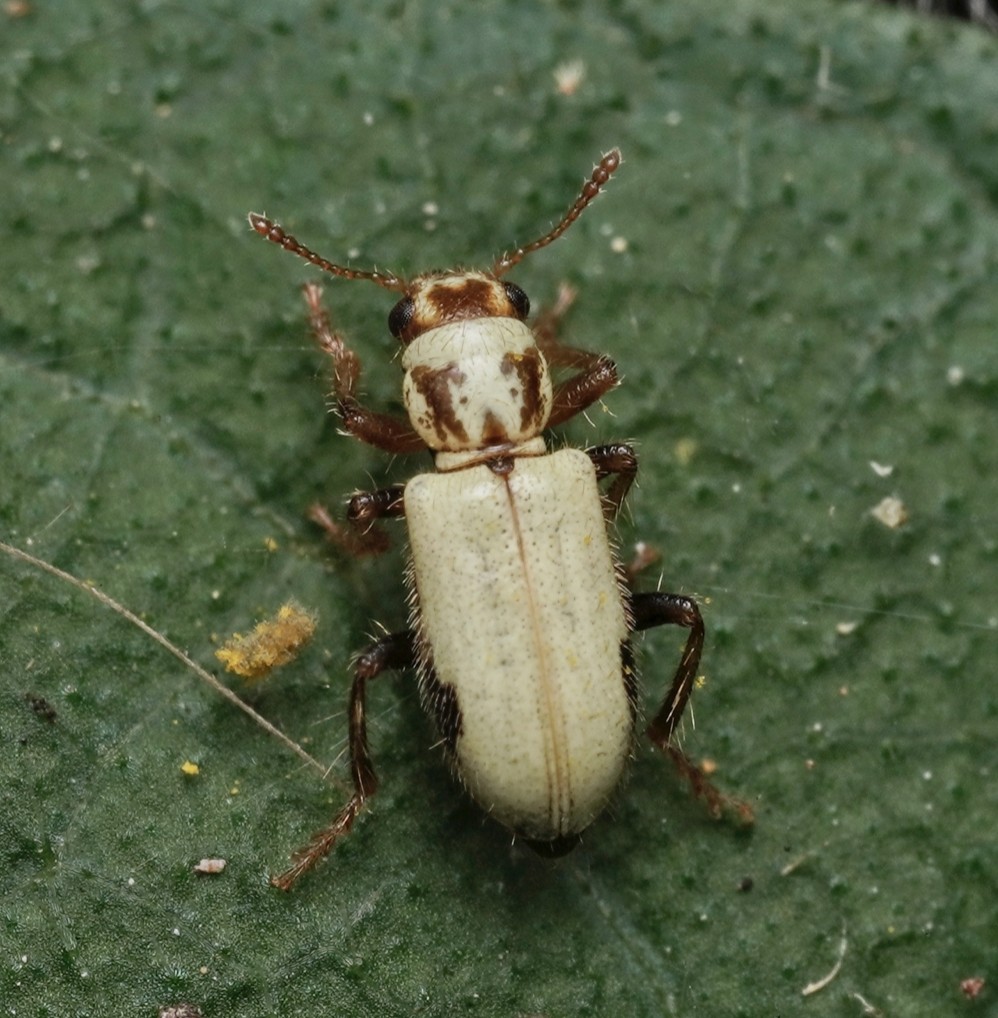
Enoclerus albidulus
- Color
- The only primarily testaceous (straw/pale) colored Enoclerus in the fauna — unique on color alone
- Length
- Very small (<4mm), shining integument
- Form
- Robust; vertex black; elytra with or without a faint triangulate dark macula on each side
- Distribution
- México (Puebla, Oaxaca, Chiapas)
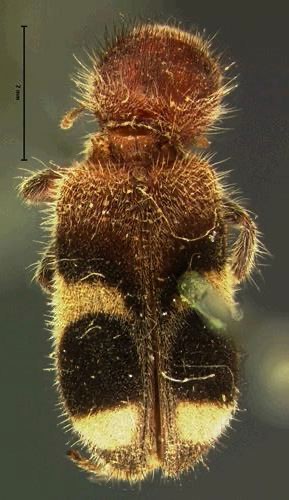
Enoclerus analis
- Color
- Black; head, pronotum, and at most basal 1/5 of elytra reddish
- Elytra
- Arcuate yellowish median fascia (placed centrally, not white-vested), may or may not extend along the suture to an anteapical fascia
- Elytra (apex)
- Black (bare), covered with ashy vestiture in opifex
- Distribution
- USA (Arizona, Colorado, Illinois, Kansas, Nevada, New Mexico, New York, Ohio, Rhode Island, Texas, Utah); México (Chihuahua, Durango)
Enoclerus angustus
- Length
- < 10 mm
- Form
- Elongate; elytra narrow
- Surface
- Rugose/punctate
- Elytra
- White median fascia narrowly margined in black
- Abdomen
- Pale reddish
- Distribution
- USA — Florida (Alachua Co., Duval Co., Jefferson Co., Levy Co., Marion Co., Suwanee Co., Union Co.); South Carolina; Virginia
Enoclerus atriceps
- Femora
- Reddish throughout (vs. tricolorous in juquilensis)
- Venter
- Pale orange
- Head
- Black, sometimes reddish
- Pronotum
- Concolorous reddish, or with anterior margin black
- Elytra
- Base narrowly yellow (vs. narrowly reddish in juquilensis)
- Length
- To 10mm
- Distribution
- Guatemala, El Salvador (Guatemalan-centered); not yet recorded from México but may occur near the border
Enoclerus auripilus
- Length
- ca. 6 mm
- Form
- Antlike
- Color
- Pale orange-testaceous, with a pale transverse elytral fascia
- Elytra
- Surface rugose; two patches of pale setae — one post-humeral oblique, one at the posterior 1/6 covering the apices
- Venter
- Also pale testaceous
- Distribution
- México (Sinaloa)
- Biology
- Tropical deciduous forest
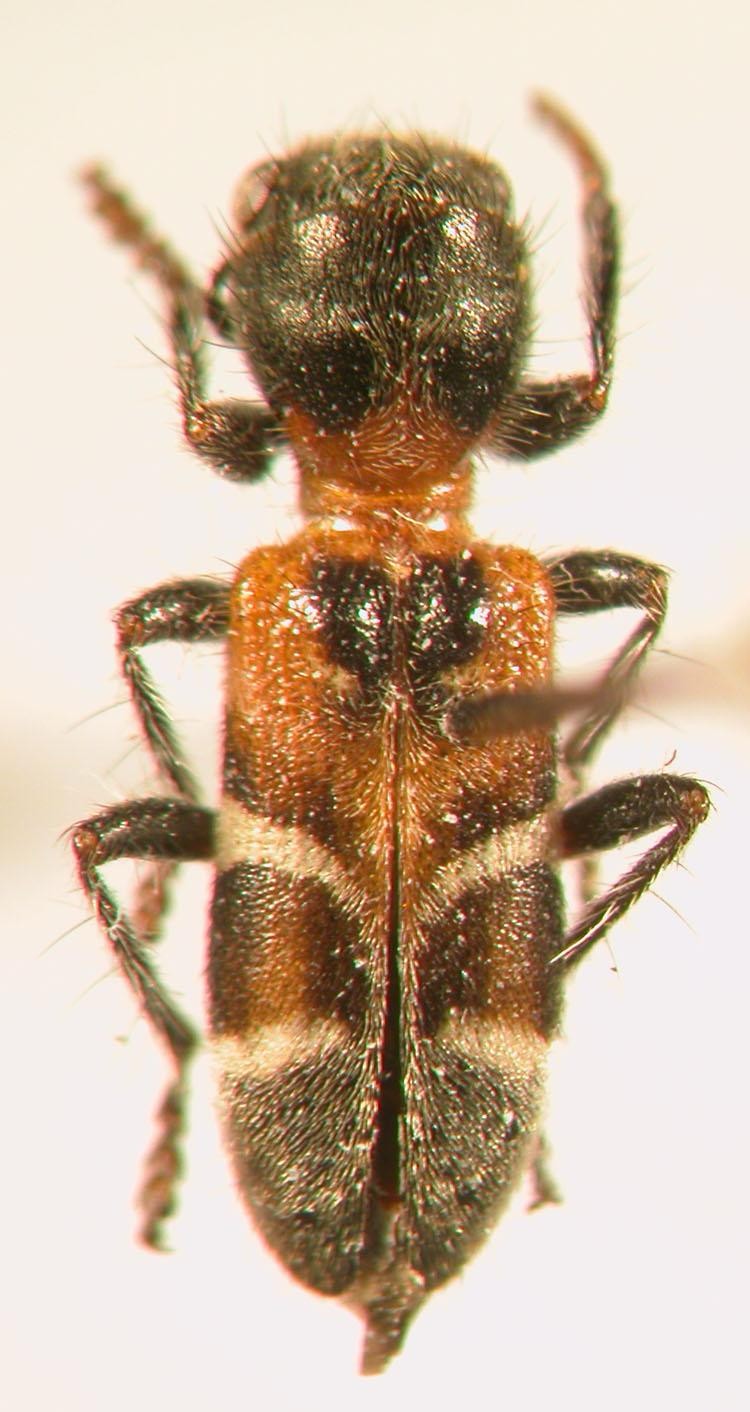
Enoclerus beatus
- Form
- Antlike; elytra subflattened, without post-basal tubercles
- Surface
- Finely, densely punctate, not rugulose
- Abdomen
- Black, or black with last ventrite(s) reddish
- Variation
- Variable species, broadly distributed; elytral pattern highly variable — not used as a key character here, so this split relies on distribution plus photo comparison
- Length
- Small, 5mm or less
- Distribution
- México (Sinaloa, Colima, Nayarit, Guerrero, Morelos, Querétaro, Oaxaca, Chiapas, Veracruz, Yucatán, Jalisco, Quintana Roo); Guatemala; Costa Rica (Puntarenas); Honduras (Francisco Morazán, Olancho)
- Note
- No USA records
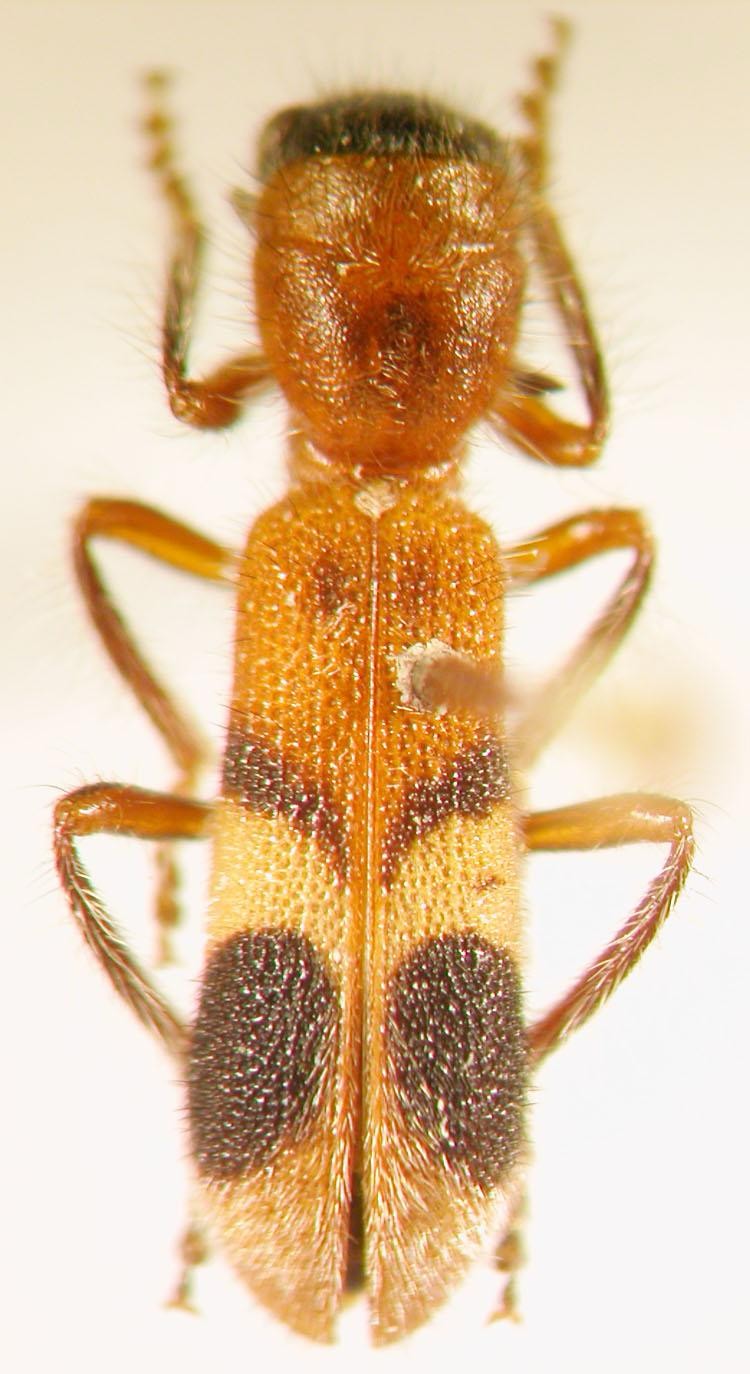
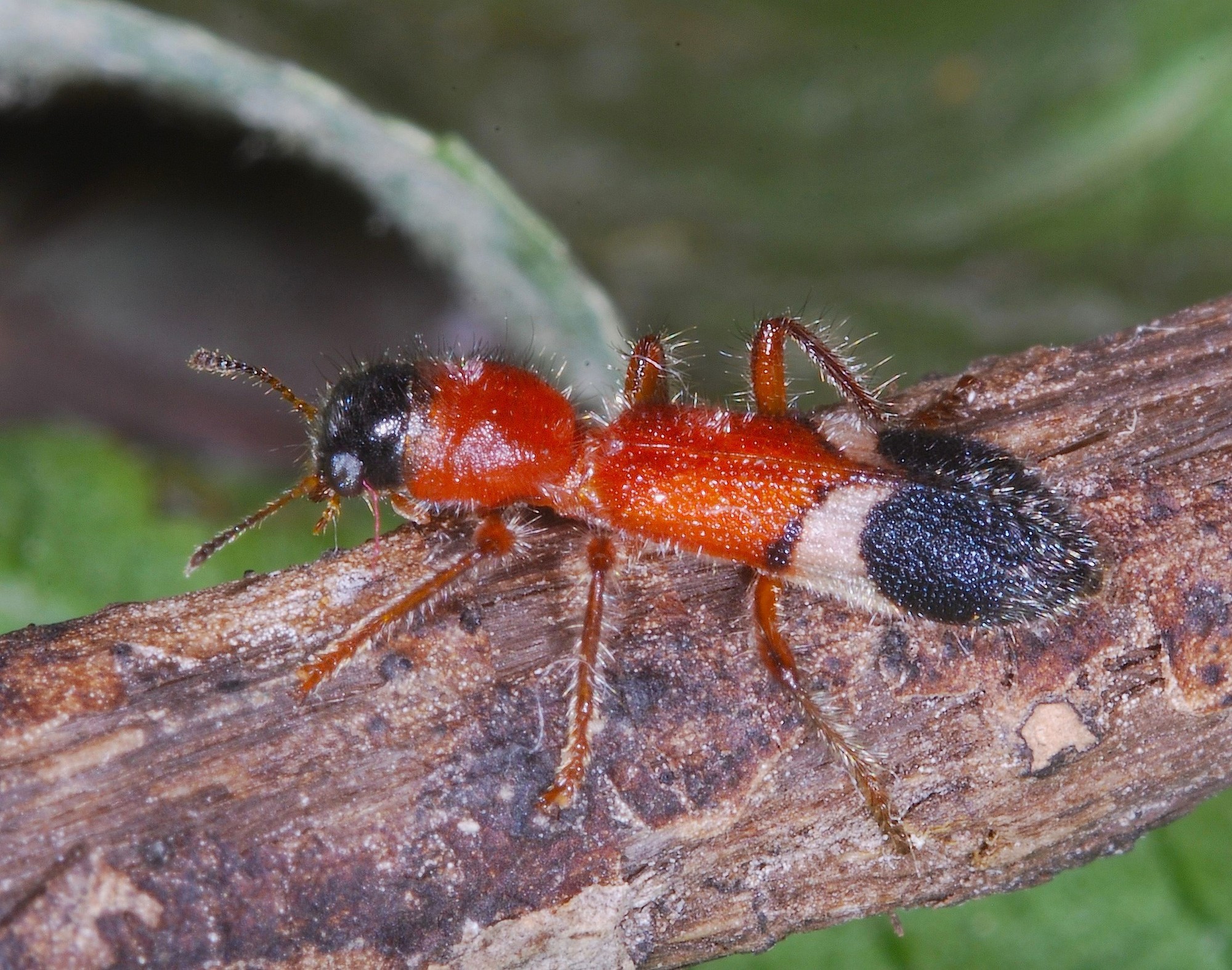
Enoclerus bellamyi
- Length
- Moderate, 6–9 mm — the largest in the Antlike Guild
- Form
- Elongate, ant-like; elytra distinctly narrowed at base, expanding posteriorly; apices sinuate
- Elytra
- Two distinct color/pattern phena as illustrated in photos
- Surface
- Distinctly rugose
- Abdomen
- Mostly dark
- Distribution
- México (México state, Guerrero, Oaxaca, Morelos)
- Biology
- Tropical deciduous forest; also beaten from roadside vegetation; flies late summer to fall
Enoclerus bimaculatus
- Elytra
- Single large oval/transverse macula per elytron (not a full-width fascia); post-basal (subbasal) swellings obsolete
- Venter
- Orange-testaceous
- Color
- Pronotum (posterior portion) and elytral base castaneous (reddish-brown) — good confirming character, absent in valens
- Length
- To 14mm
- Distribution
- USA (Arizona, New Mexico); México (Sonora) — Sonora-borderland range only, probably does not extend south of Sonora
- Biology
- Collected in oak/juniper forest. Frequently attracted to lights
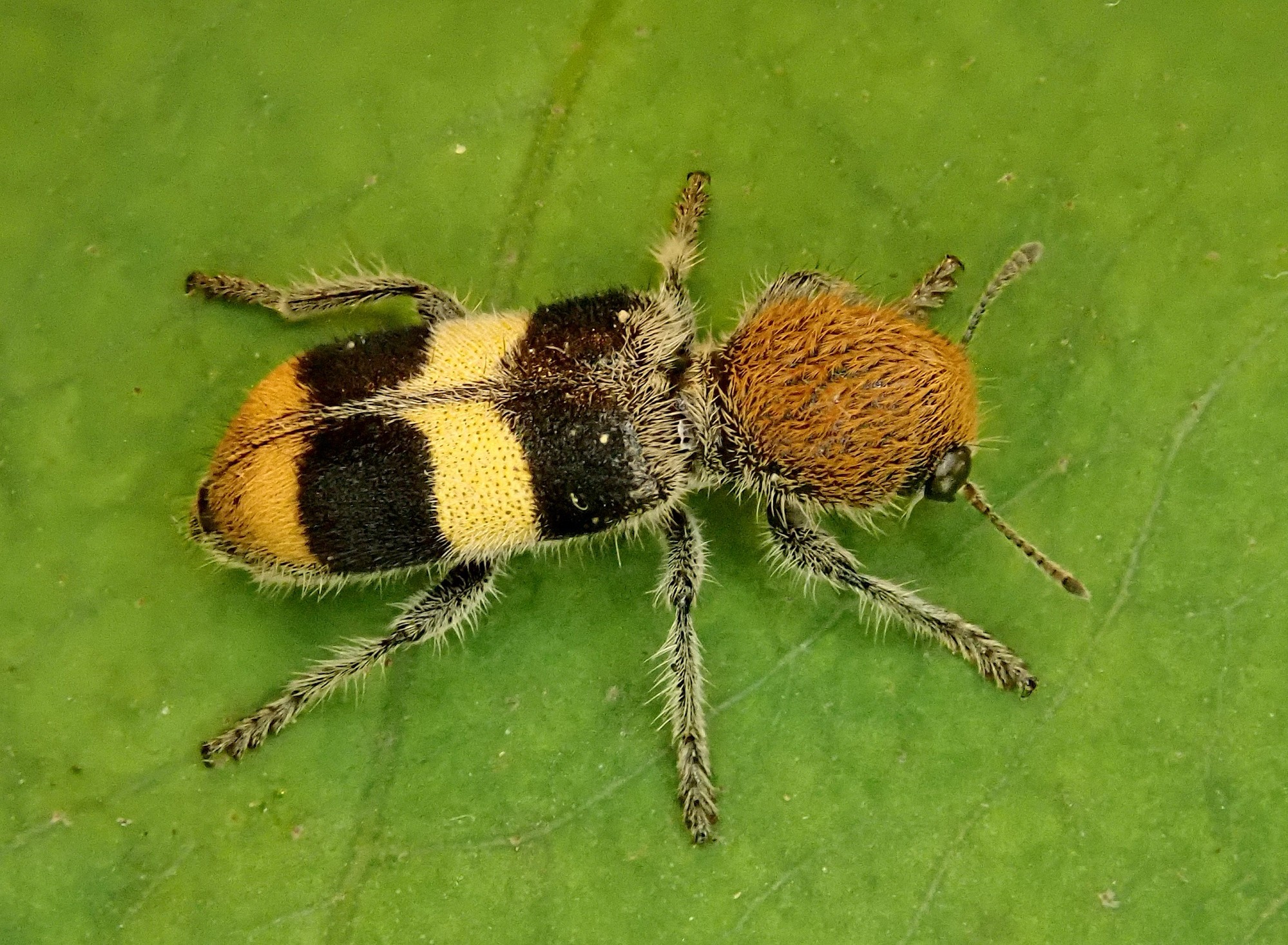
Enoclerus bipilosus
- Elytra
- With subbasal tumescences indistinct; two sets of yellow/orange markings, which may or may not be contiguous via a midline projection
- Vestiture
- One morph with orange pubescence on head/anterior pronotum/elytral apices, some specimens lack orange vestiture entirely; some populations lack dense vestiture above (dorsal surface more sparsely setose)
- Venter
- Black
- Length
- 7–11mm
- Distribution
- México (Sinaloa, Jalisco, Colima, Nayarit, Michoacán, Guerrero, Morelos) — Pacific-slope/west-central México
- Biology
- Has been collected on flowers of Croton sp.
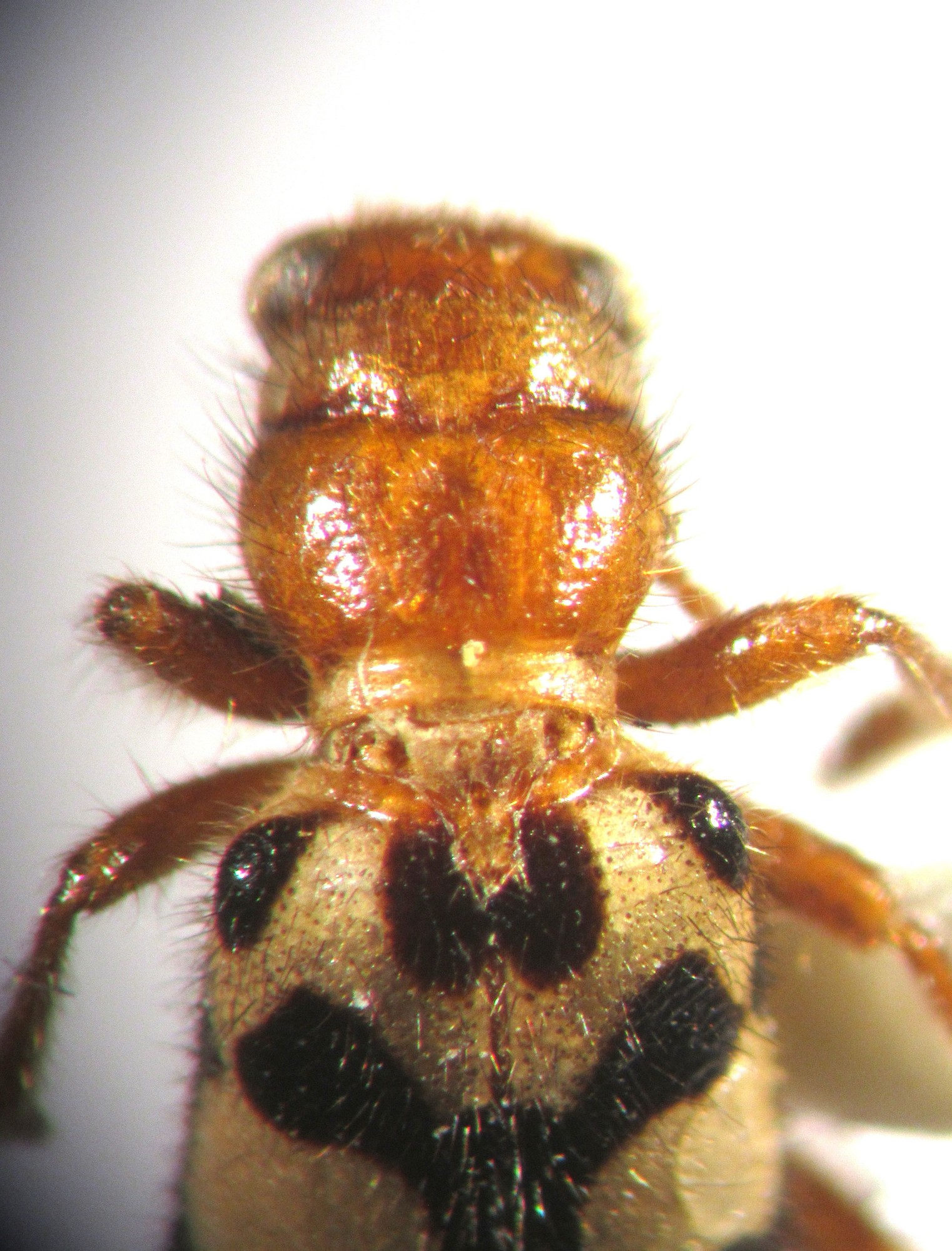
Enoclerus bobloydi
- Venter
- Entirely pale testaceous (unique in the group)
- Elytra
- Unique tessellated pattern — paired basal spots, a broad median black band, a paired subapical/apical pattern — irregular, cf. mcnallyi's more regular markings; without basal tumescences
- Length
- ~8mm
- Distribution
- México (Querétaro, Tamaulipas)
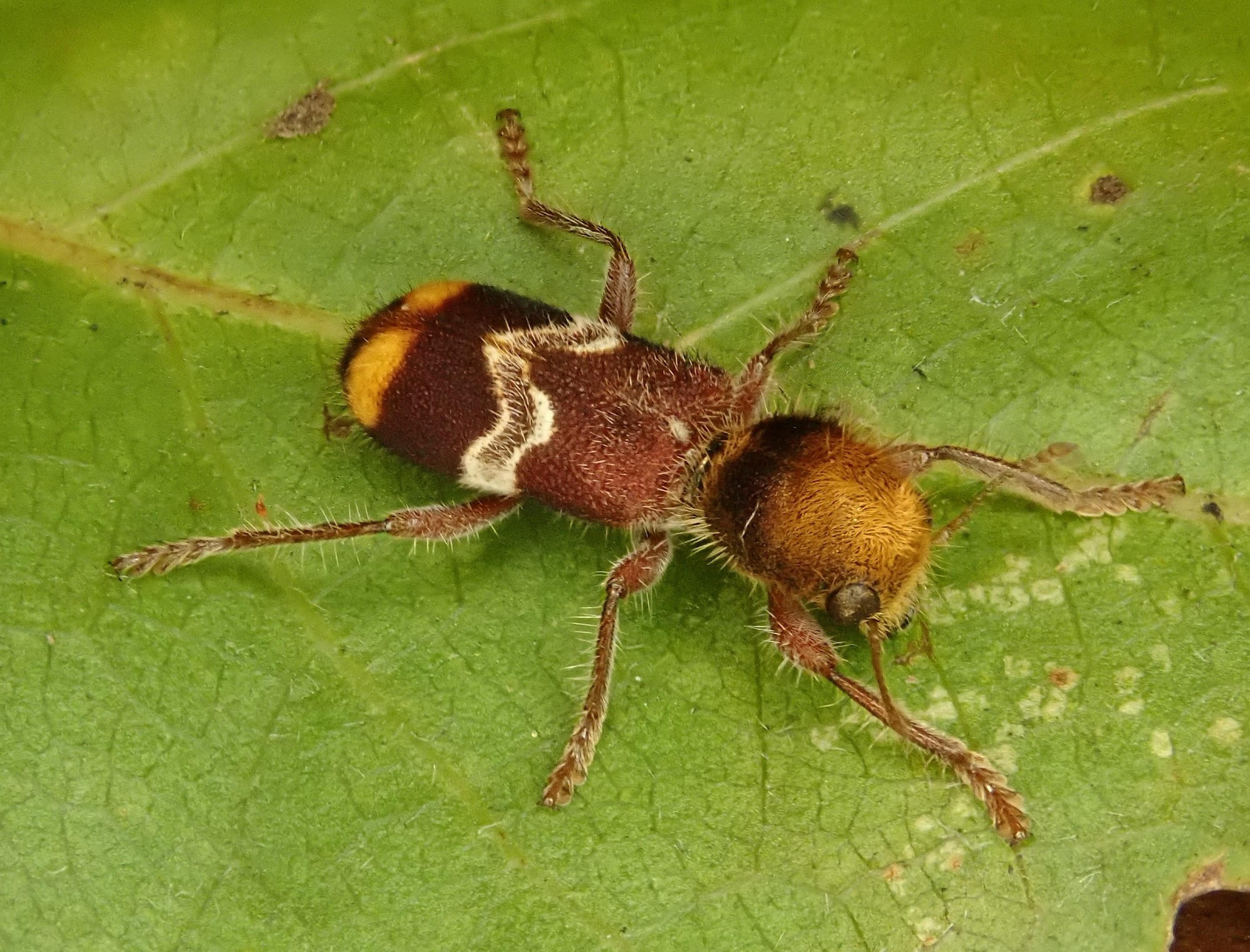
Enoclerus bombycinus
- Color
- Base color black (head, pronotum, venter), with orange-testaceous setae/markings giving an overall mutillid-mimic effect
- Abdomen
- Reddish
- Elytra
- Single angulate fascia, complete to the suture; subbasal tumescences obsolete, no tubercles
- Length
- To 10mm
- Distribution
- México (Jalisco, Michoacán, México, Guerrero, Sinaloa, Colima, Guanajuato, Puebla, Oaxaca, Chiapas, Chihuahua, Distrito Federal, Durango, Morelos, Zacatecas, Hidalgo)
- Biology
- Very widespread and common species in a variety of habitats, including suburban parkland
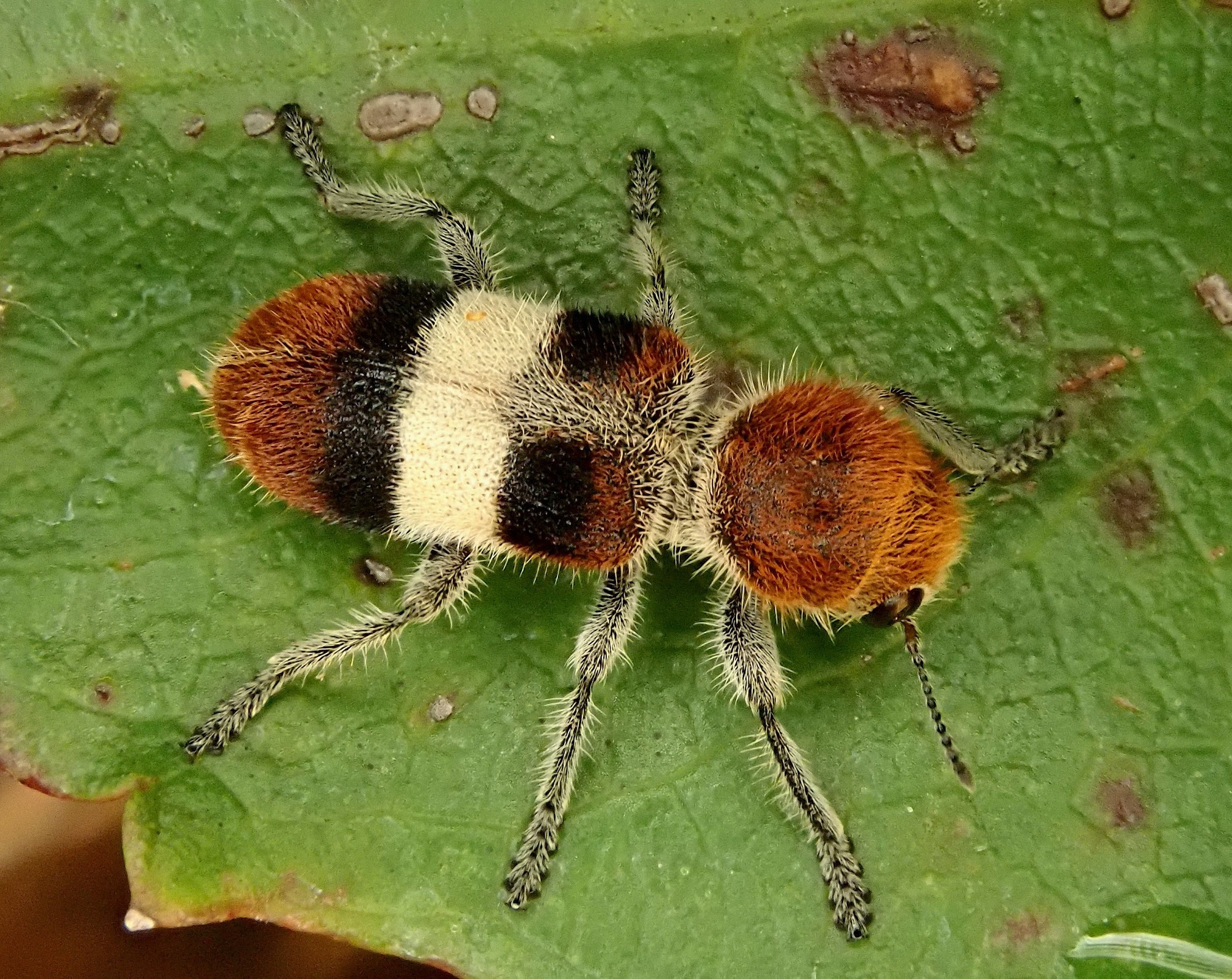
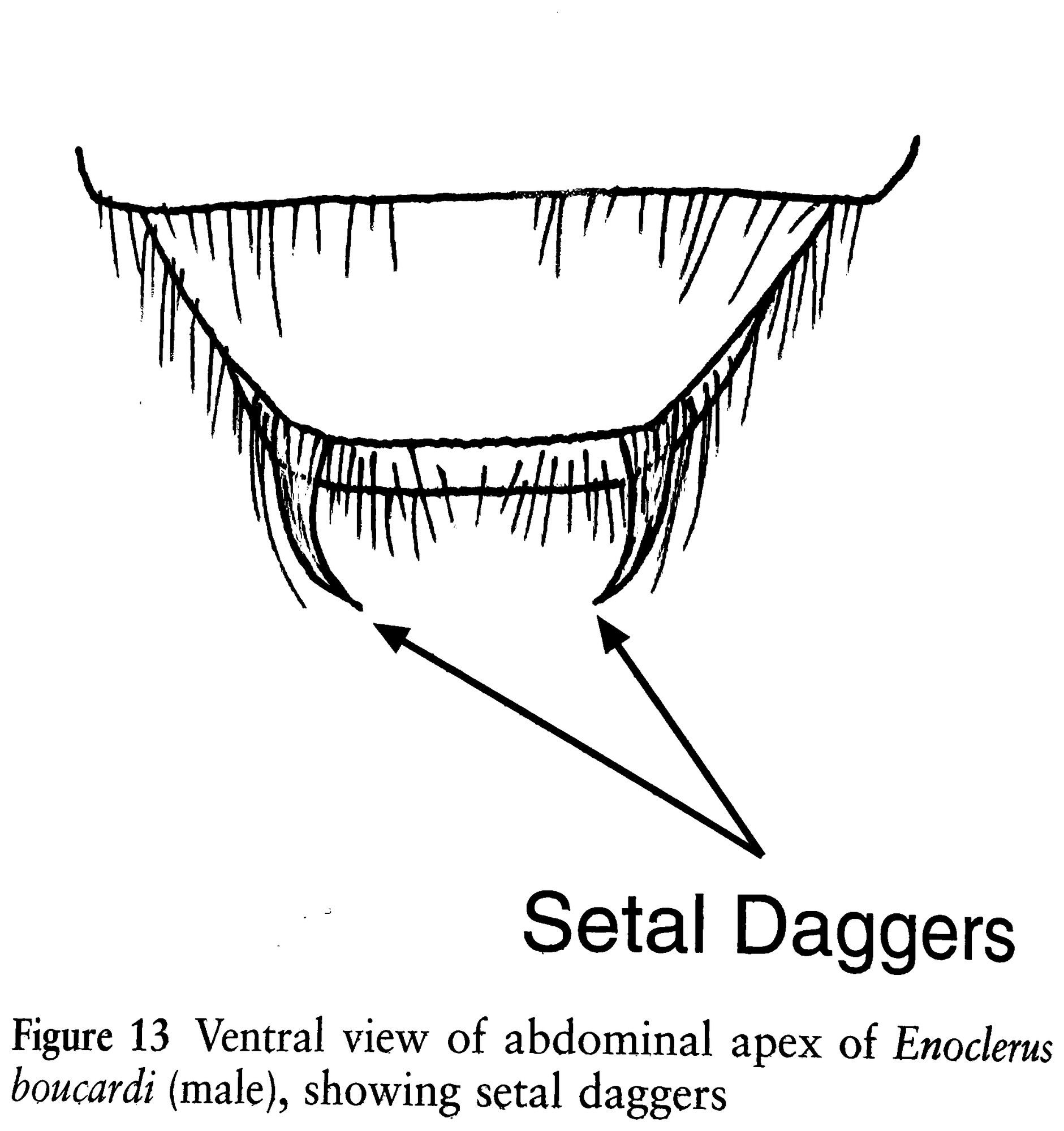
Enoclerus boucardi
- Elytra
- Fascia complete internally and laterally (not interrupted), with anterior and posterior margins more evenly transverse than in silbermannii
- Pronotum
- Entirely rust-vested, lacking a black transverse macula (present in silbermannii)
- Elytra (tumescences)
- Subbasal tumescences prominent/elevated, covered with elongate black setae
- Mesosternum
- Posterior median process produced well beyond the mesocoxae
- Setal daggers
- Present (male)
- Length
- To 13mm
- Distribution
- México (Guerrero, Michoacán, Jalisco, Puebla, Oaxaca, Chiapas, Morelos); Guatemala
Enoclerus chamelae
- Elytra (apex)
- Black integumentally, with black setae — diagnostic character (vs. thinly ashy-pubescent in E. leehermani)
- Pronotum
- Posterior vestiture band rusty, produced triangularly anteriorly (vs. usually white and transverse in E. leehermani)
- Antennae
- Antennomeres 9–10 inconspicuously pale-setose (vs. robustly white-setose in E. leehermani)
- Distribution
- Only known from the vicinity of Chamela, Jalisco, on México's west coast
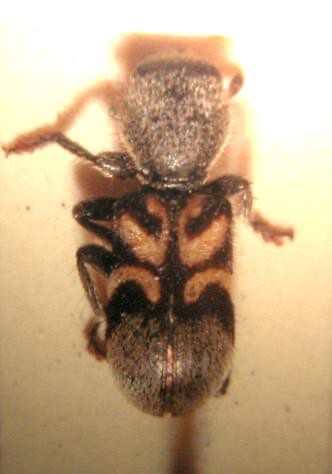
Enoclerus cinereus
- Setal pattern
- Pronotal and apical elytral ashy pubescence more extensive than E. pilatei — pronotum more conspicuously setose; apical elytral setal patch extends beyond the apical 1/6
- Elytra
- 3 marking-sets — basal carinae/sagittate patch, a median arcuate fascia, and a posterior setal patch
- Length
- ~6–7mm
- Distribution
- México (Chiapas); Guatemala; Costa Rica; Panamá; Ecuador
Enoclerus coccineus coccineus
- Pronotum
- Reddish-orange (primary diagnostic character)
- Head
- Also reddish-orange
- Elytra
- With a pair of round, consistently red basal maculae; fascia broad, transverse, subsinuate
- Length
- To 7mm
- Distribution
- USA (Arizona, New Mexico, Oklahoma, Texas, Colorado, Nebraska, South Dakota, Kansas, Utah, Wyoming, and tentatively California, Nevada, Oregon, British Columbia); “Mexico” per Barr, unverified
Enoclerus coccineus desertus
- Pronotum
- Black (primary diagnostic character)
- Head
- Also black
- Elytra
- Same as nominate
- Distribution
- Arizona only
Enoclerus colligatus
- Color
- Unique color pattern in the fauna, no close Enoclerus look-alike — recalls some species of Aulicus (a different clerid genus; superficial resemblance only). Black with distinct reddish markings contiguous along the sides
- Venter
- Black
- Elytra
- Shining, finely granulate-punctate, without subbasal tumescences, black areas conspicuously set with short, adpressed silver setae
- Length
- ~6mm
- Distribution
- México (Durango, Jalisco, Guanajuato)
Enoclerus cordifer
- Vestiture
- Prominent ashy vestiture covering head/pronotum/elytra, giving the whole dorsum a gray cast — denser/more extensive than the ashy setation in vulneratus/signatus
- Elytra
- Black-outlined salmon pink maculae (pale setae absent right at the macular edges, making them appear rimmed in black) — a distinctive combination not seen in the rest of this group
- Length
- ~9mm
- Distribution
- USA (Arizona, New Mexico, Texas, Colorado, Montana, South Dakota, Kansas, Nebraska); not recorded from México but probably occurs in northern Sonora
Enoclerus cowani
- Elytra
- Markings reddish on a black ground — a pair of small, slightly LONGITUDINAL maculae at the base (not a triangular humeral spot), and a pair of ARCUATE fasciae at middle, complete to the lateral margins
- Surface
- Superficially rugulose, without distinct punctures (smoother than both eximius and cupressi); apical 1/5 with a band of silvery setae widest at the suture
- Length
- ~7mm
- Distribution
- USA (California, Oregon, Washington) — broader range than cupressi
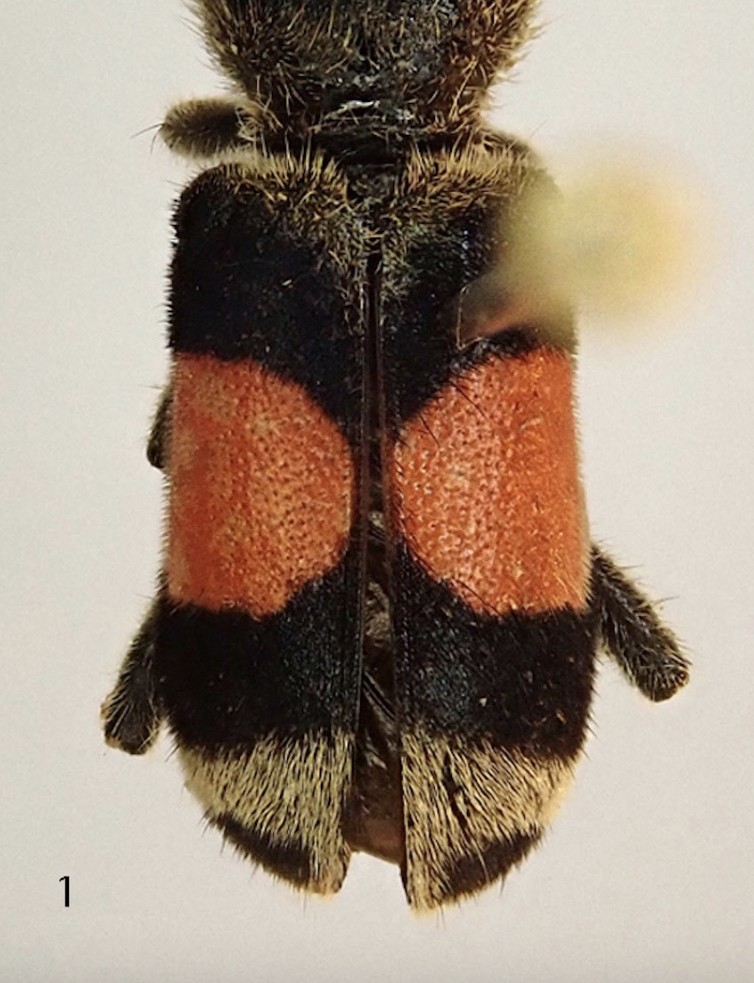
Enoclerus crabronarius
- Elytra
- Each elytron with a ringed apical black spot — a black velvety macula subapically, entirely encircled by a ring of white setae (shared with E. incanus, see below)
- Pronotum
- Lacks a pronotal ring — anterior AND posterior margins covered in white setae, disk between them black (separate bands, not a continuous ring)
- Elytra (fascia)
- A pair of large round/oval orange spots at basal-middle, black band, then a black macula near the apex entirely encircled by white setae
- Vestiture
- Black and white/silvery ONLY — no orange or tawny setae anywhere on cranium, pronotum, or elytra
- Length
- 10.5–13mm
- Distribution
- México (Chiapas) to Honduras to Costa Rica (Guanacaste)
Enoclerus crinitus
- Vestiture
- Long, conspicuous erect setae on both pronotum and elytra (shared with E. regius — long setae alone won't separate the two)
- Color
- Cinnamon/reddish-brown integument on elytra throughout (not black) — the reliable split from the whole Rusty Vestiture group
- Elytra
- A pair of separate narrow, faintly-indicated, pale post-median oblique fasciae (not the single broad band, lobate band, interrupted band, or fascia-plus-macula patterns seen in the Rusty Vestiture group)
- Length
- 11.25mm
- Distribution
- México (Puebla) only
Enoclerus cuneatus
- Color
- Uniformly black
- Elytra
- Acutely angular yellow fascia, elongate posteriorly (sharp, hook-like, running back along the suture); NO basal maculae — only two elytral markings total (the acutely-angled, posteriorly-produced anterior marking, plus a separate transverse anteapical marking)
- Surface
- Integument shining; punctures moderate basally, very fine posteriorly; basal tumescences shallow, somewhat elongate
- Length
- ~9mm
- Distribution
- México (Edo. de México, Oaxaca)
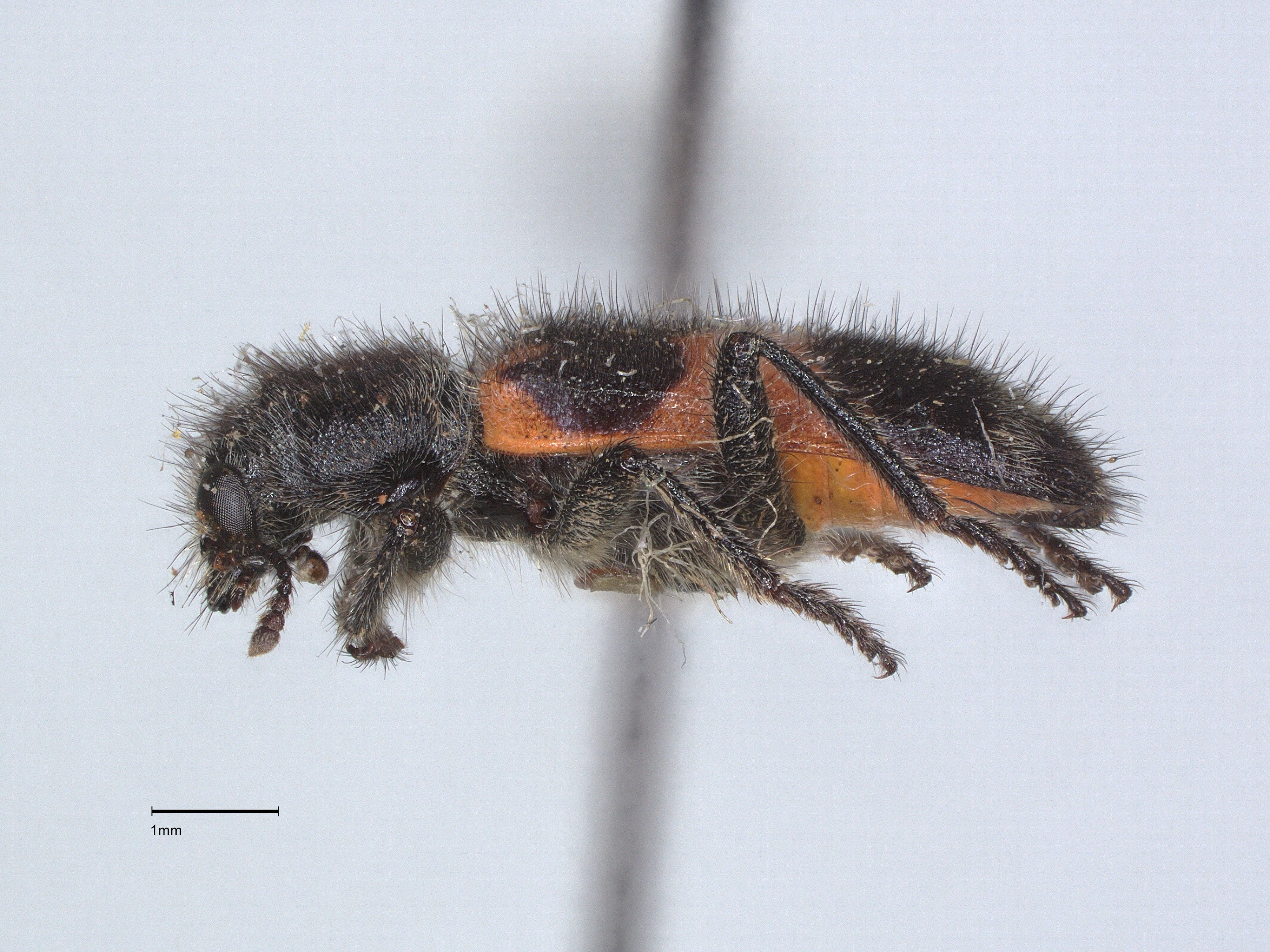
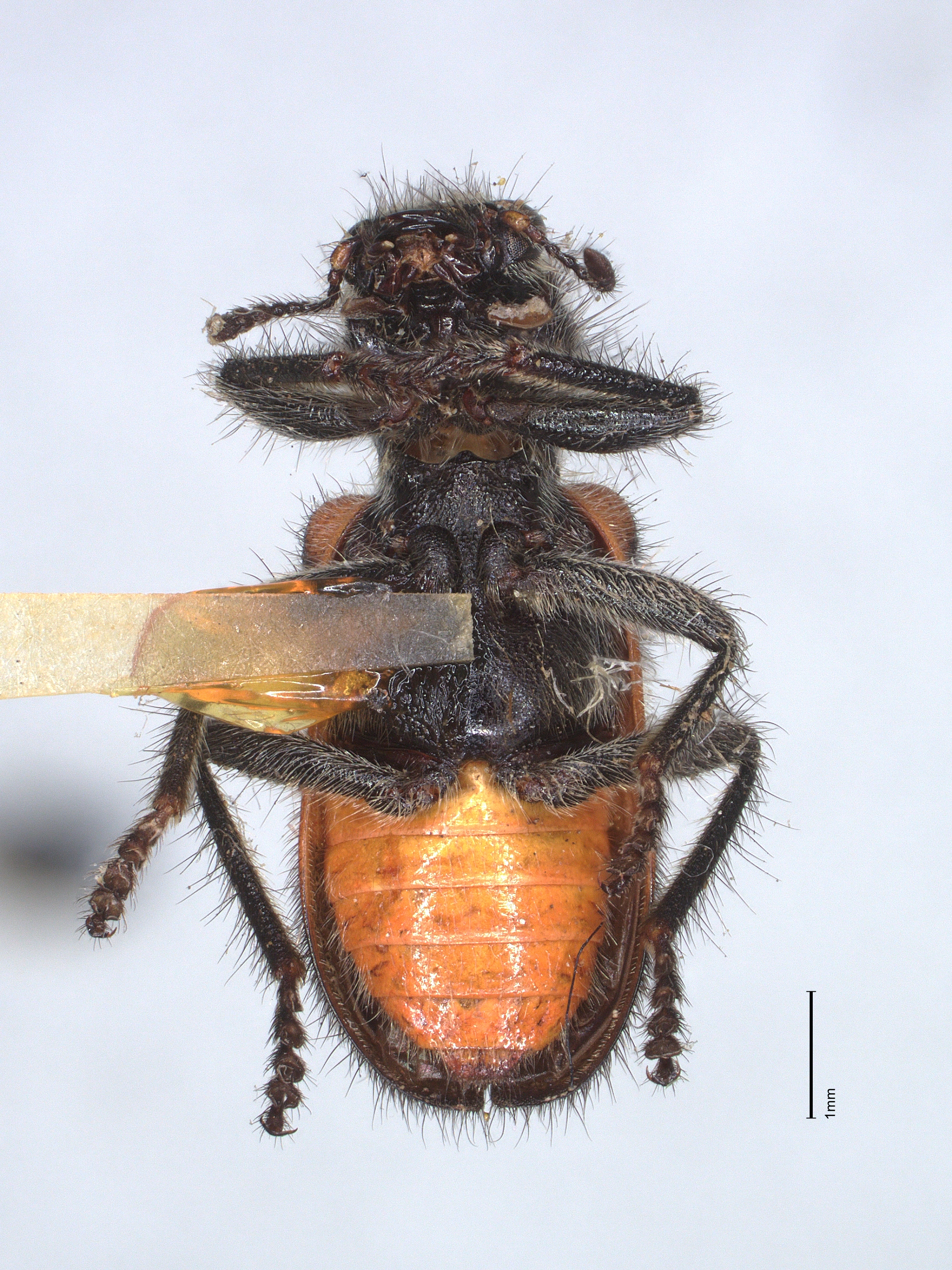
Enoclerus cupressi
- Elytra
- Markings orange-red on a bluish-black ground: a triangular macula at the humeri, plus a broad transverse bar at middle, usually NOT complete to the suture
- Build
- Proportionately broader and stouter than eximius, elytral sides more parallel, surface generally rougher
- Biology
- Larvae/adults associated with cypress (Cupressus)
- Distribution
- USA (California — central to northern coastal California)
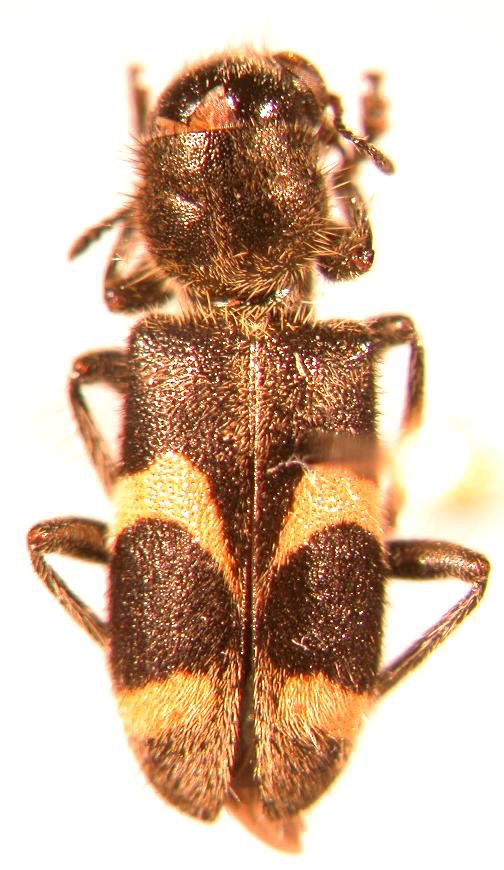
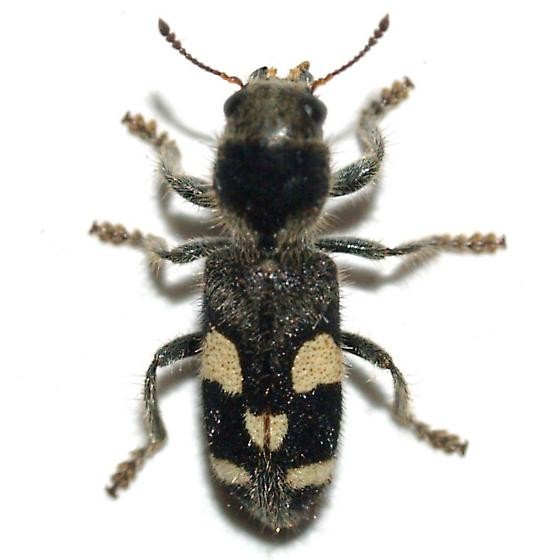
Enoclerus decussatus
- Variation
- Two color morphs — red morph: pronotum/elytral base reddish but posterior black; black morph: entirely black ground
- Elytra
- Large white scutiform setal patch post-basally; in red form, arcuate fascia narrowly outlined in black anteriorly; in both forms, fascia sometimes reduced to unconnected spots
- Length
- To 11mm
- Distribution
- México (Chihuahua, Nayarit, Michoacán, México, Morelos, Guerrero, Puebla, Veracruz); USA (Arizona — Sycamore Cyn., Santa Cruz Co.)
Arizona dark-morph photo © Margarethe Brummermann.
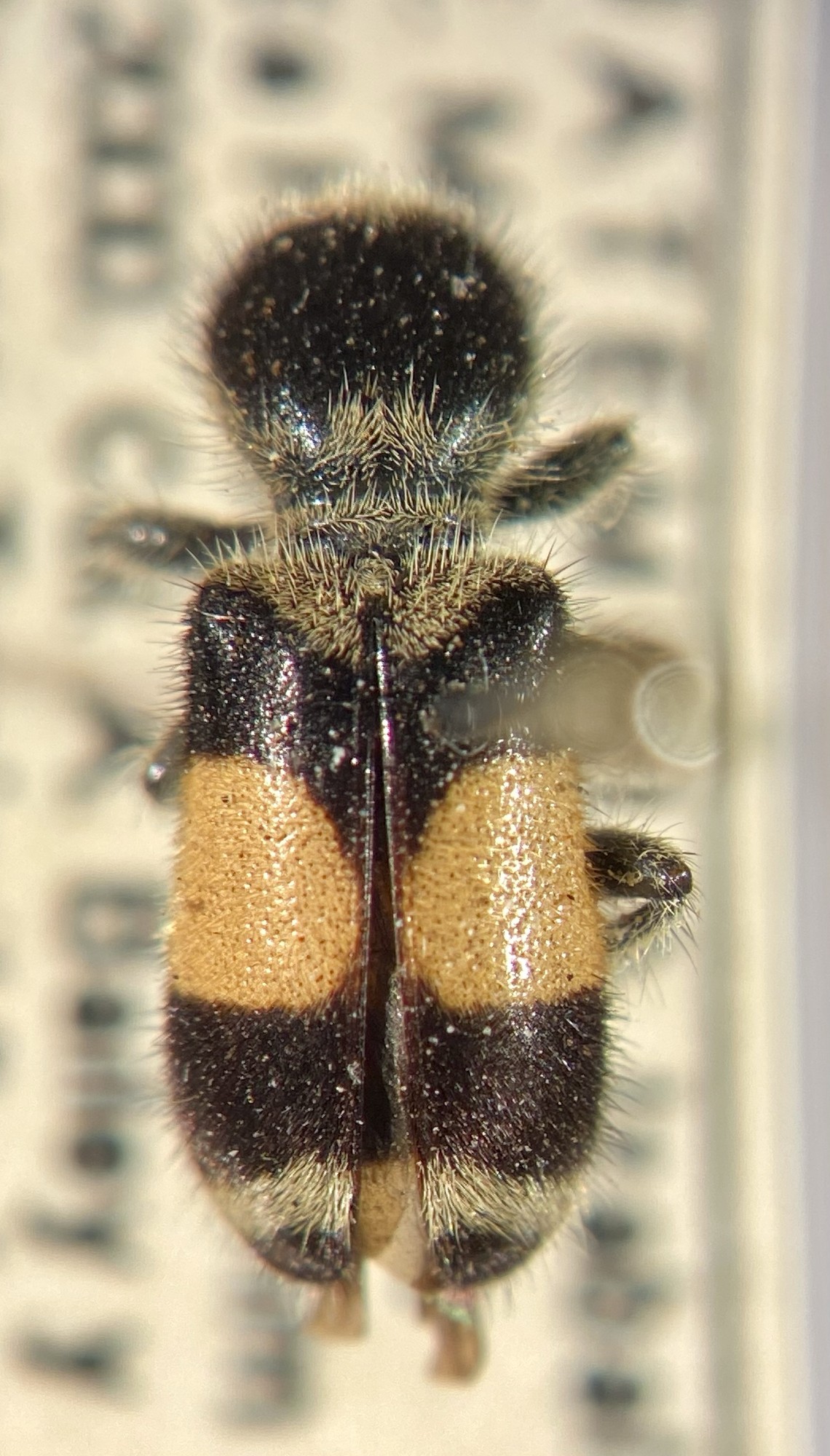
Enoclerus deletus
- Elytra
- Apical silvery-setaceous fascia a narrow oblique band, interrupted posteriorly before the apex, but not encircling a macula; median maculae yellow to reddish
- Cranial vestiture
- White or at most slightly yellowed (not orange as in necator); pale setae not mixed or replaced with orange or tawny-yellow vestiture
- Pronotum
- Anterior margin clothed with concolorous BLACK setae, no discrete anterior patch (unlike necator/zip); posterior setal patch all white
- Length
- Up to 9mm
- Distribution
- México (Veracruz; Chiapas); Costa Rica (Cartago); probably more broadly distributed throughout Middle America
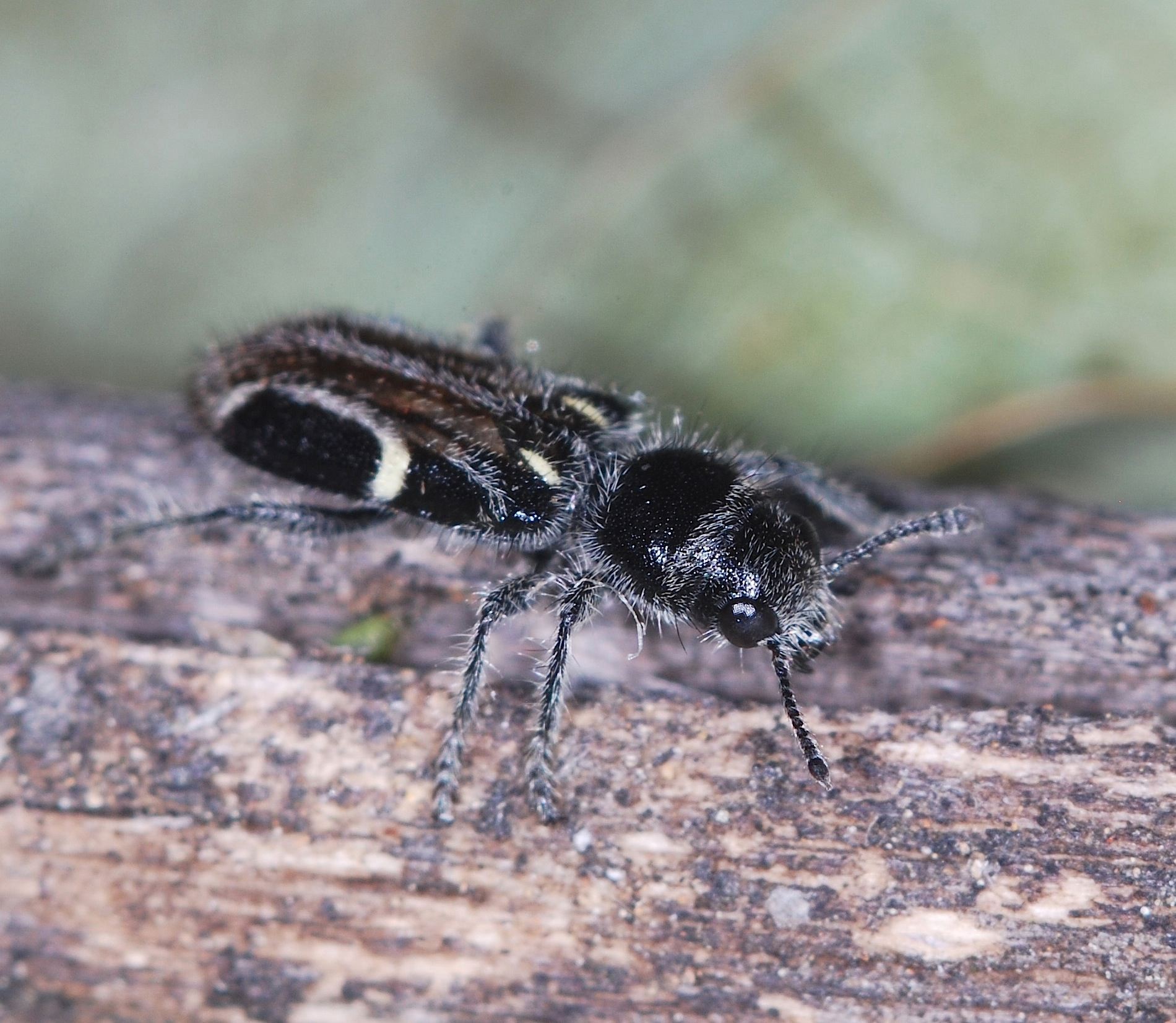
Enoclerus dimidiatus
- Elytra
- The only small-to-medium, rather robust, black Enoclerus with a blocky reddish-brown (cupreous) marking running down the elytral middle and expanding toward the apices — a pair of small elongate eburneous basal maculae, and a pair of slightly arcuate yellowish median fasciae, broadly interrupted internally before the suture by the cupreous block; block begins anterior to middle, continues to about apical 1/5, where it expands laterally to cover the apex
- Surface
- Shining, finely/densely granulate-punctate
- Length
- 6–10mm
- Distribution
- Southern México (Guerrero, Puebla, Oaxaca, Chiapas) and Guatemala
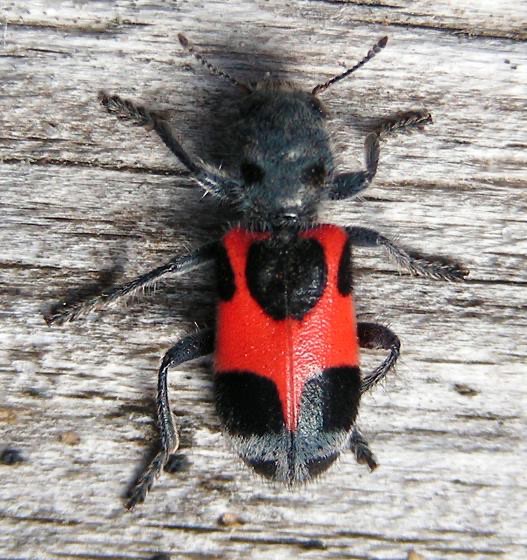
Enoclerus eximius
- Elytra
- Reverse pattern, unique in the group — anterior 4/5 salmon PINK is the ground color, with black maculae as the markings (a small spot each side not attaining the lateral margins; a large round/heart-shaped spot at middle, often narrowly touching the black scutellum)
- Elytra (apex)
- Apical 1/5 covered with whitish setae, except for a black anteapical spot on either side — the black marking sits within the white apical setal patch, not as a separate posterior macula
- Surface
- Shining, densely punctate, superficially roughened
- Length
- To 8mm
- Distribution
- USA/Canada — California, British Columbia, Idaho, Oregon, Utah, Washington, Wyoming
Enoclerus fibrillatus
- Legs
- Annulated (banded) — no other member of the group has this (also distinguishes it from the similar Central American E. whiteheadi, which has concolorous legs)
- Color
- Piceous, variegated, elytra with three pairs of transverse pale testaceous fasciae. Pronotum and elytra share a uniformly dark (piceous to black) base color.
- Elytra
- Apices narrowly pale
- Length
- 10mm
- Distribution
- Known only from the type locality, México (Jalisco, Reserva de la Biosfera Sierra de Manantlán); cloud forest
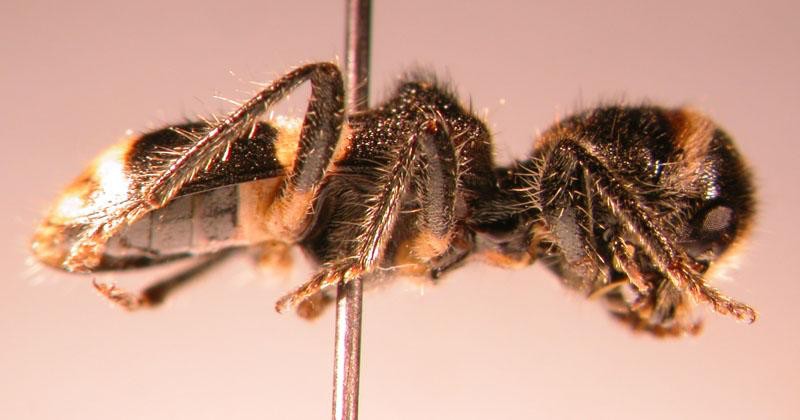
Enoclerus fugitivus
- Elytra (tumescences)
- Subbasal tubercles prominent, with a dense covering of erect black setae (contrast with bipilosus's shallow subbasal tumescences)
- Variation
- Reddish morph: head/pronotum/basal elytral 1/2 reddish, pronotum infuscate at middle behind the transverse impression, posterior 1/2 with a broad black band. Black morph: entirely lacking reddish dorsal integument
- Shared (both morphs)
- Pronotum anterior margin broadly pale with fine pale setae; each elytron with a pale oblique/transverse fascia, broadly interrupted at middle; apical 1/6 pale, densely setose; meso-/metafemora pale at base; abdomen bicolored, first visible ventrites pale, remainder dark
- Length
- To 10mm in México (larger in Costa Rica)
- Distribution
- México (Quintana Roo, Chiapas, Hidalgo, Veracruz); Guatemala; Belize; Honduras; Costa Rica; Panamá; Nicaragua — essentially non-overlapping with bipilosus's Pacific-slope range
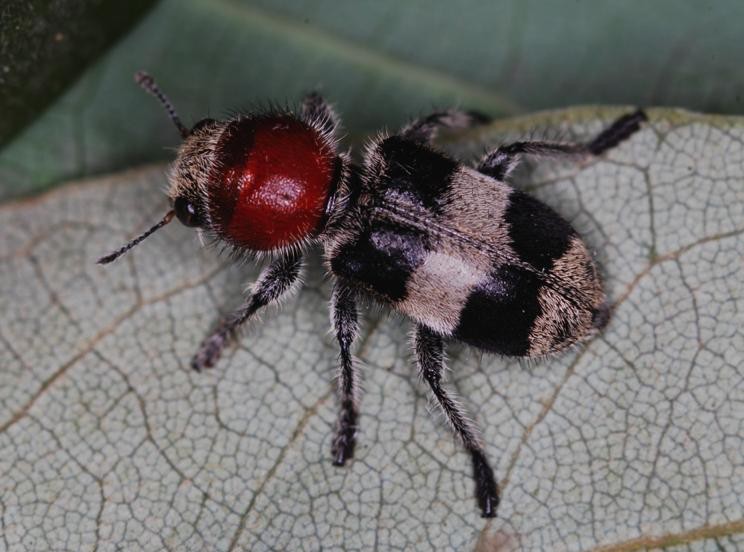
Enoclerus gabriellae
- Size
- Notably larger than the other two, to 10mm
- Pronotum
- Concolorous red
- Elytra
- Single broad, nearly complete median fascia (one marking-set — an exception to the marking-set framework otherwise used in this cohort)
- Distribution
- Oaxaca/Chiapas
- Biology
- Tropical deciduous forest
Enoclerus gavagai
- Color
- Brownish-red elytra (posterior 1/2 piceous)
- Elytra
- Three marking-sets — a pair of small rectangulate subbasal eburneous carinae, a pair of strongly curvate eburneous median fasciae attaining but not traversing the epipleural fold and broadly separated from the suture, and a pair of obscure, narrow, oblique reddish subapical fasciae
- Note
- No other Mexican congener shares this combination — no close look-alike. Rare.
- Length
- ~10mm
- Distribution
- México (Jalisco, Guerrero, Colima)
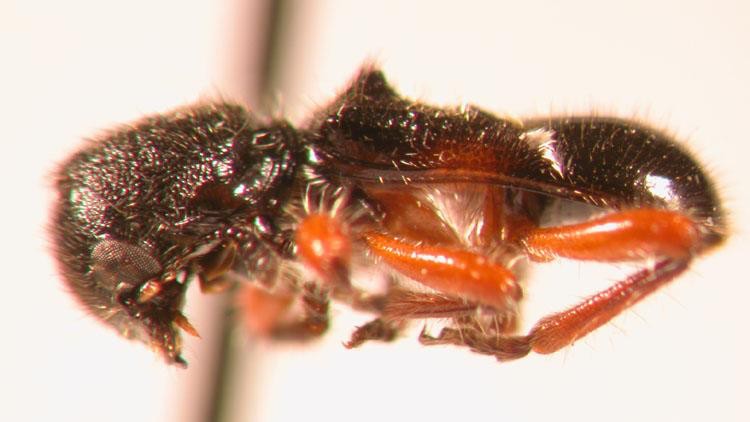
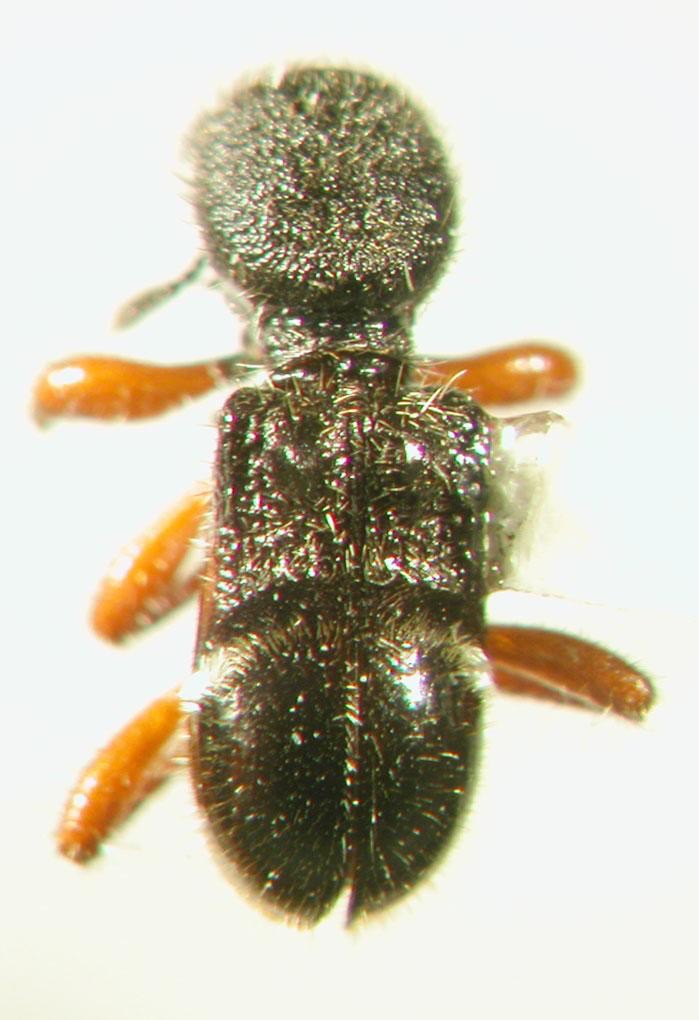
Enoclerus gibbus
- Length
- Small, antlike, 6–7 mm
- Variation
- Two color morphs — elytra reddish on anterior half, or entirely black; legs black or red in either morph
- Elytra
- A pair of extremely produced post-basal tubercles; oblique, groove-like carinate/sulcate impressions at middle, with a short oblique silvery setal fascia posterior to the groove
- Surface
- Anterior half rugose; posterior half smooth and shining
- Distribution
- México (Veracruz); Nicaragua; Guatemala; Honduras (Francisco Morazán, Olancho); Costa Rica (Puntarenas, Guanacaste); Panamá
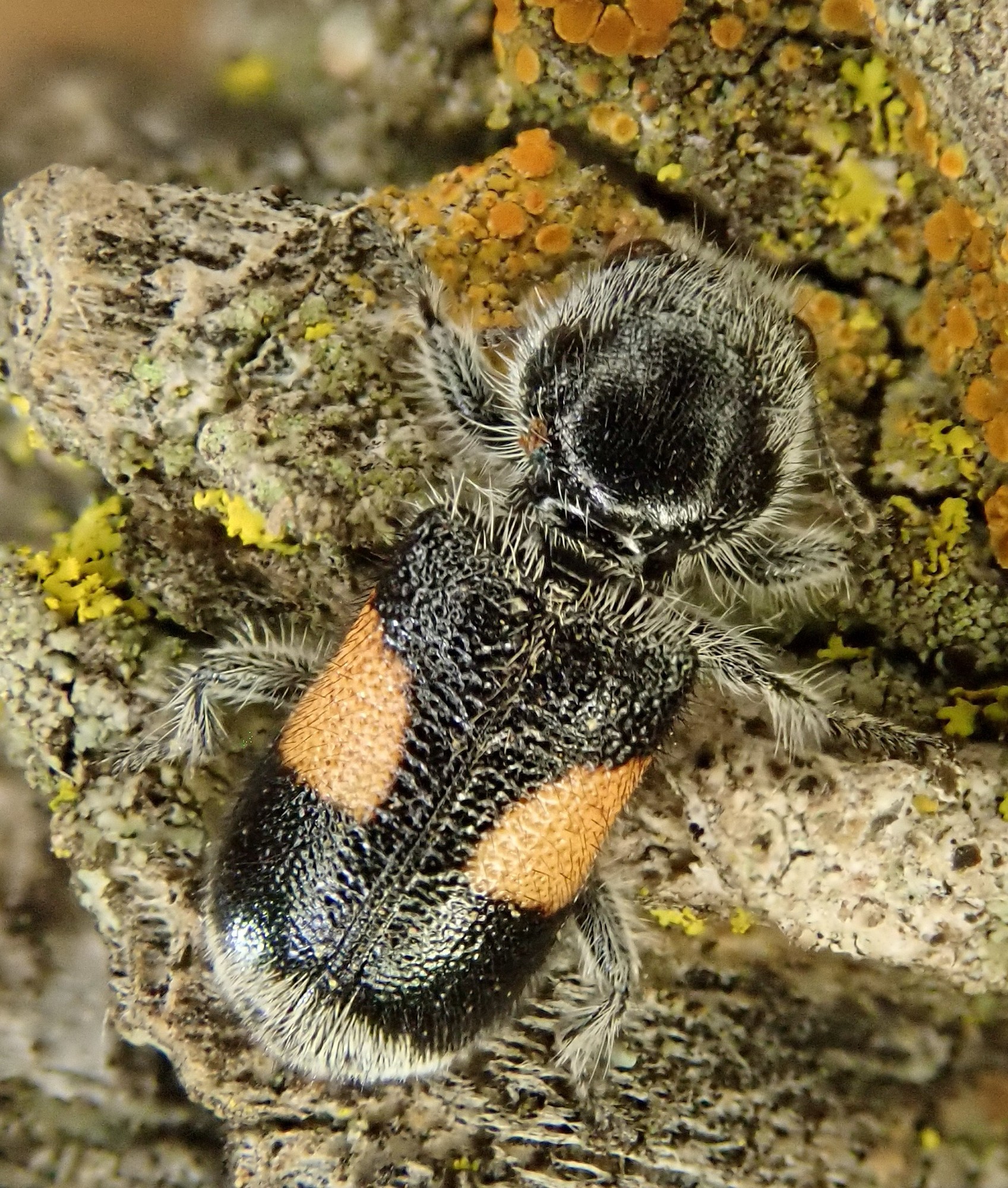
Enoclerus hoegei
- Pronotum
- Less elongate than vulneratus/signatus
- Elytra
- More robust/less elongate; setation silvery (part of the Rusty Vestiture group); sculpturing finely punctate, shining (vs. densely/deeply punctate, dull in E. vetus)
- Color
- Black, with a red or orange median band set just slightly anterior to middle, shape variable (widely separated, narrowly separated, or complete)
- Length
- Medium, 6–8mm
- Distribution
- México (Oaxaca, Chiapas, Sinaloa, Veracruz, Puebla, Querétaro, Hidalgo, Zacatecas, Jalisco); Honduras(?); El Salvador; USA (Arizona); Guatemala
- Biology
- Known from tropical deciduous forest and thorn forest
Enoclerus ichneumoneus
- Color
- Overall reddish-orange, with a broad median/submedian band wider than in quadrisignatus
- Elytra
- Anteapical/subapical white setal fascia diffuse, NOT forming a distinct narrow line (vs. sharply defined in muttkowskii)
- Scutellum
- Elongate (diagnostic per Downie & Arnett 1996)
- Length
- 8–11mm
- Distribution
- USA/Canada only (USA: Alabama, Arkansas, Delaware, District of Columbia, Florida, Georgia, Illinois, Indiana, Iowa, Kansas, Kentucky, Louisiana, Maryland, Mississippi, Missouri, New York, North Carolina, Ohio, Oklahoma, Pennsylvania, South Carolina, Texas, Utah, Virginia, West Virginia, Wisconsin; Canada: Ontario) — broader range reaching further south/west than muttkowskii
Enoclerus incanus
- Elytra
- Pale apical band eclipsed at middle by a large black macula on each elytron — the same ringed-apical-black-spot effect shared with E. crabronarius (see below)
- Length
- Much larger, >13mm (holotype 16.5mm) — the largest species in this whole sub-cluster
- Pronotum (diagnostic)
- Disk bears a large black scutiform macula, completely ringed by a continuous band of very long pale setae — a true ring, matched by no other large Enoclerus in the region; diagnostic on its own (E. crinitus has a similarly patterned pronotum, but the ring of white setae is interrupted across the anterior margin)
- Elytra (fascia)
- A large pale fascia, broadest medially, constricted toward the lateral margins (though remaining complete to the margin)
- Distribution
- Oaxaca (Isthmus of Tehuantepec) only
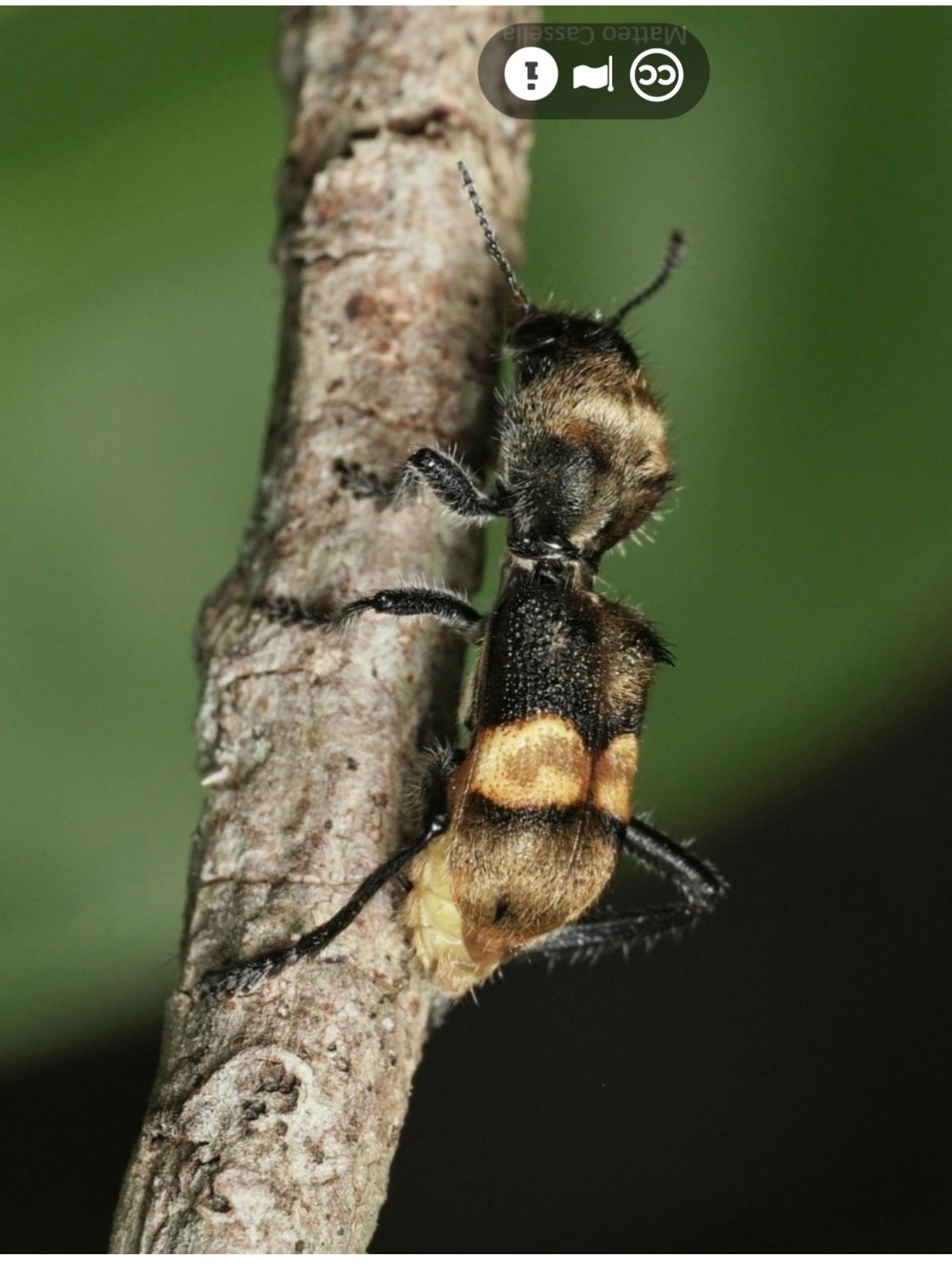
Enoclerus insidiosus
- Color
- Metallic bronze/greenish sheen on head and pronotum (unique in this cluster); patches of golden/bronze setae
- Elytra
- Prominent post-basal (subbasal) tubercles; coarsely rugose-punctate sculpturing on the anterior 1/2
- Legs
- Third leg pair (tibia) conspicuously flattened and elongate (unique structural character)
- Biology
- Presumed mimic of the ant Camponotus sericeiventris; known in Mexico from tropical deciduous forest and lowland cloud forest
- Length
- 7.5–10.5mm (smallest in this cluster, which is why it dips under the 10mm line)
- Distribution
- Costa Rica, Panamá, México (Chiapas, Veracruz)
Live photo reproduced from Matteo Casella (2026) under a Creative Commons Attribution-ShareAlike 4.0 International license (CC BY-SA 4.0).
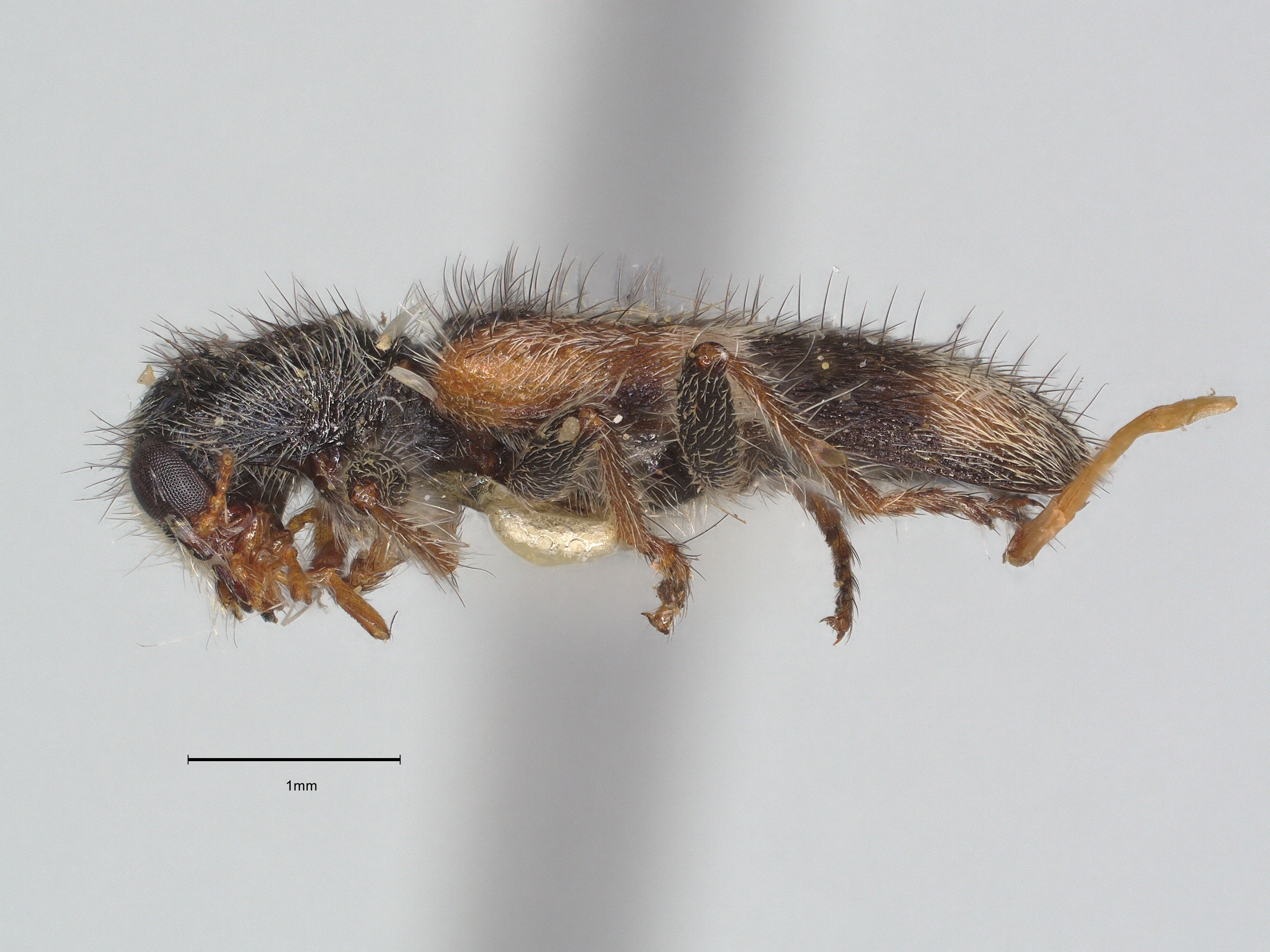
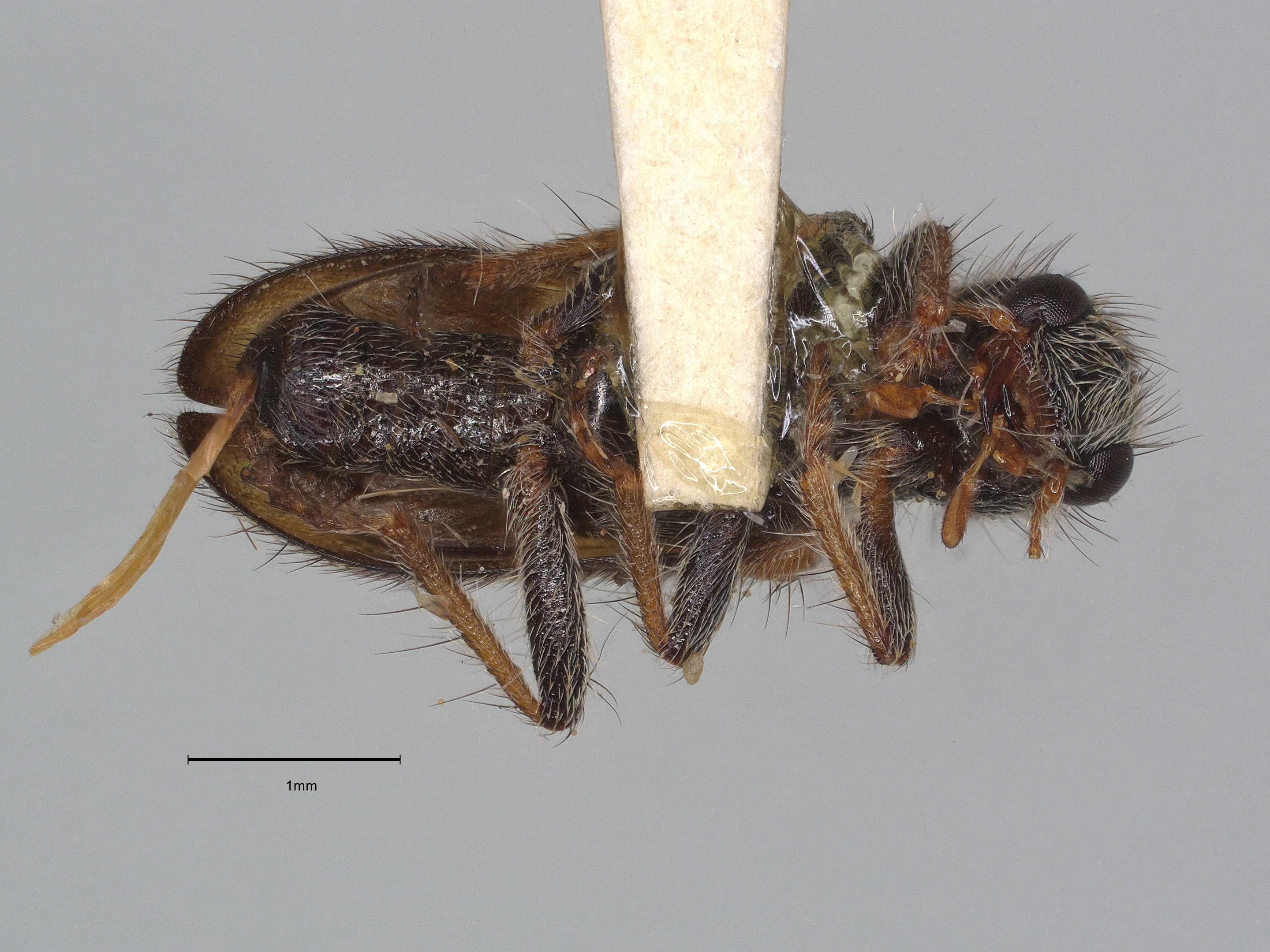
Enoclerus inyoensis
- Color
- Anterior half reddish orange except for an hourglass-shaped sutural black marking, broadest in front of the scutellum, and a blackish line along the lateral margin
- Elytra (posterior)
- Densely clothed with gray pile on a light background except for a broad, black transverse bar at the posterior third, sharply defined with even margins, which may or may not be broken at the suture
- Legs
- Tibiae fulvous (vs. black in lecontei and schaefferi)
- Diagnosis vs. schaefferi
- Large reddish-orange humeral patch (lacking or much smaller in schaefferi); gray median bar broad and evenly arcuate (much vaguer in schaefferi); black bar sharply defined (irregular, poorly defined in schaefferi)
- Length
- 5–6mm
- Distribution
- Restricted to the Panamint Mts., Inyo Co., California only (type series, beaten from pinyon pine)
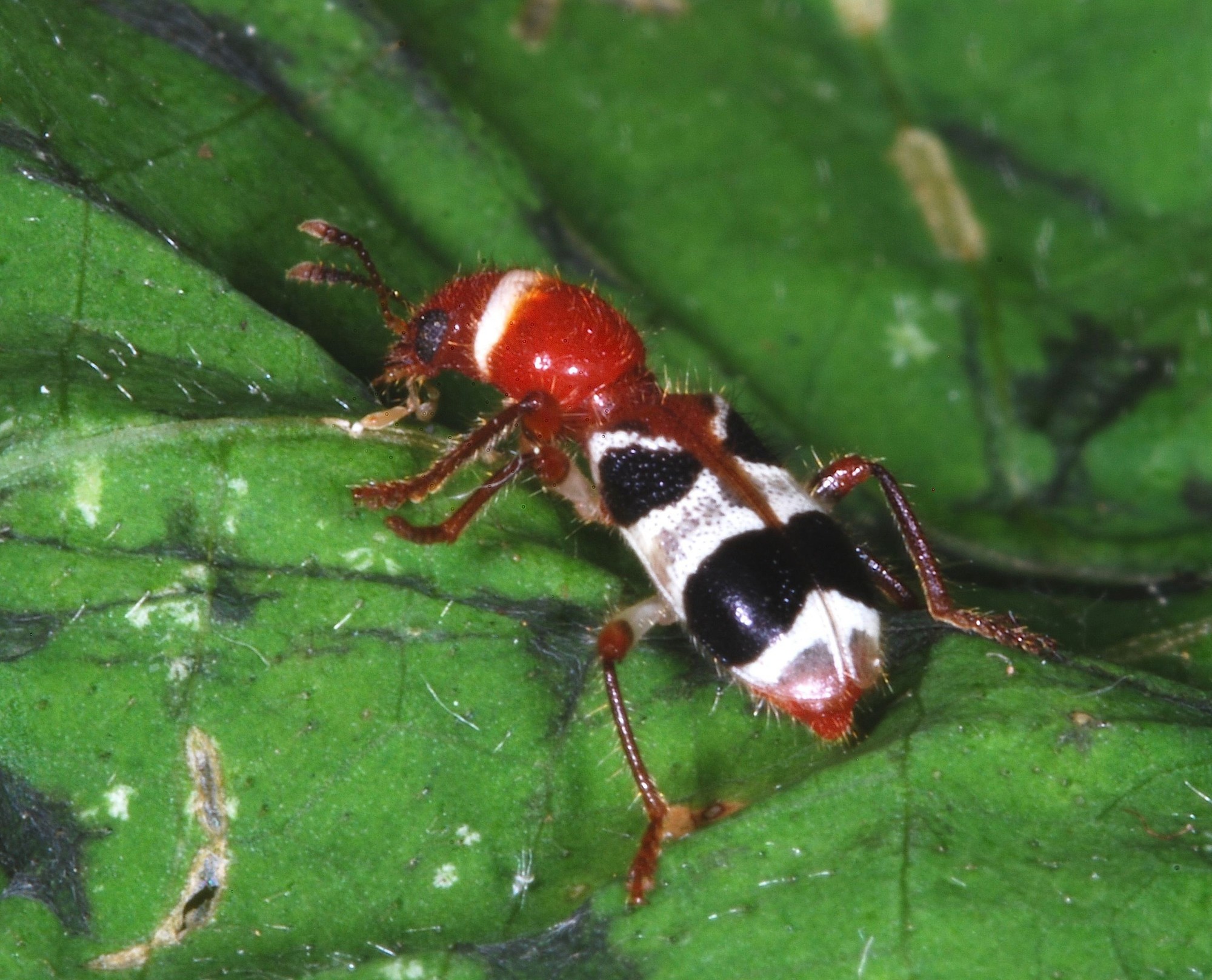
Enoclerus juquilensis
- Femora
- Tricolorous — broadly white basally, with a narrow infuscate annulus at distal half (profemur) or distal third (meso-/metafemora), remainder reddish (vs. uniformly reddish in atriceps)
- Head
- Reddish
- Pronotum
- Reddish with anterior margin broadly white (vs. atriceps's black-or-absent anterior margin marking)
- Elytra
- Base narrowly reddish (vs. narrowly yellow in atriceps)
- Length
- Small, to 5mm
- Distribution
- México (Oaxaca: Sierra Sur) only
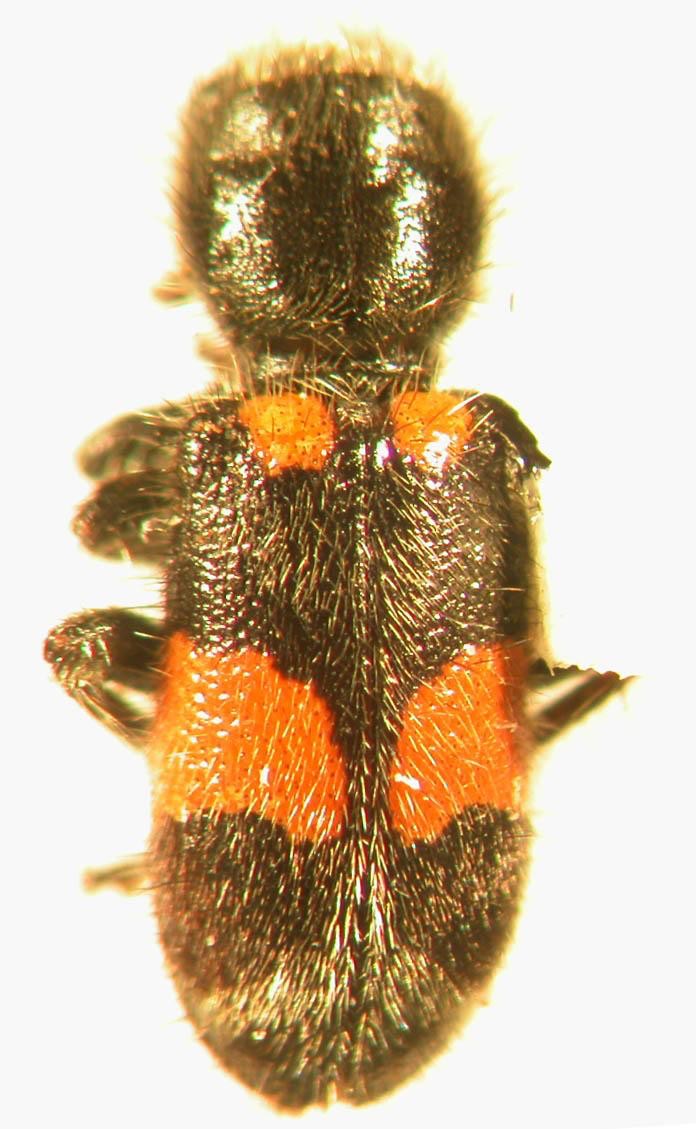
Enoclerus laetus
- Elytra (fascia)
- Transverse or angulate (not sharply hooked), usually narrowly interrupted at the suture
- Variation
- Highly variable — at least 4 color morphs recorded, but a pair of medium-sized subbasal maculae (yellow or red), a chevron-shaped band of whitish setae at the anterior 1/3, and a transverse anteapical band of pale setae produced along the midline are shared across all morphs
- Length
- Small to medium, ca. 8mm max
- Biology
- Commonly found late summer and fall on flowering yellow composites
- Distribution
- USA (Arizona, New Mexico, Texas, Kansas); México (Nuevo León, Coahuila, Chihuahua, Querétaro)
Enoclerus latesellatus
- Elytra
- Fascia salmon pink, angular (not scalloped) in outline, complete to the lateral margins
- Abdomen
- Black except ventrites reddish only along the posterior margins/at middle (not entirely red)
- Length
- To 13mm
- Distribution
- México (Sinaloa, Nayarit, Jalisco, Chihuahua, Sonora)
Enoclerus lautus
- Elytra
- Anterior with an elongate reddish block on each side, extending from the elytral base to the middle; angulate setal median fascia of adpressed white setae; apical 1/6 densely white-setose
- Color
- Black ground with the integumental reddish block described above
- Length
- Rather small, ca. 5mm
- Distribution
- USA (Arizona: Santa Cruz Co.); México (Sonora, Durango, Sinaloa)
- Biology
- Associated with pine
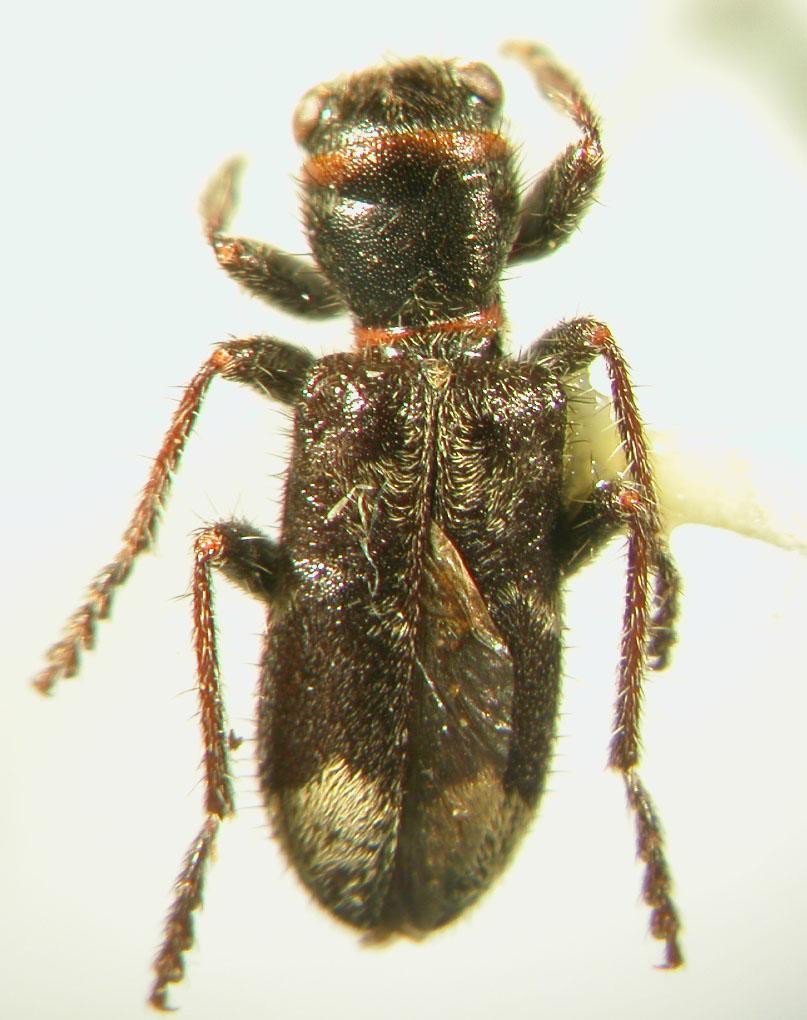
Enoclerus lecontei
- Elytra
- Pattern has three components: (1) a basal component — a line of white setae running from the scutellum to about the basal 1/4, expanding irregularly laterally, notably swirled texture; (2) a median component — a narrow angulate fascia at the middle, somewhat expanded laterally; (3) apical 1/5 with a rather dense covering of white setae
- Diagnostic
- The COMBINATION of all three setal markings together is what defines lecontei — the only member of its comparison block with this three-part pattern
- Color
- Black; venter black
- Variation
- “Erro” phenon has red anterior/posterior pronotal margins; Napa Valley population shows some integumental pale color beneath the median fascia (the one exception to this cluster's “no integumental color” rule)
- Common name
- Black-bellied Clerid
- Length
- 5–7mm
- Distribution
- USA (Wisconsin, Michigan, Arizona, California, Washington, Oregon, Idaho, South Dakota, Colorado, Wyoming, New Mexico, Texas); Canada (British Columbia); México (Sonora, Durango)
- Biology
- Commonly taken on dead pine
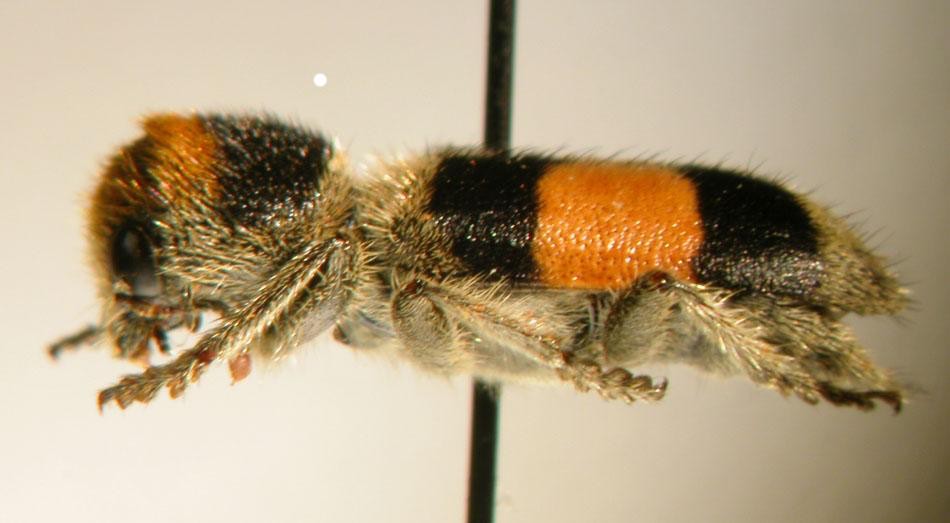
Enoclerus leehermani
- Elytra (apex)
- In E. leehermani the elytral apices are thinly covered with ashy pubescence vs E. chamelae where the apices appear black (black integument set with black setae) — diagnostic character
- Pronotum
- Posterior vestiture band usually white, transverse (vs. rusty and produced triangularly anteriorly in E. chamelae)
- Antennae
- Antennomeres 9–10 robustly white-setose (vs. inconspicuously pale-setose in E. chamelae)
- Distribution
- Chiapas/Oaxaca; Honduras; Guatemala
Enoclerus lobatus
- Elytra
- Fascia lobate internally and deeply emarginate posteriorly (distinctive scalloped shape, unlike boucardi's simple complete band)
- Pronotum
- Entire pronotum densely covered with reddish setae (not just anterior)
- Setal daggers
- Present (male)
- Length
- 10–14mm
- Distribution
- México (Chiapas, Oaxaca)
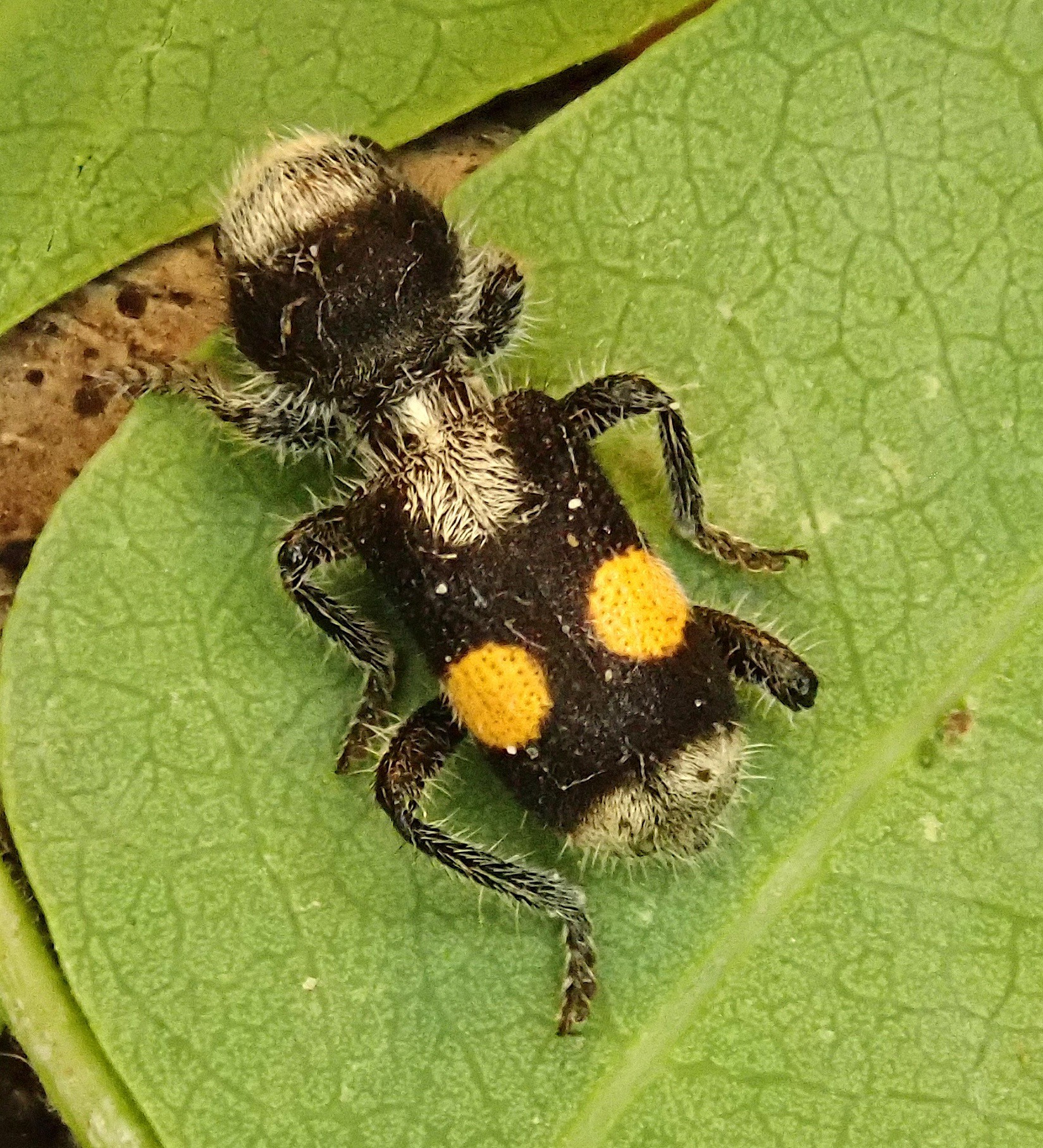
Enoclerus longipes
- Elytra (tumescences)
- Tuberculate subbasal elytral tumescence (vs. shallow/obsolete in necator/zip/deletus)
- Surface
- Coarser punctation than the cohort trio
- Vestiture
- Head, anterior of pronotum, a leaf-shaped patch behind the scutellum, and elytral apices conspicuously covered with whitish reclinate setae — the leaf-shaped subbasal patch is the most diagnostic character, not seen in the necator/zip/deletus trio
- Elytra (color)
- Black, with two round yellowish post-median maculae
- Length
- 6–8mm
- Distribution
- Restricted to the Yucatán Peninsula — México (Yucatán, Quintana Roo)
- Note
- Most commonly encountered Enoclerus in Yucatán; mutillid mimic
Enoclerus lunatus
- Elytra
- Discrete lunula (crescent-shaped marking) on each elytron — vs. E. ichneumoneus's broad continuous fascia
- Length
- ~7mm
- Distribution
- USA (Alabama, Arkansas, Delaware, Florida, Georgia, Kansas, Kentucky, Maryland, Mississippi, Missouri, New Jersey, New York, North Carolina, Ohio, Pennsylvania, South Carolina, Texas, Virginia)
Enoclerus luscus
- Build
- More robust than pinus, to 10mm
- Elytra
- Broader, angular/zigzag, orange-yellow marking
- Vestiture
- Ashy apical setae (not whitish, as in pinus)
- Abdomen
- Red (separates luscus from palmii specifically)
- Distribution
- USA (Arizona — Cochise Co., Huachuca Mtns; Nevada); México (Sonora; San Luis Potosí?, unconfirmed)
- Note
- Enoclerus quercus Schaeffer is likely a synonym of this species
- Biology
- Collected in oak forest. One specimen was collected beating Fraxinus
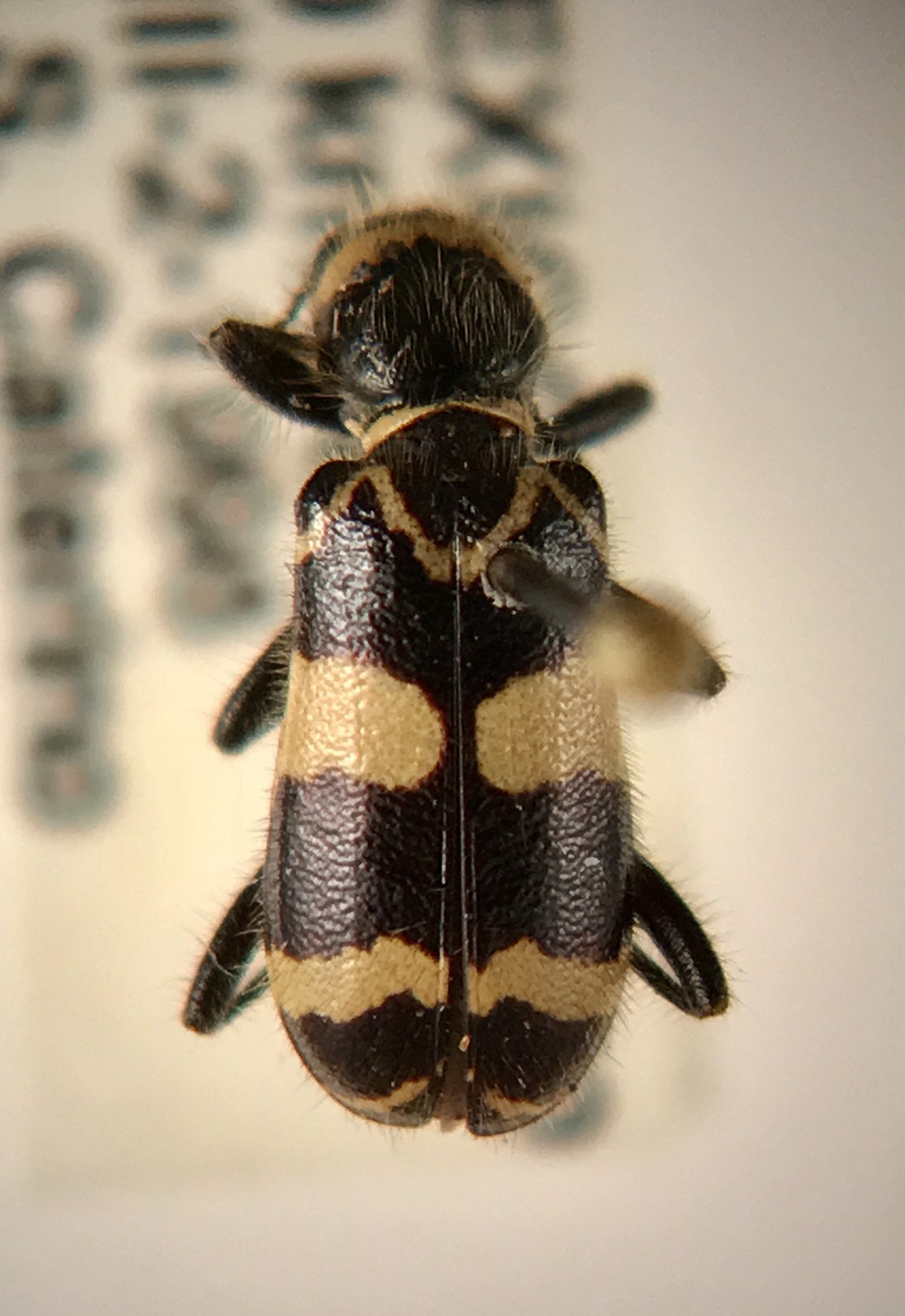
Enoclerus maculicollis
- Abdomen
- Reddish (distinct from varius's fully red venter and bobloydi's pale testaceous venter)
- Elytra
- Three elytral fasciae (distinct pattern from both varius and bobloydi)
- Pronotum
- Reddish testaceous macula anteriorly on each side plus a third testaceous marking at the anterior margin middle
- Legs
- Solid black, without annulations (vs. annulated in fibrillatus)
- Length
- ~10mm
- Distribution
- México (Hidalgo, Veracruz, Durango, Coahuila)
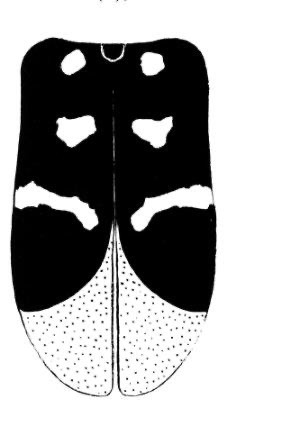
Enoclerus madrensis madrensis
- Elytra
- Unique three-marking pattern — two sets of paired yellowish maculae, a pair of narrow yellowish median fasciae, PLUS a unique apical elytral color — no close look-alike among other Mexican congeners
- Color
- Elytral posterior color yellowish-orange (vs. black in ssp. turnbowi)
- Distribution
- Sierra Madre Occidental, México (Sinaloa)
Enoclerus madrensis turnbowi
- Elytra
- Unique three-marking pattern, same as nominate
- Color
- Elytral posterior color black (vs. yellowish-orange in nominate madrensis)
- Size
- Smaller than the nominate
- Distribution
- Sierra Sur, México (Guerrero, Michoacán)
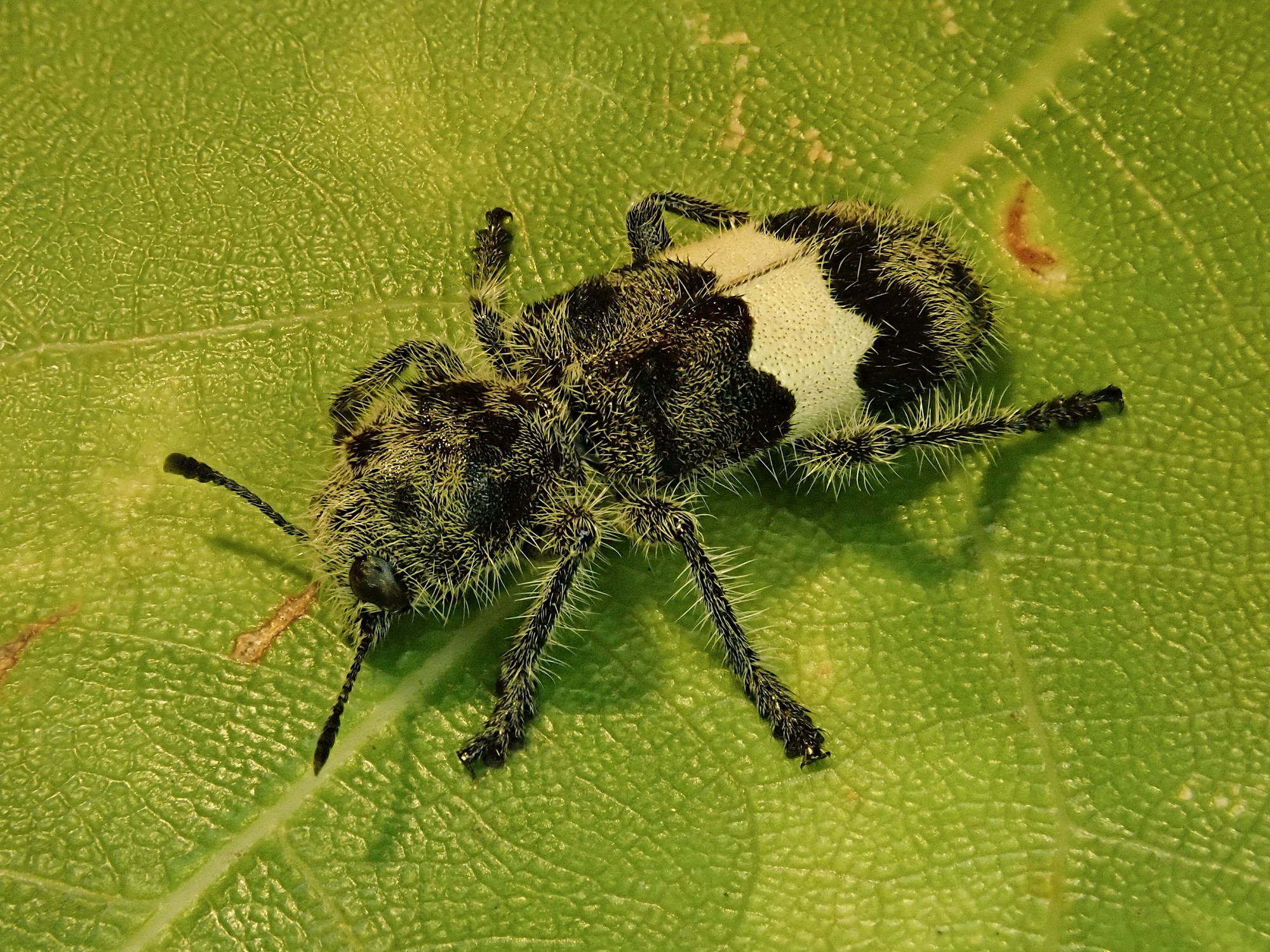
Enoclerus magnus
- Elytra
- Fascia yellowish, jagged/scalloped in outline (per OD figure)
- Abdomen
- Entirely red
- Length
- Up to 15mm (largest of the pair)
- Distribution
- México (Durango, Sinaloa, Colima, Jalisco, Nayarit; possibly Oaxaca)
- Biology
- Pine forest; collected beating dead oak in oak/pine forest
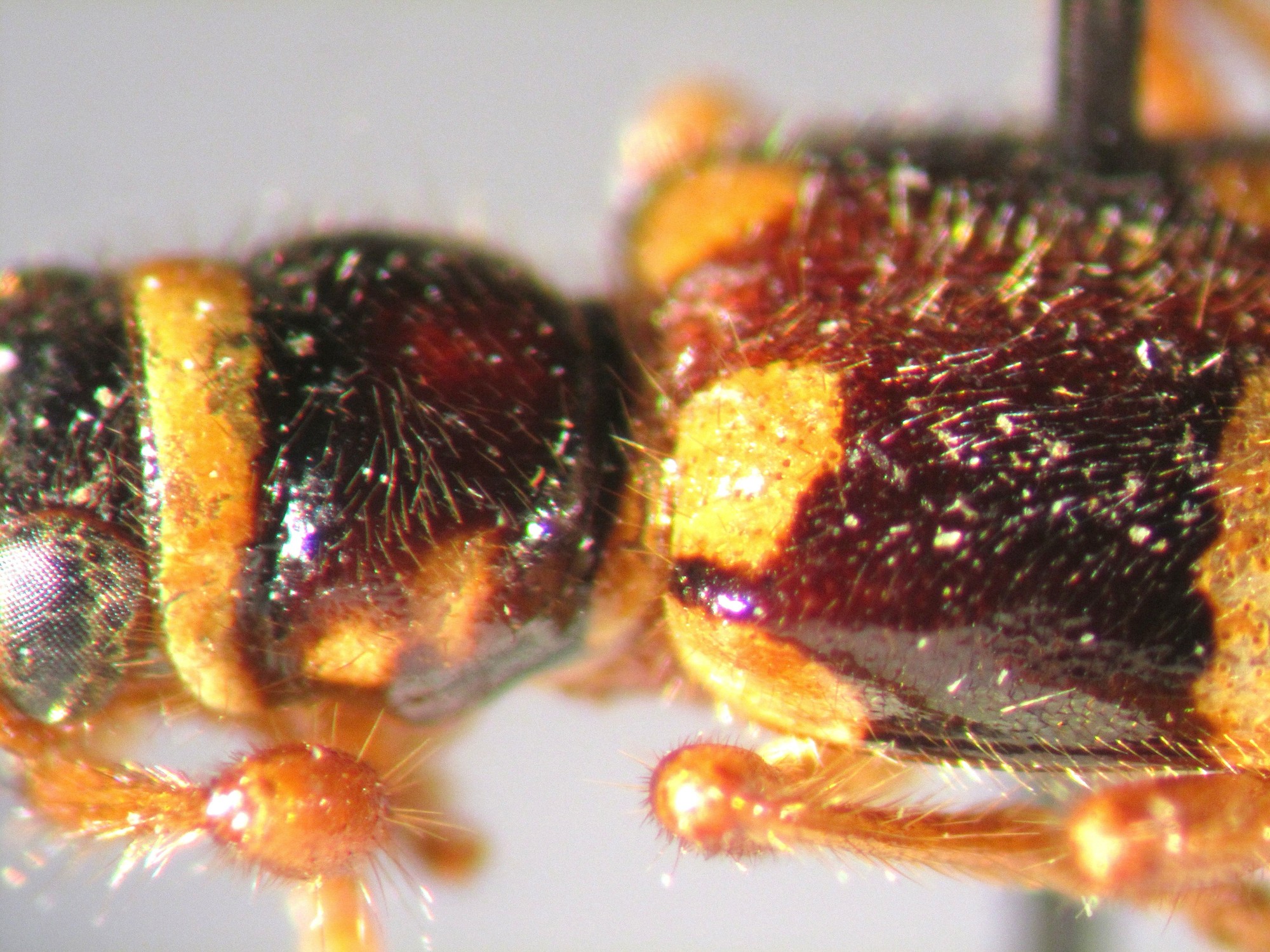
Enoclerus mcnallyi
- Diagnosis
- Closest to E. varius, but lacks the comma-shaped pronotal marking (rules out toledoi too); markings more regular than bobloydi's tessellated pattern
- vs. E. varius
- Subbasal markings MACULAR (discrete spots, not fascia-based); posterior fascia TRANSVERSE (not sinuate); no anteapical pale spot (vs. a pair of small testaceous maculae at the apices in varius); vertex/occiput/pronotal posterior darkened; pronotum proportionally narrower
- Color
- Piceous with yellow-ochre pronotal/elytral markings
- Elytra
- Subbasal tumescences feebly elevated; surface shallowly rugulose/punctate with scattered small, well-defined punctures — basically the same sculpturing as the rest of the group
- Length
- 8.0mm
- Distribution
- High elevation (9000 ft type locality). México (Guerrero) only
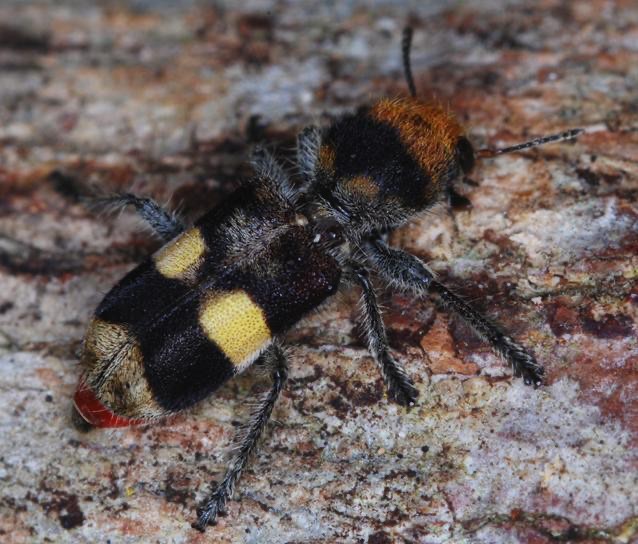
Enoclerus mexicanus
- Pronotum
- Broadly black across the middle (a transverse band bisecting the rusty pubescence — not a discrete macula as in silbermannii)
- Elytra (tumescences)
- Subbasal tumescences distinctly tuberculate
- Elytra
- Distinct post-basal shield-shaped patch of pale setation; paired median cream markings usually not reaching the suture
- Elytra (apex)
- Ashy-pubescent (vs. silbermannii's dense rusty apical vestiture)
- Setal daggers
- Present but reduced
- Variation
- Can run primarily black OR primarily reddish; the diagnostic pronotal band and other characters hold regardless of body color
- Length
- To 12mm
- Distribution
- Primarily Atlantic versant; México (Tamaulipas, Veracruz, San Luis Potosí, Chiapas, Yucatán Peninsula; Nuevo León?); Honduras
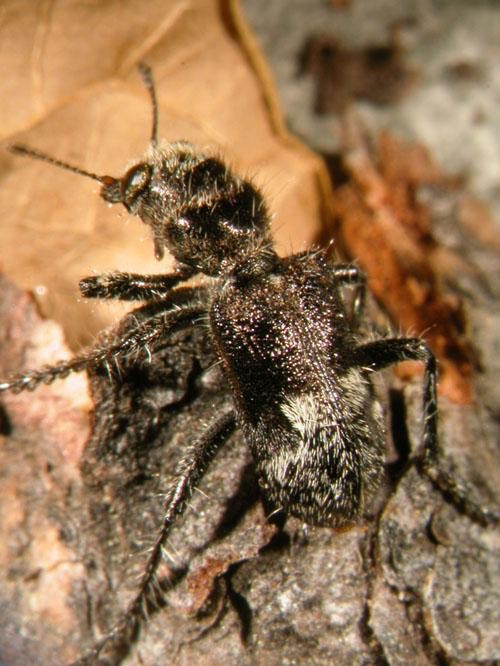
Enoclerus moestus
- Elytra
- A posteriorly-positioned setal “block” (not a median transverse band) — purely vestitural, no integumental color beneath
- Abdomen
- Reddish
- Length
- To 9mm
- Distribution
- USA (California, Arizona, Nevada, New Mexico, Colorado, South Dakota, Wyoming, Nebraska); México (Sonora, Chihuahua, Chiapas)
- Biology
- Pine forest
- Taxonomic note
- Some populations have the setal block denuded laterally/subapically (the “barri” variety of Knull, treated here as a phenon, not a species)
Enoclerus molybros
- Elytra
- Concolorous, lacking integumental pattern; densely setose, producing a uniformly gray appearance
- Length
- To 7mm
- Distribution
- México (Coahuila, Nuevo León, San Luis Potosí)
- Biology
- Collected in Chihuahuan Desert habitat
Enoclerus muttkowskii
- Color
- Overall reddish-orange, with a broad median/submedian band wider than in quadrisignatus
- Elytra
- Anteapical/subapical white setal fascia sharply defined, forming a distinct narrow line (vs. diffuse in ichneumoneus)
- Distribution
- USA (Connecticut, Maine, Massachusetts, Michigan, Minnesota, New Hampshire, New Jersey, New York, Ohio, Pennsylvania, Tennessee, Vermont, Virginia, West Virginia, Wisconsin); Canada (New Brunswick, Ontario, Quebec) — core range a northern band, with a disjunct extension south along the Appalachians into Virginia, West Virginia, and Tennessee
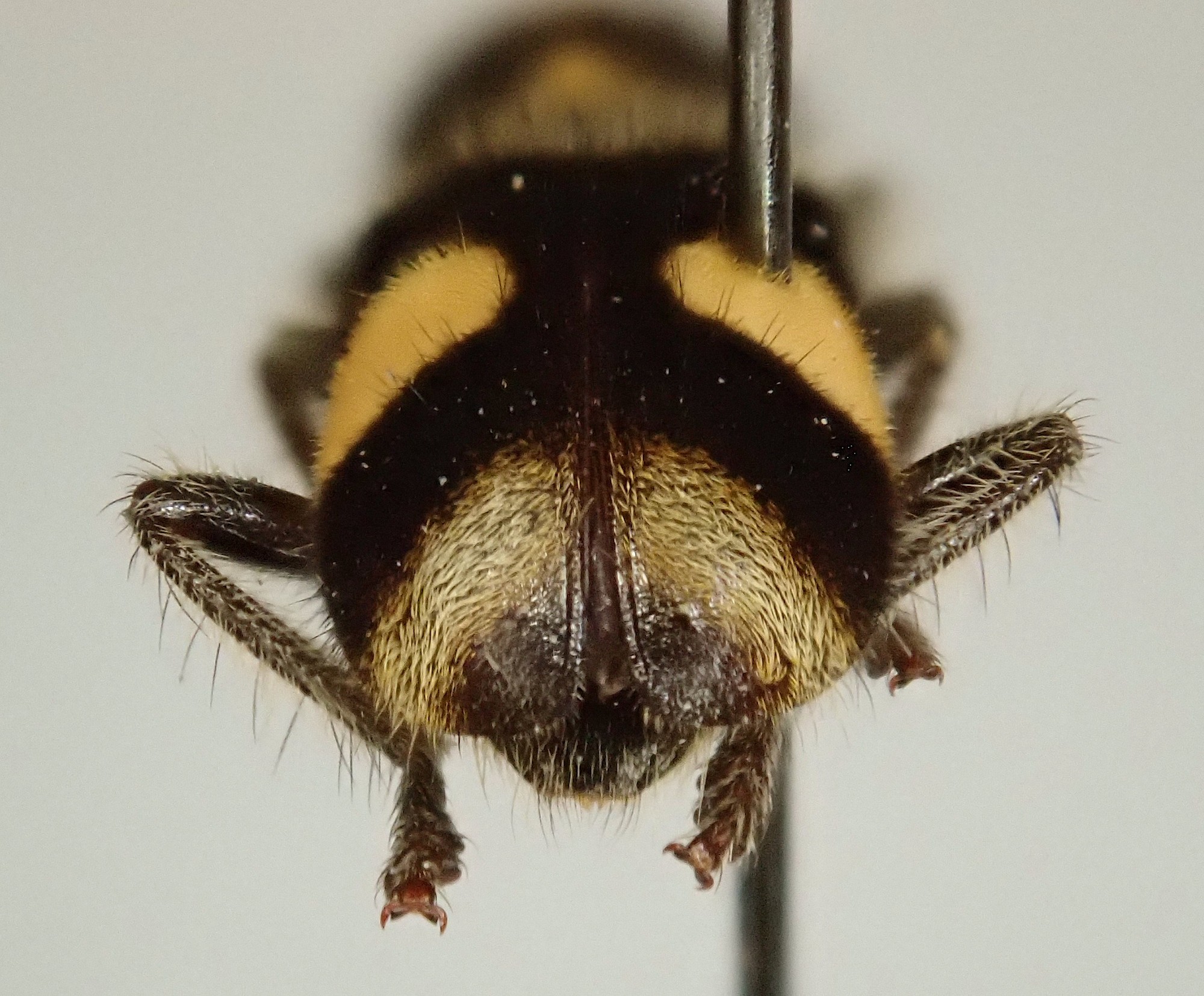
Enoclerus necator
- Cranial vestiture
- Orange (vs. white in zip; white or at most slightly yellowed in deletus)
- Pronotum
- Anterior margin with a narrow triangulate patch of orange setae (vs. absent/concolorous black in deletus; white in zip); posterior slope with a narrow triangular patch of orange pubescence (at least partially orange, vs. all white in deletus/zip)
- Elytra
- Large pale yellow fascia at middle, complete to lateral margins, rounded internally where broadly interrupted before the suture; anteapical band of setae sometimes orange-bordered (vs. purely silver/white in deletus/zip), NOT reaching the apices (vs. reaching the apices in zip)
- Length
- 8.0–9.75mm
- Distribution
- Chiapas, México; Zacapa, Guatemala
Enoclerus nelsoni
- Length
- Small to medium, to 7 mm
- Form
- Elongate, antlike
- Species group
- Part of the “Caestron trogositoides Spinola” complex, along with E. vulnus
- Color
- Reddish-testaceous, with elytral posterior 1/3 black
- Elytra
- A pair of arcuate, postmedian, pale fasciae, narrowed internally and incomplete at the suture, usually outlined anteriorly in black; subbasal swellings not greatly elevated; surface rugose/punctate, very distinctly so on the black posterior areas; apices with a dense covering of ashy setae
- Abdomen
- Black anteriorly, red posteriorly
- Biology
- Apparent mimic of Pseudomyrmex ants; frequently found with them on thorn species in tropical deciduous forest
- Distribution
- México (Oaxaca — Isthmus of Tehuantepec specifically)
Enoclerus nigricans
- Color
- Black
- Form
- Slender
- Elytra
- Surface finely, densely roughened, nearly scabrous; a narrow, elongate patch of short white setae at the sides near middle, extending from the disk posteriorly to the suture, then along the suture to the apical 1/4, where it obliquely extends to the sides
- Elytra (tumescences)
- Subbasal swellings obsolete
- Length
- Small, ca. 5mm
- Distribution
- México (Puebla, Hidalgo)
- Biology
- Pine; pine/oak forest
Enoclerus nigrifrons
- Form
- Narrow, elongate (as opposed to the more robust E. n. nigripes)
- Color
- Dark brown to black; head, pronotum, and basal 1/3 of elytra reddish brown, frequently with a dark spot on head and pronotum
- Surface
- Shining (vs. dull in nigripes) and finely punctate
- Biology
- Often associated with pine
- Length
- ~6.5mm
- Distribution
- USA (Alabama, Connecticut, D.C., Florida, Georgia, Indiana, Massachusetts, Michigan, Nebraska, New Hampshire, New Jersey, New York, North Carolina, Ohio, Oklahoma, Pennsylvania, Rhode Island, South Carolina, Vermont, Virginia, West Virginia); Canada (Ontario)
Enoclerus nigripes nigripes
- Color
- Reddish brown; apical 2/3 of elytra black
- Elytra
- Median, sinuate, transverse band of white pubescence; apices similarly vested
- Surface
- Coarsely, densely punctate
- Length
- ca. 6.5mm
- Distribution
- USA (Alabama, D.C., Delaware, Florida, Illinois, Indiana, Maryland, Massachusetts, Michigan, Minnesota, Missouri, Nebraska, North Dakota, Ohio, Oklahoma, Pennsylvania, Rhode Island, South Carolina, Tennessee, Texas, Vermont, Virginia, Wisconsin); Canada (Manitoba, Nova Scotia, Ontario, Quebec, Saskatchewan)
- Distribution note
- A California/Arizona report in some secondary sources is a false identification and should not be treated as confirmed range
Enoclerus nigripes rufiventris
- Color
- Black dorsally (head, pronotum, elytra) — no reddish-brown elytral base as in the nominate
- Length
- ca. 6.5mm
- Distribution
- USA (New York, Maine, Vermont, Michigan); Canada (Ontario, Nova Scotia, New Brunswick)
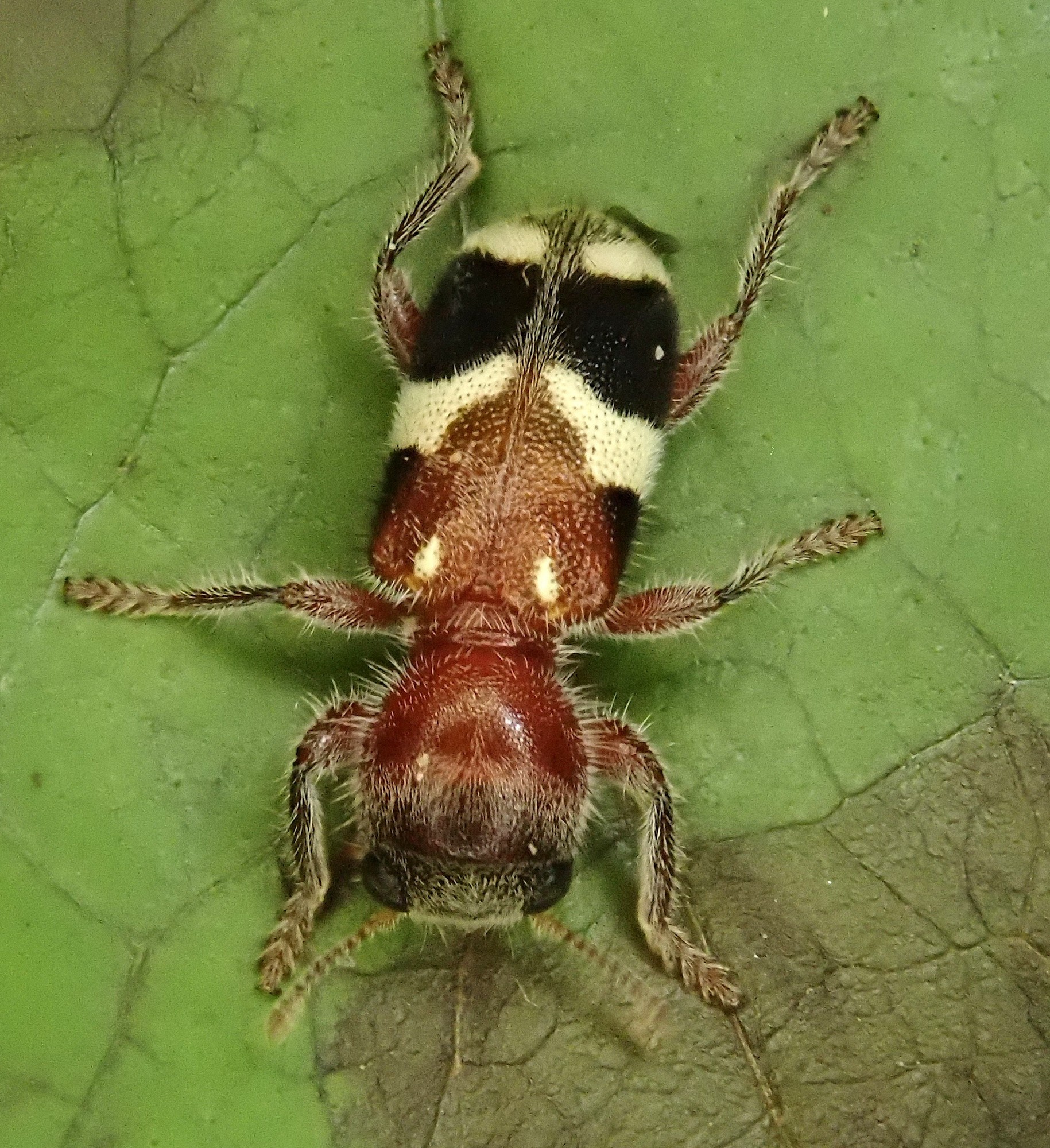
Enoclerus nigromaculatus
- Color
- Entire pronotum, as well as the elytral base, reddish — unique in this group of four (the other three have a black pronotum, with at most the posterior margin reddish in pilatei)
- Elytra
- 3–4 pairs of yellowish/eburneous markings, variable (x-album form has a cross-shaped anterior marking)
- Surface
- Smooth-and-shining to densely punctate/roughened depending on population
- Biology
- Apparent mimic of cephalotine ants
- Taxonomic note
- Enoclerus x-album is probably a synonym of this species
- Distribution
- México (Chiapas, Yucatán, Quintana Roo); Guatemala; Nicaragua; Belize; Costa Rica; Honduras; Panamá
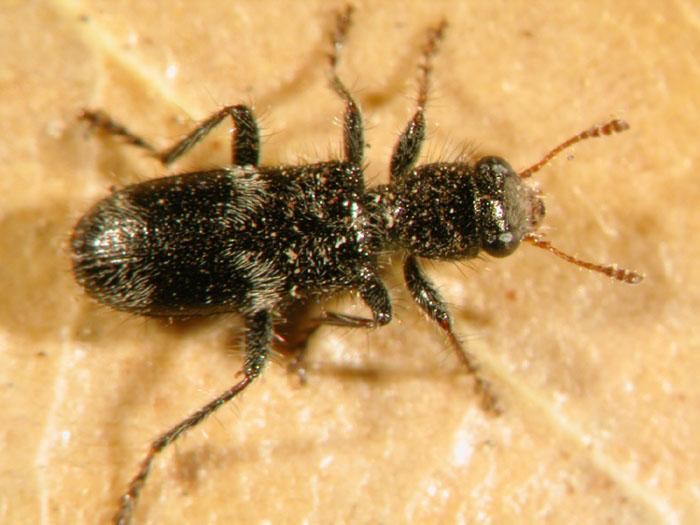
Enoclerus ocreatus
- Color
- Shiny black; lacks integumental color/markings entirely (immaculate ground)
- Elytra
- Each elytron with a distinct curvate median fascia composed of silvery/whitish adpressed setae (purely vestitural, not integumental); apices similarly vested; surface shining, finely punctate
- Length
- Small, less than 5mm; narrow form
- Variation
- Some Arizona specimens have head, pronotum, and base of elytra reddish, but this is atypical
- Distribution
- USA (Arizona, New Mexico, Colorado, Kansas, Utah, Nevada); México (Nuevo León)
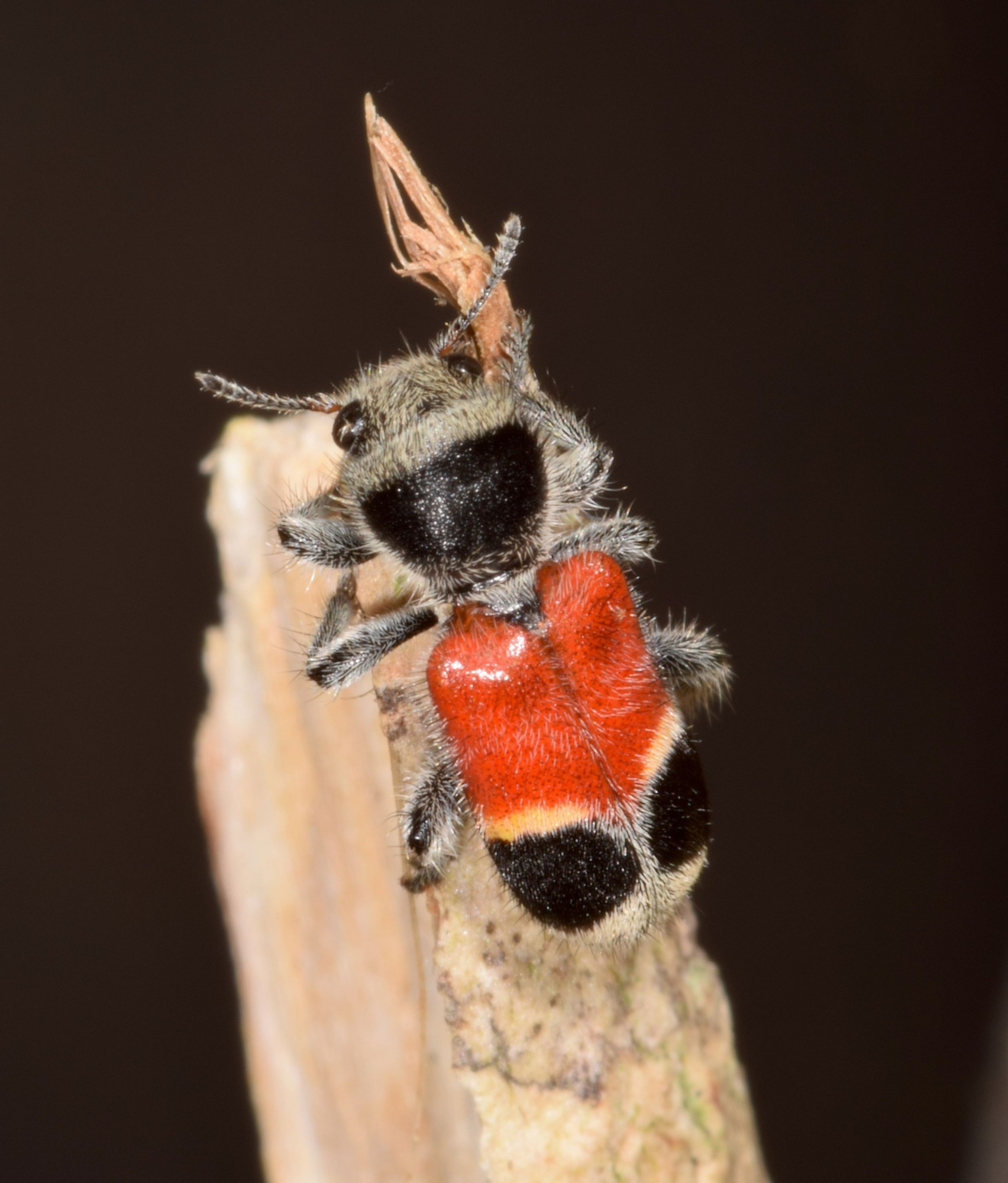
Enoclerus opifex
- Elytra (extent of red)
- Anterior 2/3 of the elytra red (vs. at most basal 1/5 in analis)
- Elytra (pattern)
- Two large black anteapical maculae bordered anteriorly by a curvate yellow integumental fascia overlaid with white setae, posteriorly by a narrow angular yellow fascia
- Elytra (apex)
- Covered with ashy vestiture (vs. black/bare in analis)
- Elytra (integument)
- Shining and rather finely punctate
- Color
- Red with black pronotum
- Distribution
- USA (Texas, New Mexico); México (Sonora, Sinaloa, Nayarit, Jalisco, Michoacán, Guerrero, Puebla, Veracruz, Chiapas, Tamaulipas, Morelos); Guatemala; Nicaragua; Honduras; Costa Rica
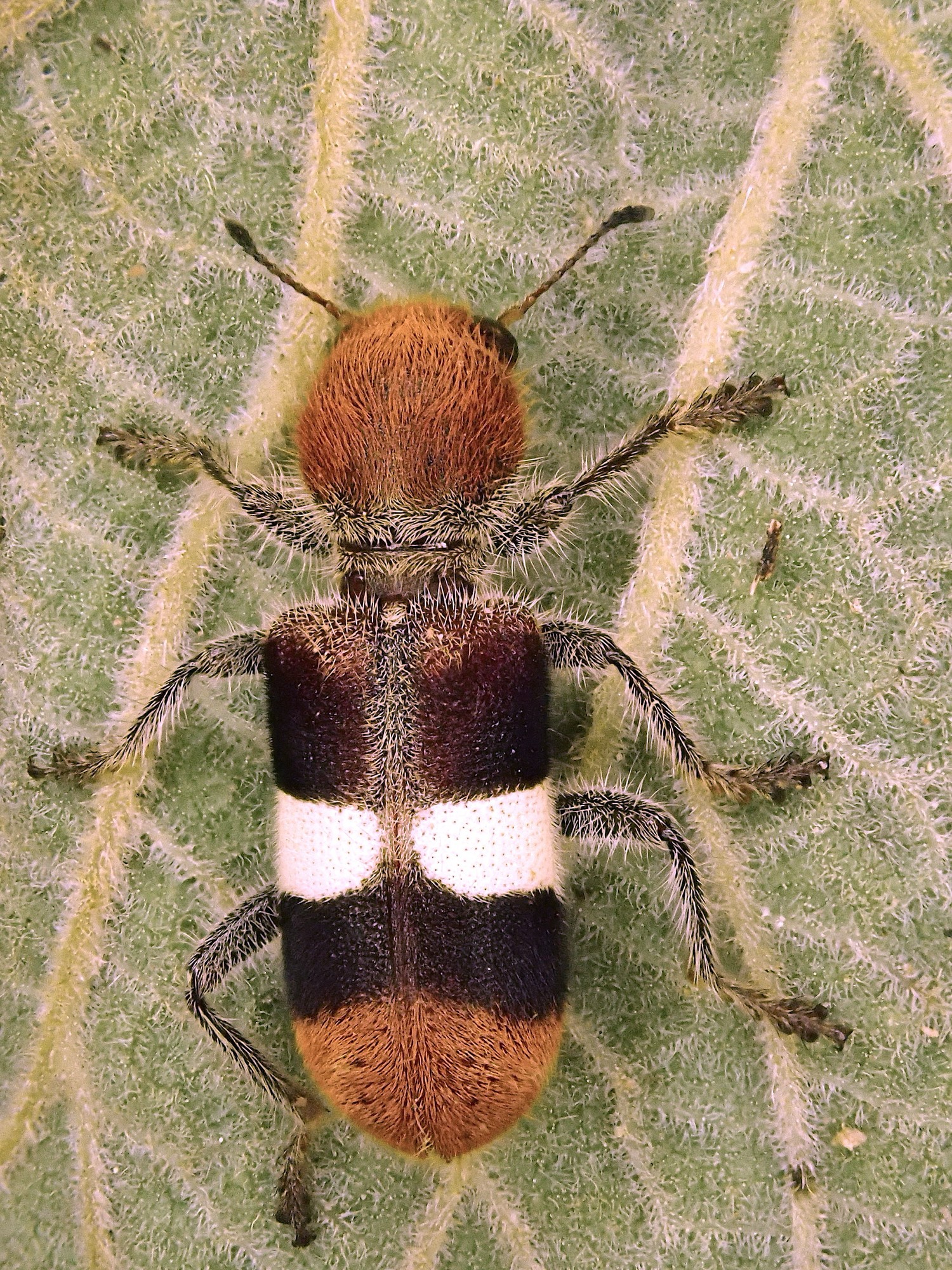
Enoclerus pacificus
- Elytra (proportion)
- Elongate (less than spectori)
- Elytra (fascia)
- Complete to the lateral margins, only narrowly interrupted at the suture
- Pronotum
- ENTIRELY vested with rust-colored setation, no black transverse area
- Elytra (apex)
- Apical 1/3 densely covered with ferruginous setae — a third color zone not present in spectori
- Length
- To 15.5mm (largest of the two)
- Distribution
- Pacific versant México (Sinaloa to Oaxaca)
Enoclerus palmii
- Build
- Robust, ~7mm
- Elytra
- Broader yellow fascia, complete to the sides but broadly interrupted before the suture
- Vestiture
- Ashy apical setae
- Abdomen
- Black (separates palmii from luscus specifically)
- Distribution
- USA (Arizona — Cochise Co., Greenlee Co.; New Mexico, Utah, California); México (unsubstantiated)
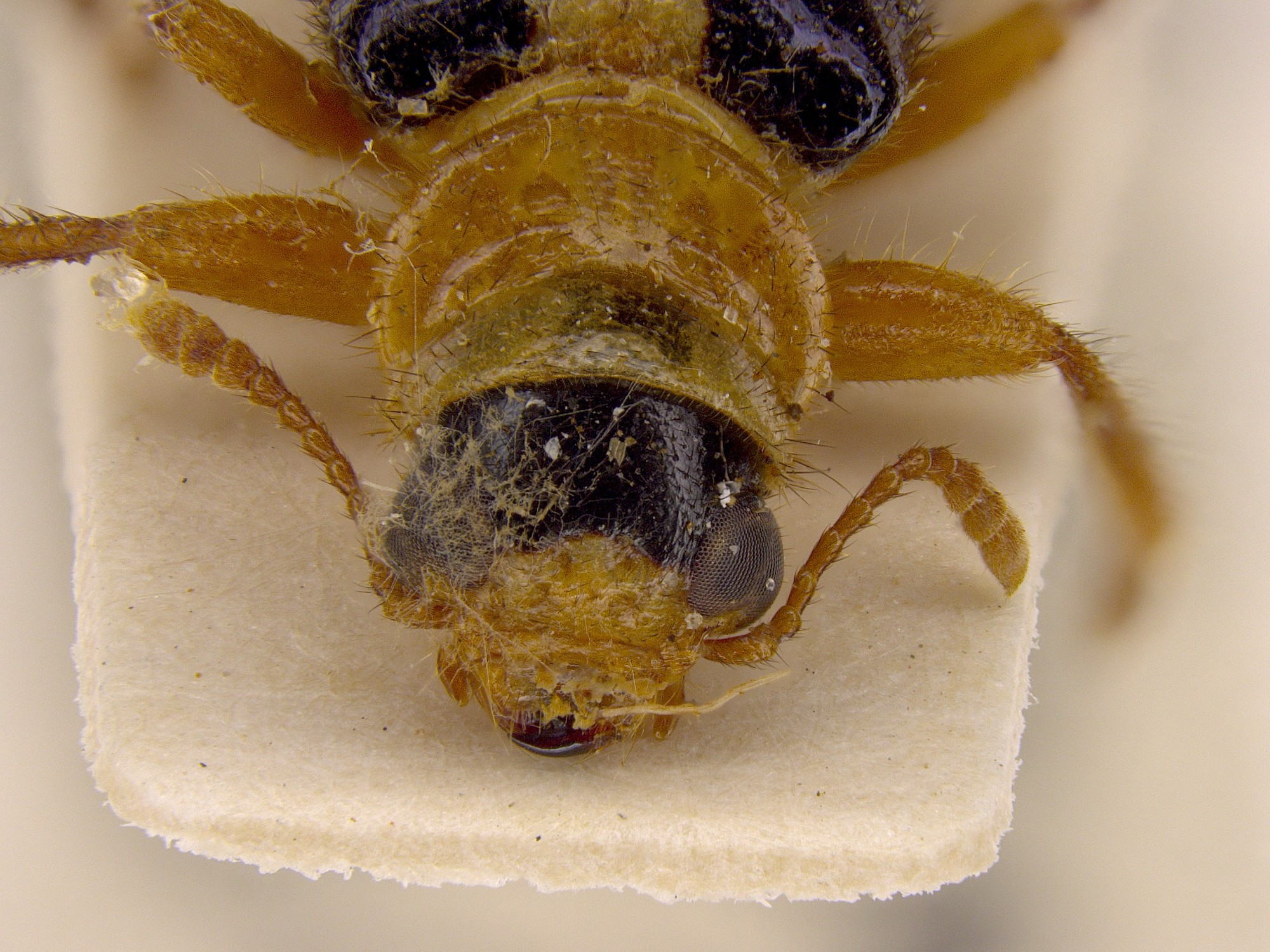
Enoclerus pelonioides
- Elytra
- Smooth, with distinct pattern; expanded posteriorly
- Note
- Apparently a chrysomelid mimic; rare species, known from perhaps the type only; appears very similar to species of Quadrophenia but possesses typical Enoclerus antennal structure
- Distribution
- México (Jalapa, Veracruz Estado)
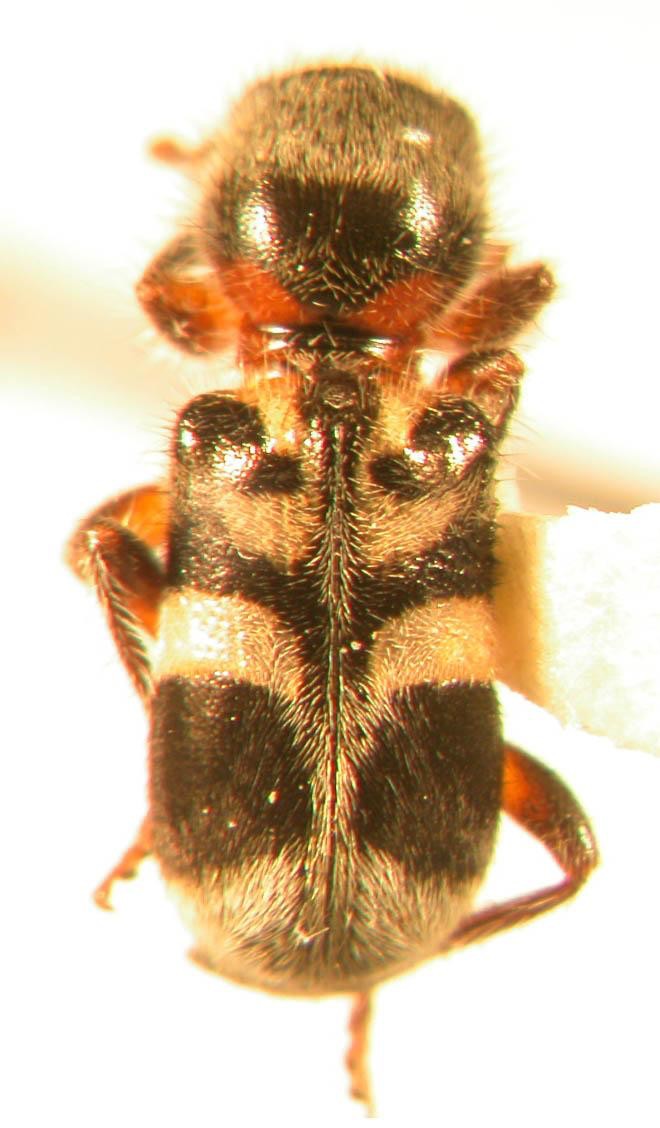
Enoclerus pilatei
- Setal pattern
- Pronotal and apical elytral ashy pubescence less extensive than E. cinereus — pronotum less conspicuously setose; apical elytral setal patch confined to about the apical 1/6
- Color
- Black; posterior of pronotum sometimes reddish
- Elytra
- Median yellow fascia incomplete internally; basal carinae may or may not connect into wedge-shaped yellow maculae
- Note
- Robust Yucatán Peninsula specimens likely represent an undescribed species
- Taxonomic note
- E. quadrinodosus (Chevrolat) — Chiapas, Guatemala, Panamá, Costa Rica, Nicaragua — is very similar and may prove to be a junior synonym of this species; distinguished, if valid, by its primarily reddish (vs. mostly black) integument. Not treated as a separate key entry here, as confirmed specimens are not known from México.
- Length
- ~6mm
- Distribution
- México (Quintana Roo, Yucatán, Veracruz, Tabasco, Chiapas); Guatemala (Izabal); Nicaragua; Honduras; Belize (Cayo, Orange Walk)
Enoclerus pinus
- Length
- 6–7mm — narrow, elongate, black
- Venter
- Including abdomen, black
- Elytra
- Rather scabrous; apices with a thin patch of whitish setae; each elytron with a rather narrow eburneous curvate fascia that does not attain the suture
- Legs
- Black
- Distribution
- USA (Arizona — central and southern part of the state) only
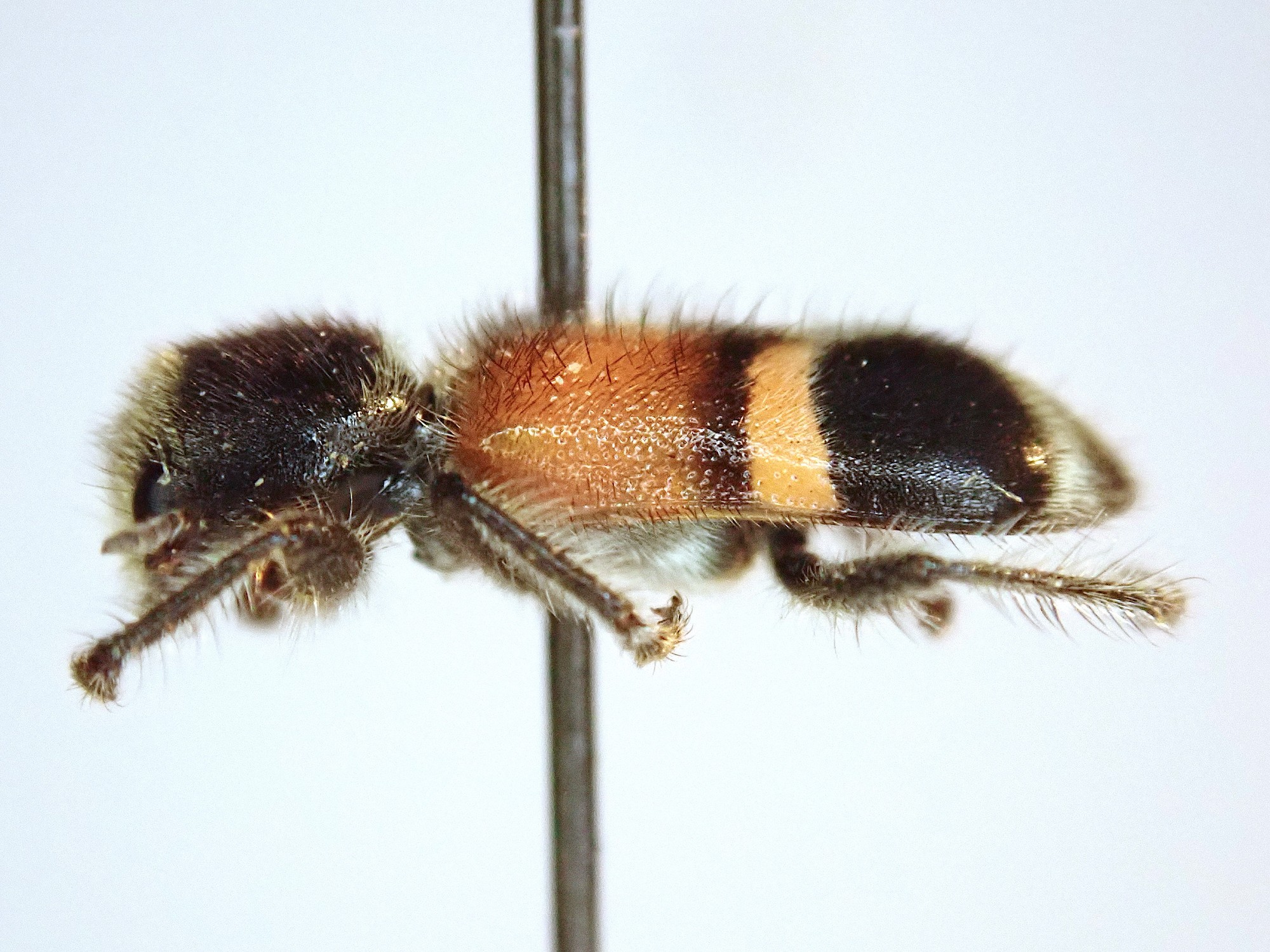
Enoclerus primulus
- Pronotum
- Entirely black (corrected — earlier image captions describing it as orange-red were inaccurate)
- Elytra
- Anterior 1/2 reddish; posterior 1/2 interrupted anteriorly by a narrow, arcuate, reddish-yellow fascia — one pale yellowish, elytral band only (vs. salvini's two)
- Surface
- Shining, rather coarsely/densely/moderately deeply punctate on anterior 1/2, diminished medially, obsolete posteriorly (finely granulate)
- Length
- 8.0mm
- Distribution
- Central Depression of Chiapas, México + Bosque El Imposible, El Salvador; more xeric habitat
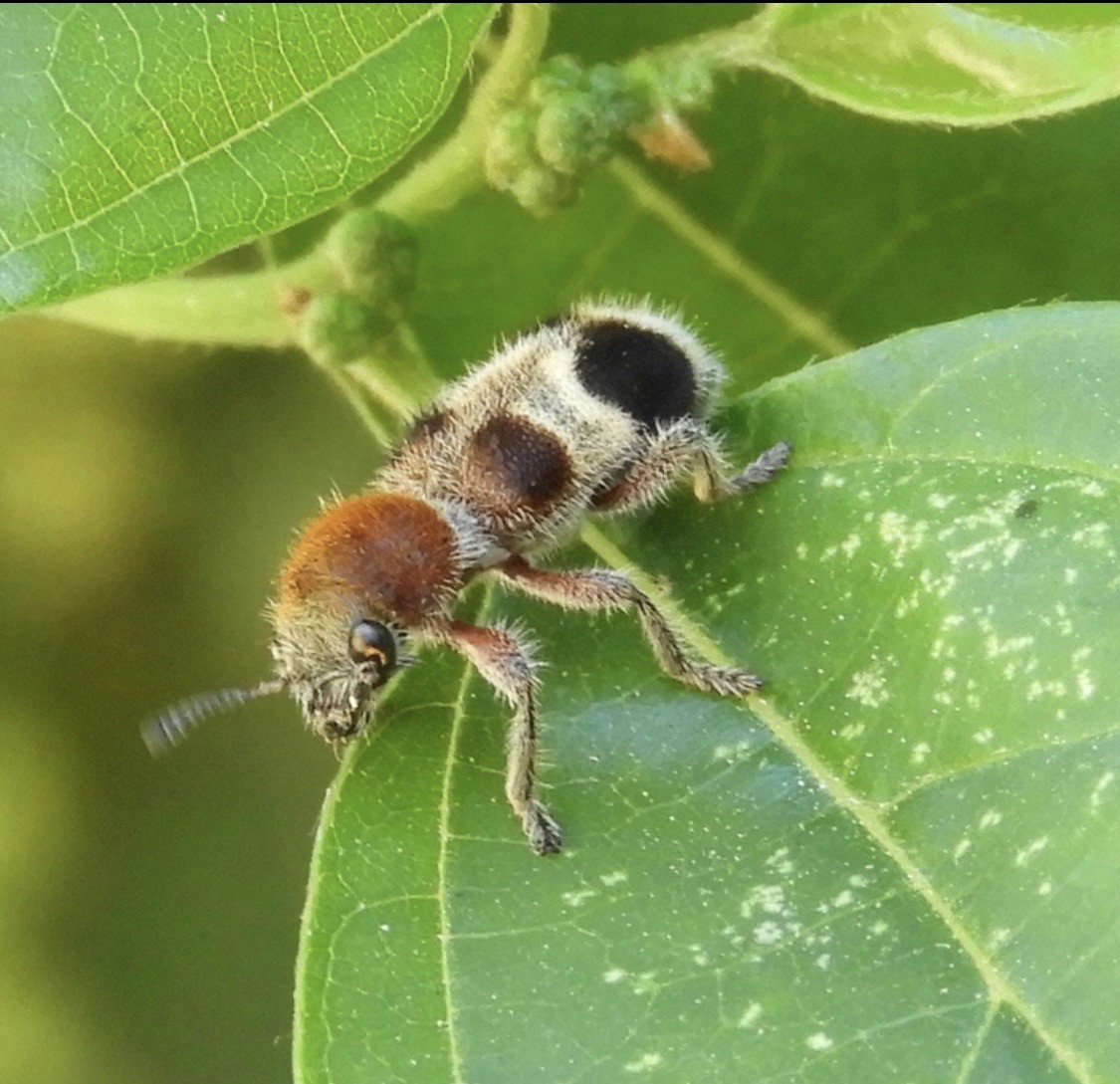
Enoclerus quadrinotatus
- Elytra
- Broad yellowish fascia attaining the suture PLUS a separate large black macula on each elytron posterior to the fascia (fascia-plus-spot pattern, not a single uninterrupted band)
- Variation
- Two color phena — reddish (pronotum, elytral base, venter except abdomen reddish) and black (pronotum, entire venter including abdomen, elytral base black; known from Guerrero)
- Pronotum
- Densely reddish/coppery-setose in both phena
- Setal daggers
- Present (male)
- Length
- To 12mm
- Distribution
- México (Sinaloa, Jalisco, Nayarit, Colima, Guerrero, Oaxaca)
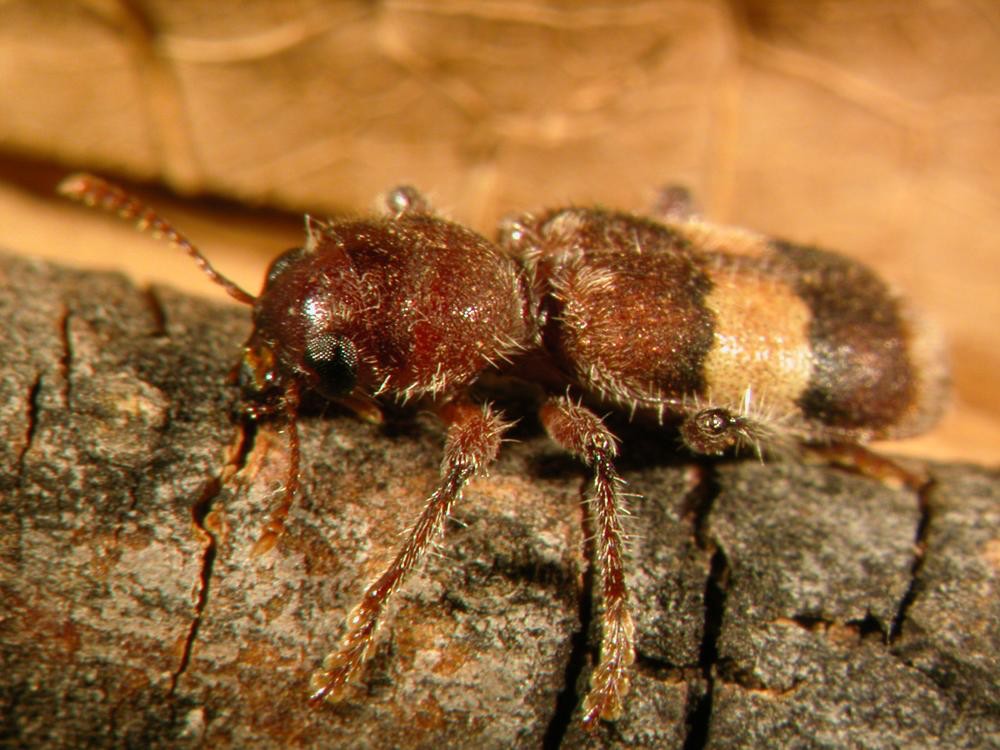
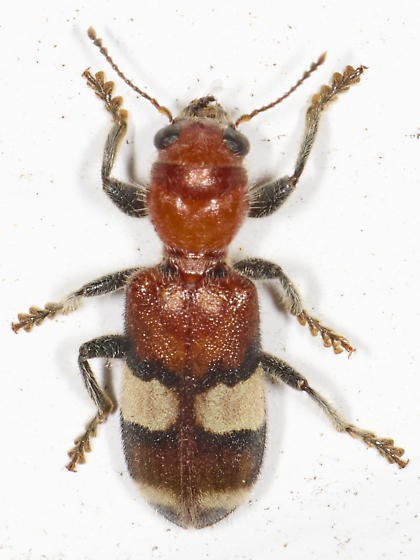
Enoclerus quadrisignatus
- Color
- Dorsal base color runs from castaneous to light brown in western US and México/Central American specimens, to eastern US populations, which exhibit a reddish-brown pronotum and elytral anterior 1/2 and dark brown posterior 1/2. However, no populations show a primarily true orange dorsum as in the other species in this section (ichneumoneus/muttkowskii)
- Elytra
- Median fascia distinctly narrower than in the other two, PLUS a second, separate, narrower anteapical pale fascia (a two-band pattern, not a single broad band)
- Variation
- Eastern US specimens appear more tricolored
- Distribution
- USA (Arizona, Arkansas, California, Colorado, Georgia, Illinois, Indiana, Kansas, Kentucky, Maryland, Missouri, Nebraska, New Jersey, New Mexico, Ohio, Oklahoma, Pennsylvania, South Carolina, Texas); México (Baja California, Baja California Sur, Chiapas, Chihuahua, Guerrero, Jalisco, Morelos, Nayarit, Oaxaca, San Luis Potosí, Sinaloa, Sonora, Tamaulipas, Veracruz); south to northwestern Costa Rica
- Biology
- Common species with extensive range. Adapted to many different habitats. Frequently attracted to lights.
Eastern US specimen photo by Steve Pelikan (BugGuide).
Enoclerus reburrus
- Elytra
- A pair of large, irregularly margined, transverse maculae at middle
- Vestiture
- Dorsum very densely clothed with short, suberect, reddish-brown (copper-colored) setae — a distinctive, immediate single-character split from all look-alikes
- Surface
- Finely, densely punctate; basal margin clothed with long white setae; subbasal tumescences shallow
- Length
- Moderate, 6–8.3mm
- Distribution
- México (Durango, Sinaloa, Hidalgo, Tamaulipas, Chiapas, Guerrero, Oaxaca); Guatemala
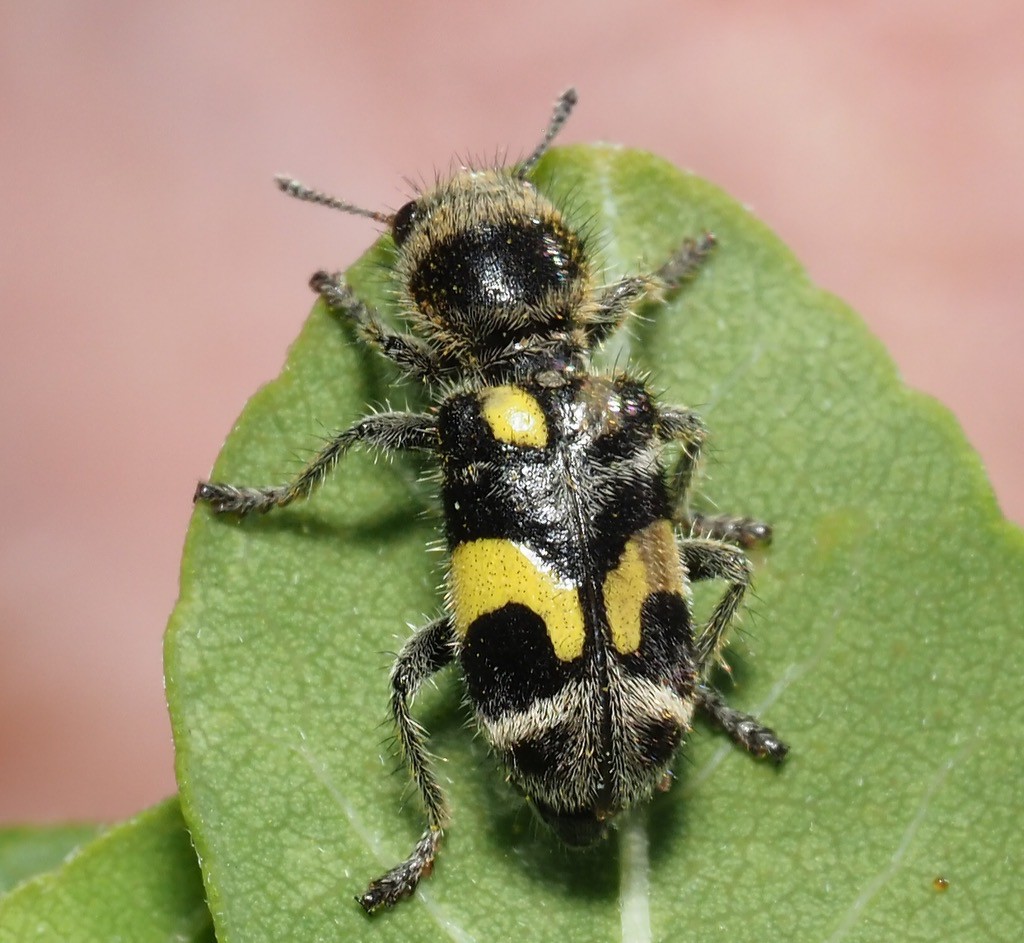
Enoclerus recurvatus
- Elytra (fascia)
- Acutely angled internally AND elongate posteriorly — a sharp, hook-like fascia running back along the suture
- Elytra (maculae)
- has a pair of large subbasal yellowish maculae (in addition to the fascia)
- Elytra (apex)
- Narrow transverse band of silvery setae anteapically, not covering the apices
- Biology
- Taken on Ptelea trifoliata flowers in Puebla
- Distribution
- México (Guerrero, Puebla, Oaxaca)
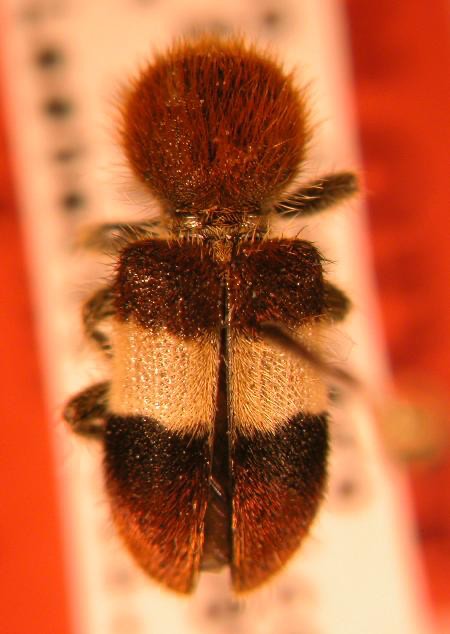
Enoclerus regius
- Elytra (proportion)
- Facies more robust, elytra less elongate than E. boucardi
- Elytra (tumescences)
- Subbasal tumescences shallow, not elevated/prominent (vs. elevated/prominent in boucardi)
- Vestiture
- Notably long, erect setae on head/pronotum (ferruginous) and elytral base (coppery red, mixed with longer erect black setae), vs. boucardi's shorter, non-erect rust-colored covering
- Setal daggers
- ABSENT in male (vs. present in all five other members of this group)
- Length
- 7.8–8.75mm — smaller than boucardi (to 13mm), lobatus (10–14mm), and s. silbermannii (to 11mm)
- Distribution
- México (Guerrero, Oaxaca, Jalisco, Morelos)
- Note
- E. boucardi and E. regius are difficult to separate with confidence unless a specimen can be examined in hand
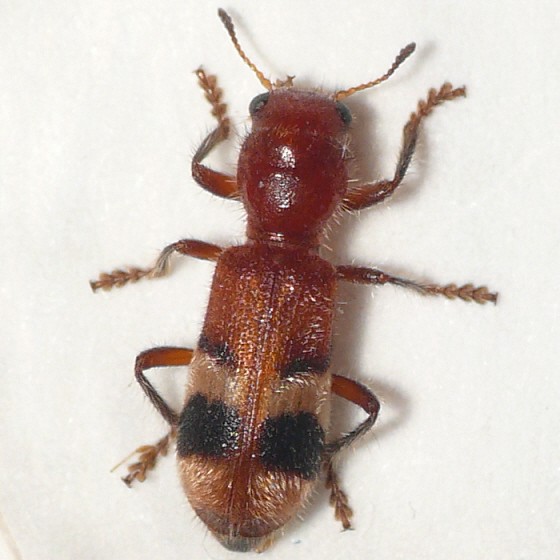
Enoclerus rosmarus
- Length
- Small to medium
- Form
- Antlike
- Color
- Narrow, elongate, reddish-brown; abdomen black; legs and antennae often darker
- Elytra
- Basal half reddish-brown, apical half black exclusive of a white median fascia that does not attain the suture
- Surface
- Irregularly, coarsely punctate on the anterior half, densely finely punctate posteriorly; faint traces of costae
- Distribution
- USA — widespread East/Midwest (Alabama, Arkansas, Connecticut, D.C., Florida, Georgia, Illinois, Indiana, Iowa, Kansas, Kentucky, Louisiana, Maine, Maryland, Massachusetts, Michigan, Mississippi, Nebraska, New Jersey, New York, North Carolina, North Dakota, Ohio, Pennsylvania, South Dakota, Tennessee, Virginia, West Virginia, Wisconsin)
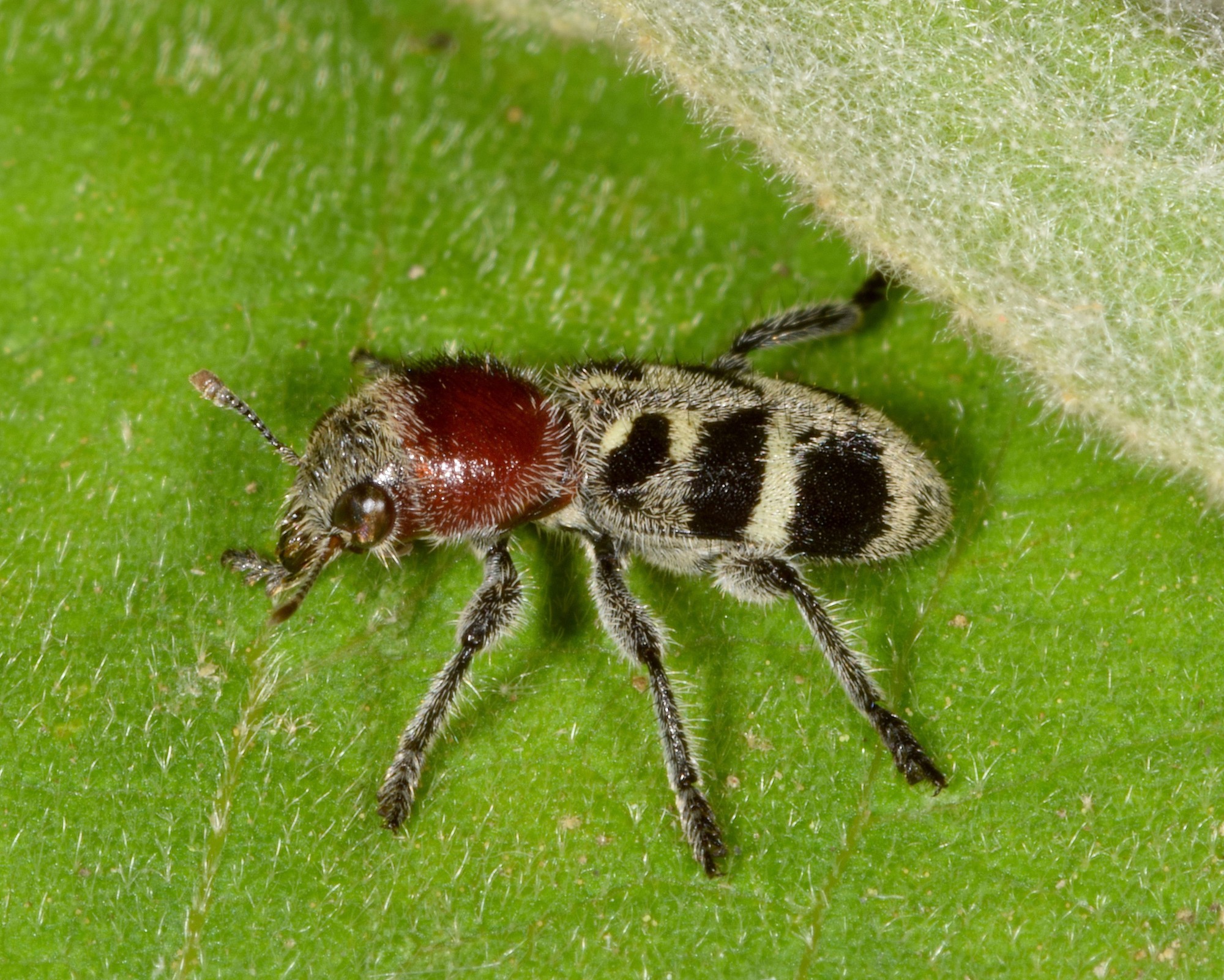
Enoclerus sagittarius
- Size
- ~7mm
- Pronotum
- Concolorous red
- Elytra
- 2 marking-sets (sagittate subbasal mark, narrowed median fasciae) — identical marking-set count to zebra; splits cleanly from it on pronotum color alone
- Biology
- Proposed mimic of sarcophagid flies (per Hespenheide); collected on Croton sp. in tropical deciduous forest
- Distribution
- México (widespread — Sinaloa/Jalisco/Morelos/Puebla/Guerrero/Michoacán/Colima)
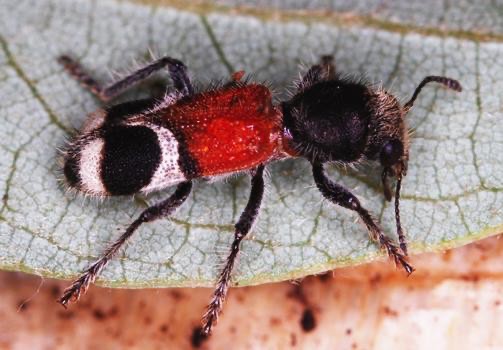
Enoclerus salvini
- Pronotum
- Entirely black
- Elytra
- TWO separate pale posterior bands (an arcuate median fascia attaining the suture PLUS a distinct separate posterior transverse/oblique fascia)
- Surface
- Rough cribrate/reticulate sculpturing (good confirming character)
- Length
- To 10mm
- Distribution
- Widest range of the trio — México (Chiapas), Guatemala, Honduras, Nicaragua, Costa Rica
Enoclerus sanguinipes
- Elytra
- Basal markings macular, not forming an arrow/sagittate shape (vs. cinereus/pilatei)
- Color
- Black, with three sets of yellowish or orange markings
- Legs
- Reddish
- Distribution
- Reported from México with no further locality; known from Panamá (Panamá); Costa Rica (Guanacaste); Nicaragua
Enoclerus schaefferi
- Nomenclature
- Replacement name for the preoccupied E. humeralis Schaeffer (a junior homonym)
- Color
- Black, with blocky humeral red maculae
- Elytra
- Surface finely rugulose; submedian angulate patch of white setae on each side; apices similarly vested
- Venter
- Including the abdomen, black
- Length
- Small; 4–6mm
- Distribution
- USA (California, Arizona, Idaho, Washington, Oregon, Nevada); Canada (British Columbia); possibly México (Chihuahua)
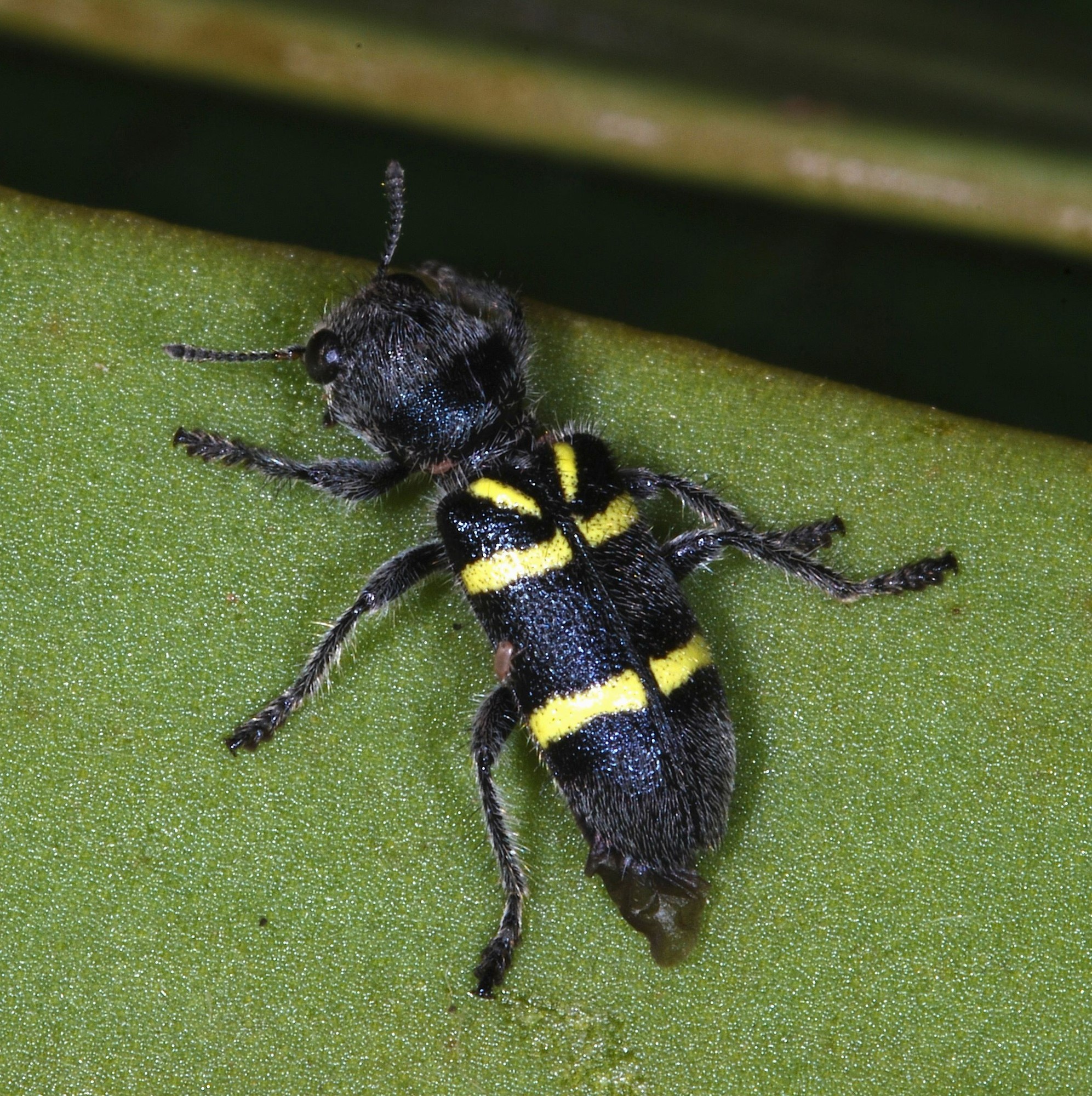
Enoclerus scitulus
- Color
- Distinctive blue-black (not plain black) integument
- Elytra
- Unique three-set bright yellow marking pattern — a pair of subbasal angulate elongate maculae (carinate), a pair of transverse narrow fasciae at basal 1/4, and a pair of narrow transverse postmedian fasciae incomplete internally
- Surface
- Rugulose-punctate, black areas ashy-reclinate-setose
- Variation
- A Morelos population has the yellow markings obsolete, appearing nearly concolorous blue-black
- Length
- ~7mm
- Distribution
- México (Morelos, Oaxaca, Chiapas)
- Biology
- Taken on flowers of Baccharis sp. in Oaxaca; beating in tropical deciduous forest in Chiapas; collected beating branches of Ipomoea sp. and mistletoe in Oaxaca; beating Acacia pennatula
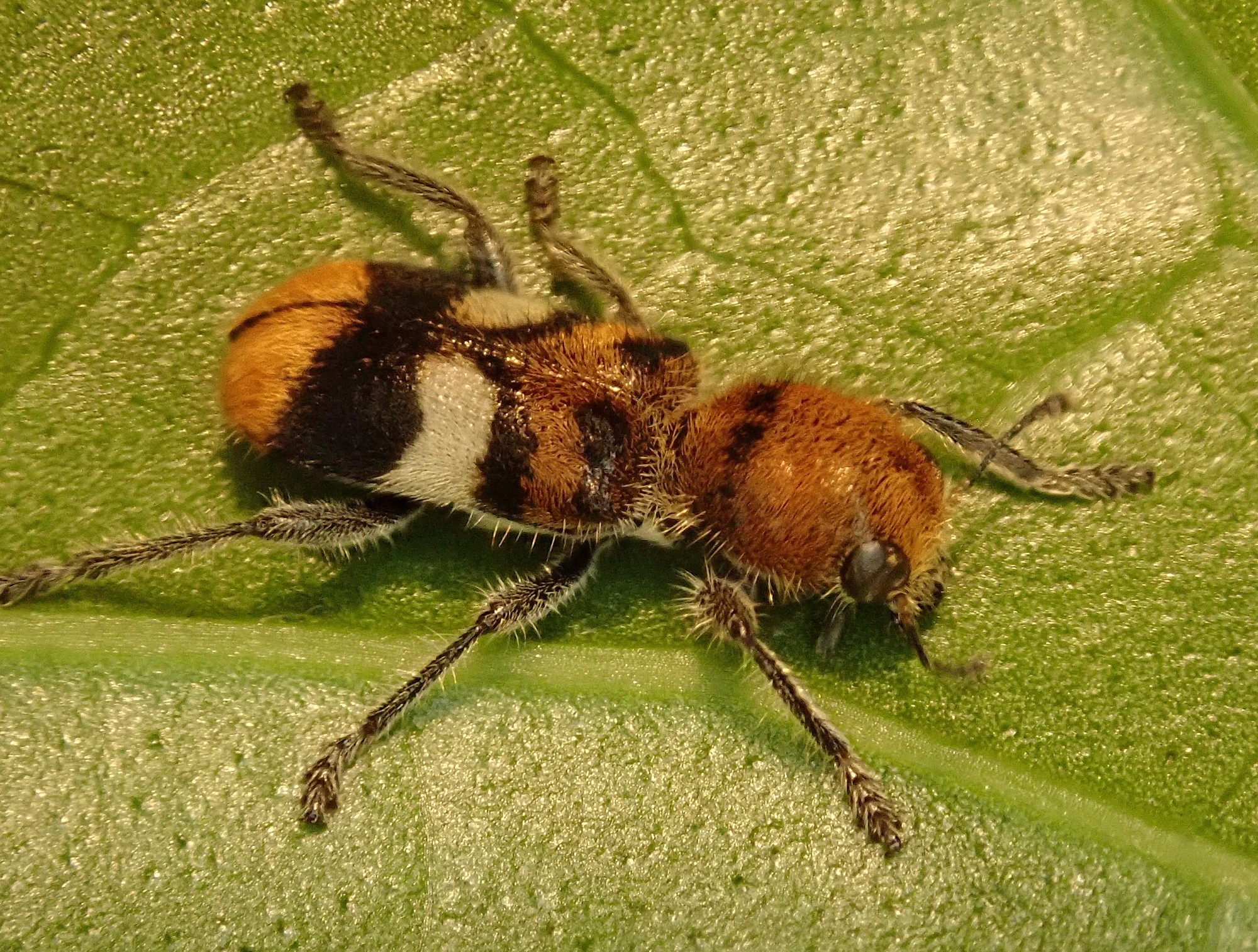
Enoclerus semiochraceus
- Diagnostic
- Sagittate (arrowhead-shaped) patch of rust-colored pubescence at the elytral base — the single most reliable diagnostic mark for this species within the group
- Elytra (fascia)
- Anterior margin of fascia slightly constricted before suture; posterior margin similar but also shallowly emarginate at middle of elytron (vs. both margins transverse in boucardi); densely setose with short, fine, yellow-orange setae (vs. sparser, mixed-length whitish setae in boucardi/silbermannii)
- Pronotum
- Vestiture variable — uniformly rust-colored, or rust-colored with a narrow transverse black setal patch anterior to the basal constriction
- Setal daggers
- Present in males
- Length
- 4–8mm — smallest in this group by a wide margin
- Distribution
- México (Puebla, Veracruz); Guatemala (Baja Verapaz)
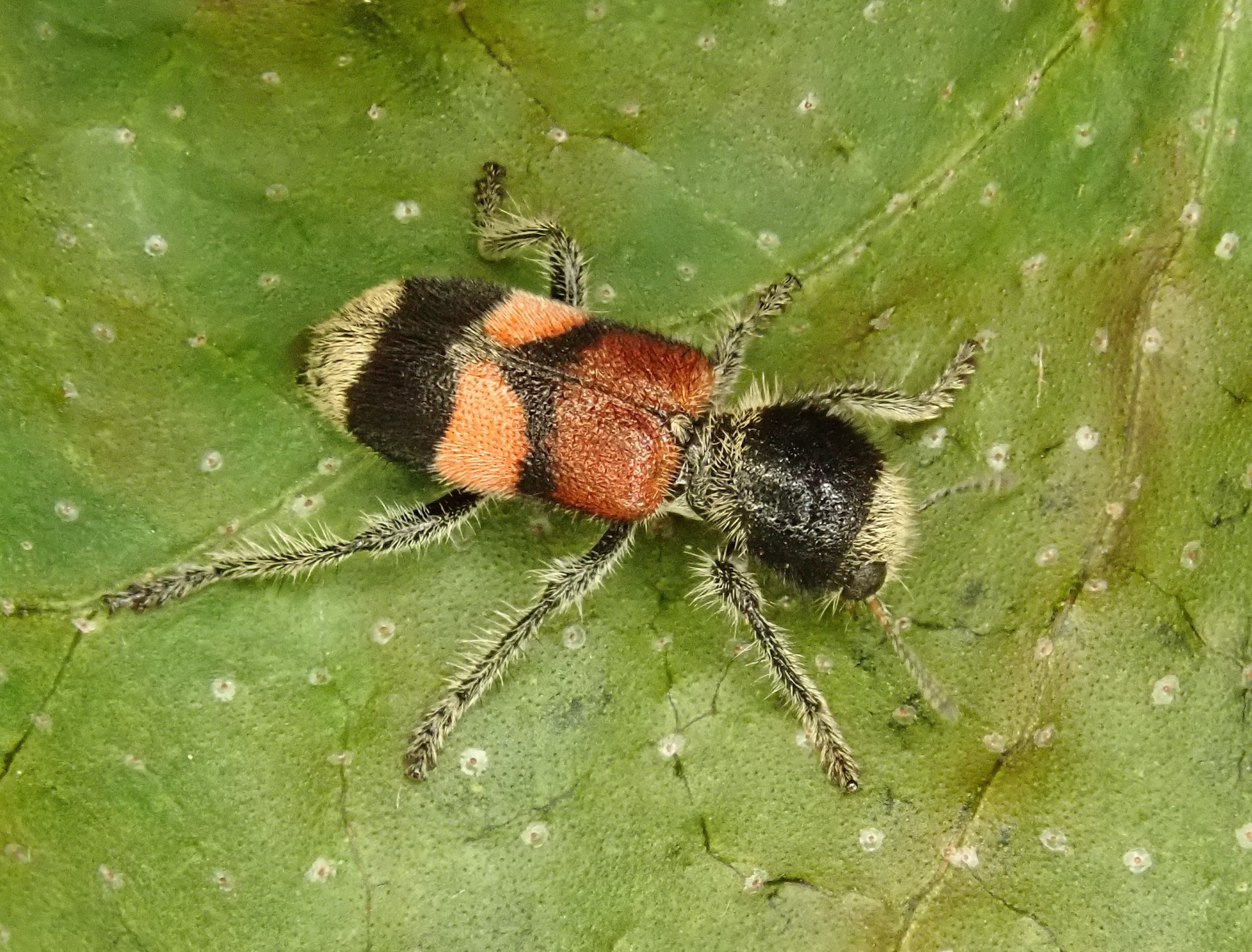
Enoclerus sepultura
- Pronotum
- Entirely black
- Elytra
- Broader, bright salmon pink fascia (vs. primulus's narrower, reddish-yellow fascia) — one pale reddish, elytral band only
- Length
- 7.5mm
- Distribution
- Chiapas only, Sierra Madre de Chiapas — possibly allopatric from primulus
- Biology
- Collected on Croton sp. in tropical deciduous forest
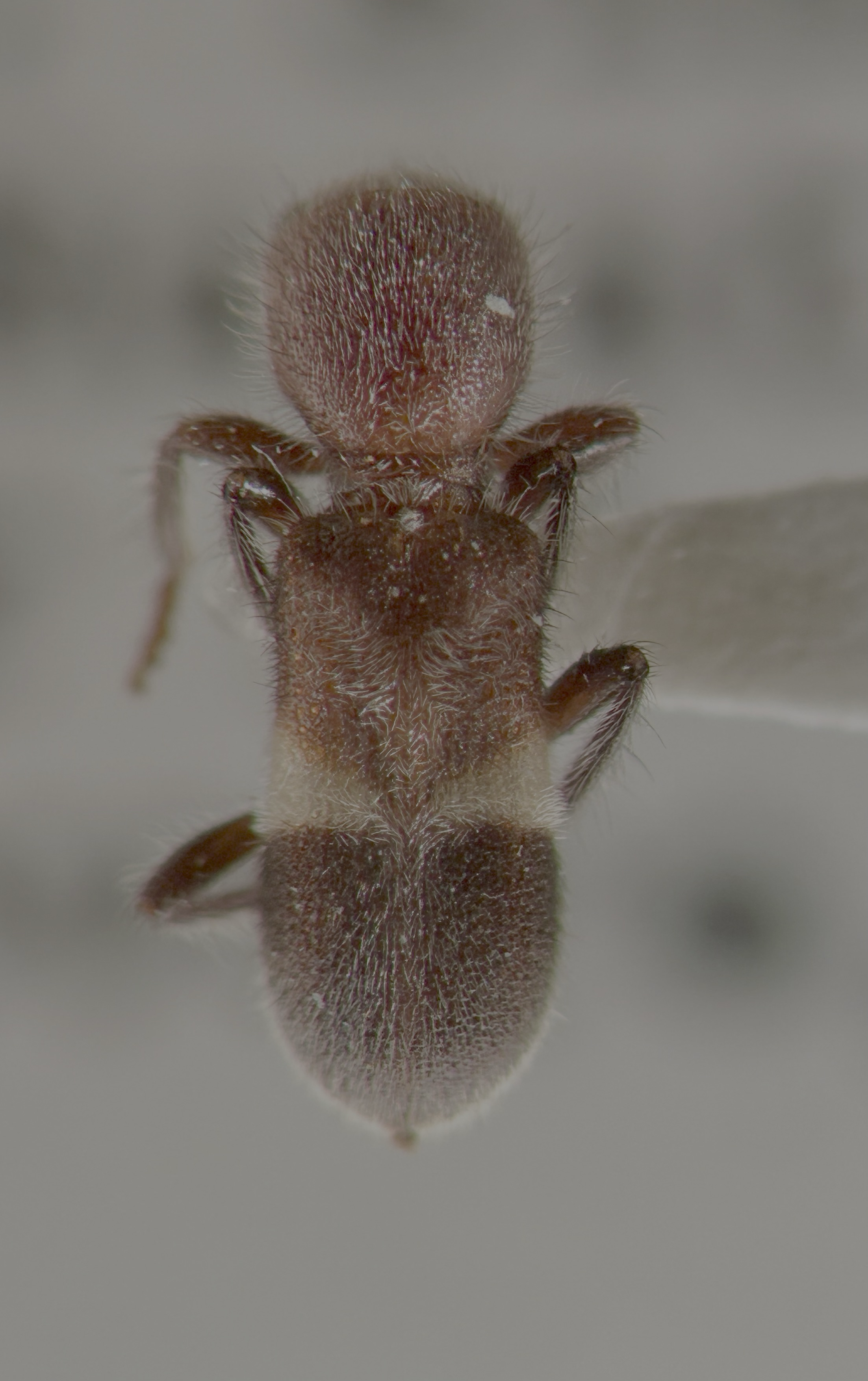
Enoclerus sericeus
- Length
- ca. 6 mm
- Form
- Elongate, antlike
- Color
- Castaneous; abdomen and elytral apical half brownish
- Elytra
- A triangulate pale median fascia, incomplete to the suture; setae patterned into an oblique basal fascia and a triangular median fascia, densely set on the apical 1/3
- Surface
- Arenose, shining; subbasal tumescences prominent; punctures deep at basal and apical thirds, smaller at the middle
- Distribution
- México (Sinaloa, Jalisco)
Enoclerus signatus
- Pronotum
- More elongate than hoegei
- Elytra
- More elongate than hoegei; setation ashy (not silvery) — same split as vulneratus vs. hoegei; maculae small, constricted laterally
- Color
- Black with bronzy dorsal reflections, venter blue-black
- Distribution
- México (Guerrero, Estado de México, Morelos)
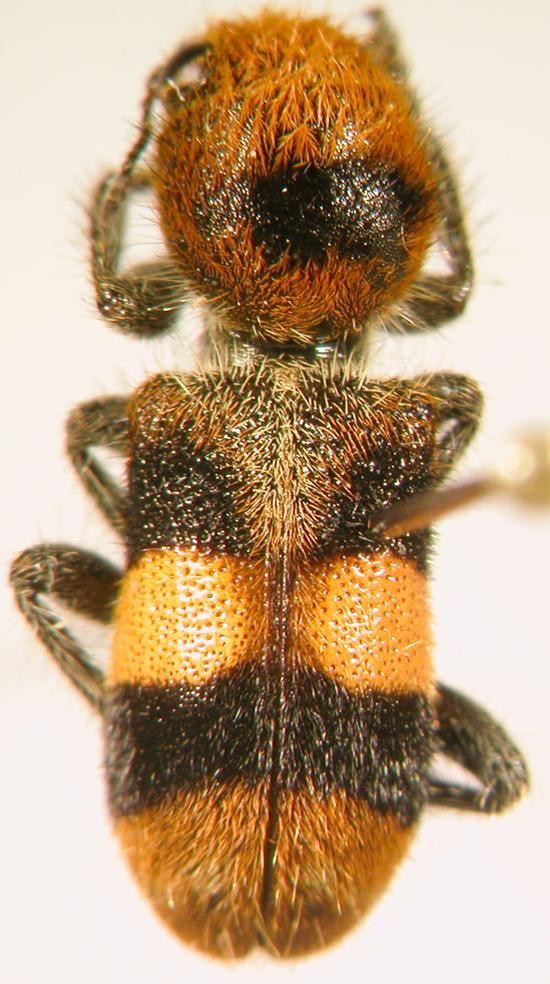
Enoclerus silbermannii silbermannii
- Elytra
- Fascia narrowly interrupted at the suture (not complete), with anterior and posterior margins less evenly transverse than in boucardi
- Pronotum
- Transverse black macula at middle lacking reddish setae, amid the otherwise rusty pubescence
- Elytra (apex)
- Apex black integumentally, covered with a band of thick rusty setae bearing a subapical ivory-colored setal spot on each elytron
- Setal daggers
- Present (male)
- Length
- To 11mm
- Distribution
- México (Chiapas only); Guatemala
Enoclerus spectori
- Elytra (proportion)
- Most elongate (≈2× as long as wide)
- Elytra (maculae)
- Broad, arcuate bands, complete to the lateral margins, attenuated before the suture and rounded internally
- Vestiture
- Cranial and pronotal vestiture PALE (not orange/rust) and FINE (not coarse) — vs. pacificus
- Elytra (tumescences)
- Each produced into an obtuse, backward-projecting spine (unique in this pair)
- Length
- To 11.5mm
- Distribution
- Costa Rica, Panamá, México (Veracruz)
Enoclerus sphegeus
- Color
- Black, sometimes with cupreous reflections; abdomen red
- Elytra
- Broad pale (whitish-ashy) transverse vestitural fascia at middle — purely setal, no integumental color change beneath
- Length
- 9–13mm
- Distribution
- Western North America to southern México, and Honduras
- Biology
- Pine forest
- Taxonomic note
- E. arachnodes (Klug) is treated here as a synonym of E. sphegeus. The differences in color and sculpturing cited by Barr (1976) for keeping them separate are not consistent within populations.
Enoclerus spinolae
- Elytra
- INVERSE ground color — elytra red with black maculae (humeral + postmedian/anteapical), not a fascia on a black ground
- Biology
- Associated with Agave/Yucca; flies during the Arizona “monsoon” season (June–Aug)
- Distribution
- SW USA (Arizona, New Mexico, Texas, Colorado, Utah, Nebraska) + N México (Chihuahua, Durango, Sonora, Guerrero)
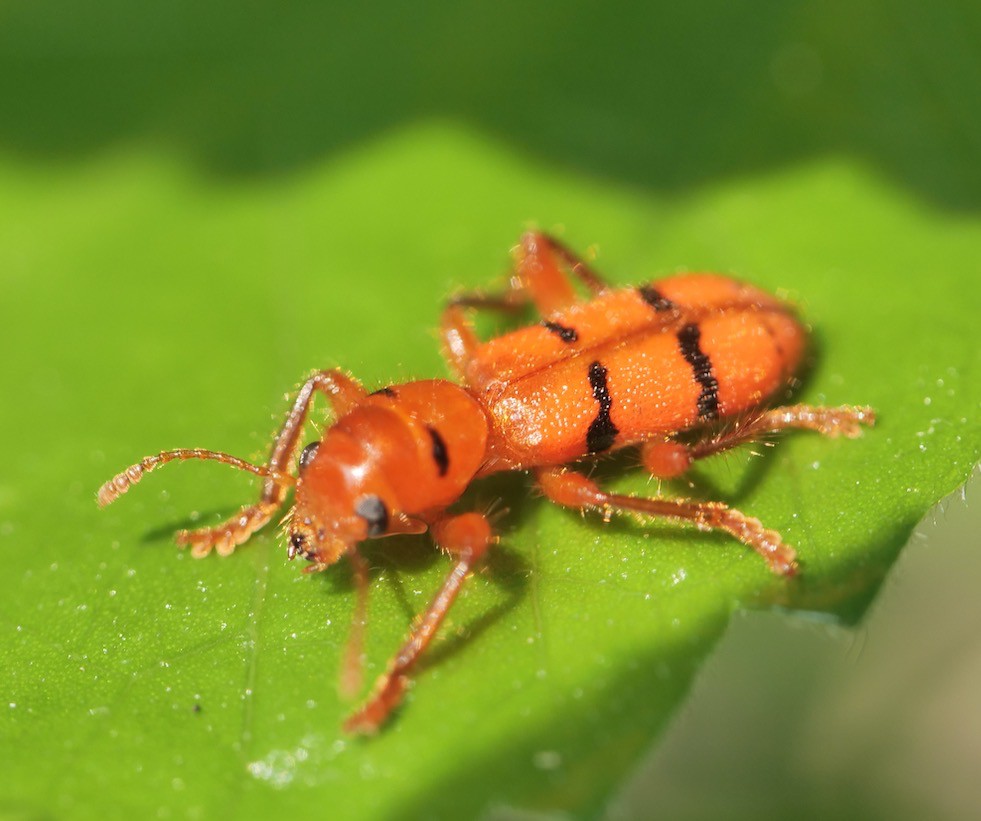
Enoclerus tigris
- Color
- Fluorescent orange-pink ground color (unique in the fauna) combined with three narrow black elytral fasciae — color and pattern alone place this species with no close look-alike
- Length
- 7–8.5mm
- Distribution
- México (Estado de México, Morelos, Guerrero, Puebla)
Live photo: specimen from Gloria Almada de Bejarano, Cuernavaca, Morelos, July 31, 2022 (iNaturalist, user gborn).
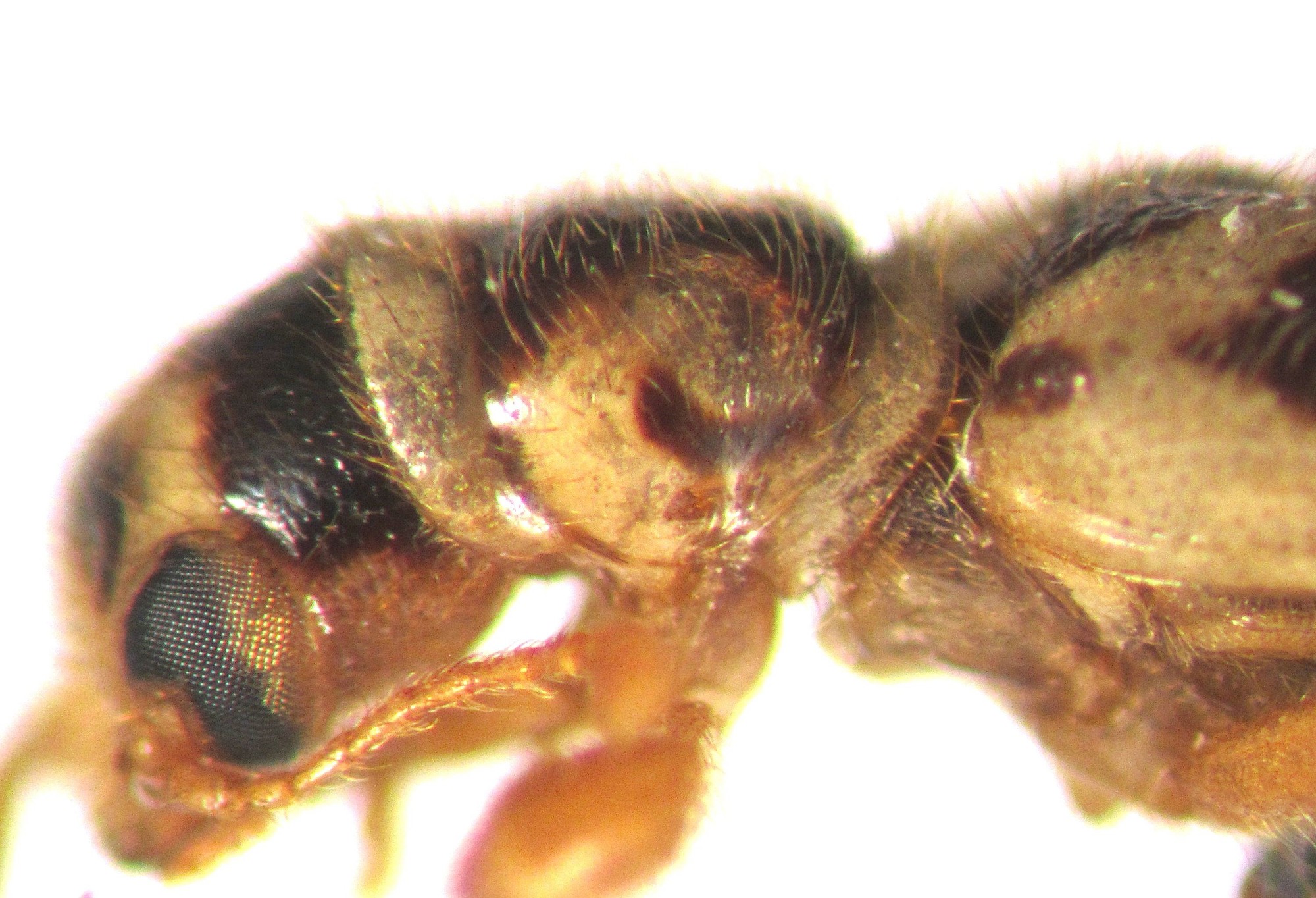
Enoclerus toledoi
- Pronotum
- Elongate, comma-shaped marking on each side — no other member of the group has this
- Color
- Brown, head stramineous except a dark half-moon macula
- Elytra
- Finely, deeply punctulate, distinctly transversely rugose throughout
- Length
- To 7.2mm
- Distribution
- México (Hidalgo)
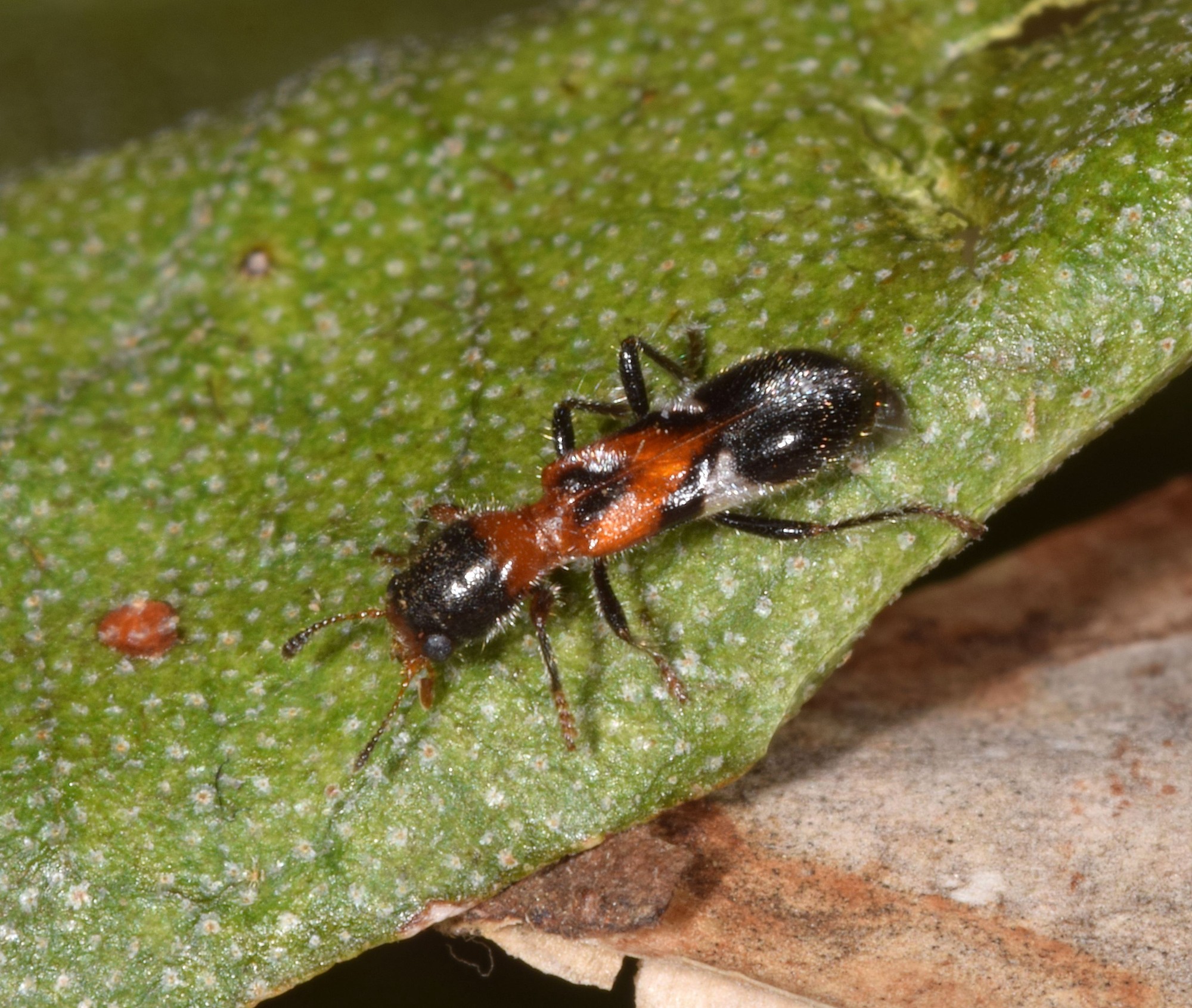
Enoclerus topes
- Length
- Very small, 5 mm or less
- Form
- Elongate, narrow; ant mimic (mimics Pseudomyrmex ants, which also occur in these color patterns)
- Variation
- Two color morphs — (1) reddish, black pronotal anterior, black subbasal macula, posterior half black transected by a narrow oblique yellowish fascia; (2) pale, with a short black transverse macula outlining the pale fascia posteriorly
- Elytra
- Subbasal tumescences prominent; shining, very finely punctate, non-rugose sculpturing
- Distribution
- México (Jalisco, Colima, Guerrero)
- Biology
- Taken beating Acacia sp., Salix sp., etc.
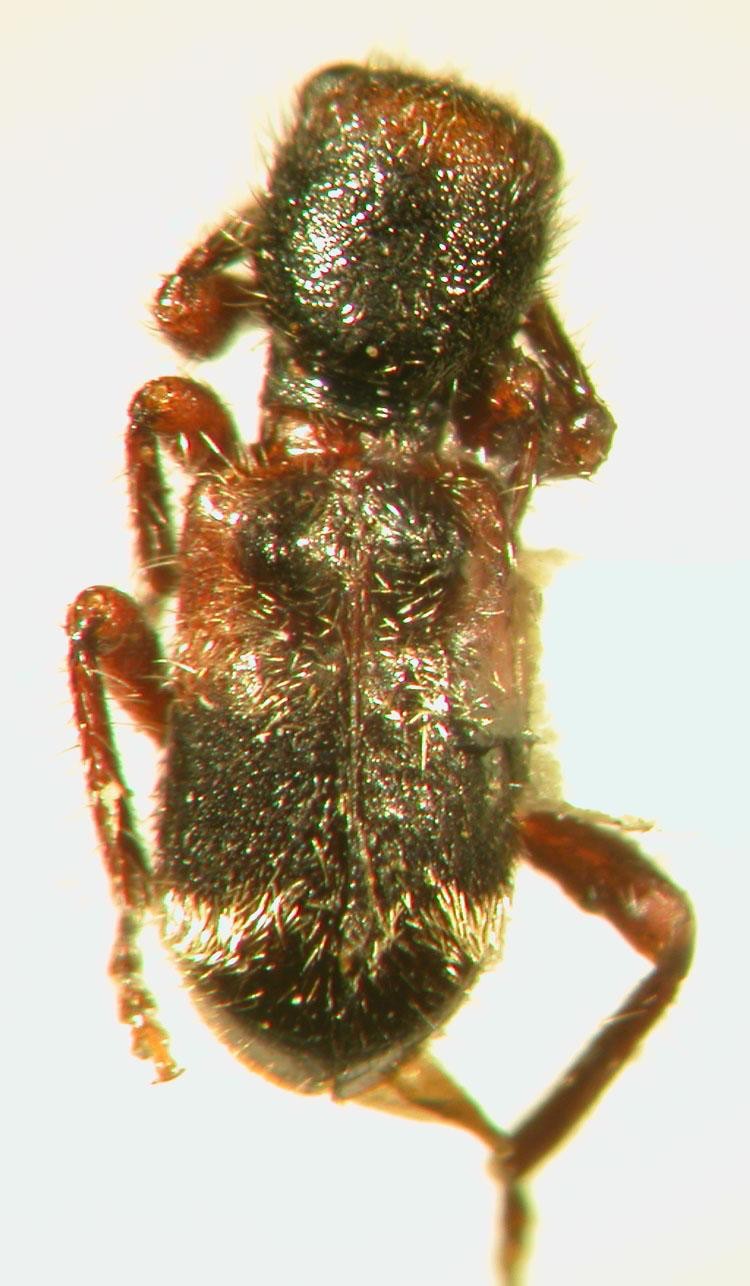
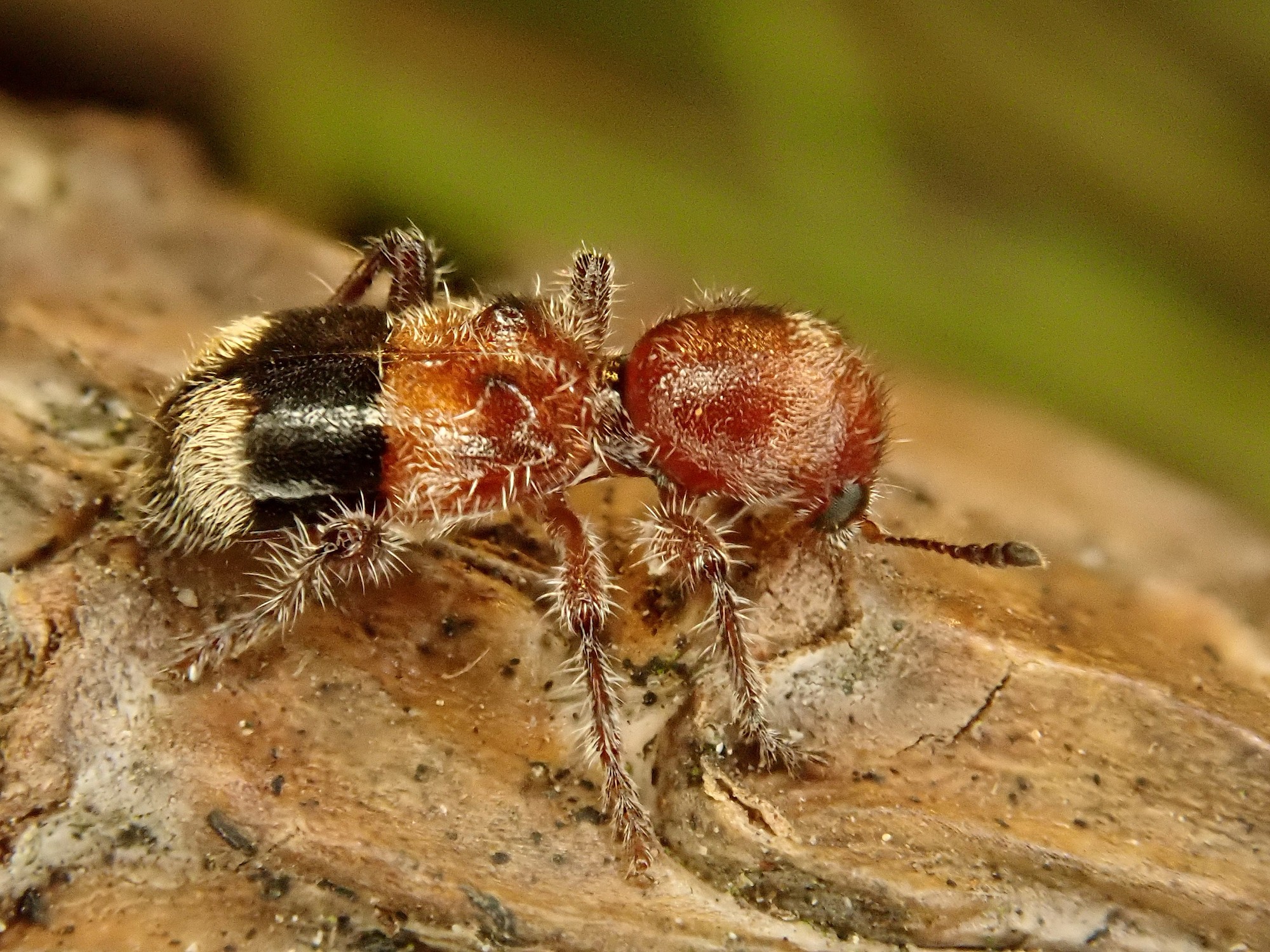
Enoclerus tubercularis
- Length
- Small, 5 mm or less
- Form
- Ant mimic; more robust than most other similarly small antlike Enoclerus, except E. gibbus
- Variation
- Two color phena — one with pronotum + anterior half of elytra reddish, the other with pronotum and elytral anterior at least partially black
- Elytra
- Subbasal tubercles prominent; a subapical transverse fascia of adpressed whitish setae, not strongly indicated at the suture
- Abdomen
- Posterior black
- Distribution
- México (Chiapas); Guatemala (Baja Verapaz)
- Biology
- On pine slash in Chiapas
Enoclerus valens
- Elytra
- Broad transverse median fascia narrowly interrupted before the suture (spans almost the full width, unlike bimaculatus's isolated macula); humeri very pronounced
- Elytra (tumescences)
- Subbasal tumescences shallow but present (vs. obsolete in bimaculatus)
- Color
- Pronotum and elytral base black throughout (no castaneous coloring, unlike bimaculatus)
- Abdomen
- Reddish
- Length
- To 14mm
- Distribution
- Apparently restricted to central Arizona, USA
- Biology
- One specimen collected beating Acer sp.; another beaten from dead pine; another collected on fallen pine
Enoclerus varius
- Venter
- Entirely red (unique in the group)
- Elytra
- Four sets of yellowish markings, posterior fascia sinuate, plus a pair of small testaceous maculae at the apices
- Color
- Black with red head, legs, pronotum
- Elytra (tumescences)
- Shallow
- Length
- 9mm
- Distribution
- México (Nuevo León)
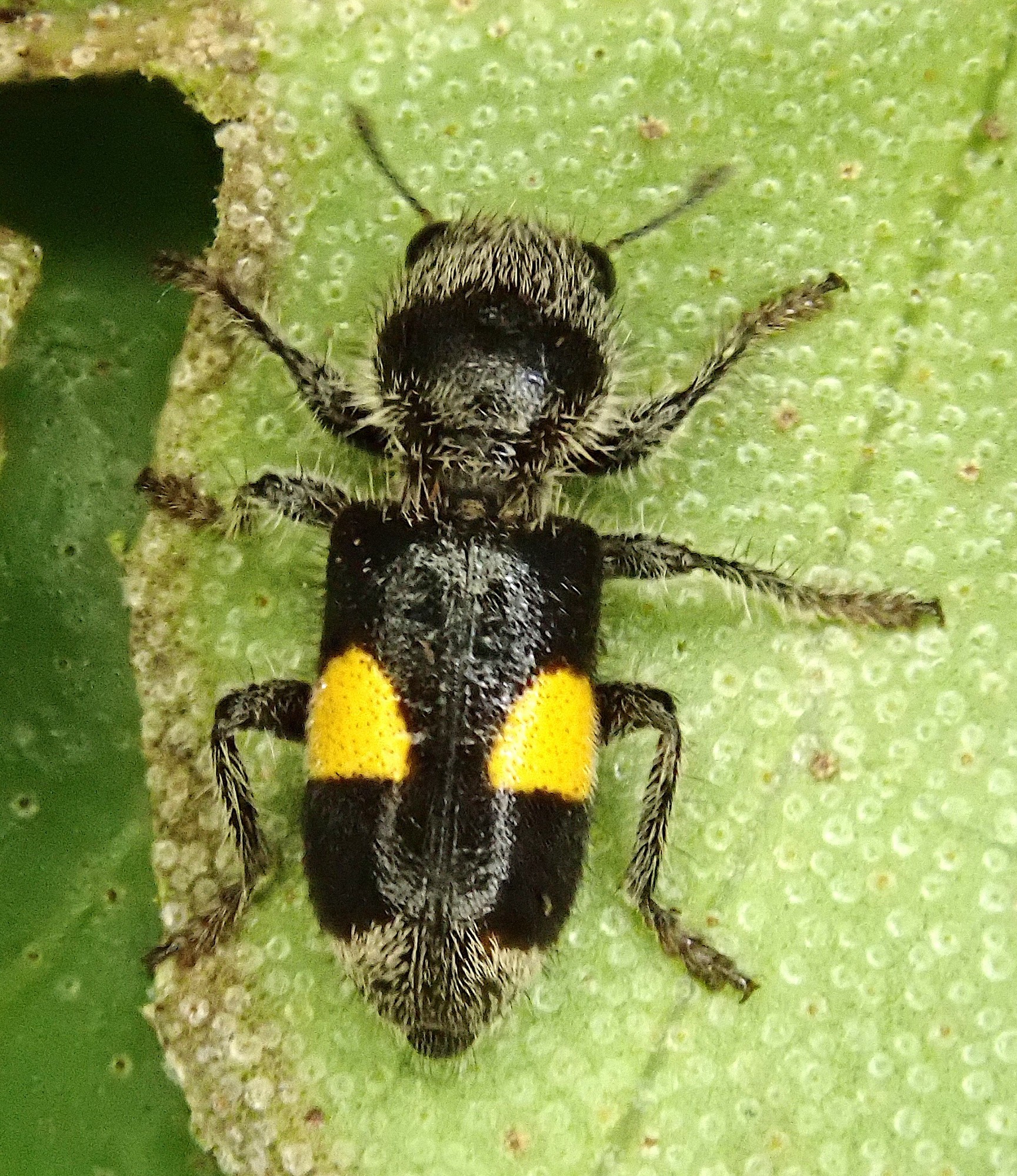
Enoclerus venator
- Elytra
- Broad median transverse yellow macula on each side, rather broadly interrupted internally before the suture; a small oblique yellowish fascia may or may not be present anteapically, when present mostly obscured by the apical covering of ashy pubescence
- Vestiture
- Pronotum ashy-clothed on the anterior half; elytra with a sagittate patch of fine white setae postbasally
- Abdomen
- Black
- Elytra (tumescences)
- Moderately elevated; surface densely but finely punctate
- Taxonomic note
- At least one, and possibly several, similar species occur in Central America (including Guatemala) with an added pair of basal pale maculae — more taxonomic work needed here
- Length
- Smallish, ca. 6mm max
- Distribution
- Southern México
Enoclerus vernalis
- Elytra
- Reduced/narrower orange band at basal third + orange apex — least extensive red of the four; elytral integument usually less lustrous than in related E. spinolae
- Biology
- Associated specifically with Joshua Tree (Yucca brevifolia); flies in spring (Apr–Jun), phenologically isolated from E. spinolae even where ranges might otherwise approach
- Distribution
- Restricted to the Mojave Desert, California
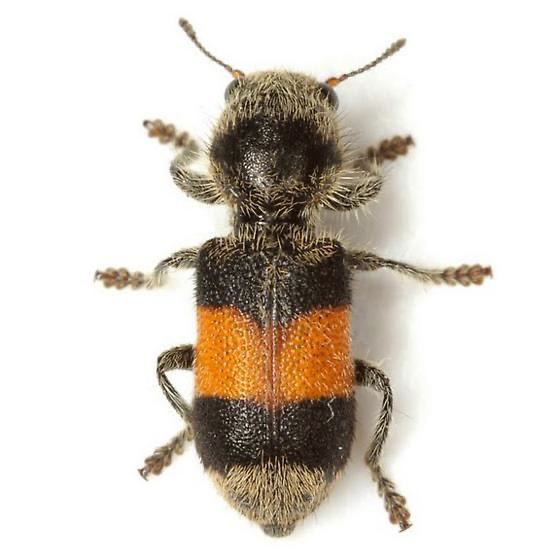
Enoclerus vetus
- Surface
- Elytra dull, densely and deeply punctate (vs. shining, finely punctate in E. hoegei)
- Elytra
- Fascia pale pink/reddish, complete across the suture (not broadly separated as often seen in hoegei)
- Setal daggers
- Present in males (a pair) — allies this species with hoegei, s. silbermannii, boucardi, lobatus, quadrinotatus, and semiochraceus
- Length
- Medium, robust, to 8mm
- Distribution
- USA (Texas); México (San Luis Potosí, Tamaulipas, Nuevo León, Jalisco?)
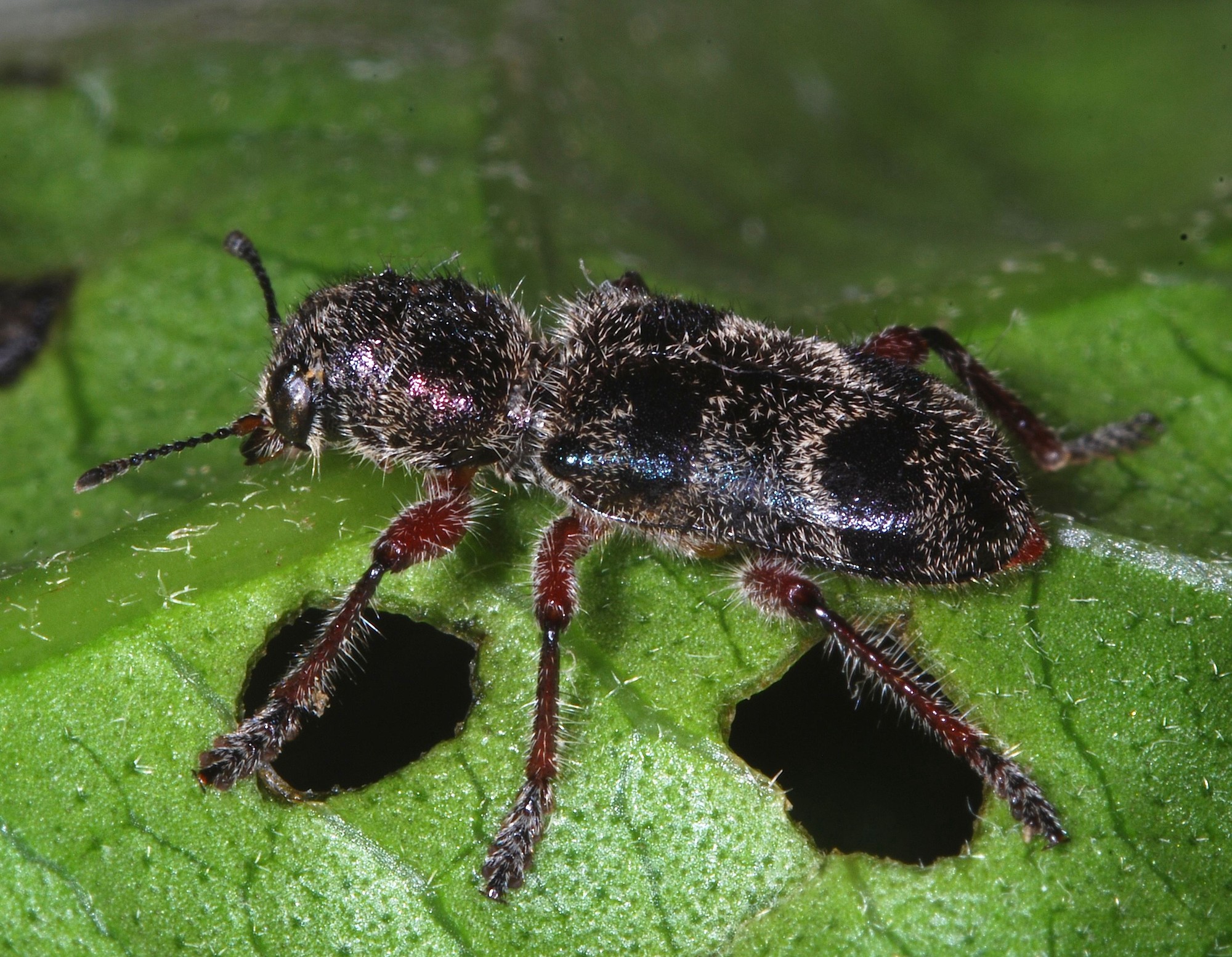
Enoclerus viduus
- Color
- Blue-black, sometimes with purple reflections; legs and abdomen red
- Elytra
- Four large dark maculae, but formed entirely by areas where whitish pubescence is ABSENT (vestitural gap, not true integumental color) — no integumental pattern at all
- Length
- Medium to large, to 10mm
- Distribution
- USA (Georgia, North Carolina, Tennessee, Texas, Virginia); México (Sinaloa, Jalisco, Nayarit, Oaxaca, Morelos, Hidalgo, Querétaro)
- Biology
- Thorn forest/TDF in México, often on Acacia
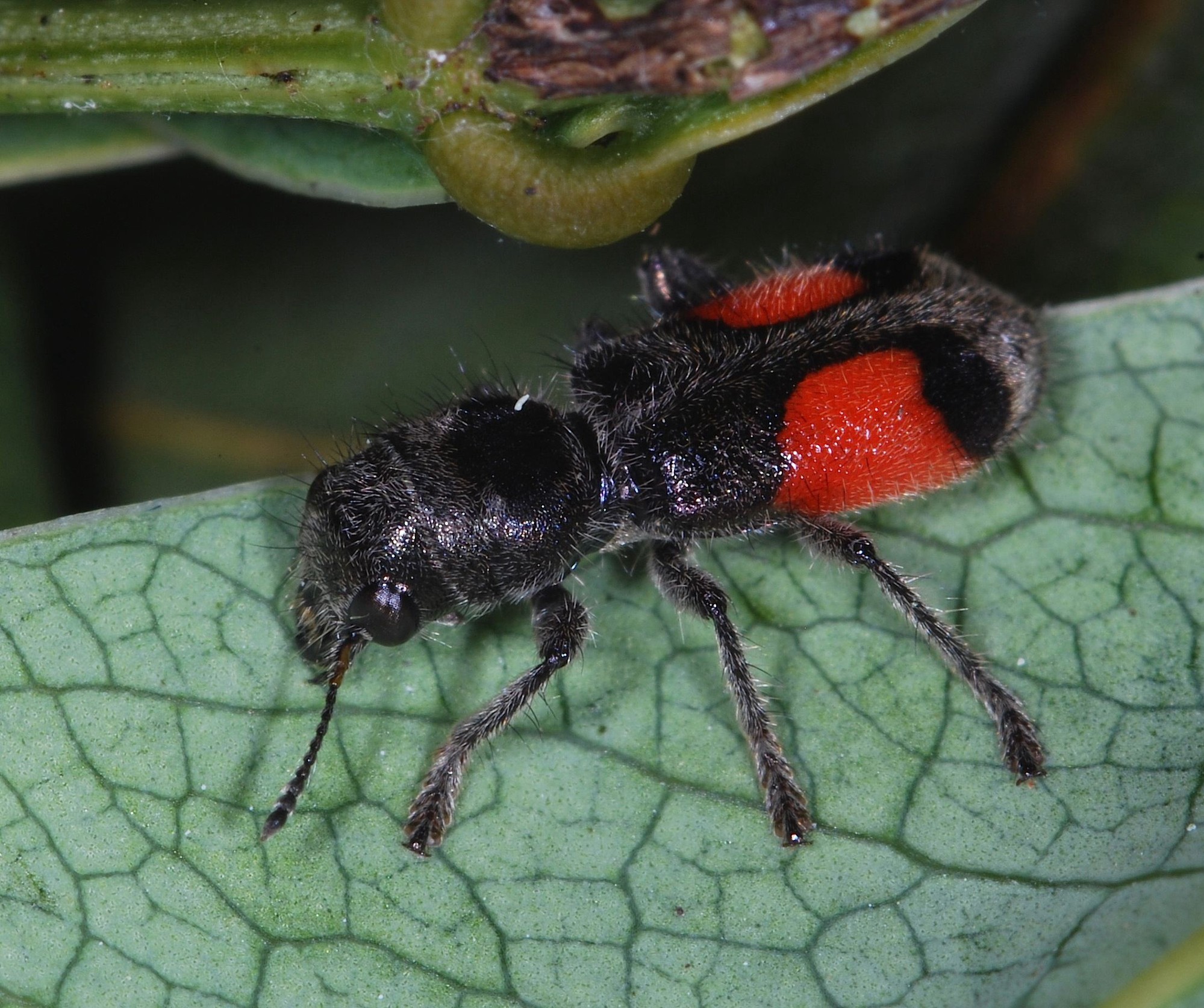
Enoclerus vulneratus
- Pronotum
- More elongate than hoegei
- Elytra
- More elongate than hoegei; setation ashy (not silvery); finer sculpturing than hoegei
- Color
- Blue-black integument with aeneous/blue reflections
- Distribution
- México (Guerrero, Puebla, Morelos, Distrito Federal, Estado de México, Michoacán, Oaxaca, Jalisco)
Enoclerus vulnus
- Length
- ca. 6 mm
- Form
- Elongate, antlike; relatively stocky for the complex — comparable in build to E. sericeus
- Species group
- Part of the “Caestron trogositoides Spinola” complex, along with E. nelsoni
- Color
- More reddish-brown overall; elytral ground reddish-brown with paired castaneous posterior maculae
- Scutellum
- Rounded, somewhat raised
- Pronotum
- With a transverse depression — distinguishes E. vulnus from E. sericeus, which lacks this depression
- Sexual dimorphism
- Male abdominal sternites darkened, female reddish; male terminal antennomere narrowed/acute apically, blunted in the female
- Distribution
- México (Sinaloa)
Enoclerus zacryptoceroides
- Length
- Ca. 5 mm
- Form
- Small, antlike, elongate; mimics similarly setose cephalotine ants
- Color
- Black, but with a dense covering of silvery setae rendering the beetle grayish
- Elytra
- A pair of wedge-shaped eburneous maculae at middle, interrupted internally before the suture; base with a sagittate patch of swirled silvery setae terminating before the fascia (allowing integument to show through, outlining the fascia anteriorly)
- Surface
- Rather coarsely roughened
- Abdomen
- Black
- Distribution
- México (Jalisco, Colima, Guerrero, Oaxaca)
- Biology
- Beaten from Acacia sp. and other plants in tropical deciduous forest
- Note
- Could be confused with Caestron contractus (a different genus) — that species has a more narrowed/extended pronotal collar, a narrower elytral base, and a distinct dorsal impression at the elytral middle
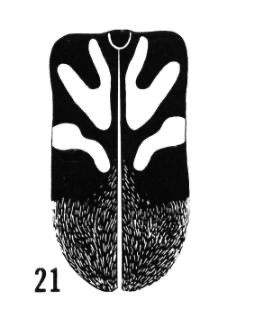
Enoclerus zebra
- Size
- ~6–7mm
- Pronotum
- Bicolorous red-and-black (anterior half reddish, rest black)
- Elytra
- Sagittate subbasal mark plus a pair of oblique/curvate median maculae, incomplete internally
- Biology
- Proposed mimic of sarcophagid flies (per Hespenheide)
- Distribution
- México (Tamaulipas, Chiapas, Quintana Roo), plus El Salvador/Belize/Guatemala/Honduras/Nicaragua/Costa Rica
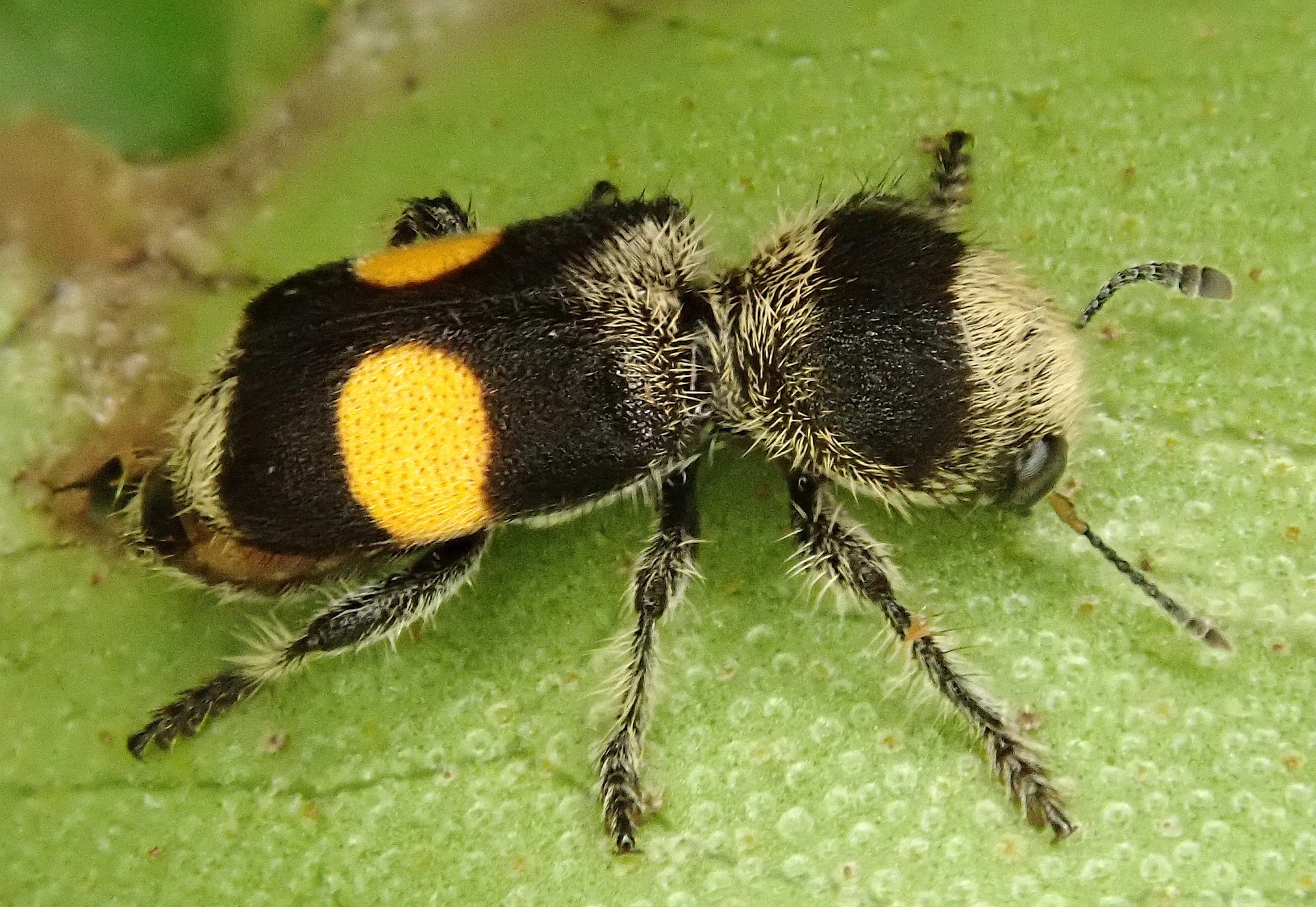
Enoclerus zip
- Cranial vestiture
- White only, without admixture of reddish setae (vs. orange in necator)
- Pronotum
- Anterior margin with a setal patch (unlike deletus's concolorous black setae); posterior setal patch all white
- Elytra
- Posterior band of silvery setae NOT interrupted at the apices (reaches the apices — vs. not reaching them in necator); robust build; anteapical fascia purely silver/white, not orange-bordered
- Variation
- Specimens from Oaxaca and Veracruz have the apices not covered with white setae, but remain distinguishable by robust elytra and setal color pattern
- Length
- Small, ca. 6mm
- Distribution
- Yucatán Peninsula, México (Quintana Roo, Yucatán); México (Oaxaca, Veracruz, Chiapas, Tabasco); El Salvador
Enoclerus zonatus
- Elytra
- Broad transverse red fascia at middle (fire-engine red in life) + red apical 1/5, black elsewhere
- Biology
- Associated with Agave/Yucca
- Distribution
- NE México (Tamaulipas, Hidalgo, Michoacán)
Genera in the family Cleridae that are easily confused with Enoclerus at a glance, or that contain species entering into the mimicry complexes discussed elsewhere in this key. Some of these genera contain many species (e.g. Perilypus). The images included are merely representative.
Caestron
As currently recognized, C. trogositoides appears to be a complex of species rather than a single one, and that complex may include some elongate, antlike Enoclerus (E. nelsoni and E. vulnus among them).
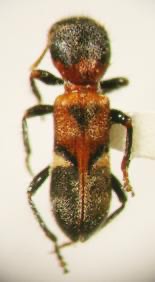 C. concinnus (Gorham)
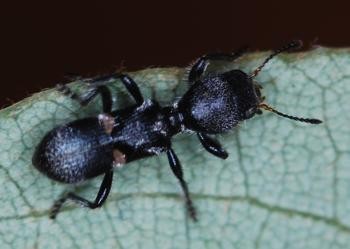 C. contractus (Gorham)
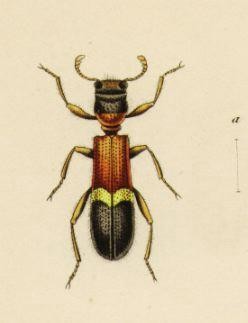 C. trogositoides Spinola
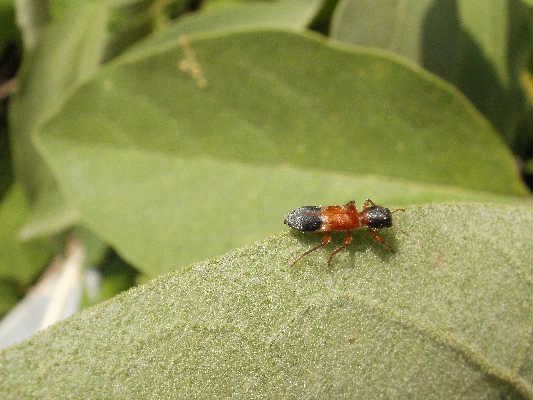 C. trogositoides Spinola
Sallea
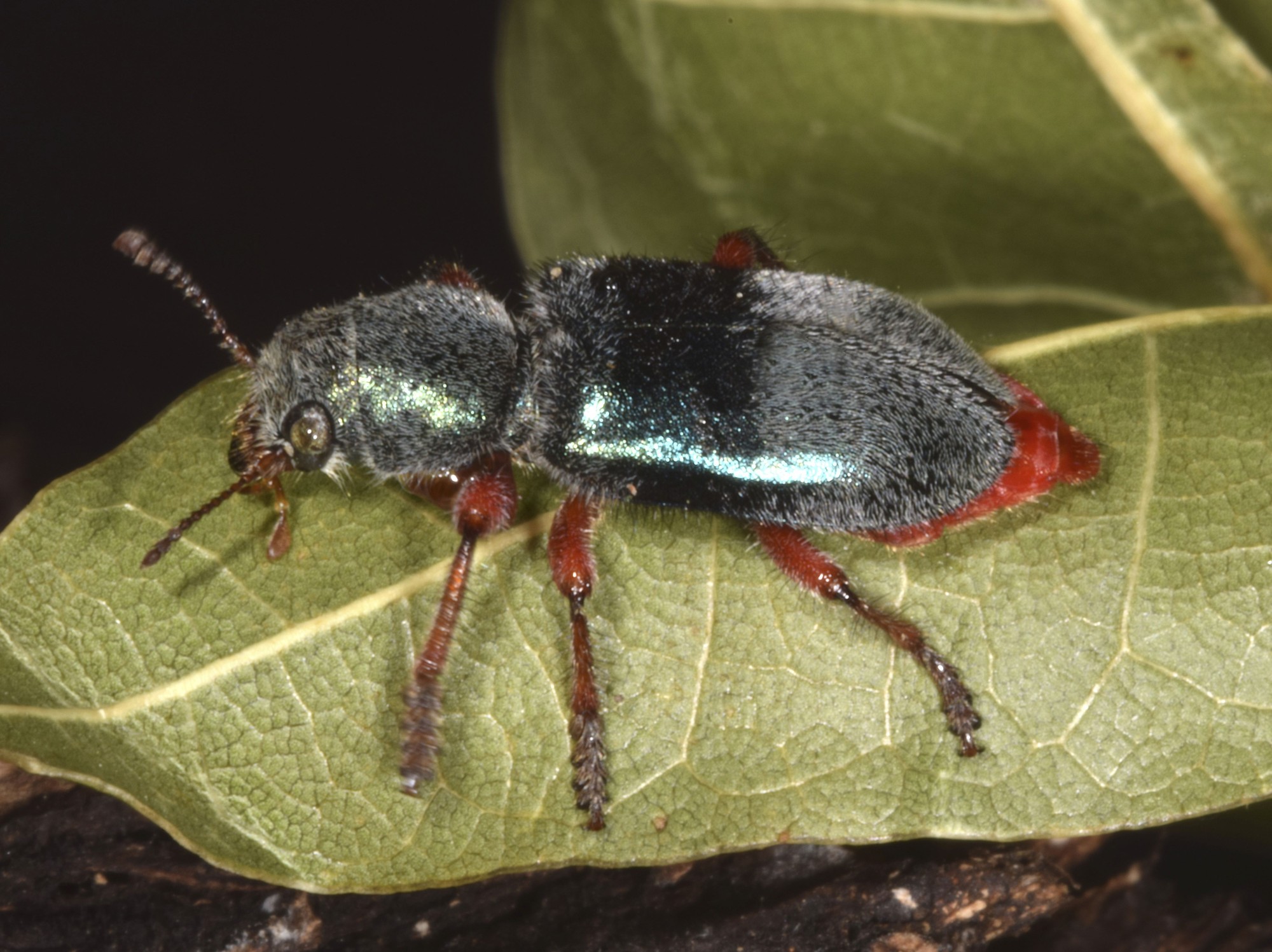 S. necrobioides Chevrolat
Placopterus
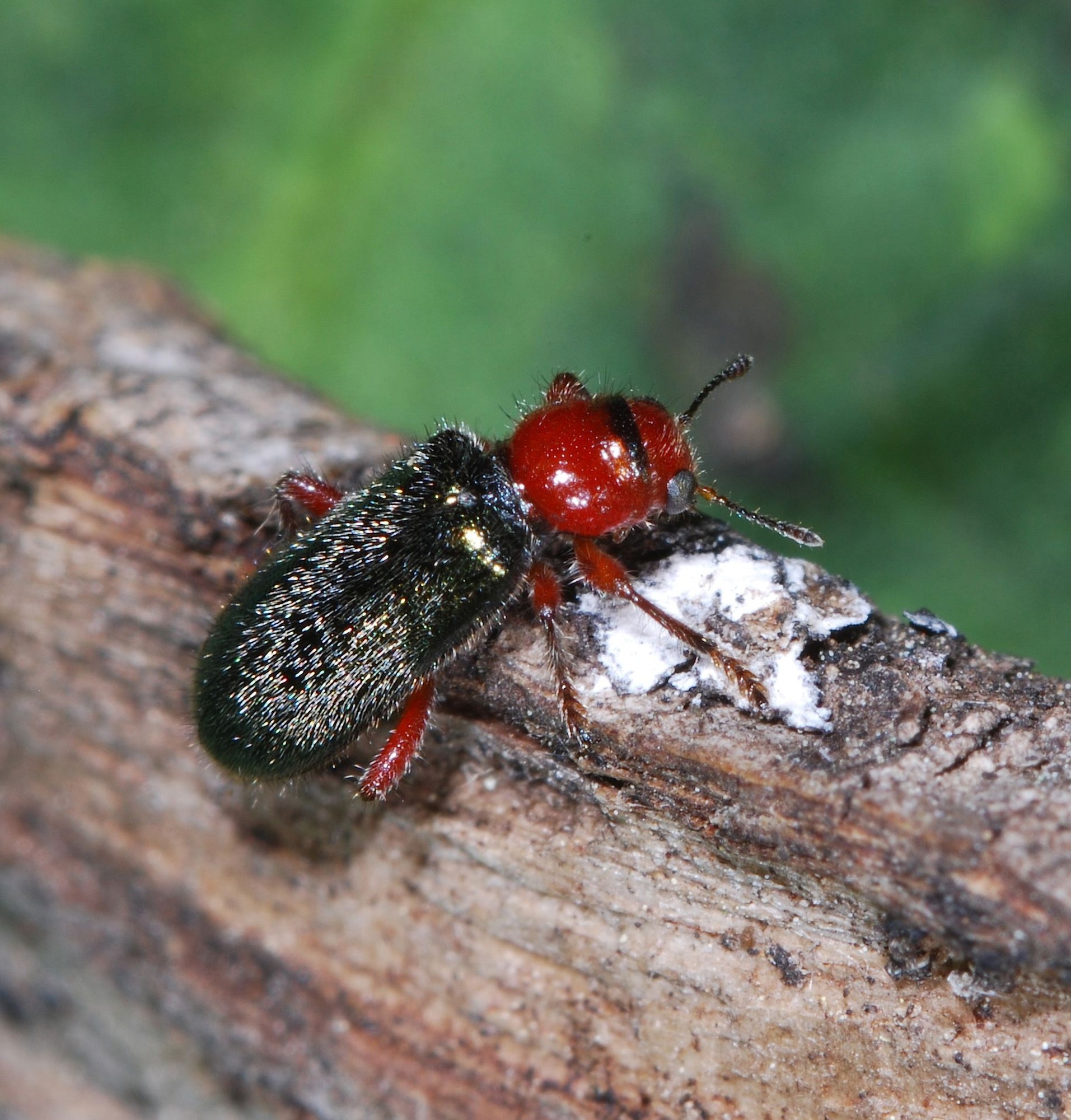 P. rufipes (Schenkling)
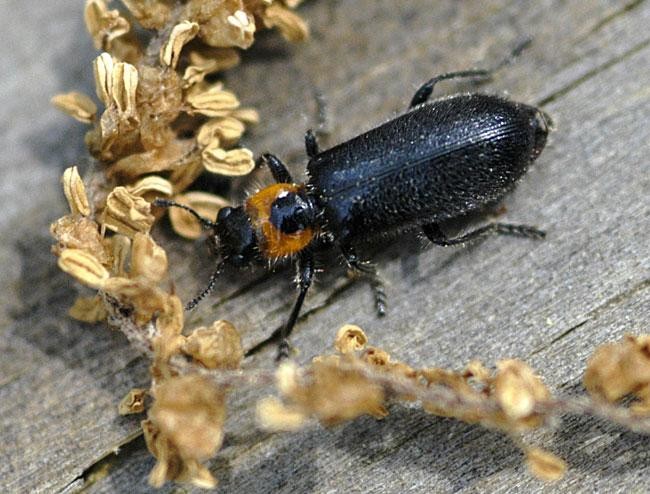 P. thoracicus (Olivier)
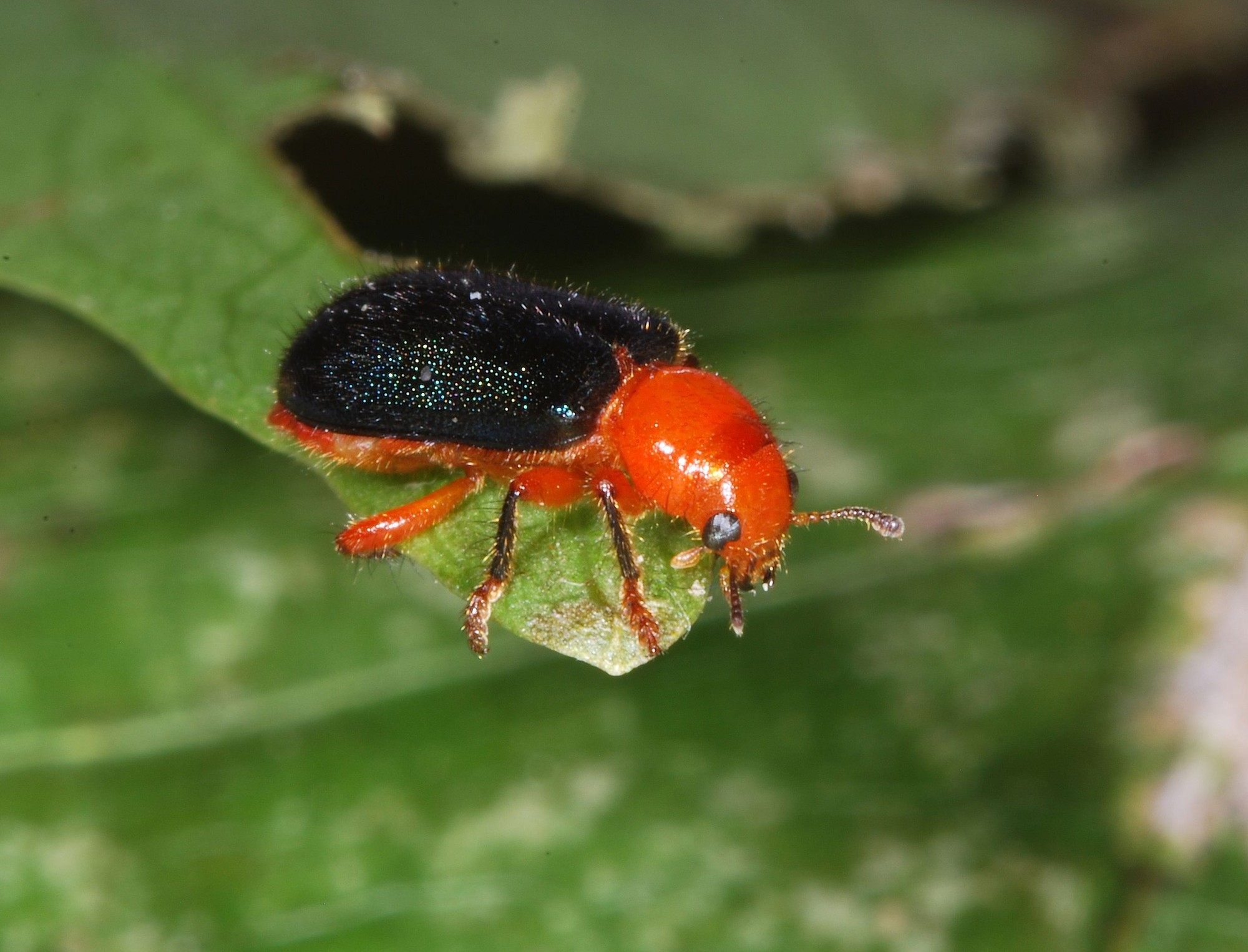 P. plumbeus (Gorham)
Colyphus
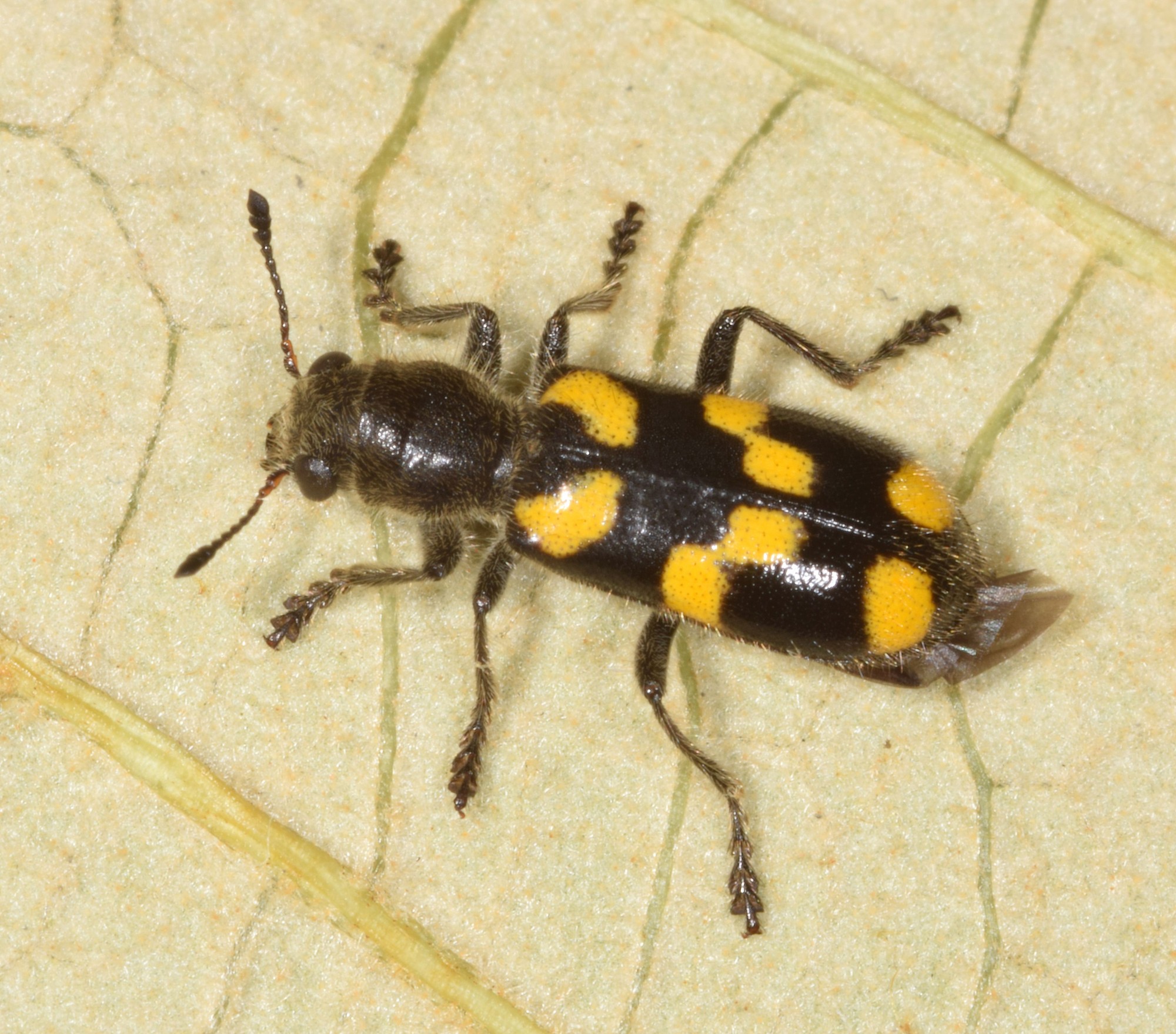 C. artus Ekis
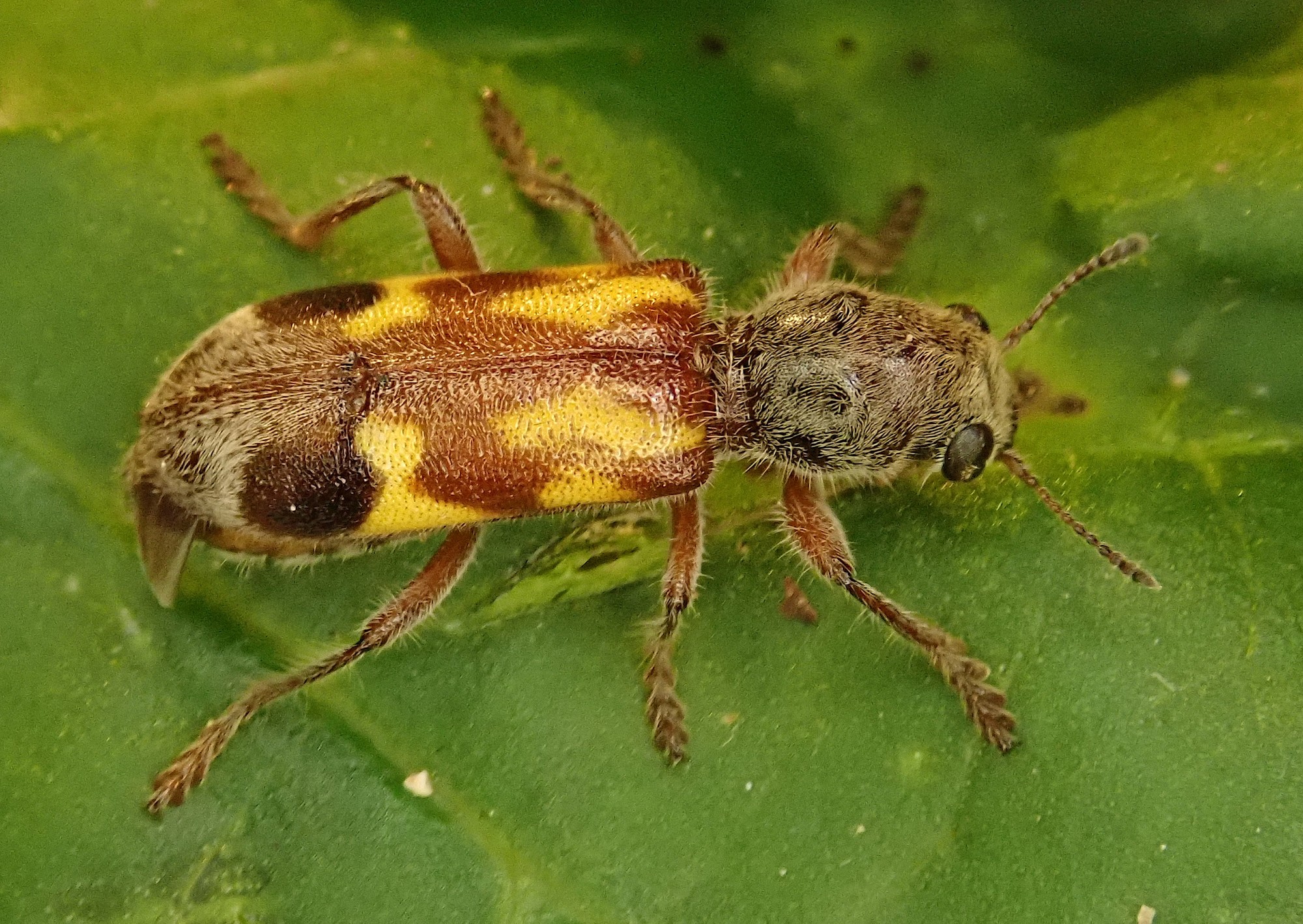 C. cylindricus (Gorham)
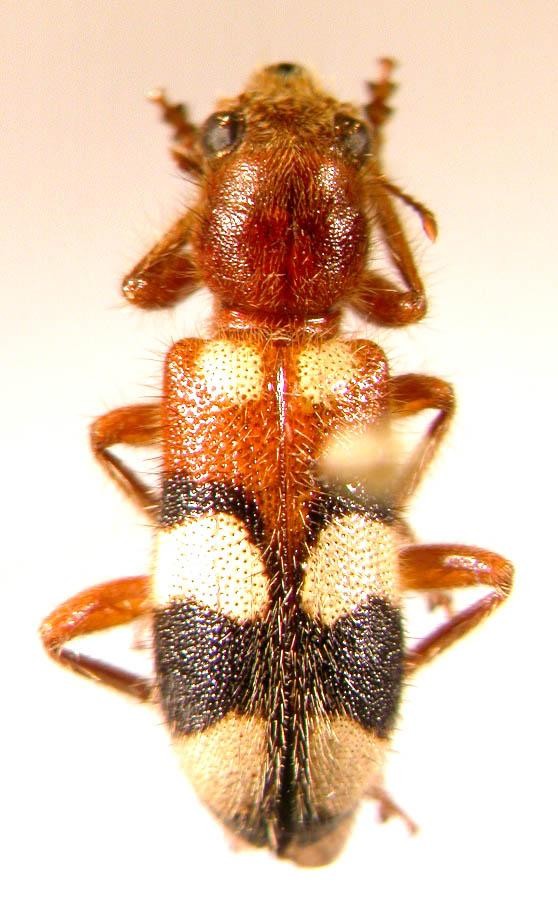 C. guptai Ekis
Aulicus
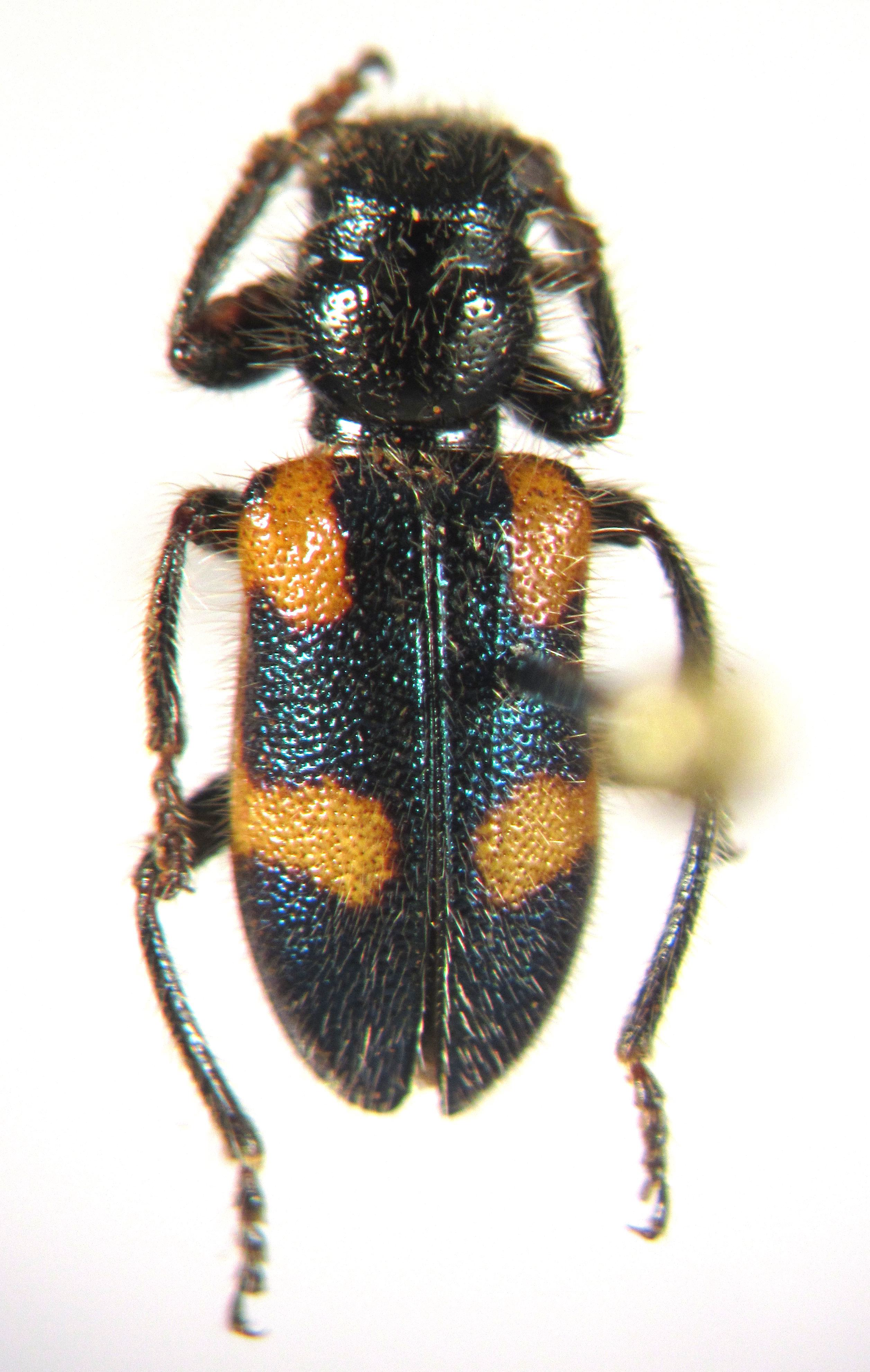 A. apachei (Barr & Foster)
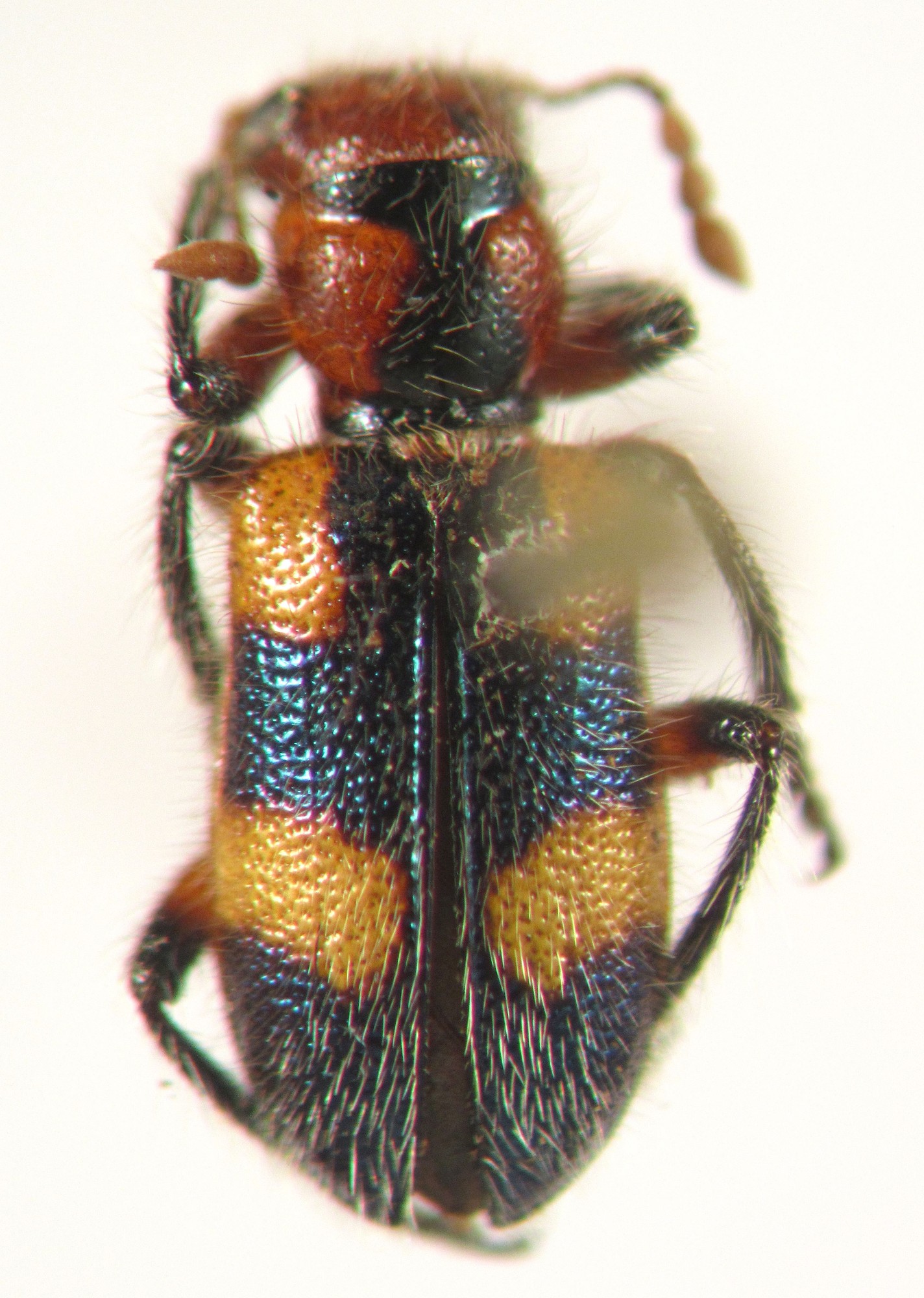 A. femoralis Schaeffer
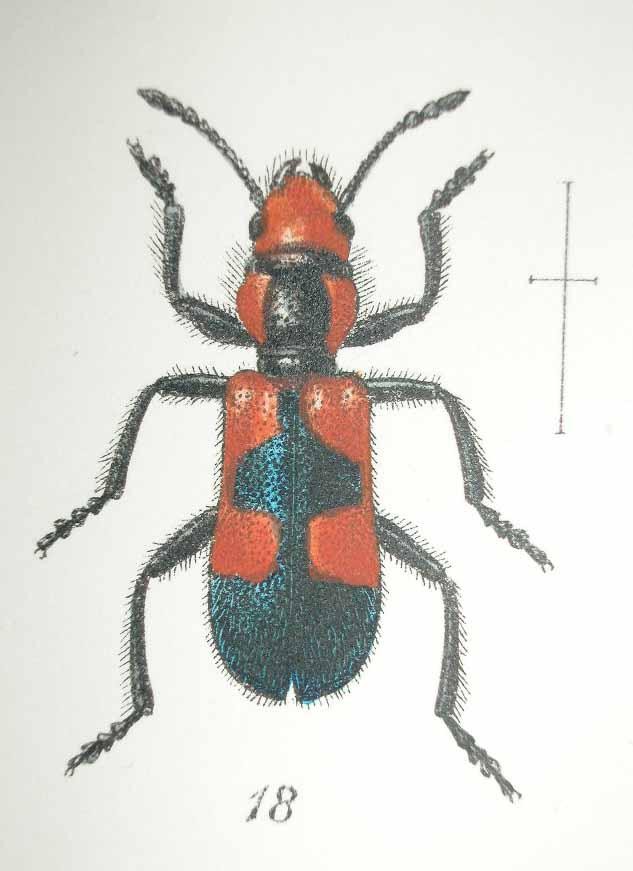 A. monticola Gorham
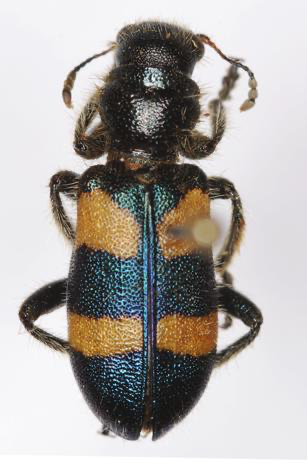 A. thoracicus Schenkling
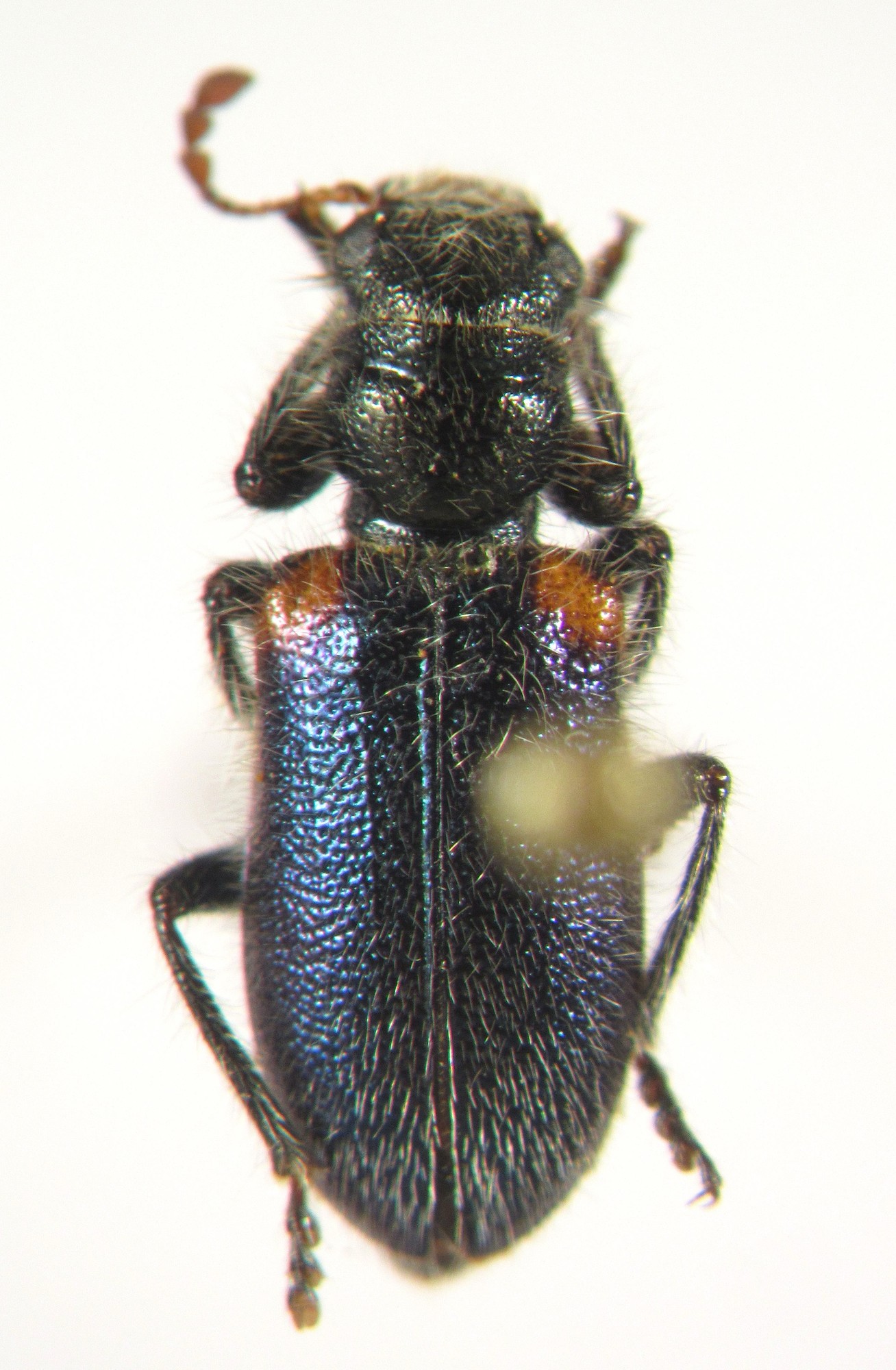 A. linsleyi Barr
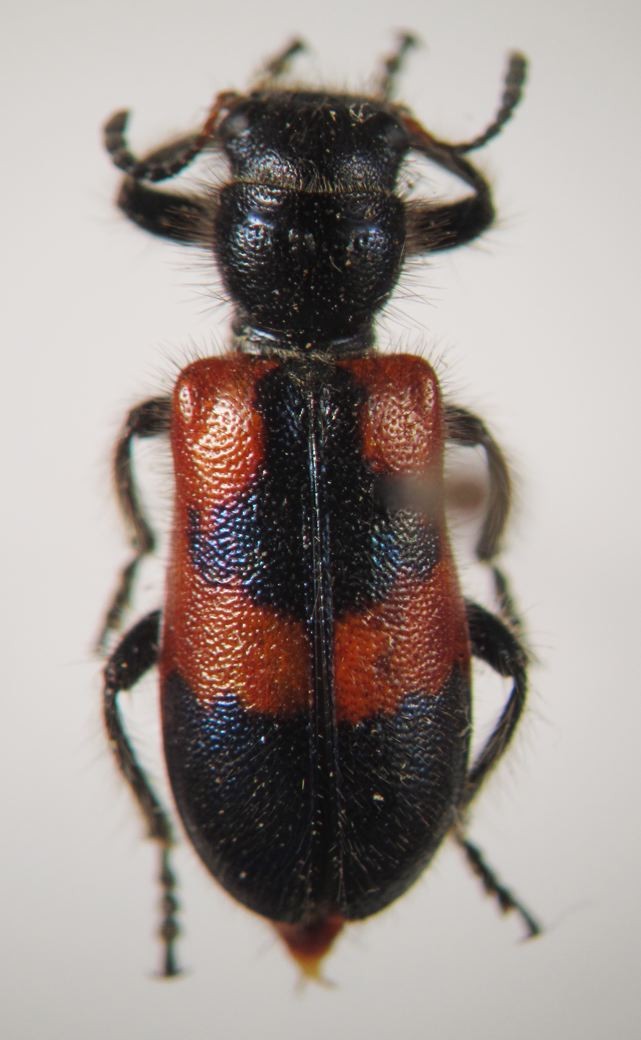 A. nero
Perilypus
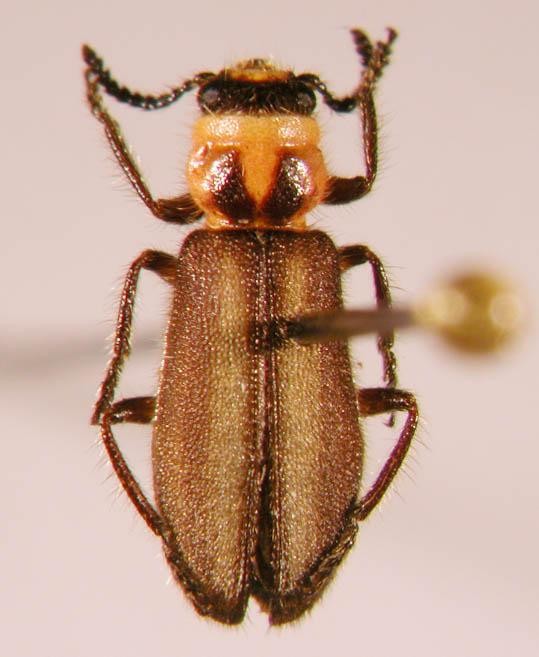 P. ornaticollis (LeConte)
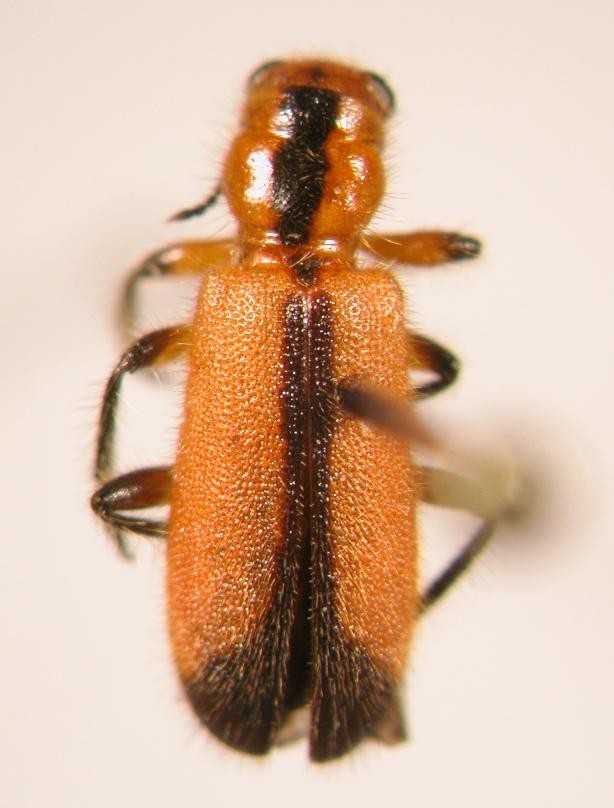 P. chaletoides Ekis
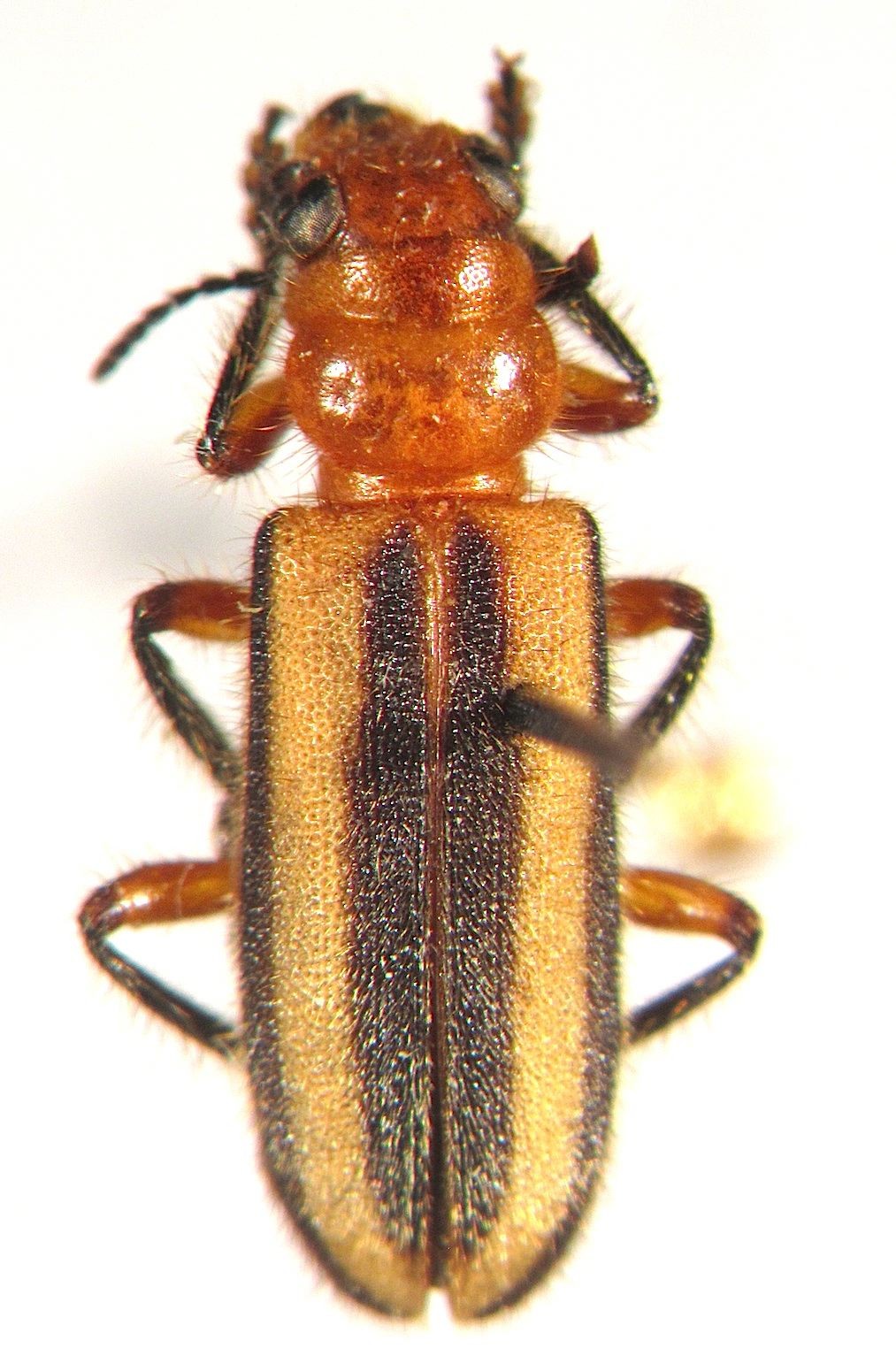 P. carbonarius
Dologenitus
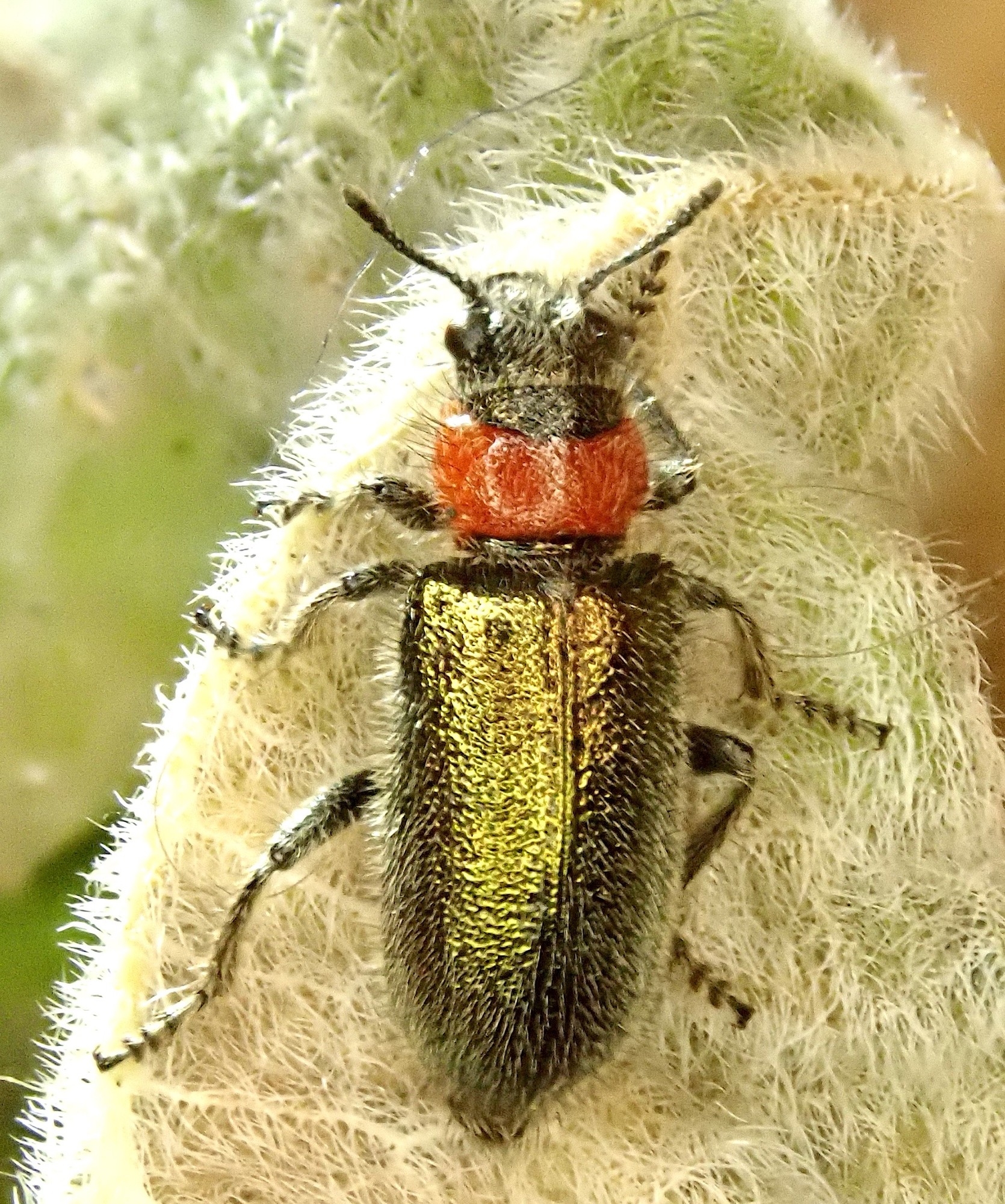 D. cyanipennis (Klug)
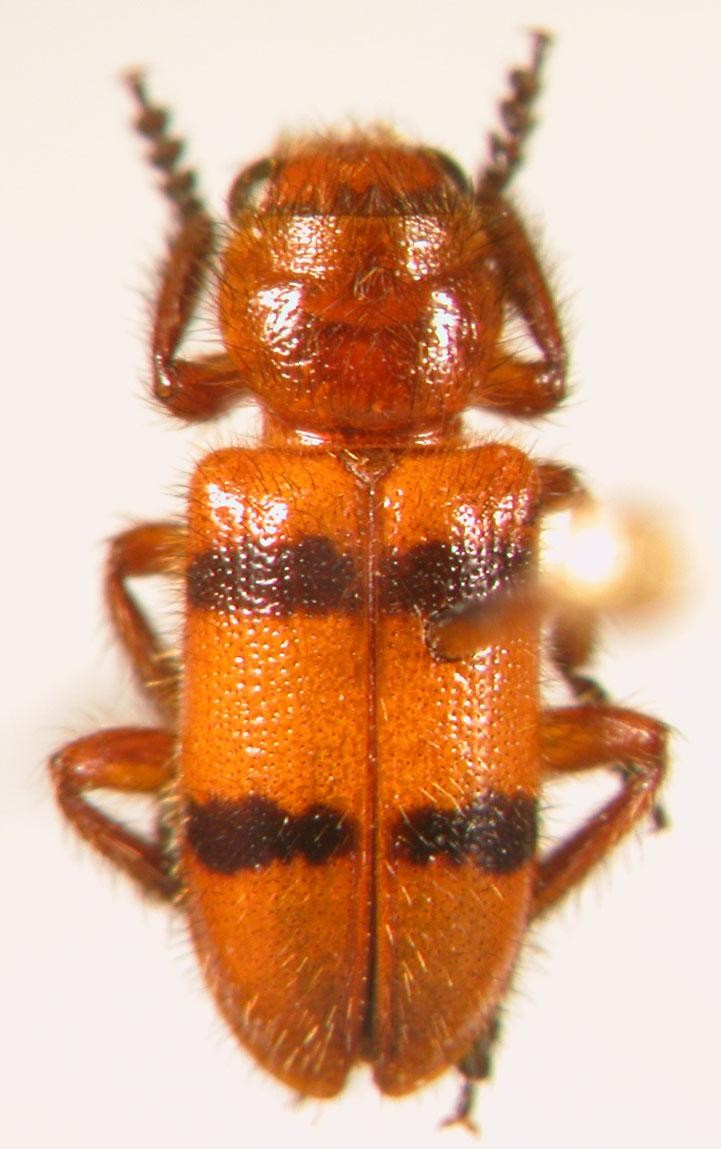 D. nigrocinctus (Klug)
Quadrophenia
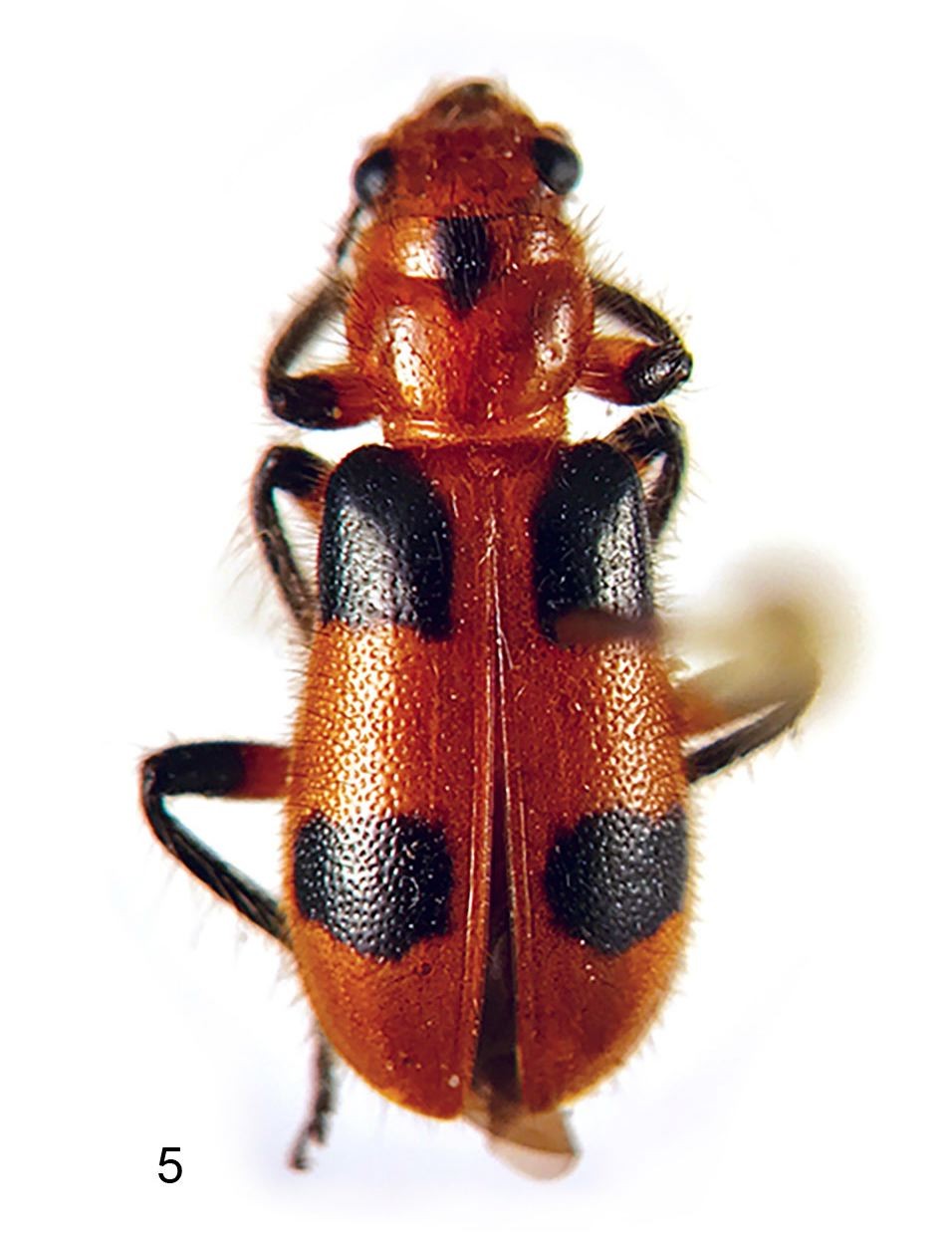 Q. townshendi
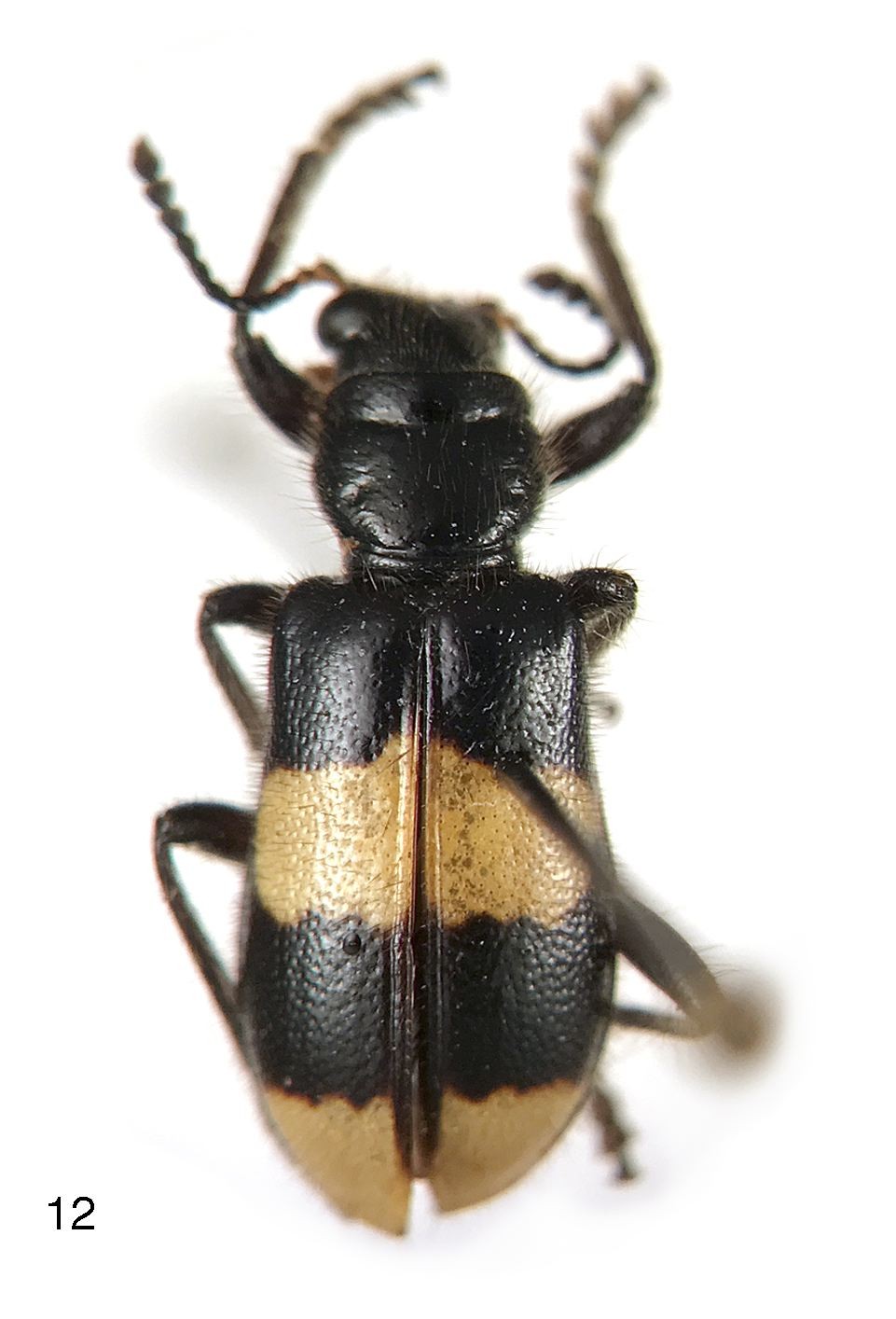 Q. sumidero
Systenoderes
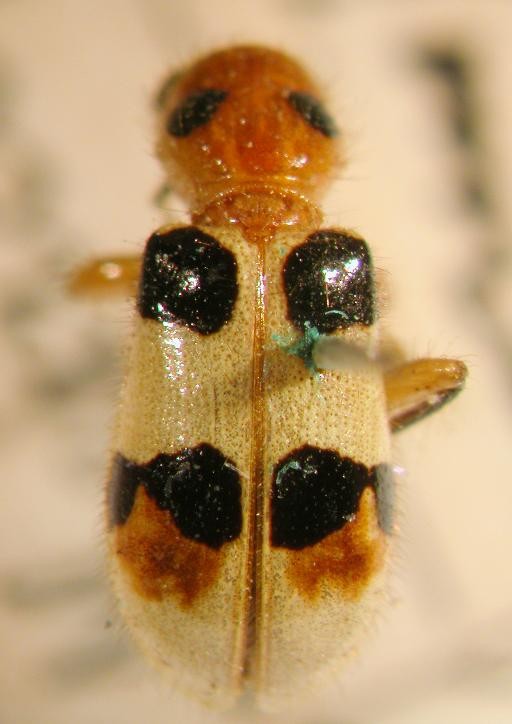 S. amoenus
This species may be synonymous with Enoclerus tricolor (Castelnau), described from Mexico but otherwise unknown.
Blaxima
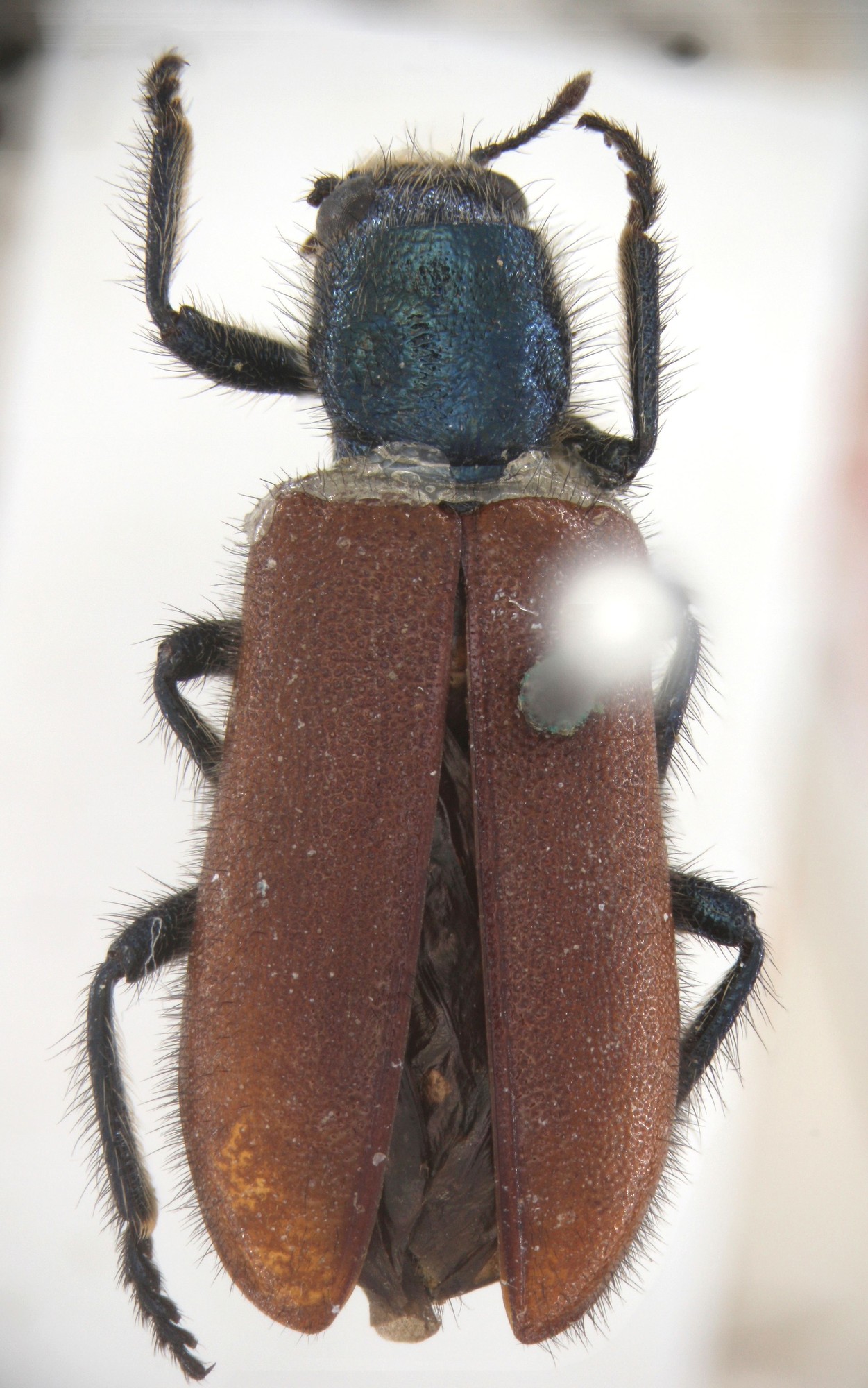 B. rubripennis
Aphelocerus
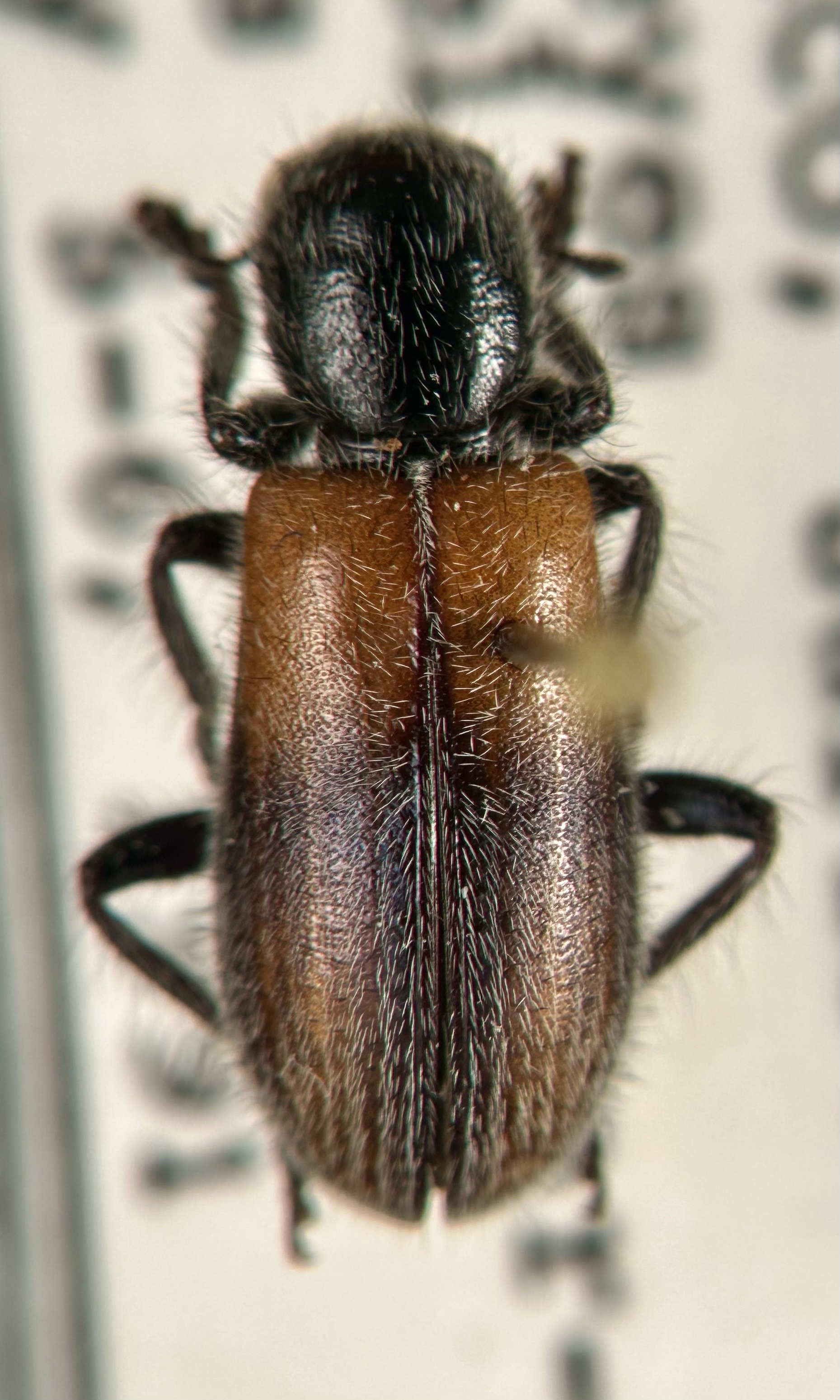 A. coalitus Opitz
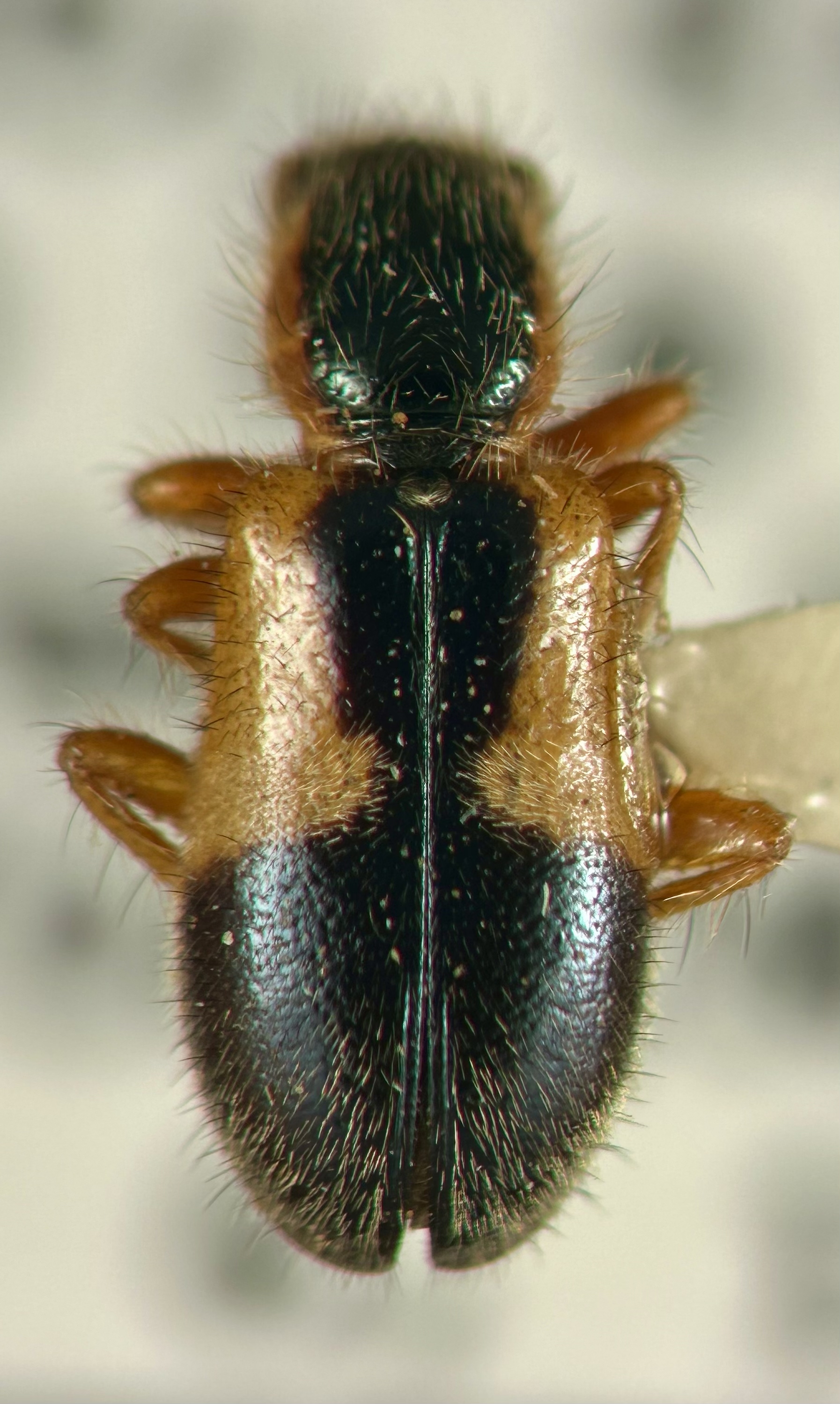 A. delicatulus Barr
A general nomenclatural note: Gahan did not erect Enoclerus as a genus until 1910 — all pre-1910 works below (Say, LeConte, Klug, Chevrolat, Spinola, and Gorham's earlier fascicles) describe these beetles under the older, broader genus Clerus.
Arnett, R.H., Jr. 1960. The Beetles of the United States (A Manual for Identification). Catholic University Press, Washington, D.C. 1112 pp.
Barr, W.F. 1975. Family Cleridae. Pp. 1–18 in R.H. Arnett (ed.), Checklist of the Beetles of North and Central America and the West Indies, vol. 4, family 73. Flora and Fauna Publications, Gainesville, Florida.
Barr, W.F. 1976. Descriptions and taxonomic notes on Enoclerus and some allied genera (Coleoptera: Cleridae). Melanderia 24: 17–35.
Barr, W.F. 1978. New species of Enoclerus from Mexico, Central America, and Venezuela (Coleoptera: Cleridae). The Coleopterists Bulletin 32(4): 269–278.
Barr, W.F. 1979. Checklist of the Cleridae of North and Central America and the Caribbean Islands. University of Idaho, Moscow, Idaho. 19 pp.
Barr, W.F. 1980. New genera and new species of New World Cleridae (Coleoptera: Cleridae). Pan-Pacific Entomologist 56: 277–282.
Barr, W.F. & Rifkind, J. 2009. Two new and one resurrected species of Enoclerus Gahan (Coleoptera: Cleridae: Clerinae) from the western United States. Zootaxa 2168(1): 57–62.
Blackwelder, R.E. 1939. Fourth supplement, 1933–1938 (inclusive), to the Leng Catalogue of Coleoptera of America, north of Mexico. John D. Sherman, Mount Vernon, N.Y. 146 pp.
Blackwelder, R.E. 1945. Checklist of the Coleopterous insects of Mexico, Central America, the West Indies, and South America. Part 3. United States National Museum Bulletin 185: 343–550.
Blackwelder, R.E. 1957. Checklist of the Coleopterous insects of Mexico, Central America, the West Indies, and South America. Part 6. United States National Museum Bulletin 185: i–vii, 927–1492.
Castelnau, F.L. Laporte de. 1836. Études entomologiques, ou descriptions d'insectes nouveaux et observations sur la synonymie. Revue Française d'Entomologie 4: 5–60.
Champlain, A.B. & Knull, J.N. 1925. Notes on Coleoptera. The Canadian Entomologist 57(5): 112–115.
Chapman, E.G., Leavengood, J.M., Jr. & Dupuis, J.R. 2025. The Cleridae and Thanerocleridae of eastern North America, with illustrated keys, updated distributions, and special emphasis on the Kentucky fauna. Zootaxa 5639(1): 1–88.
Chevrolat, L.A.A. 1876. Mémoire sur la famille des Clérites. Buquet, Paris. 51 pp.
Chevrolat, L.A.A. 1834–1835. Coléoptères du Mexique. Strasbourg (G. Silbermann), issued in 8 fascicules.
Corporaal, J.B. 1950. Cleridae. Coleopterorum Catalogus, Supplementa, pars 23 (2nd ed., W.D. Hincks, ed.). W. Junk, 's-Gravenhage. 373 pp.
Ekis, G. 1976. Neotropical checkered beetles of the genus Enoclerus (Coleoptera: Cleridae: Clerinae). Studies on Neotropical Fauna and Environment 11(3): 151–172.
Ekis, G. 1977. Classification, phylogeny, and zoogeography of the genus Perilypus (Coleoptera: Cleridae). Smithsonian Contributions to Zoology 227: 1–138.
Evans, A.V. 2014. Beetles of Eastern North America. Princeton University Press, Princeton, N.J. 560 pp.
Evans, A.V. 2021. Beetles of Western North America. Princeton University Press, Princeton, N.J. 624 pp.
Figueroa-Castro, P., López-Martínez, V., Toledo-Hernández, V.H. & Rifkind, J. 2017. First report of the entomophagous Enoclerus zonatus (Coleoptera: Cleridae) associated with stalks of the mezcal maguey in Guerrero, Mexico. Revista Mexicana de Biodiversidad 88: 467–470.
Foster, D.E. & Barr, W.F. 1972. Notes on the distribution and bionomics of some North American Cleridae. Journal of the Kansas Entomological Society 45: 122–125.
Gahan, C.J. 1910. Notes on the Cleridae and descriptions of some new genera and species of this family of Coleoptera. Annals and Magazine of Natural History 5(8): 55–76.
Gerstmeier, R. 2014. An overview of taxonomy and biology of the Cleridae (Coleoptera, Cleroidea, Cleridae). Giornale Italiano di Entomologia 13(59): 481–494.
Gorham, H.S. 1882. Cleridae. Biologia Centrali-Americana, Insecta, Coleoptera 3: 129–168. (Godman & Salvin, eds., Porter, London.)
Gorham, H.S. 1883. Cleridae. Biologia Centrali-Americana, Insecta, Coleoptera 3: 169–192. (Godman & Salvin, eds., Porter, London.)
Gorham, H.S. 1886. Cleridae (Supplement). Biologia Centrali-Americana, Insecta, Coleoptera 3(2): 341. (Godman & Salvin, eds., Porter, London.)
Hernández-May, M.A., Pérez-De La Cruz, M., Toledo-Hernández, V.H., Rifkind, J., Leavengood, J.M., Jr., Guzmán-Vega, G.A. & Niño-Maldonado, S. 2021. Preliminary survey of the checkered beetles (Coleoptera: Cleridae) of Tamaulipas, Mexico. The Coleopterists Bulletin 75(3): 661–669.
Hernández-May, M.A., Toledo-Hernández, V.H., Corona-López, A.M., Pérez-De La Cruz, M., Rifkind, J., Leavengood, J.M., Jr., Magaña-Alejandro, M.A., Olivera-Gómez, L.D. & De La Cruz-Pérez, A. 2024. Diversity and seasonality of Cleridae (Coleoptera) in the tropical rainforest of the Sierra El Madrigal in Tabasco, Mexico. The Coleopterists Bulletin 78(1): 9–17.
Hespenheide, H.A. 1973. A novel mimicry complex: beetles and flies. Journal of Entomology Series A, General Entomology 48: 49–55.
Hespenheide, H.A. 1986. Mimicry of ants of the genus Zacryptocerus (Hymenoptera: Formicidae). Journal of the New York Entomological Society 94: 394–408.
Horn, G.H. 1885. Contributions to the coleopterology of the United States. Transactions of the American Entomological Society 12: 128–162.
Klug, J.C.F. 1842. Versuch einer systematischen Bestimmung und Auseinandersetzung der Gattungen und Arten der Clerii, einer Insectenfamilie aus der Ordnung der Coleopteren. Abhandlungen der Königlichen Akademie der Wissenschaften zu Berlin: 259–397. (Read before the Academy 17 Aug 1837; published with later additions, 1842.)
Knull, J.N. 1951 (reprinted 1972). The Checkered Beetles of Ohio (Coleoptera: Cleridae). Ohio Biological Survey Bulletin 42, Vol. VIII, No. 2. — Includes a key to most Eastern US Enoclerus spp.
Leavengood, J.M., Jr. 2008a. The Checkered Beetles (Coleoptera: Cleridae) of Florida. Unpublished M.S. thesis, University of Florida, Gainesville. 206 pp.
Leavengood, J.M., Jr. 2008b. Enoclerus knabi (Wolcott), a junior synonym of Enoclerus ichneumoneus (Fabricius) (Coleoptera: Cleridae). Insecta Mundi 57: 1–2.
Leavengood, J.M., Jr. & Garner, B.H. 2014. Nomenclatural notes on some checkered beetle (Coleoptera: Cleridae) types of the Natural History Museum, London (BMNH). Zootaxa 3760(3): 301–335.
Leavengood, J.M., Jr. & Androw, R.A. 2026. New Records from North American Cleridae and Thanerocleridae (Coleoptera: Cleroidea). Proceedings of the Entomological Society of Washington 127(4): 733–746.
LeConte, J.L. 1849. Synopsis of the coleopterous insects of the group Cleridae which inhabit the United States. Annals of the Lyceum of Natural History of New York 5: 9–35.
Majka, C.G. 2006. The checkered beetles (Coleoptera: Cleridae) of the Maritime Provinces of Canada. Zootaxa 1385: 31–46.
Mawdsley, J.R. 1994. Mimicry in Cleridae (Coleoptera). The Coleopterists Bulletin 48(2): 115–125.
Mawdsley, J.R. 2001. Cladistic analysis of Nearctic species of Enoclerus Gahan (Coleoptera: Cleridae), with discussion of the evolution of mimicry and cryptic coloration. Transactions of the American Entomological Society 127(4): 459–471.
Menier, J.J. 1985. Quelques aspects du "mimétisme" chez les Cleridae. Bulletin de la Société entomologique de France 90: 1071–1083.
Opitz, W. 2002a. Cleridae Latreille 1804. Chapter 73 in R.H. Arnett, Jr. et al. (eds.), American Beetles, Volume 2: Polyphaga: Scarabaeoidea through Curculionoidea. CRC Press, Boca Raton. Pp. 267–280.
Opitz, W. 2009. Revision of the Mexican Checkered Beetle Genus Dologenitus Opitz (Coleoptera: Cleridae: Clerinae). Annals of Carnegie Museum 78(1): 1–16.
Opitz, W. 2020. Three new species of South American checkered beetles (Coleoptera: Cleridae: Clerinae). Insecta Mundi 0832: 1–5.
Opitz, W. 2021b. New South American checkered beetles of the genus Enoclerus (Coleoptera, Cleridae, Clerinae). Linzer Biologische Beiträge 53(1): 123–169.
Rifkind, J. 1996a. A new genus and species of checkered beetle from Honduras with additions to the Honduran fauna (Coleoptera: Cleridae). Contributions in Science, Natural History Museum of Los Angeles County, 461: 1–10.
Rifkind, J. 1996b. New species of ant-like Enoclerus Gahan from Mexico (Coleoptera: Cleridae). Entomological Problems 27(1): 65–73.
Rifkind, J. 1997. Enoclerus (Enoclerus) insidiosus (Gorham) (Coleoptera: Cleridae): another likely mimic of Camponotus sericeiventris Guérin (Hymenoptera: Formicidae). The Coleopterists Bulletin 51(3): 298–302.
Rifkind, J. 2002. New Central American and Mexican Enoclerus (Coleoptera: Cleridae). Contributions in Science, Natural History Museum of Los Angeles County, 487: 1–16.
Rifkind, J. 2010. The occurrence of Enoclerus decussatus (Klug) (Coleoptera: Cleridae: Clerinae) in the United States. The Pan-Pacific Entomologist 86(1): 20–21.
Rifkind, J. 2012. New Central American and Mexican Enoclerus Gahan (Coleoptera: Cleridae: Clerinae): Part II. Zootaxa 3397(1): 1–27.
Rifkind, J. 2014a. Systematic and distributional notes on some Mexican and Neotropical Cleridae (Coleoptera). Giornale Italiano di Entomologia 13(59): 443–446.
Rifkind, J. 2015. A note on microhabitat affinities of Mexican checkered beetles (Coleoptera: Cleridae), with new distribution records for Oaxaca, Mexico. The Coleopterists Bulletin 69(4): 559–564.
Rifkind, J. 2016a. A New Species of Enoclerus Gahan (Coleoptera: Cleridae: Clerinae) from the Sierra Sur of Oaxaca, Mexico. The Coleopterists Bulletin 70(1): 168–170.
Rifkind, J. 2016b. Enoclerus Gahan: predators of chemically protected ladybird beetles (Coleoptera: Cleridae and Coccinellidae). Insecta Mundi 0514: 1–5.
Rifkind, J. 2017. New species of Mutillid Mimicking Enoclerus Gahan (Coleoptera: Cleridae: Clerinae) from Mexico and Central America. Zootaxa 4231(3): 409–420.
Rifkind, J. 2017. New genera and species of mimetic Cleridae from Mexico and Central America (Coleoptera: Cleroidea). Insecta Mundi 0591: 1–18.
Rifkind, J. 2020. New Species of Cleridae (Coleoptera) from Mexico and Central America, with notes on others. The Coleopterists Bulletin 74(4): 875–893.
Rifkind, J. 2021. Enoclerus hefferni, a new species of checkered beetle (Coleoptera: Cleridae: Clerinae) from Honduras, with additions to the Honduran Enoclerus Gahan fauna. Insecta Mundi 0847: 1–4.
Rifkind, J. 2022. New distributional records for Mexican Cleridae (Coleoptera) with the description of three new species. Insecta Mundi 0963: 1–12.
Rifkind, J. 2025. On the identity of Enoclerus crabronarius (Spinola), with the description of a new species of Enoclerus Gahan, and new distributional records for Mexican and Central American Cleridae (Coleoptera). Insecta Mundi 1163: 1–12.
Romero Nápoles, J. & Rifkind, J. 2013. First record of predation on a seed beetle (Coleoptera: Bruchidae) by a checkered beetle (Coleoptera: Cleridae). Insecta Mundi 0288: 1–3.
Say, T. 1823. Descriptions of coleopterous insects collected in the late expedition to the Rocky Mountains, performed by order of Mr. Calhoun, Secretary of War, under Major Long. Journal of the Academy of Natural Sciences of Philadelphia 3: 139–216.
Say, T. 1835. Descriptions of new North American coleopterous insects, and observations on some already described. Boston Journal of Natural History 2: 151–203.
Schaeffer, C. 1904. New genera and species of Coleoptera. Journal of the New York Entomological Society 12: 197–236.
Schaeffer, C. 1905. Some additional new genera and species of Coleoptera found within the limits of the United States. Science Bulletin of the Museum of the Brooklyn Institute of Arts and Sciences 7: 141–179.
Schenkling, S. 1906. Die Cleriden des Deutschen Entomologischen National-Museums, nebst Beschreibungen neuer Arten. Deutsche Entomologische Zeitschrift: 241–320.
Skinner, H. 1905. Descriptions of new Coleoptera from Arizona, with notes on some other species. Entomological News 16: 289–292.
Spinola, M. 1844. Essai monographique sur les clérites, insectes coléoptères. 2 vols., 47 pls. Imprimerie des frères Ponthenier, Gênes.
Toledo-Hernández, V.H., Rifkind, J., Corona-López, A.Ma., Flores-Palacios, A. & Leavengood, J.M., Jr. 2015. Faunistic composition of Cleridae (Coleoptera) in El Limón de Cuauchichinola, Morelos, Mexico. Annals of the Entomological Society of America 108(5): 771–776.
Van Dyke, E.C. 1915. Some new beetles in the families Ostomidae (Trogositidae) and Cleridae from California. Bulletin of the Brooklyn Entomological Society 10: 25–33.
Van Dyke, E.C. 1938. New species of Pacific Coast Coleoptera (Cleridae, Pyrochroidae, Chrysomelidae). Entomological News 49: 189–195.
Vaurie, P. 1952. The checkered beetles of north central México (Coleoptera, Cleridae). American Museum Novitates 1597: 1–37.
Wickham, H.F. 1895. The Coleoptera of Canada. XIII. The Cleridae of Ontario and Quebec. The Canadian Entomologist 27: 247–253.
Wickham, H.F. & Wolcott, A.B. 1912. Notes on Cleridae from North and Central America. Bulletin from the Laboratories of Natural History of the State University of Iowa 6: 49–67.
Wolcott, A.B. 1910. Notes on some Cleridae of Middle and North America, with descriptions of new species. Field Museum of Natural History, Publication 144, Zoological Series 7(10): 339–401.
Wolcott, A.B. 1910. Cleridae. Pp. 846–862 in W.S. Blatchley, An Illustrated Descriptive Catalogue of the Coleoptera or Beetles Known to Occur in Indiana. Bulletin of the Indiana Department of Geology and Natural Resources 1, 1386 pp.
Wolcott, A.B. 1927. A review of the Cleridae of Costa Rica. Coleopterological Contributions 1(10): 1–104.
Wolcott, A.B. 1947. Catalogue of North American beetles of the family Cleridae. Fieldiana: Zoology 32(2): 59–105.